Artwork
Dao ba zi
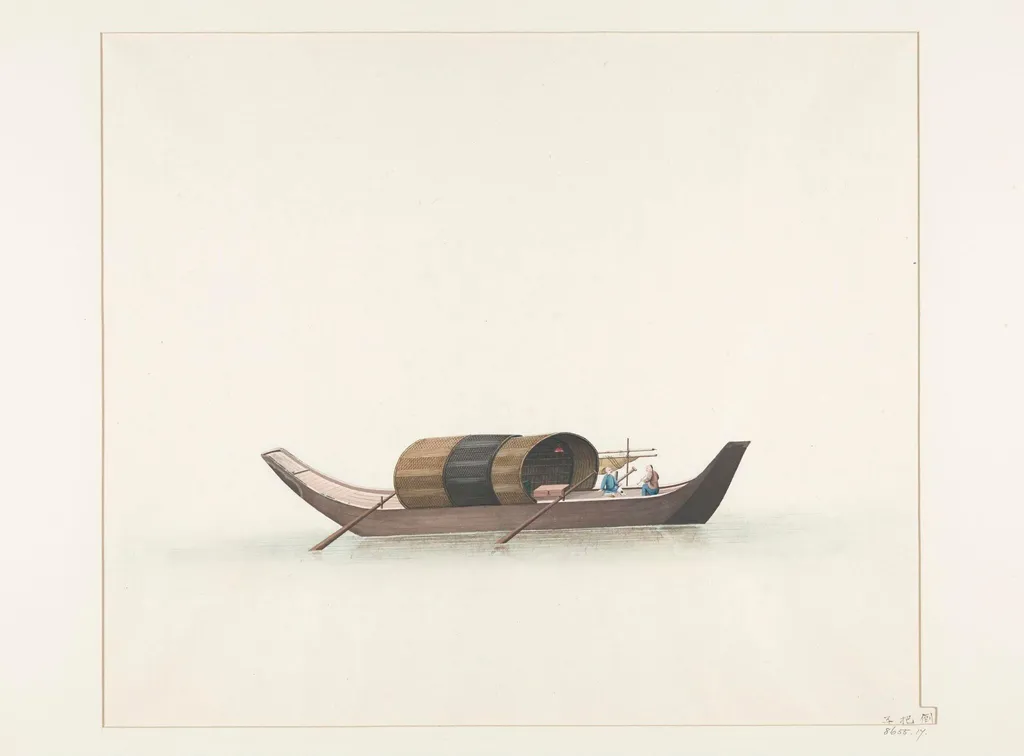
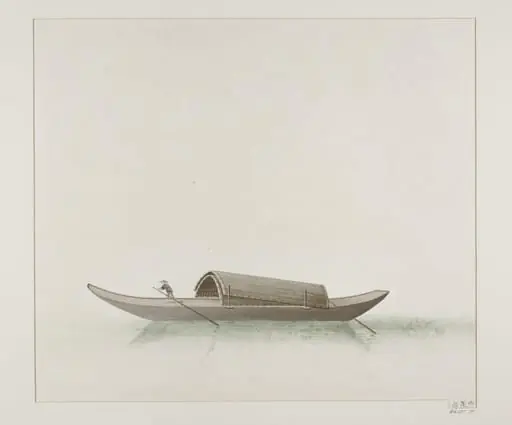
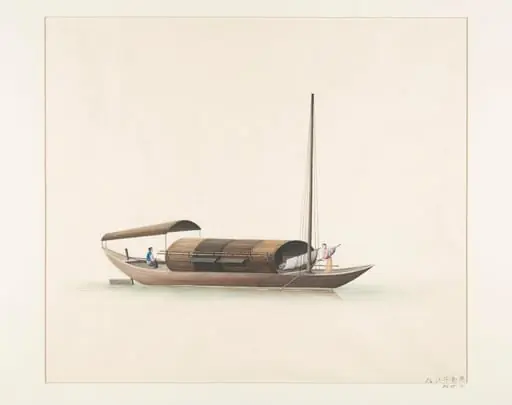
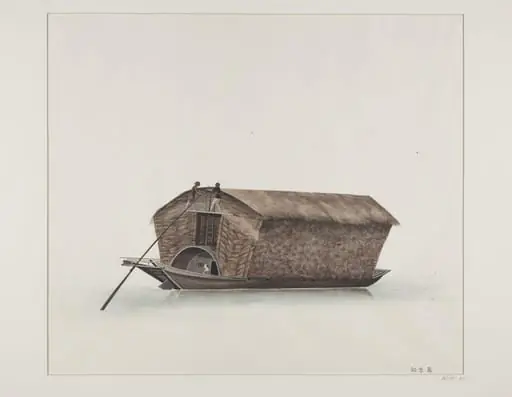
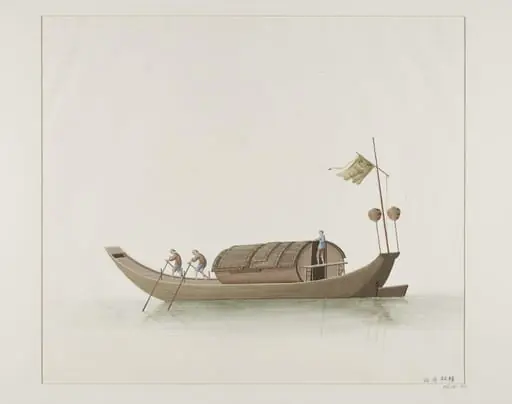
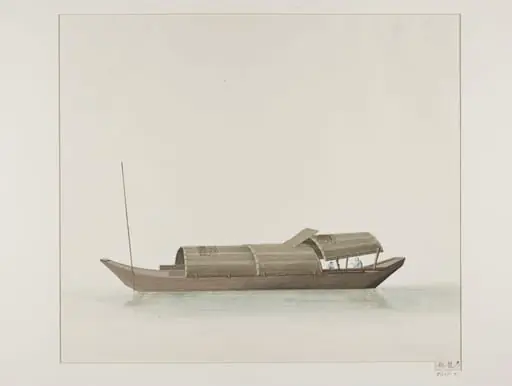
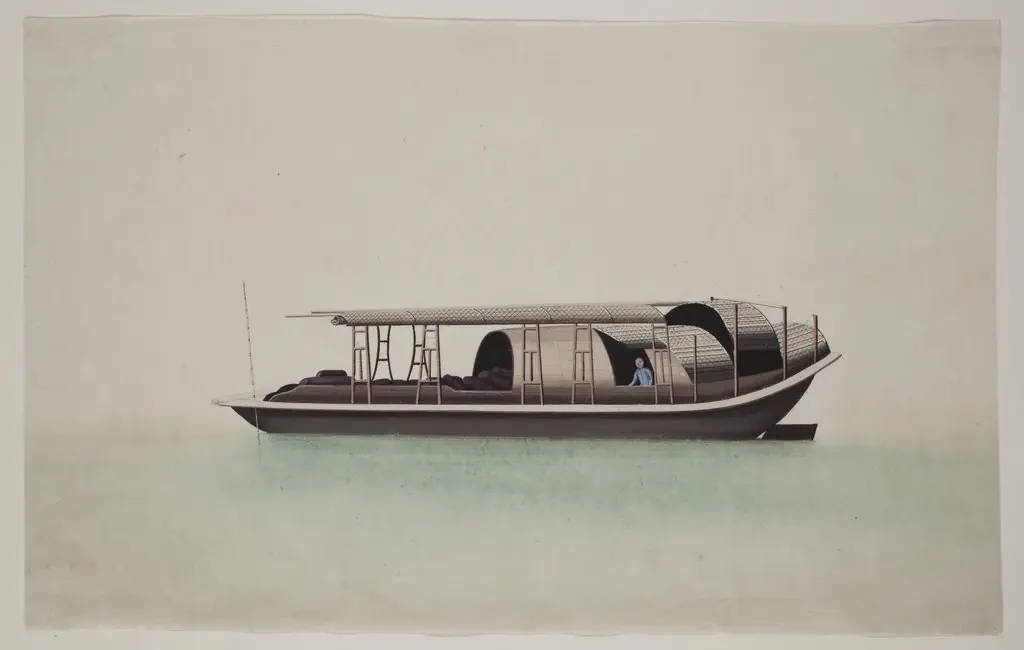
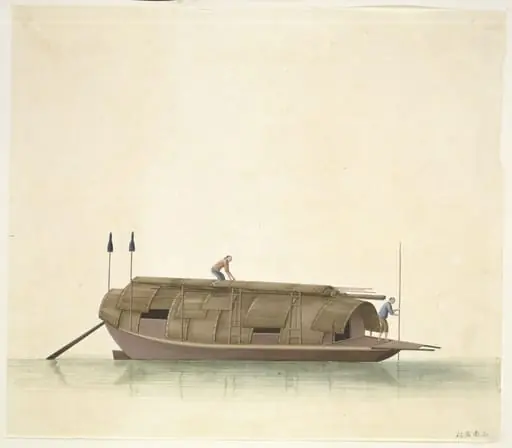
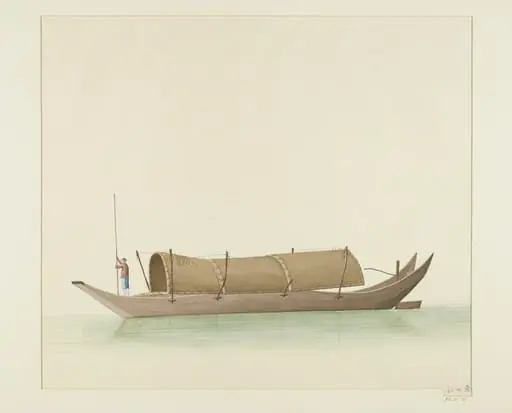
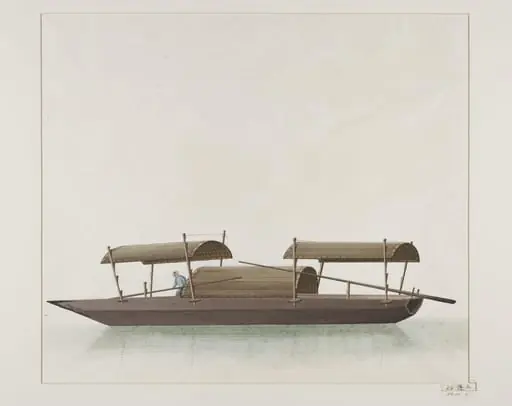
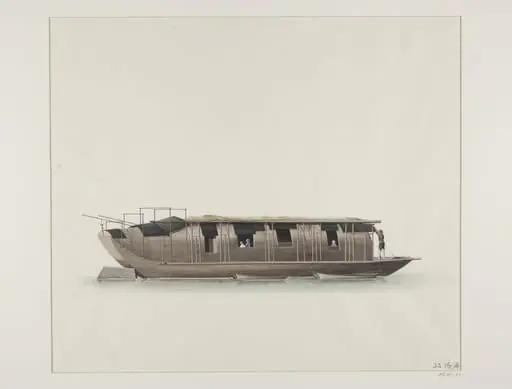
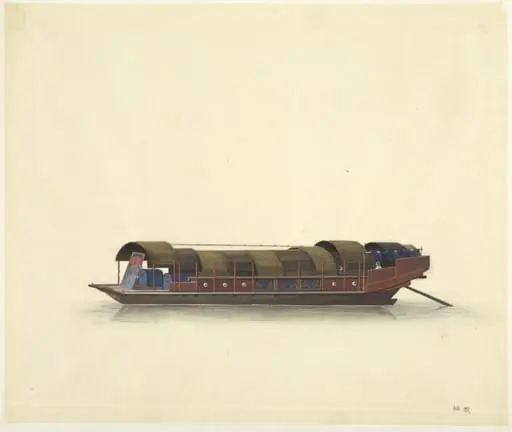
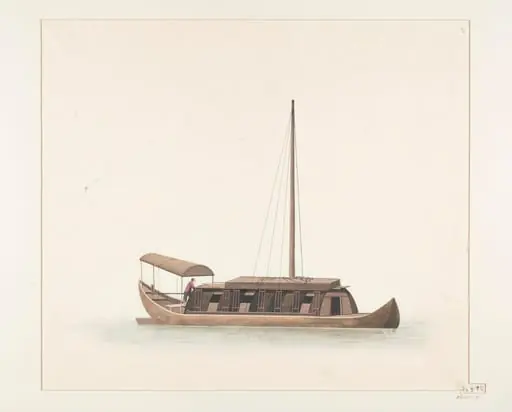
Dao ba zi is a paint painting by the Romanticist artist Unknown. It dates from 1810 and is held in the collection of the Victoria and Albert Museum. This small rectangular painting is one of fifty sheets from a serial depiction of river vessels on the Pearl River.
About this work
Overview
Originally produced as a commercial souvenir for foreign traders, the series was systematically numbered and widely circulated in the late 18th century.
This small rectangular painting is one of fifty sheets from a serial depiction of river vessels on the Pearl River. Executed in restrained earth tones, it portrays a narrow, elongated ferry with upturned hull ends and a rounded central cabin. The composition emphasizes stillness: calm water, minimal detail, and a quiet atmosphere. Originally produced as a commercial souvenir for foreign traders, the series was systematically numbered and widely circulated in the late 18th century.
Subject & Meaning
The vessel appears to be a working ferry, carrying three large woven baskets covered with cloth—likely holding fish, produce, or traded goods. Two figures are seated near the stern; one holds a long pole, suggesting active navigation or mooring. The scene captures routine labor rather than spectacle, reflecting the daily rhythm of river commerce. The absence of dramatic elements underscores its function as an observational record, not a ceremonial or symbolic image.
Technique & Style
The artist employed a minimalist approach, using thin washes of muted pigments to define form without elaborate shading or color variation. Contours are clean and economical, with attention to the boat’s structural simplicity and the texture of the baskets. The water is rendered with near-absolute stillness, enhancing the sense of quietude. This restrained style prioritizes clarity and recognizability over artistic flourish, aligning with the production demands of souvenir series.
History & Provenance
The painting belonged to a numbered set of fifty sheets, cataloged as 8655:1 to 51, created for export to European markets. These works were likely produced by Cantonese artists for foreign merchants and travelers. Lord Macartney’s 1793 observations of the bustling Pearl River provide contemporary context for the scene. The series has since been dispersed across collections, with this sheet surviving as a fragment of a once-coherent visual archive.
Context
In the late 18th century, Canton (Guangzhou) was the primary port for Western trade with China. The Pearl River teemed with vessels of all sizes, serving both local transport and international commerce. These paintings responded to foreign curiosity about Chinese river life, offering compact, easily transportable images that documented the practical realities of a bustling trade hub, distinct from imperial or ceremonial themes.
Legacy
Though produced as commercial ephemera, these sheets now serve as valuable ethnographic records of Qing-era river transport. Their simplicity and uniformity make them useful for studying vernacular art practices and cross-cultural exchange. Surviving examples, including this one, contribute to broader understandings of how Chinese artisans adapted their output to foreign tastes while preserving local visual conventions.
Artist & collection

 Domestic Scene
 Giacomo and Cardinal Marco, investing Andrea, Abbot of San Zeno, with his Benefice
 The Nymph of Fontainebleau
 Portrait of a Woman
 Madonna and Child with Saints in the Enclosed Garden
 Venus and Minerva
 Family Group of Four on Sofa
 Wall painting from Room H of the Villa of P. Fannius Synistor at Boscoreale