Artwork
De boom van Jesse
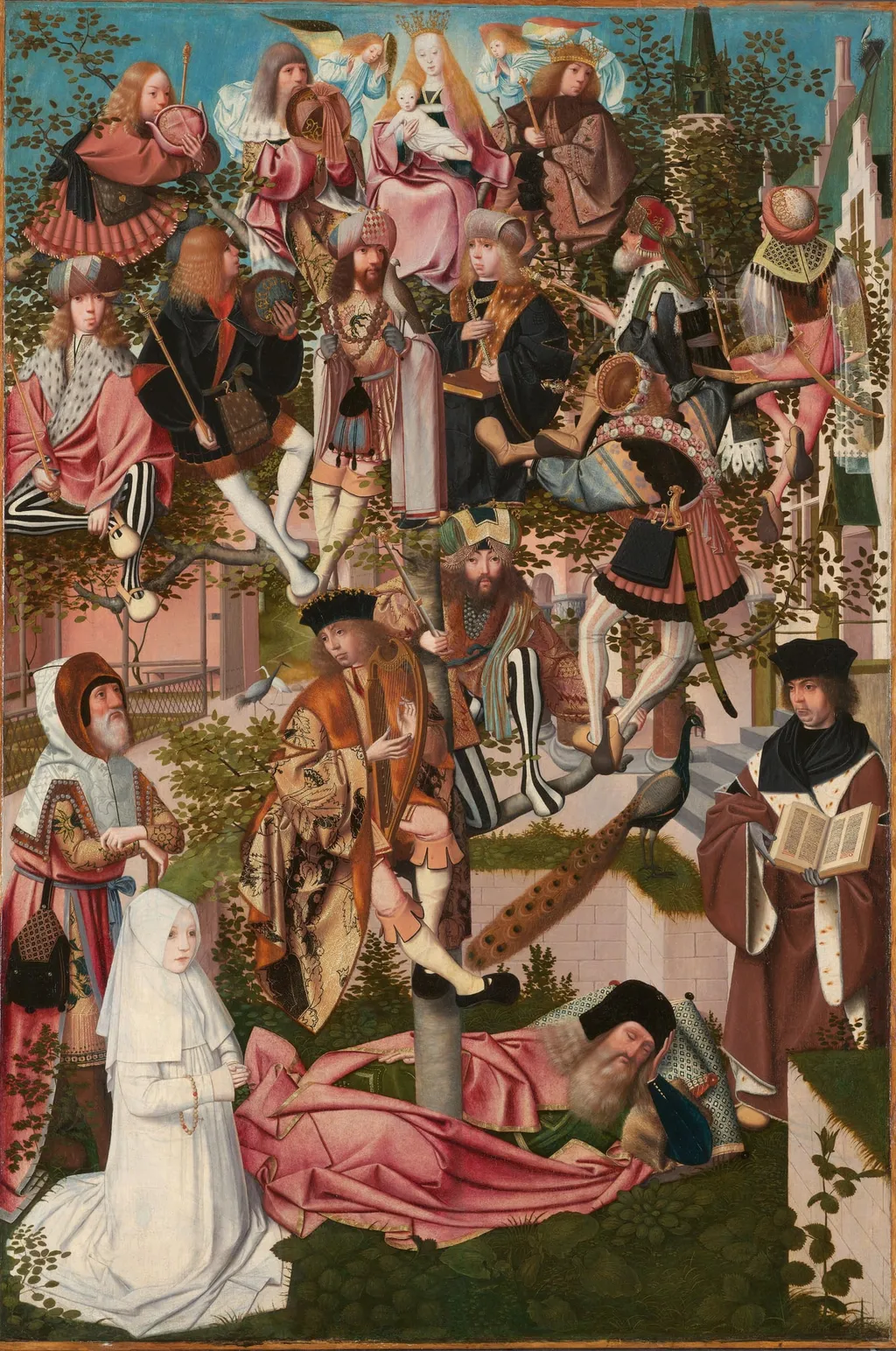
De boom van Jesse is an unspecified painting by the Northern Renaissance artist Unknown. It dates from 1500 and is held in the collection of the Rijksmuseum.
About this work
You see a tall tree growing from a sleeping man’s chest. The branches hold kings, a harpist, and a woman holding a baby at the top.
This painting shows Jesus’s family tree, starting with Jesse, an old king. Each branch holds a ruler from the Bible. The artist made it around 1500, but no one knows their name.
To see more paintings like this, visit the Rijksmuseum.
Overview
The tree’s branches extend upward, bearing figures of royal descendants, culminating in the Virgin Mary and the Christ Child.
This late 15th-century painting depicts the genealogical lineage of Christ through the symbolic form of a tree emerging from the reclining figure of Jesse, an ancestor of King David. The tree’s branches extend upward, bearing figures of royal descendants, culminating in the Virgin Mary and the Christ Child. The composition follows a medieval theological tradition that visually connects Old Testament ancestry with the Incarnation.
Subject & Meaning
The painting illustrates the prophecy from Isaiah that a shoot would arise from the stump of Jesse, symbolizing the divine origin of Christ’s kingship. Each figure along the branches represents a biblical monarch, including David, whose harp alludes to his role as psalmist. The Virgin and Child at the summit affirm Christ’s dual nature as both human descendant and divine savior, grounding salvation history in royal lineage.
Technique & Style
Executed in tempera and gold leaf on panel, the work employs a flat, hierarchical space typical of late Gothic devotional art. Figures are arranged in orderly rows along the tree’s limbs, with rich coloration and intricate detail in garments and halos. The tree’s form is stylized rather than naturalistic, serving as a structured framework to convey theological narrative over spatial realism.
History & Provenance
Created around 1500, the painting’s origin remains anonymous, as was common for religious works of the period. It likely originated in the Southern Netherlands, where such genealogical imagery was popular in ecclesiastical settings. The work entered the Rijksmuseum’s collection in the 19th century, having passed through private and monastic holdings over the preceding centuries.
Context
During the late Middle Ages, the Tree of Jesse was a common motif in stained glass, manuscripts, and panel paintings, especially in regions with strong Marian devotion. It served both as a didactic tool for the faithful and as a visual affirmation of Christ’s legitimacy as the promised Messiah, reinforcing the continuity between Jewish scripture and Christian belief.
Legacy
Though the artist’s identity is lost, the painting preserves a widely disseminated visual language of sacred genealogy. It reflects the enduring influence of medieval iconography well into the Renaissance, even as new artistic trends emerged. Today, it stands as a representative example of how theological concepts were rendered in accessible, symbolic form for pre-Reformation audiences.
Artist & collection

 Domestic Scene
 Giacomo and Cardinal Marco, investing Andrea, Abbot of San Zeno, with his Benefice
 The Nymph of Fontainebleau
 Portrait of a Woman
 Madonna and Child with Saints in the Enclosed Garden
 Venus and Minerva
 Family Group of Four on Sofa
 Wall painting from Room H of the Villa of P. Fannius Synistor at Boscoreale
 Justice of Emperor Otto III: The Trial by Fire
 The Holy Kinship
 Festival of the Archers
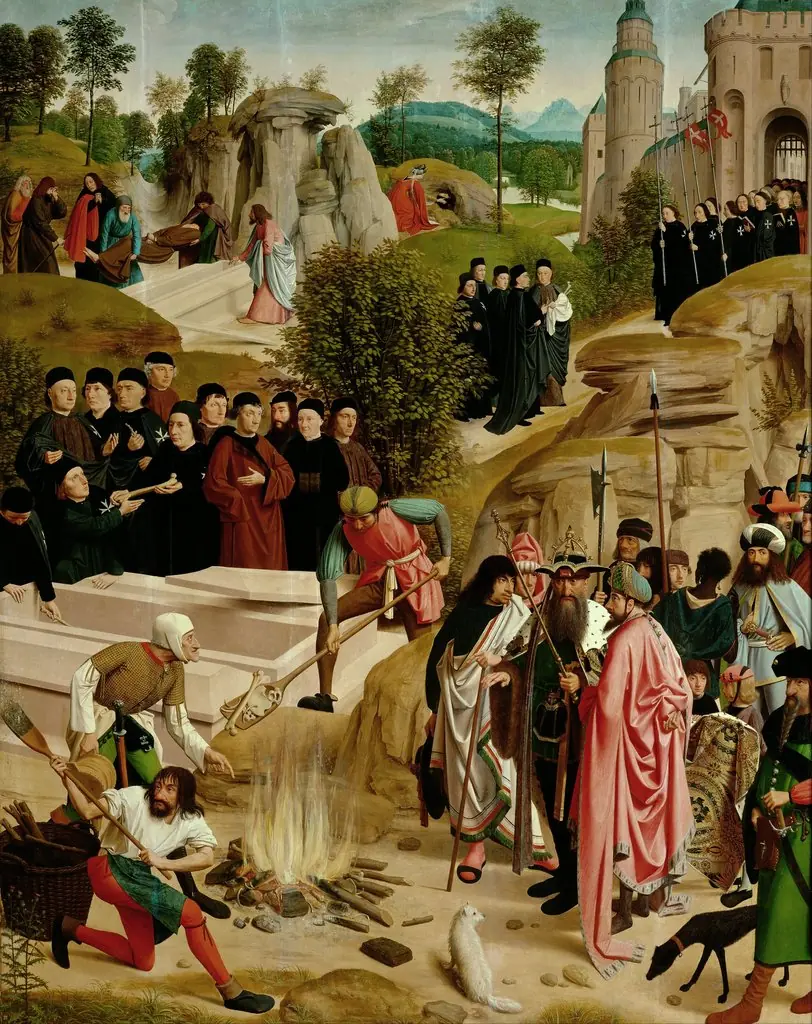 Legend of the Relics of St. John the Baptist
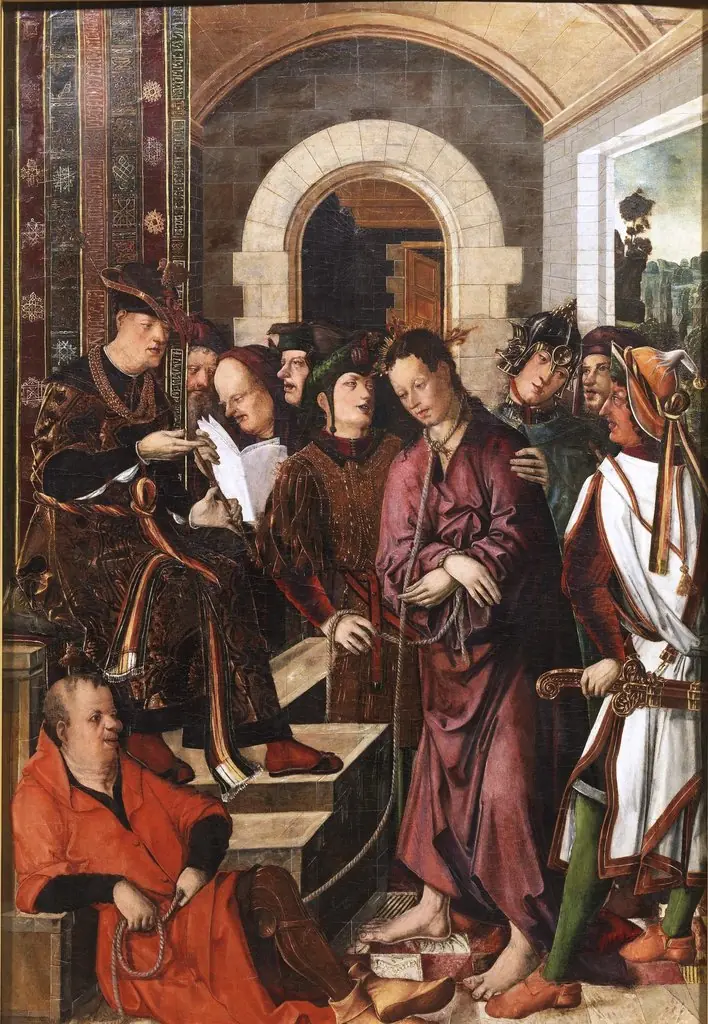 Christ before Pilate
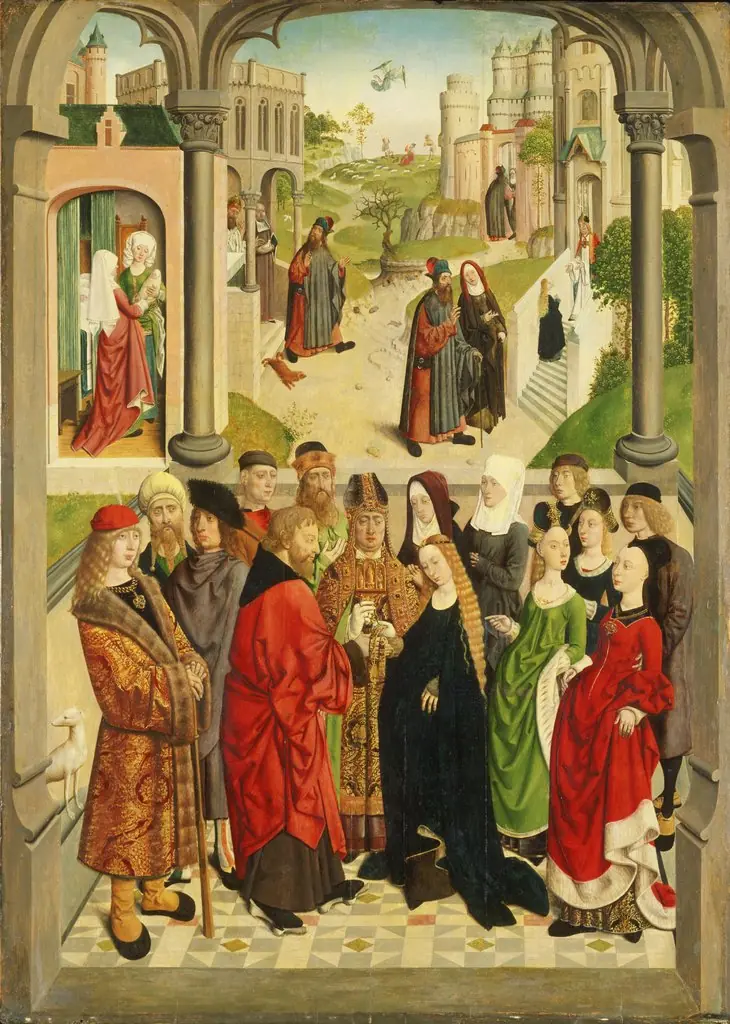 The Marriage of the Virgin, with the Expulsion of Saint Joachim from the Temple, the Angel Appearing to Saint Joachim, the Meeting at the Golden Gate, the Birth of the Virgin, and the Presentation of the Virgin
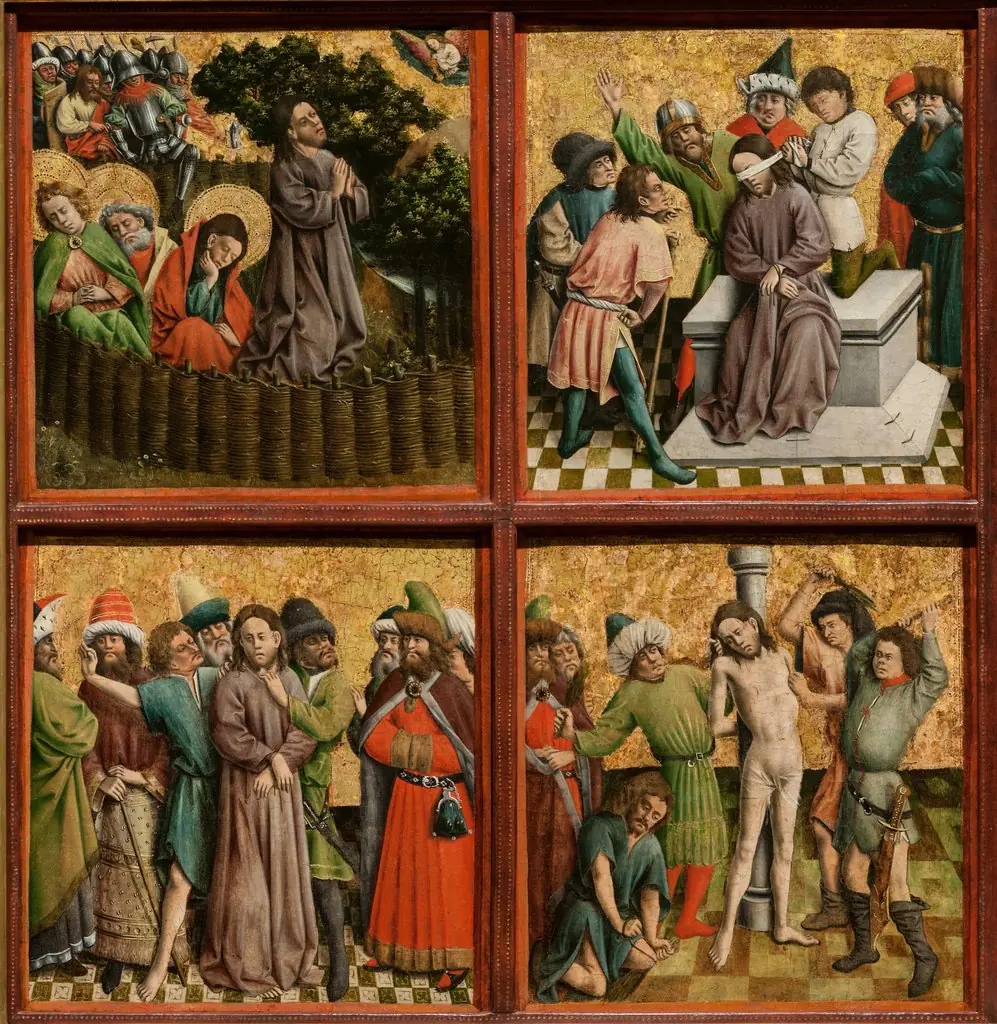 Altarpiece with The Passion of Christ
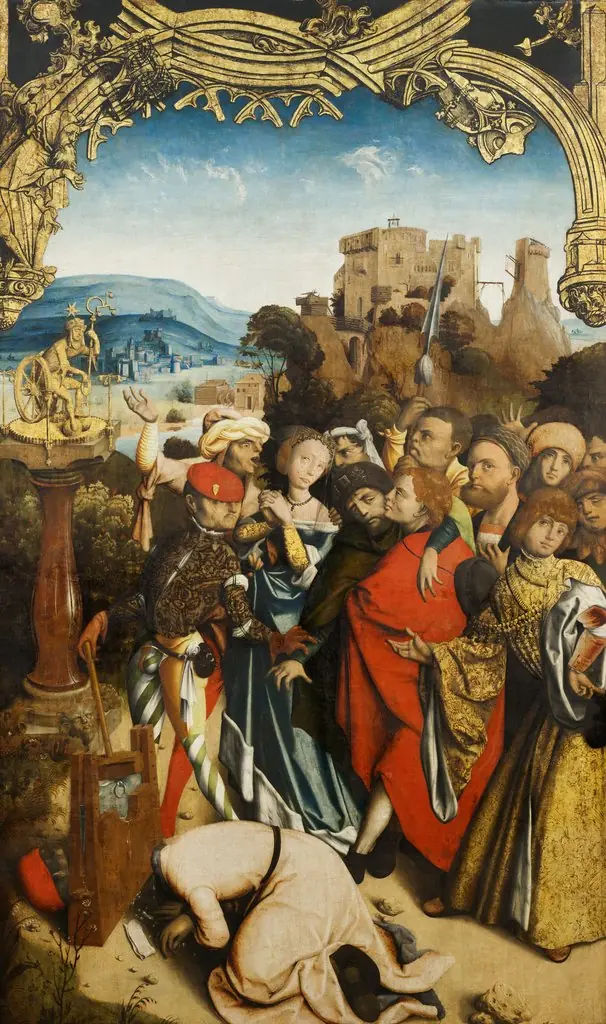 Martyrium der hll. Cantius, Cantianus und Cantianilla (Innenseite); Auferstehung Christi (Außenseite)
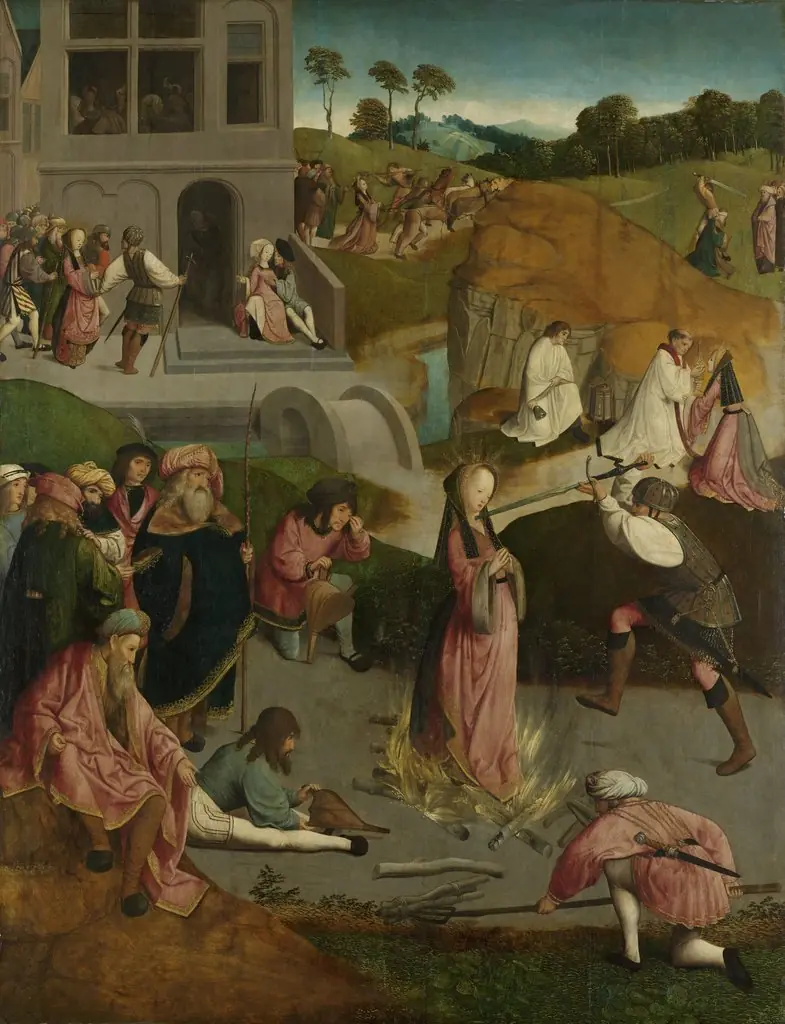 The Martyrdom of Saint Lucy
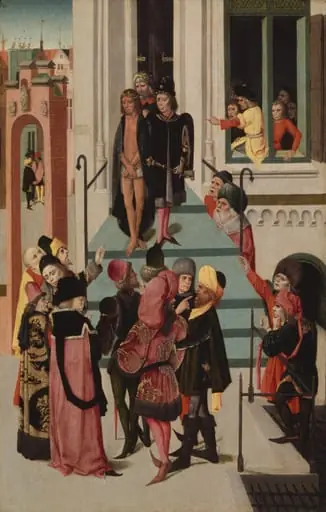 Christ Presented to the People
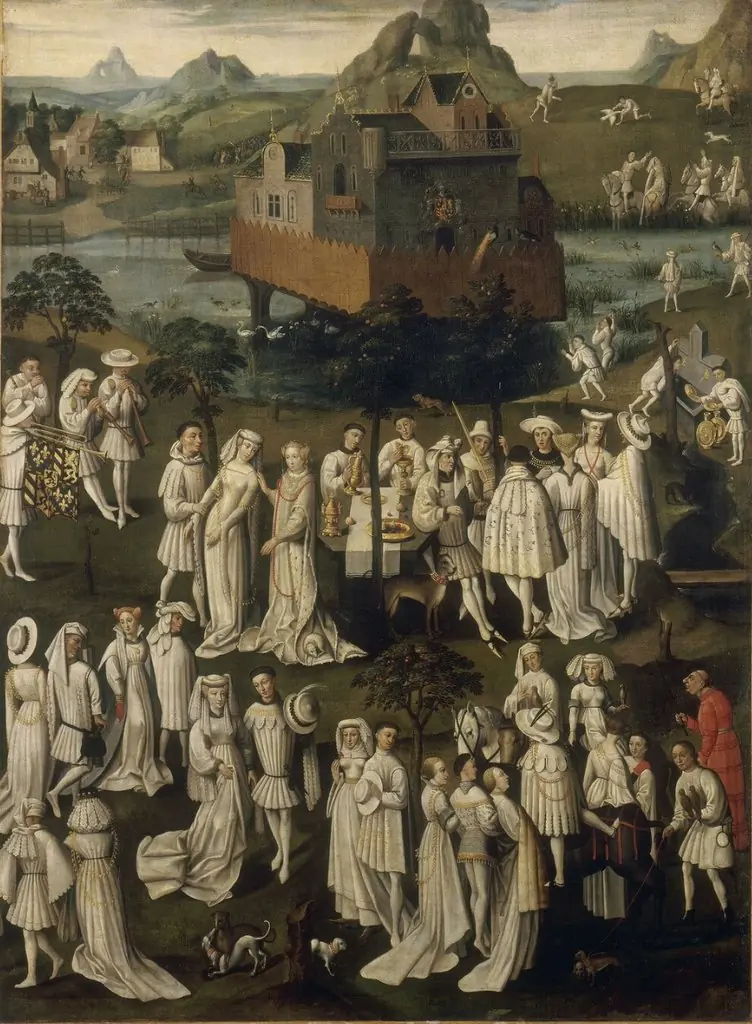 Garden of love at the court of Philippe the Good, Duke of Burgundy
 The Raising of Lazarus