Artwork
Demon Intoning the Name of the Buddha
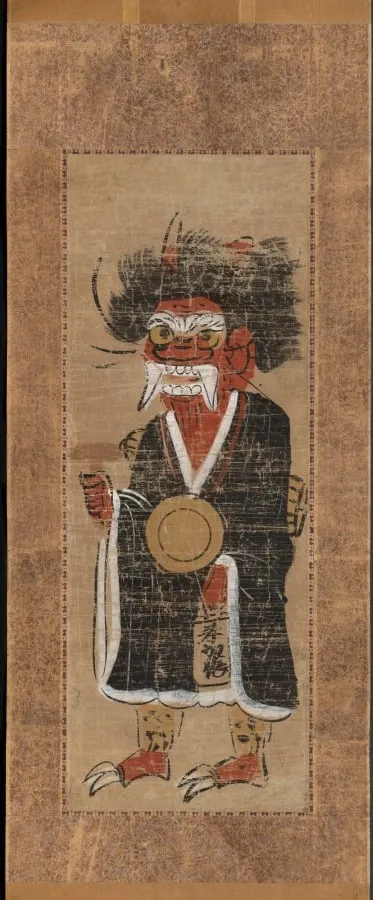
Demon Intoning the Name of the Buddha is an unspecified painting by the Baroque artist Unknown. It dates from 1704 and is held in the collection of the Cleveland Museum of Art.
About this work
Look up more paintings from japan, edo period (1615–1868) to see how artists turned everyday life into playful art.
You see a grinning demon dressed like a wandering monk, chanting into a scroll.
These were cheap, cheerful souvenirs sold to travelers in the town of Otsu. The artist probably made dozens a day—quick brushstrokes, stenciled gold, bright colors. The joke is that even a demon can recite Buddha’s name, so anyone can find salvation.
Look up more paintings from japan, edo period (1615–1868) to see how artists turned everyday life into playful art.
Overview
Demon Intoning the Name of the Buddha is a painting exemplifying the Otsu-e genre, created for travelers on the Tokaido route between Edo and Kyoto. Characterized by vibrant colors and gold accents, these works were mass-produced as affordable souvenirs.
Subject & Meaning
The painting depicts a demon disguised as a wandering monk, chanting the Buddha's name. This humorous scene conveys the Buddhist notion that even the most unlikely beings can seek salvation through devotion.
Technique & Style
The artwork combines woodblock printing with rapid hand-brushstrokes and stencil or manual application of color and gold pigments, reflecting the efficient, high-volume production typical of Otsu-e souvenirs.
History & Provenance
Produced during the Edo period (1615–1868), this Otsu-e painting is part of a tradition that evolved from depicting Buddhist and Shinto icons to incorporating popular Kabuki figures and parable illustrations by the later period.
Context
Originally sold in Otsu to travelers on the Tokaido, these paintings represent a blend of religious themes and everyday life, characteristic of Edo period art's tendency to infuse the mundane with playfulness.
Artist & collection

 Domestic Scene
 Giacomo and Cardinal Marco, investing Andrea, Abbot of San Zeno, with his Benefice
 The Nymph of Fontainebleau
 Portrait of a Woman
 Madonna and Child with Saints in the Enclosed Garden
 Venus and Minerva
 Family Group of Four on Sofa
 Wall painting from Room H of the Villa of P. Fannius Synistor at Boscoreale
 Kannon
 龍湫周沢写 不動明王二童子像|Fudō Myōō and Two Attendants
 Kongara-Doji (Acólito de Fudo Myo-o)
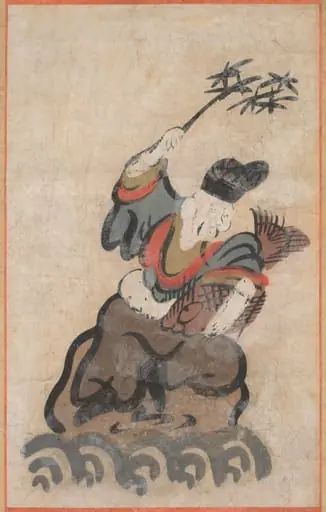 Ebisu
Ebisu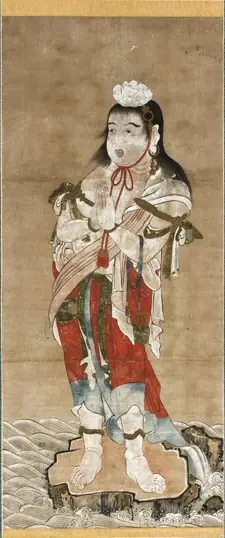 Seitaka-Doji (Acólito de Fudo Myo-o)
 Guardian Kings: Dhrtarastra and Virupaksa
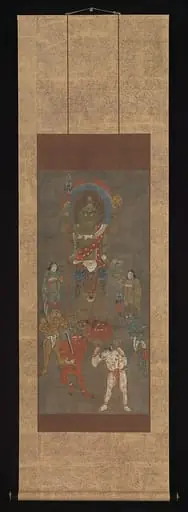 青面金剛夜叉図大津絵|Ōtsu-e of Shōmen Kongōyasha (Vajrayaksha)
 元 佚名 第六羅漢跋陀羅圖 軸|Bhadra, The Sixth Luohan
 Shomen Kongo: The Blue-Faced Kongo
 龍湫周沢写 不動明王二童子像|Fudō Myōō and Two Attendants
 龍湫周沢写 不動明王二童子像|Fudō Myōō and Two Attendants
 Untitled