Artwork
Depictions of a Common Indian myna and a Himalayan tree-creeper of Northern India
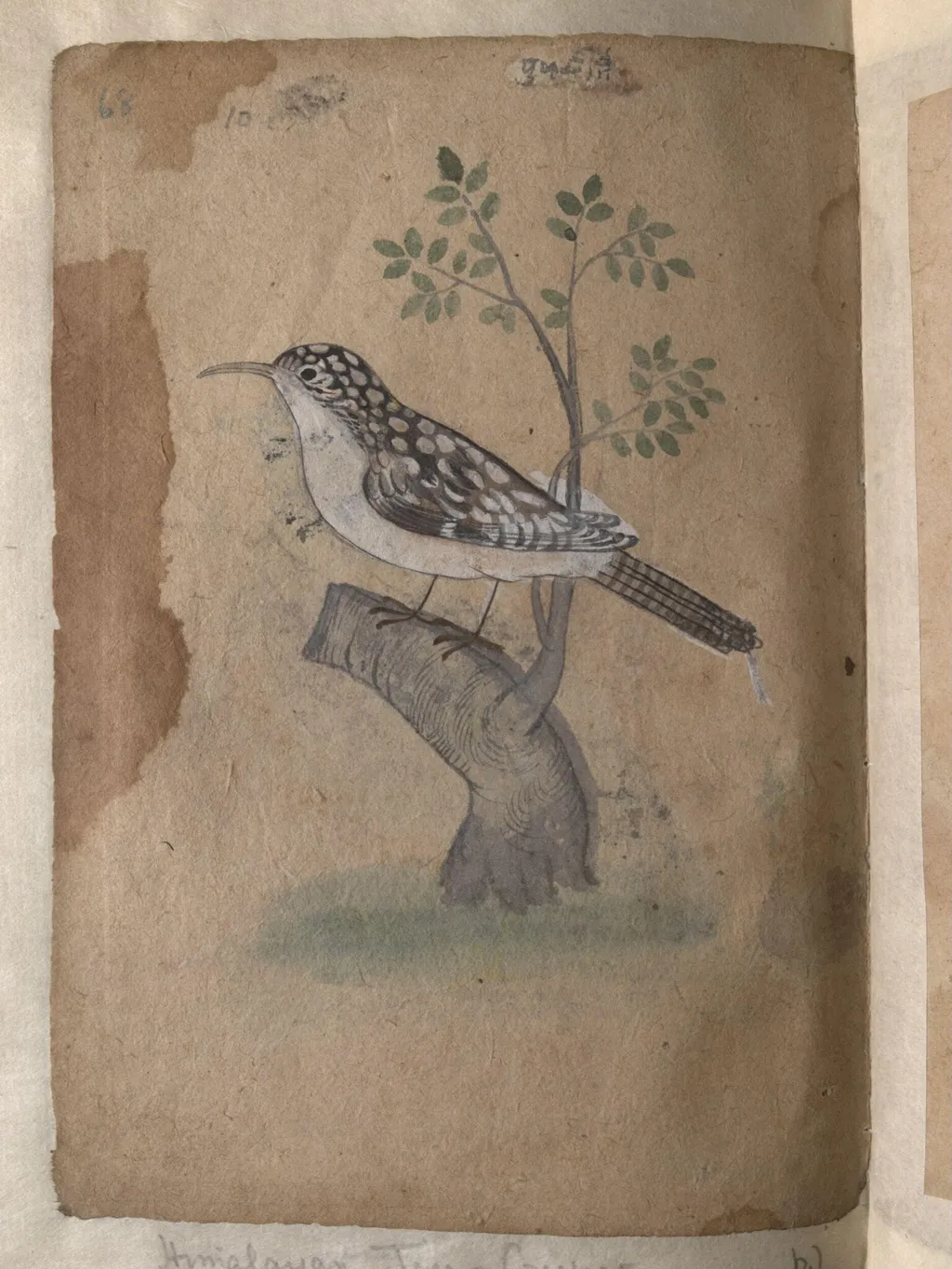
Depictions of a Common Indian myna and a Himalayan tree-creeper of Northern India is a paint painting by the Patna School of Painting artist Unknown. It dates from 1820 and is held in the collection of the Victoria and Albert Museum.
About this work
The tree-creeper clings to the bark with long claws, its brown stripes blending into the wood.
This watercolor shows two birds side by side on a branch. The Indian myna has speckled feathers and a yellow beak. The tree-creeper clings to the bark with long claws, its brown stripes blending into the wood.
These pictures were drawn in north India around 1820. Artists back then often studied birds and plants for science as well as art. The colors look fresh because the paint is still bright.
Look up the Victoria and Albert Museum to see more work from this time.
Overview
Two small watercolours dating from around 1820 portray a Common Indian myna and a Himalayan tree‑creeper, both birds native to the northern regions of the subcontinent. The works are executed on paper and remain notable for their vivid pigments, which have retained their brightness over two centuries.
Subject & Meaning
The myna is shown with speckled plumage and a bright yellow bill, perched beside a branch, while the tree‑creeper clings to the bark, its brown‑striped feathers blending with the woody texture. The juxtaposition highlights contrasting habits: the myna’s open, social stance versus the creeper’s secretive, bark‑bound posture, offering a comparative glimpse of avian life in the area.
Technique & Style
Rendered in transparent watercolour, the paintings employ fine brushwork to delineate feather detail and the bark’s texture. The palette is restrained yet saturated, allowing the birds’ natural colours to stand out against a muted background. The precision of line and colour suggests an approach that balances scientific illustration with aesthetic sensitivity.
History & Provenance
The pair entered the museum collection in 1929 as a donation from Robert Scott Greenshields, who served in the Indian Civil Service in Bengal and Assam between 1879 and 1910. Greenshields’ connection to the region likely facilitated his acquisition of these early nineteenth‑century Indian artworks.
Context
During the early 1800s, Indian artists frequently combined natural history observation with artistic practice, producing images that served both scientific documentation and decorative purposes. These watercolours exemplify that dual intent, reflecting a period when colonial administrators and scholars encouraged the recording of local flora and fauna for study and display.
Artist & collection

 Domestic Scene
 Giacomo and Cardinal Marco, investing Andrea, Abbot of San Zeno, with his Benefice
 The Nymph of Fontainebleau
 Portrait of a Woman
 Madonna and Child with Saints in the Enclosed Garden
 Venus and Minerva
 Family Group of Four on Sofa
 Wall painting from Room H of the Villa of P. Fannius Synistor at Boscoreale
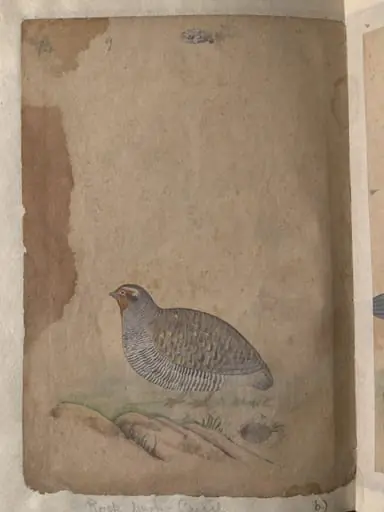 Depictions of a (unfinished drawing) and a Rock bush-quail of Northern India
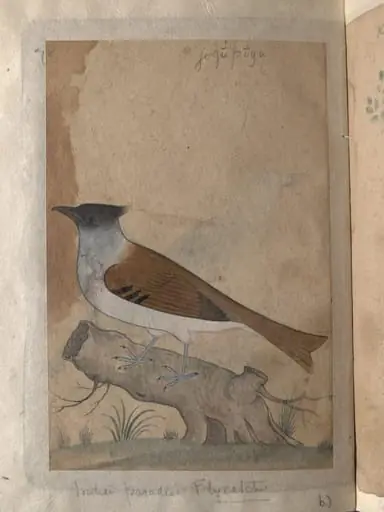 Depictions of Indian house crow and a Indian paradise flycatcher of Northern India
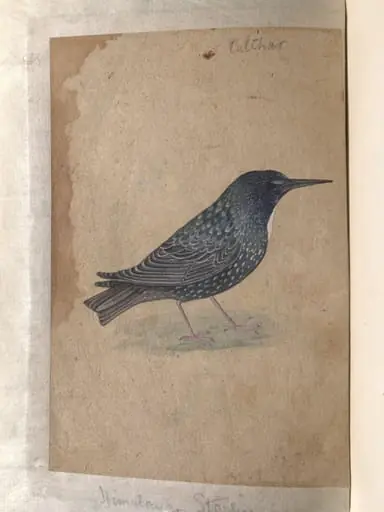 Depictions of white-cheeked bulbul and a Himalayan starling of Northern India
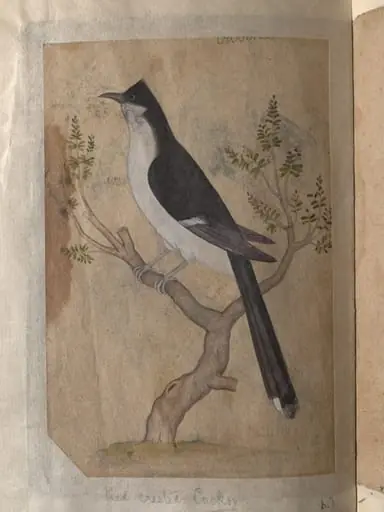 Depictions of a Indian fruit-bat and Pied crested cuckoo of Northern India
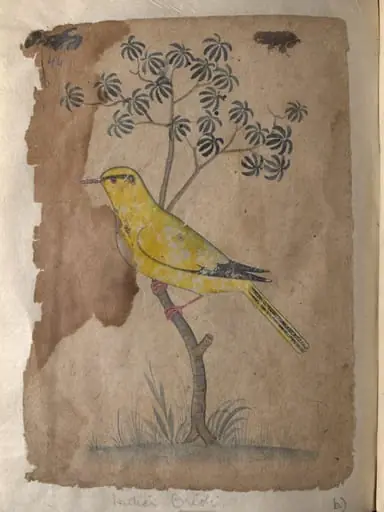 Depictions of a Shikra and a Indian oriole of Northern India
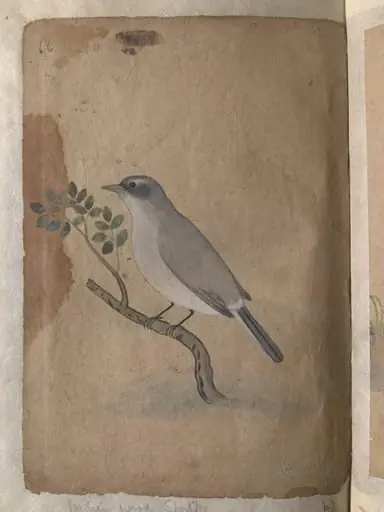 Depictions of a Indian spotted dove and a Common Indian wood-shrike of Northern India
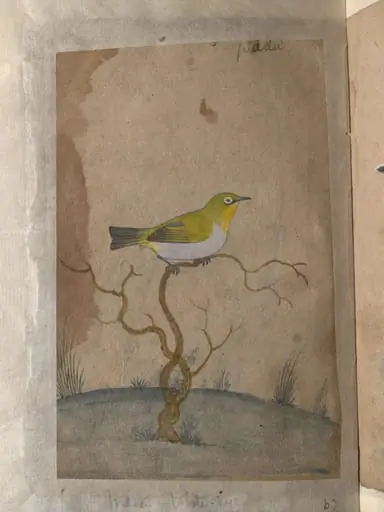 Depictions of a Indian spotted owlet and a Indian white-eye of Northern India
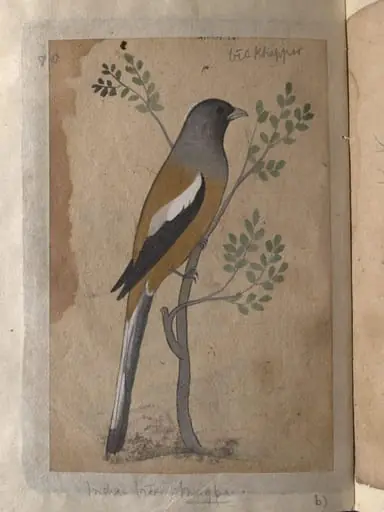 Depictions of a Grey partridge and a Indian tree-pie of Northern India
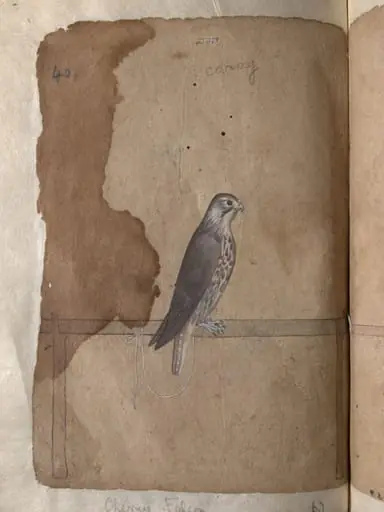 Depictions of a Eastern peregrine falcon and Cherrug falcon of Northern India
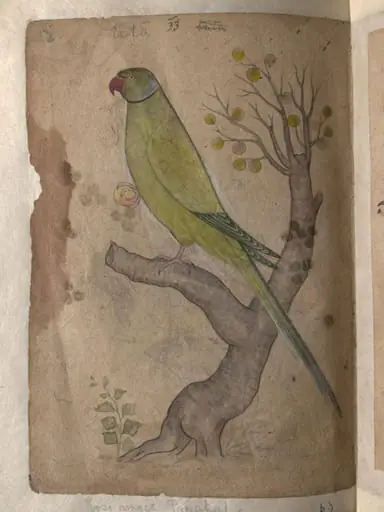 Depictions of Striated scops owl and Rose-ringed parakeet of Northern India
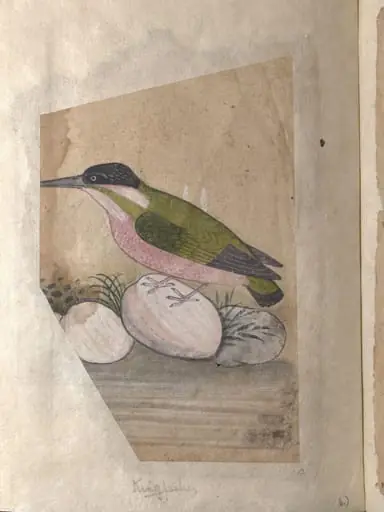 Depictions of a Plumbeous redstart and a Kingfisher of Northern India