Artwork
Depictions of a Indian spotted dove and a Common Indian wood-shrike of Northern India
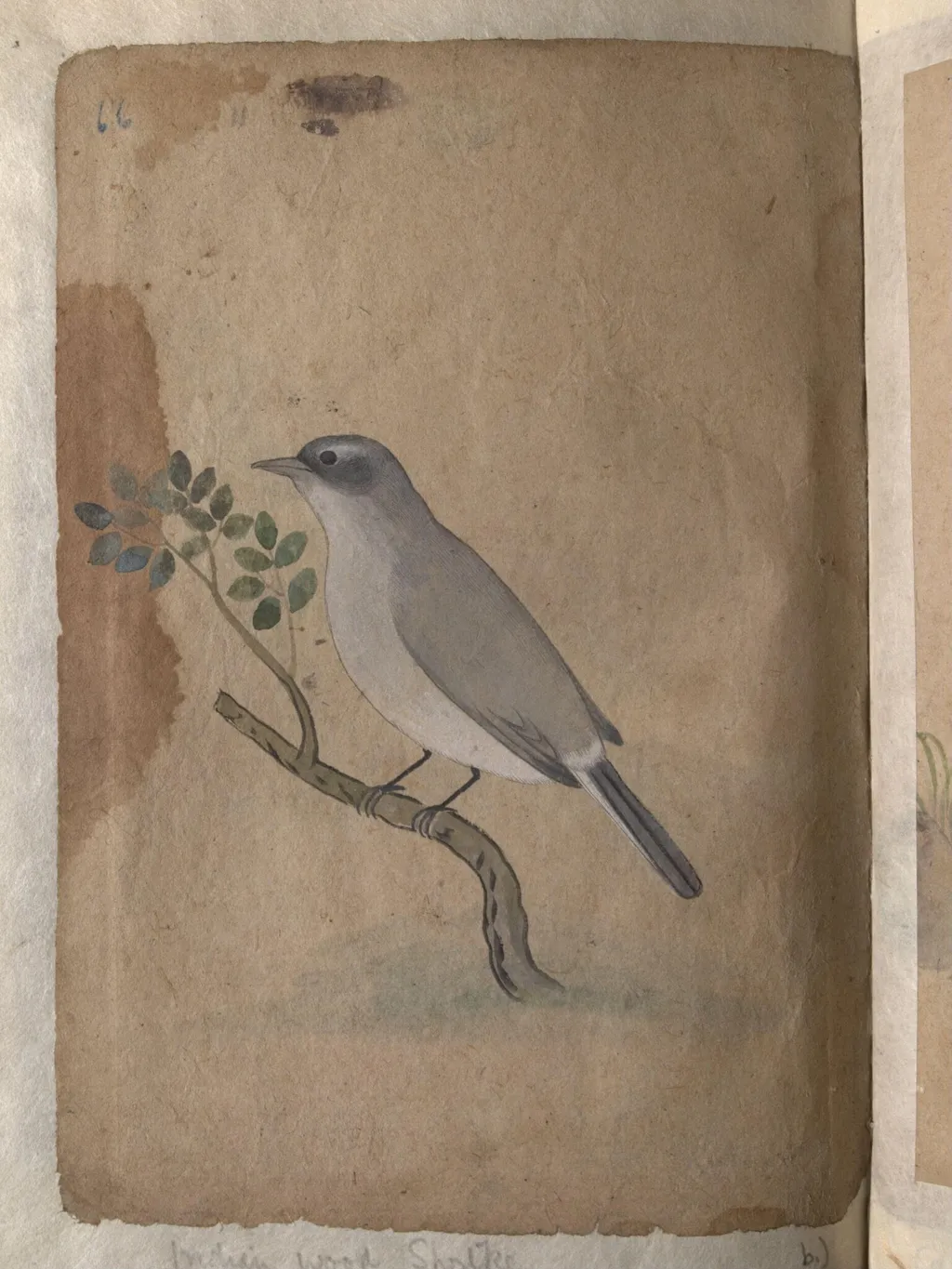
Depictions of a Indian spotted dove and a Common Indian wood-shrike of Northern India is a paint painting by the Patna School of Painting artist Unknown. It dates from 1820 and is held in the collection of the Victoria and Albert Museum.
About this work
Overview
These are a pair of early‑nineteenth‑century watercolour studies portraying two avian species native to northern India: the Indian spotted dove (Spilopelia chinensis) and the common Indian wood‑shrike (Lanius cristatus). Executed around 1820, the works present the birds side by side, the dove in a composed pose and the shrike appearing alert, each rendered in a restrained palette of browns and whites.
Subject & Meaning
The compositions serve as naturalistic records rather than allegorical scenes, focusing on the distinctive plumage and posture of each species. By juxtaposing a calm dove with a vigilant shrike, the illustrations highlight contrasting behavioural traits—peaceful foraging versus watchful predation—offering viewers a comparative glimpse of northern Indian birdlife.
Technique & Style
Rendered in transparent watercolour on paper, the paintings employ delicate washes to suggest feather texture and subtle shading. The limited colour range emphasizes natural tones, while fine brushwork delineates contour and detail without excessive ornamentation, reflecting the utilitarian aesthetic typical of scientific illustration in the early 1800s.
History & Provenance
The artist remains unidentified, but the works are dated to circa 1820. In 1929 they entered a museum collection as part of a donation by Robert Scott Greenshields, a former officer of the Indian Civil Service who served in Bengal and Assam between 1879 and 1910. Greenshields’ contribution linked the pieces to the broader colonial interest in documenting Indian fauna.
Context
During the early nineteenth century, British officials and naturalists in India commissioned watercolours to catalogue regional wildlife for scientific and educational purposes. Such studies were often produced by local or European artists trained in the conventions of field illustration, providing accurate visual references for scholars back in Europe.
Artist & collection

 Domestic Scene
 Giacomo and Cardinal Marco, investing Andrea, Abbot of San Zeno, with his Benefice
 The Nymph of Fontainebleau
 Portrait of a Woman
 Madonna and Child with Saints in the Enclosed Garden
 Venus and Minerva
 Family Group of Four on Sofa
 Wall painting from Room H of the Villa of P. Fannius Synistor at Boscoreale
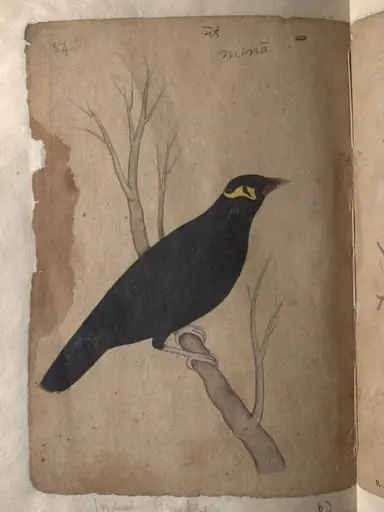 Depictions of a Domestic pigeon and Indian grackle of Northern India
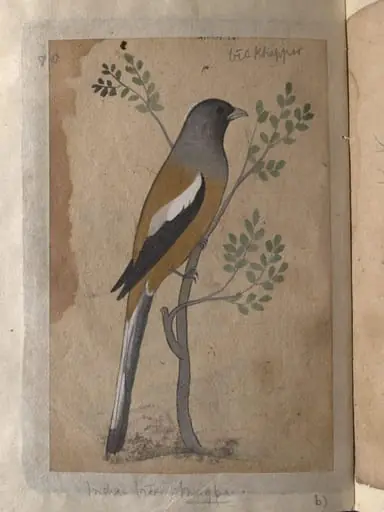 Depictions of a Grey partridge and a Indian tree-pie of Northern India
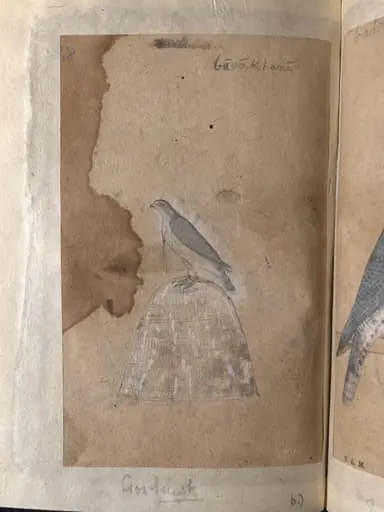 Depictions of a Bronze-winged dove and a Goshawk of Northern India
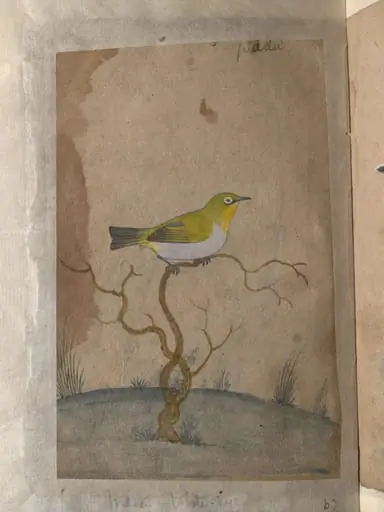 Depictions of a Indian spotted owlet and a Indian white-eye of Northern India
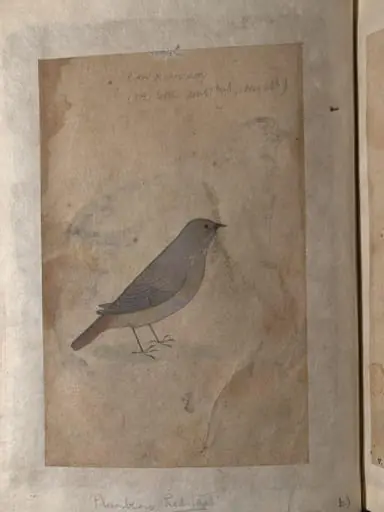 Depictions of a Bengal green pigeon and a Plumbeous redsatart of Northern India
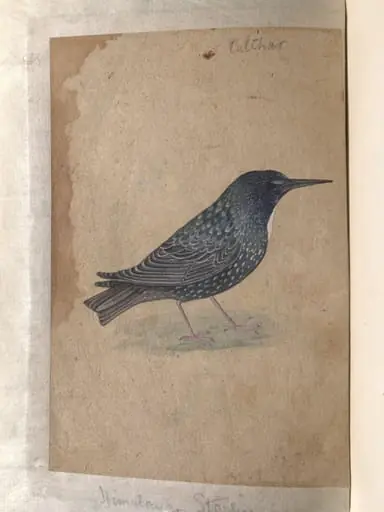 Depictions of white-cheeked bulbul and a Himalayan starling of Northern India
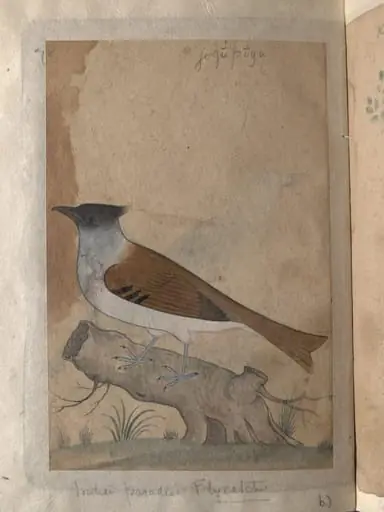 Depictions of Indian house crow and a Indian paradise flycatcher of Northern India
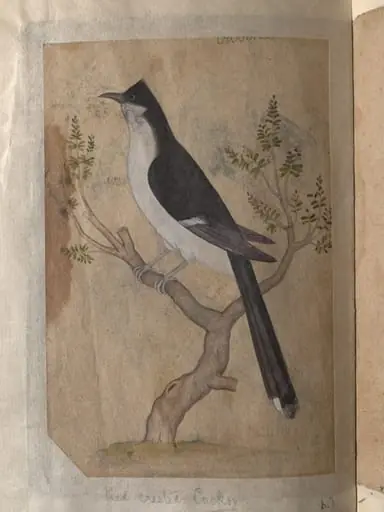 Depictions of a Indian fruit-bat and Pied crested cuckoo of Northern India
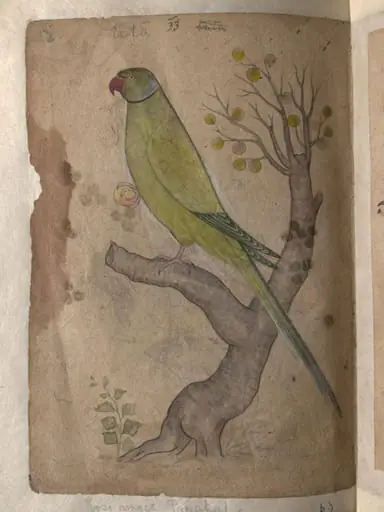 Depictions of Striated scops owl and Rose-ringed parakeet of Northern India
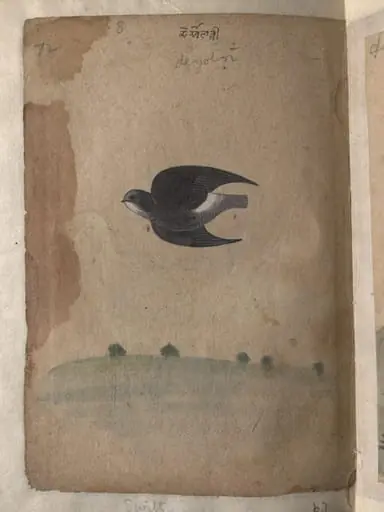 Depictions of a Green pigeon (?) and a Common house-swift of Northern India
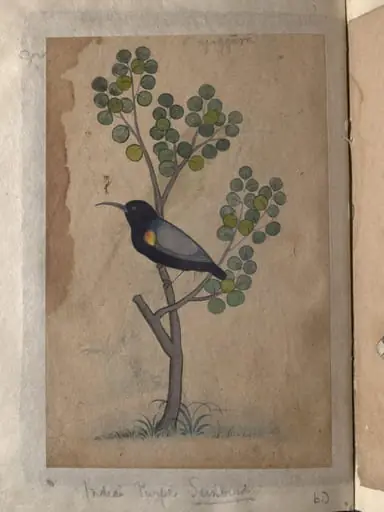 Depictions of a common Indian bee-eater and a Indian purple sunbird of Northern India