Artwork
Depictions of a Indian fruit-bat and Pied crested cuckoo of Northern India
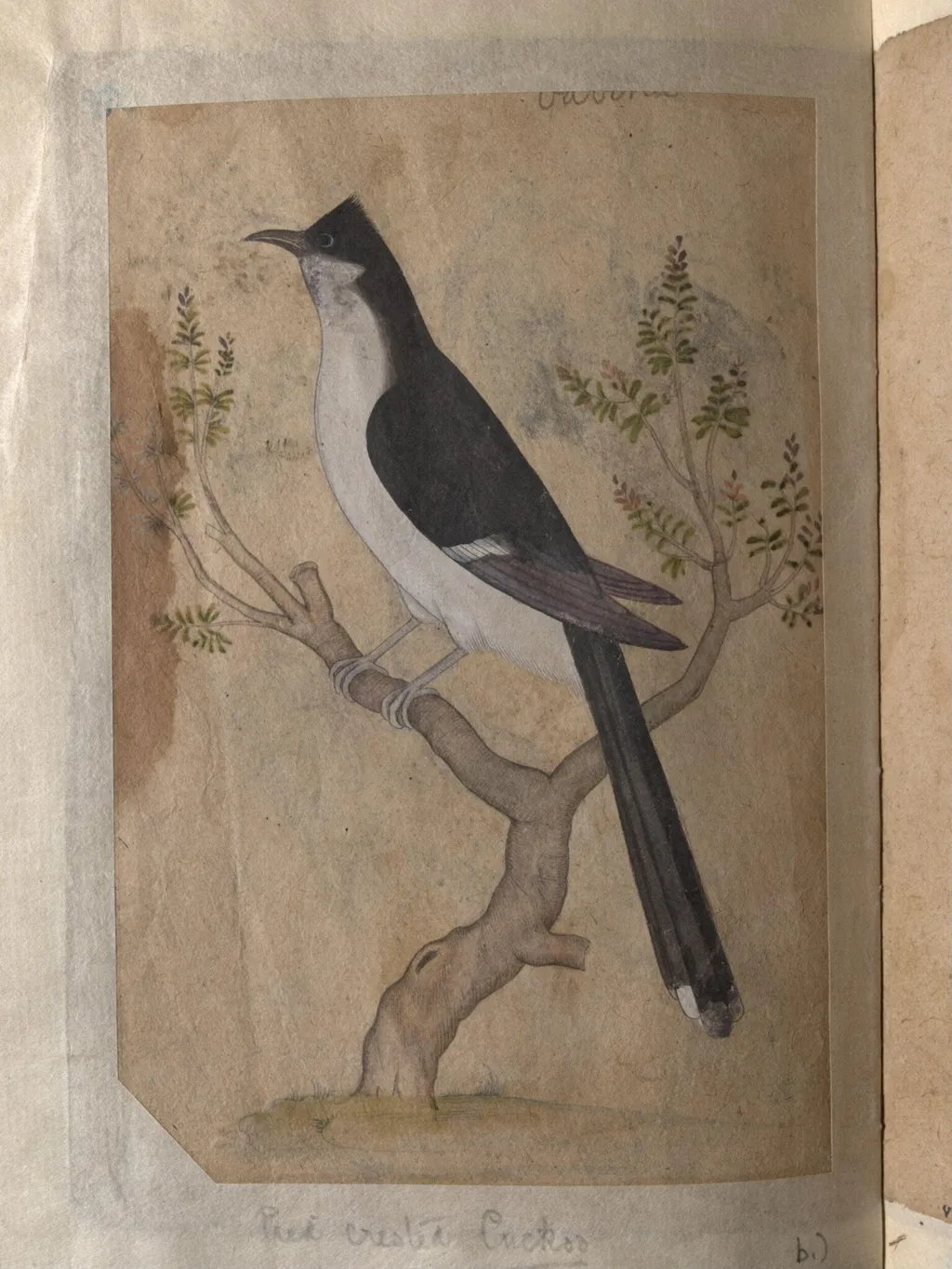
Depictions of a Indian fruit-bat and Pied crested cuckoo of Northern India is a paint painting by the Patna School of Painting artist Unknown. It dates from 1820 and is held in the collection of the Victoria and Albert Museum. Two watercolor paintings created in 1820 illustrate a fruit‑bat and a pied crested cuckoo, both species indigenous to northern India.
About this work
Overview
Two watercolor paintings created in 1820 illustrate a fruit‑bat and a pied crested cuckoo, both species indigenous to northern India. Executed in a precise naturalistic manner, the works emphasize the anatomical features of the animals against a minimal background, allowing the subjects to dominate the visual field.
Subject & Meaning
The bird study portrays a pied crested cuckoo perched on a slender twig, its contrasting black and white plumage, elongated tail and sharp beak rendered with careful attention. The accompanying bat image captures the nocturnal mammal’s delicate wing membranes and facial structure, reflecting an early 19th‑century interest in cataloguing regional fauna.
Technique & Style
Both pieces employ transparent watercolor washes, building layers to achieve fine detail in feathers, fur and foliage. The artists limited the palette to muted greens and earth tones for the background, thereby isolating the subjects and highlighting texture through fine brushwork and precise line work.
History & Provenance
The pair entered the museum collection in 1929 as a donation from Robert Scott Greenshields, who served in the Indian Civil Service in Bengal and Assam from 1879 to 1910. Greenshields’ contribution reflects his personal interest in the natural history of the region where he worked.
Context
Created during the early Romantic period, these watercolors align with contemporary scientific illustration trends that combined artistic skill with empirical observation. Such works supported expanding knowledge of Indian wildlife among European audiences, complementing the era’s broader fascination with exotic natural subjects.
Artist & collection

 Domestic Scene
 Giacomo and Cardinal Marco, investing Andrea, Abbot of San Zeno, with his Benefice
 The Nymph of Fontainebleau
 Portrait of a Woman
 Madonna and Child with Saints in the Enclosed Garden
 Venus and Minerva
 Family Group of Four on Sofa
 Wall painting from Room H of the Villa of P. Fannius Synistor at Boscoreale
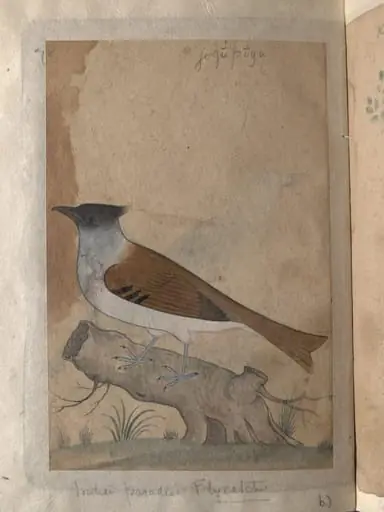 Depictions of Indian house crow and a Indian paradise flycatcher of Northern India
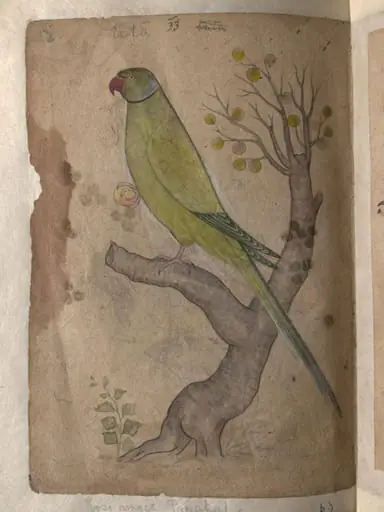 Depictions of Striated scops owl and Rose-ringed parakeet of Northern India
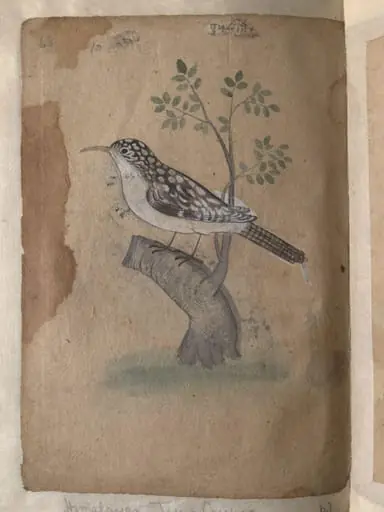 Depictions of a Common Indian myna and a Himalayan tree-creeper of Northern India
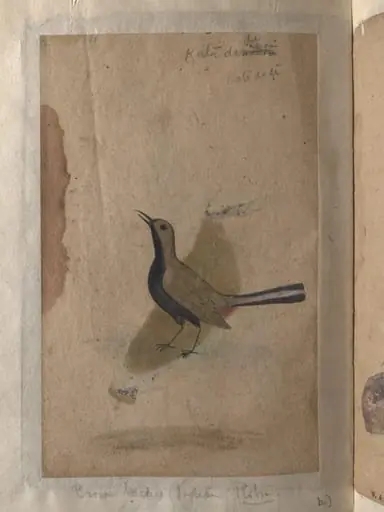 Depictions of a India pitta and Brown-backed Indian robin of Northern India
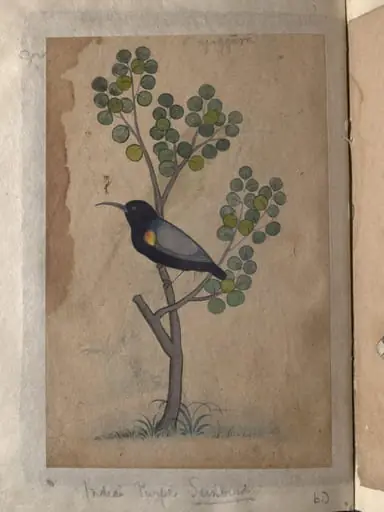 Depictions of a common Indian bee-eater and a Indian purple sunbird of Northern India
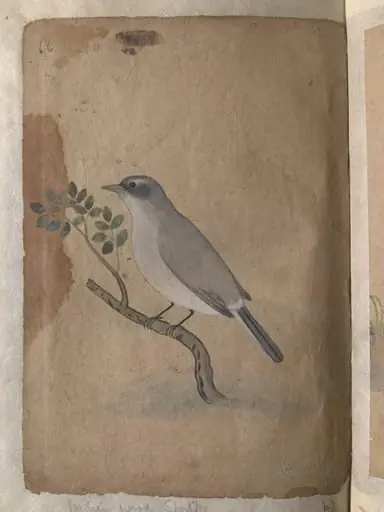 Depictions of a Indian spotted dove and a Common Indian wood-shrike of Northern India
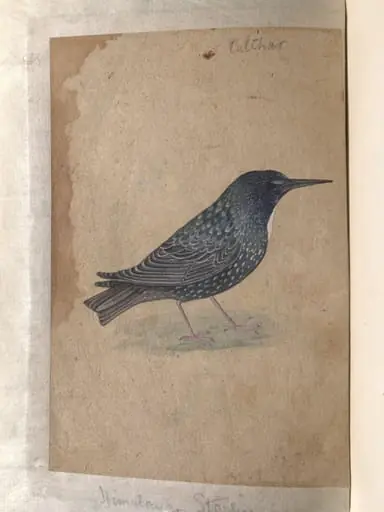 Depictions of white-cheeked bulbul and a Himalayan starling of Northern India
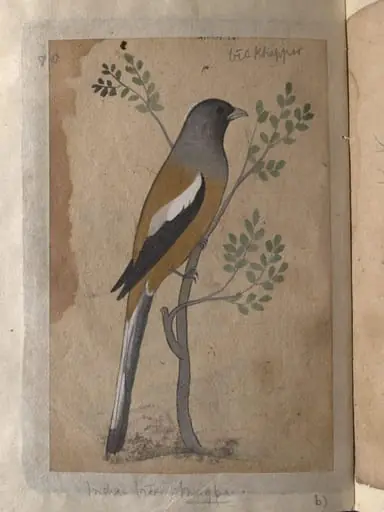 Depictions of a Grey partridge and a Indian tree-pie of Northern India
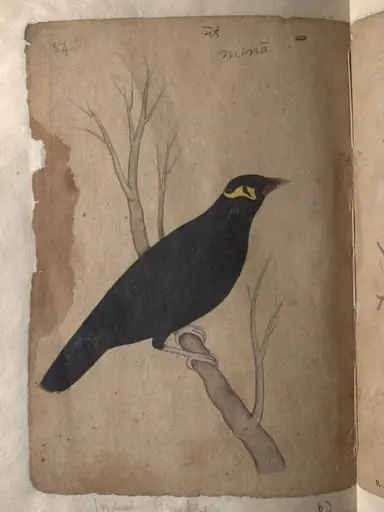 Depictions of a Domestic pigeon and Indian grackle of Northern India
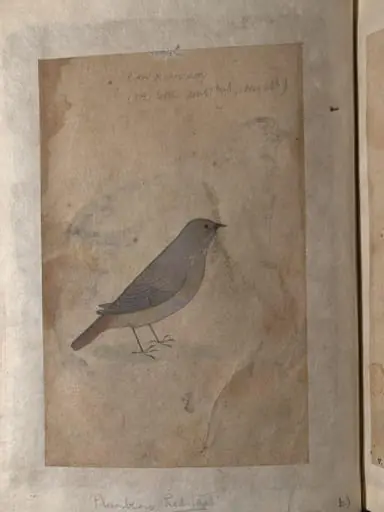 Depictions of a Bengal green pigeon and a Plumbeous redsatart of Northern India
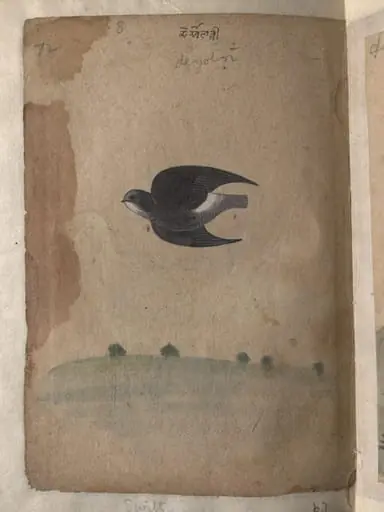 Depictions of a Green pigeon (?) and a Common house-swift of Northern India
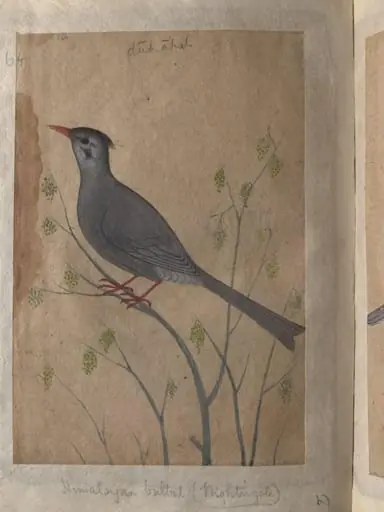 Depictions of a Magpie robin and a Himalayan black bulbul of Northern India