Artwork
Depictions of a Domestic pigeon and Indian grackle of Northern India
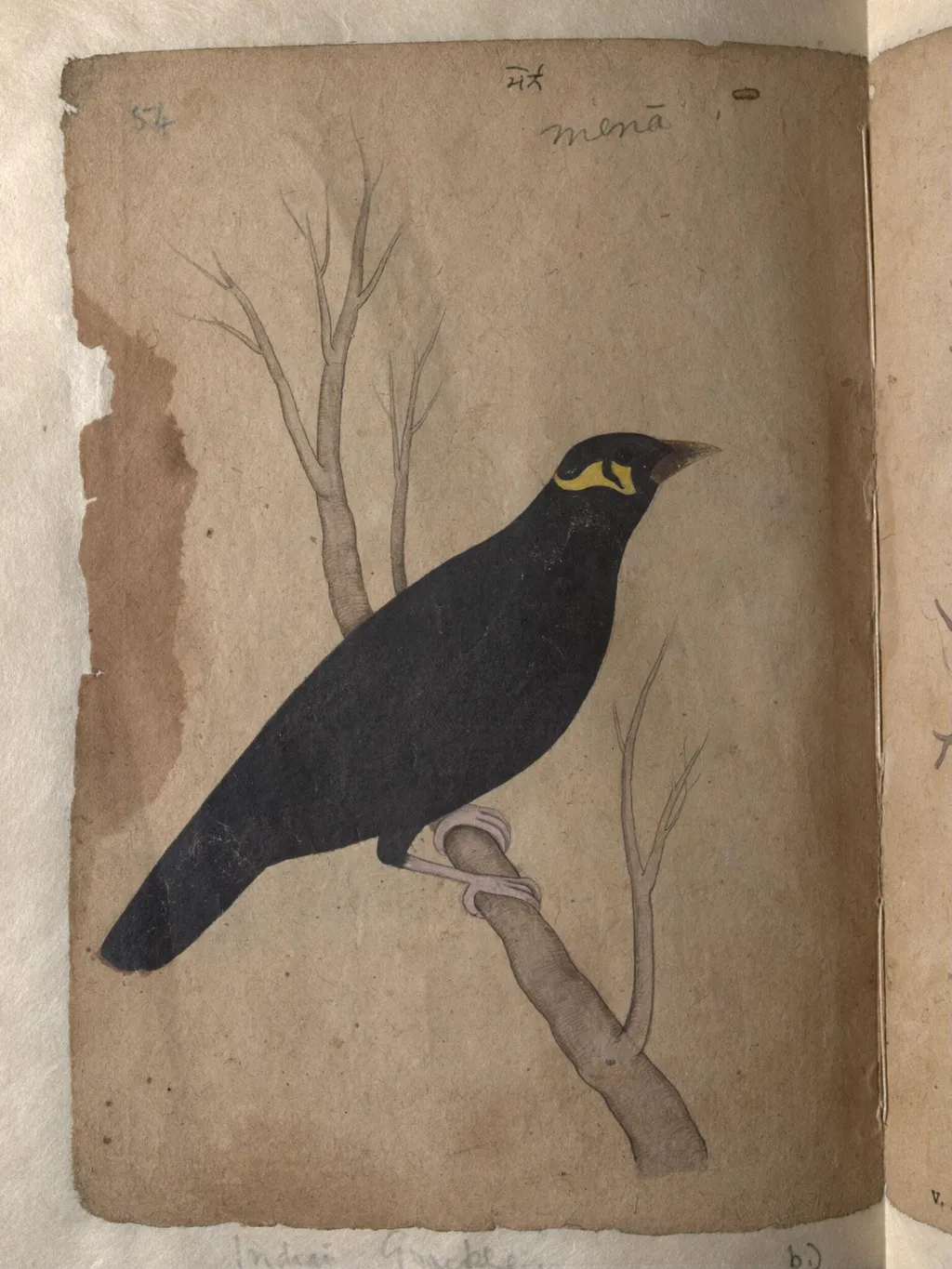
Depictions of a Domestic pigeon and Indian grackle of Northern India is a paint painting by the Patna School of Painting artist Unknown. It dates from 1820 and is held in the collection of the Victoria and Albert Museum. Two watercolor studies from 1820 portray a domestic pigeon and an Indian grackle, both native to northern India.
About this work
This painting shows two birds side by side: a gray pigeon and a dark grackle with a long tail.
This painting shows two birds side by side: a gray pigeon and a dark grackle with a long tail. The artist used soft brushes to paint fine feathers and shadows. Notice how the grackle’s glossy black neck stands out against the muted colors.
These birds aren’t just decorative—they’re real species from northern India. The artist worked around 1820, when British collectors often asked for pictures like this.
Look up this painting at the Victoria and Albert Museum.
Overview
Two watercolor studies from 1820 portray a domestic pigeon and an Indian grackle, both native to northern India. Executed by an unidentified artist, the works were created as naturalistic observations rather than decorative pieces. They entered the Victoria and Albert Museum’s collection in 1929 through a donation by Robert Scott Greenshields, a former British civil servant with long service in Bengal and Assam.
Subject & Meaning
The birds are depicted with scientific precision, emphasizing their physical traits rather than symbolic meaning. The pigeon’s muted gray plumage contrasts with the grackle’s iridescent black neck and elongated tail, highlighting differences in species and habitat. These images reflect a period when British officials in India documented local fauna, often for private or institutional study rather than public display.
Technique & Style
The artist employed delicate watercolor washes and fine brushwork to render individual feathers and subtle gradations of light. Shadows are softly modeled to suggest volume without heavy outlines. The grackle’s glossy neck catches the light with a restrained sheen, while the pigeon’s feathers are rendered in muted tones, creating a quiet tonal harmony that prioritizes accuracy over ornamentation.
History & Provenance
Created around 1820, the paintings remained in private hands until 1929, when Robert Scott Greenshields, who served in the Indian Civil Service from 1879 to 1910, donated them to the Victoria and Albert Museum. His collection likely included other natural history studies gathered during his time in India, reflecting a broader trend among colonial administrators of documenting regional biodiversity.
Context
During the early 19th century, British residents in India frequently commissioned local artists to record native flora and fauna. These works served as visual records for scientific interest, personal curiosity, or colonial documentation. The absence of human figures or landscape elements focuses attention on the birds as specimens, aligning with emerging practices in natural history illustration.
Legacy
These studies contribute to a body of colonial-era naturalist art that preserved visual records of species now subject to environmental change. Their quiet realism offers insight into the methods and priorities of early biological observation in South Asia. Though unsigned, they remain valuable as examples of skilled, unadorned observation from a period when art and science often intersected in colonial contexts.
Artist & collection

 Domestic Scene
 Giacomo and Cardinal Marco, investing Andrea, Abbot of San Zeno, with his Benefice
 The Nymph of Fontainebleau
 Portrait of a Woman
 Madonna and Child with Saints in the Enclosed Garden
 Venus and Minerva
 Family Group of Four on Sofa
 Wall painting from Room H of the Villa of P. Fannius Synistor at Boscoreale
 Depictions of a Indian spotted dove and a Common Indian wood-shrike of Northern India
 Depictions of a Bengal green pigeon and a Plumbeous redsatart of Northern India
 Depictions of white-cheeked bulbul and a Himalayan starling of Northern India
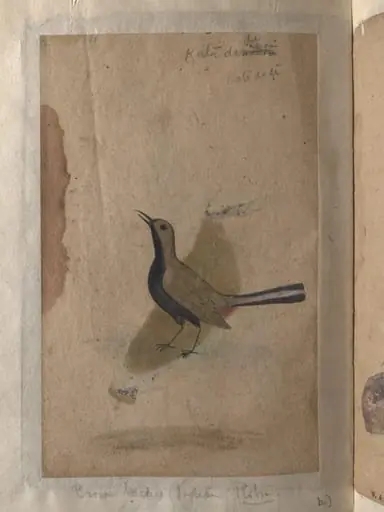 Depictions of a India pitta and Brown-backed Indian robin of Northern India
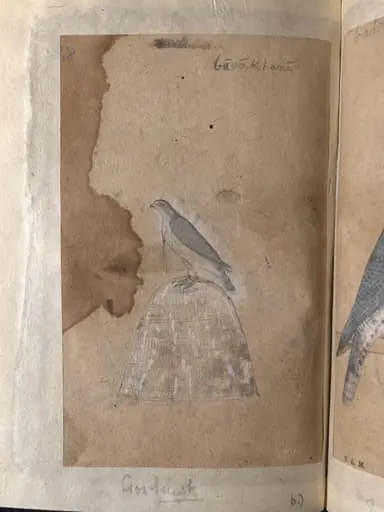 Depictions of a Bronze-winged dove and a Goshawk of Northern India
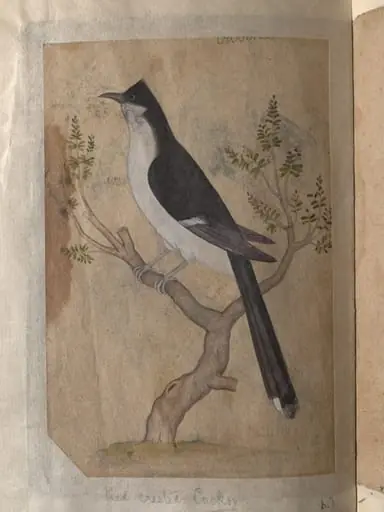 Depictions of a Indian fruit-bat and Pied crested cuckoo of Northern India
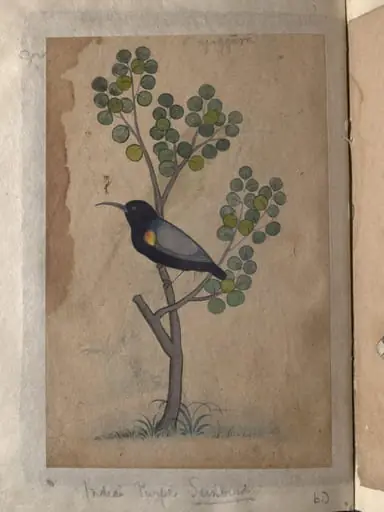 Depictions of a common Indian bee-eater and a Indian purple sunbird of Northern India
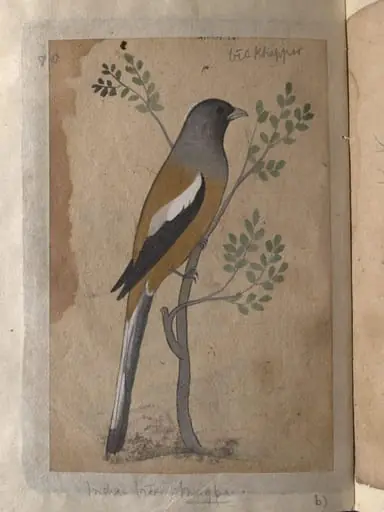 Depictions of a Grey partridge and a Indian tree-pie of Northern India
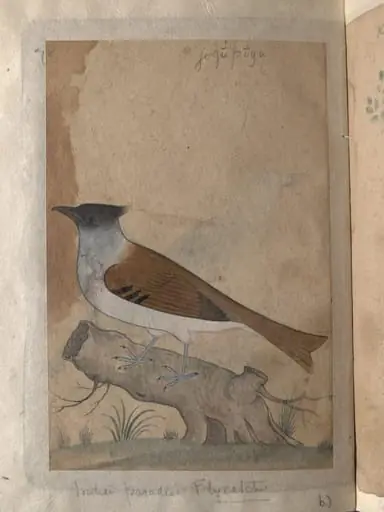 Depictions of Indian house crow and a Indian paradise flycatcher of Northern India
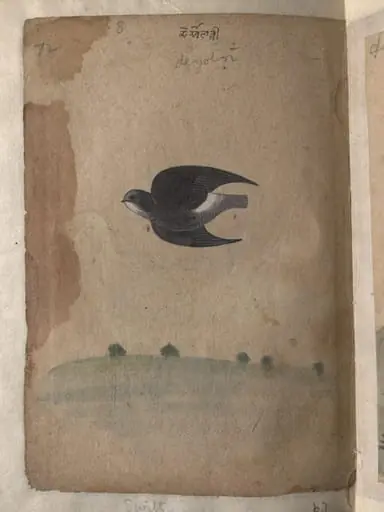 Depictions of a Green pigeon (?) and a Common house-swift of Northern India
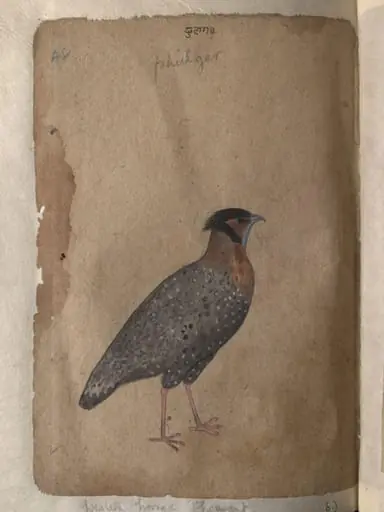 Depictions of Impeyan pheasant (male) and a Western horned pheasant of Northern India
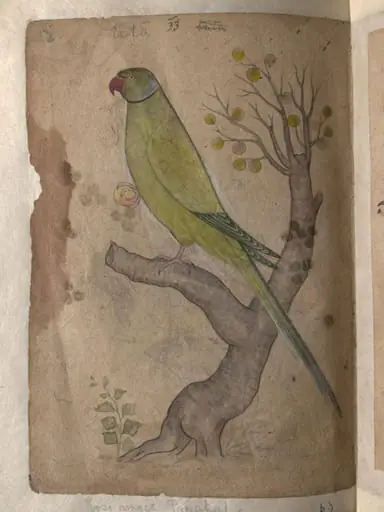 Depictions of Striated scops owl and Rose-ringed parakeet of Northern India