Artwork
Depictions of a Green pigeon (?) and a Common house-swift of Northern India
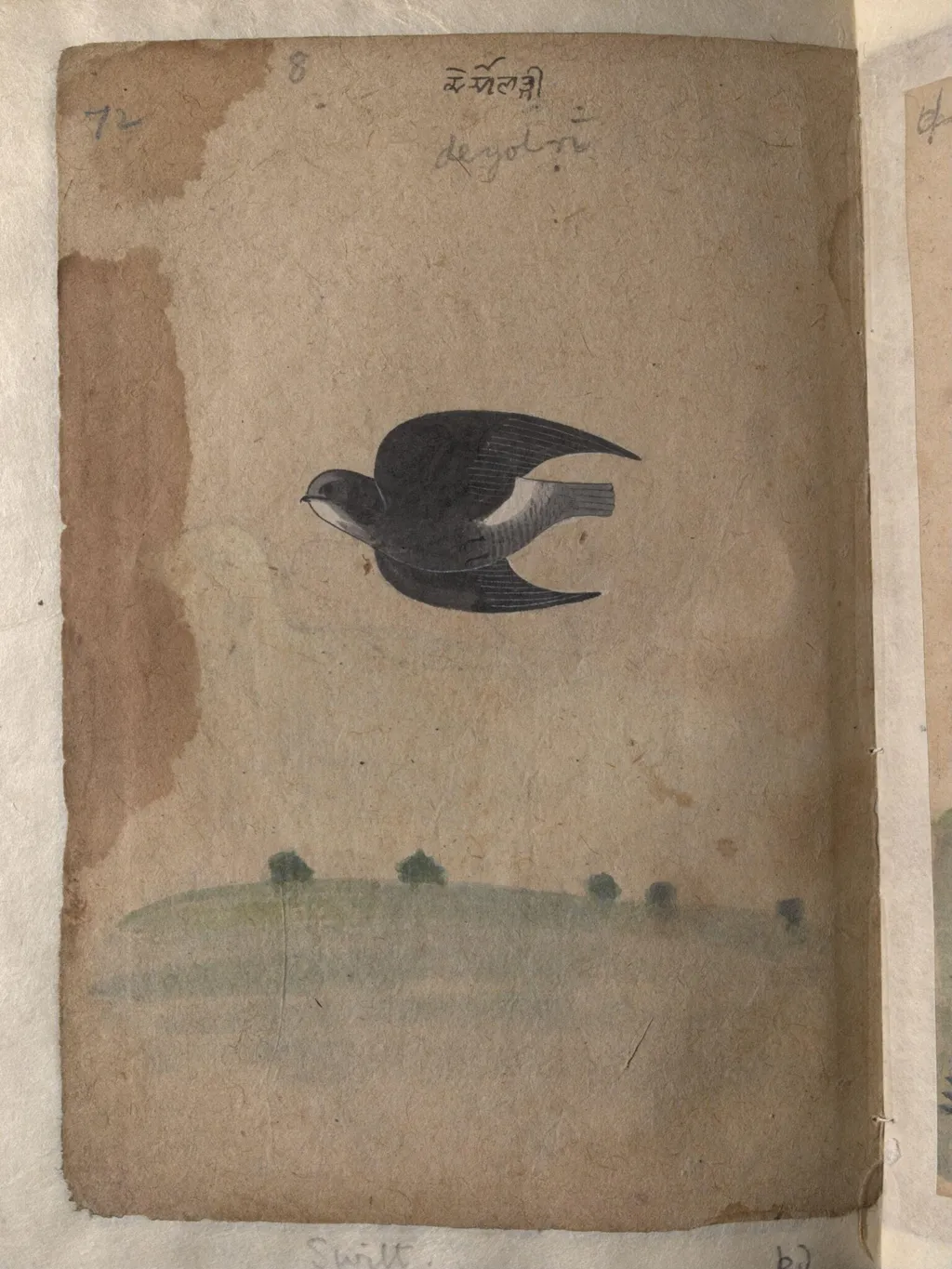
Depictions of a Green pigeon (?) and a Common house-swift of Northern India is a paint painting by the Patna School of Painting artist Unknown. It dates from 1820 and is held in the collection of the Victoria and Albert Museum. Two watercolor illustrations from 1820 portray a green pigeon and a common house-swift native to northern India.
About this work
Overview
Two watercolor illustrations from 1820 portray a green pigeon and a common house-swift native to northern India.
Two watercolor illustrations from 1820 portray a green pigeon and a common house-swift native to northern India. These works were part of a natural history collection assembled during British colonial administration. In 1929, they were donated to a public institution by Robert Scott Greenshields, a former civil servant with decades of service in Bengal and Assam, reflecting a broader trend of colonial-era documentation of regional fauna.
Subject & Meaning
The images focus on two bird species observed in the wilds of northern India. The house-swift is rendered in flight, its elongated tail and spread wings captured with minimal detail, while the green pigeon is suggested through a faint green hue. These depictions serve as observational records rather than symbolic representations, emphasizing accuracy over artistic flourish, consistent with scientific documentation practices of the period.
Technique & Style
Executed in watercolor on paper, the illustrations employ light washes and restrained linework. The background is left largely blank, with only a subtle horizontal line hinting at distant hills and sparse vegetation. The birds are outlined with precision but lack ornamental detail, prioritizing clarity and identification. The paper shows signs of age, with fading and wear consistent with decades of handling and storage.
History & Provenance
Created around 1820, the illustrations were likely produced by an unnamed artist working under colonial patronage. They remained in private hands until 1929, when Robert Scott Greenshields, who had served in the Indian Civil Service from 1879 to 1910, donated them to a public collection. His donation aligns with a wider movement of British officials transferring ethnographic and natural history materials to institutional archives.
Context
These works emerged during a period when British administrators and naturalists systematically recorded India’s biodiversity. Artists employed by colonial surveys produced such images to support scientific classification, often with limited resources and direct field observation. The faint script near the top, likely in a local language or early transliteration, suggests an attempt at labeling species for scholarly use, though much of the text remains illegible.
Legacy
The illustrations contribute to a historical archive of South Asian ornithology, offering insight into early methods of biological documentation. Though not widely exhibited, they remain part of institutional collections that preserve colonial-era scientific practices. Their modest execution underscores the functional intent behind such works—recording nature for study, not display.
Artist & collection

 Domestic Scene
 Giacomo and Cardinal Marco, investing Andrea, Abbot of San Zeno, with his Benefice
 The Nymph of Fontainebleau
 Portrait of a Woman
 Madonna and Child with Saints in the Enclosed Garden
 Venus and Minerva
 Family Group of Four on Sofa
 Wall painting from Room H of the Villa of P. Fannius Synistor at Boscoreale
 Depictions of a Indian spotted dove and a Common Indian wood-shrike of Northern India
 Depictions of a Bronze-winged dove and a Goshawk of Northern India
 Depictions of Indian house crow and a Indian paradise flycatcher of Northern India
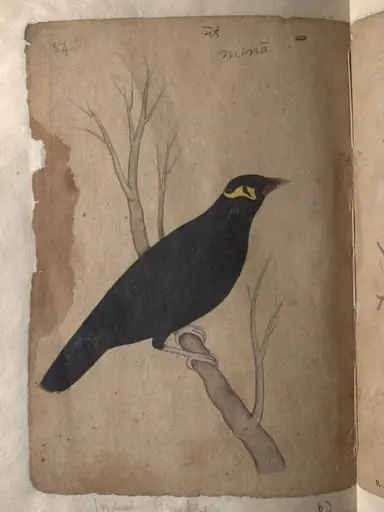 Depictions of a Domestic pigeon and Indian grackle of Northern India
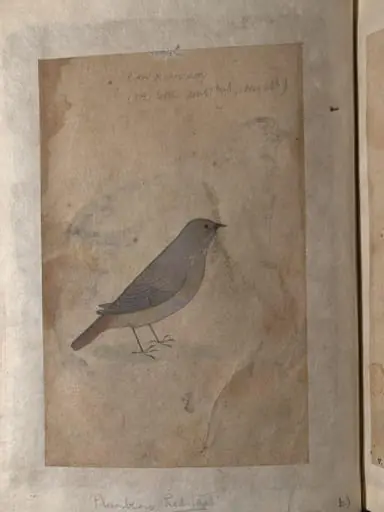 Depictions of a Bengal green pigeon and a Plumbeous redsatart of Northern India
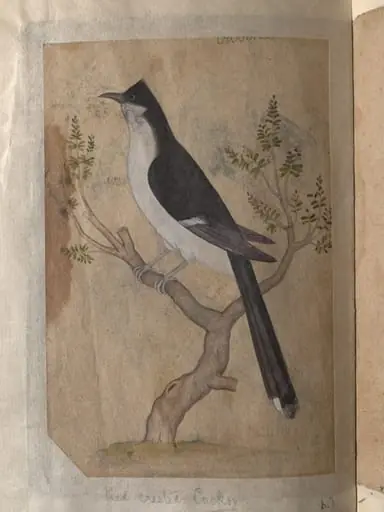 Depictions of a Indian fruit-bat and Pied crested cuckoo of Northern India
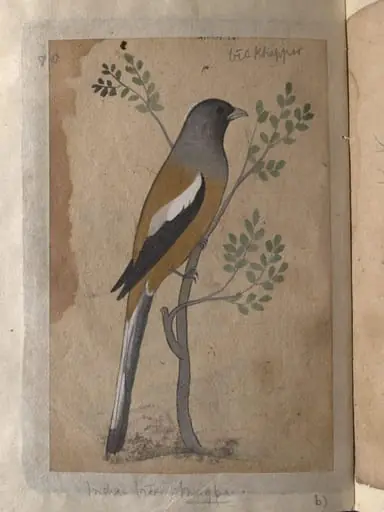 Depictions of a Grey partridge and a Indian tree-pie of Northern India
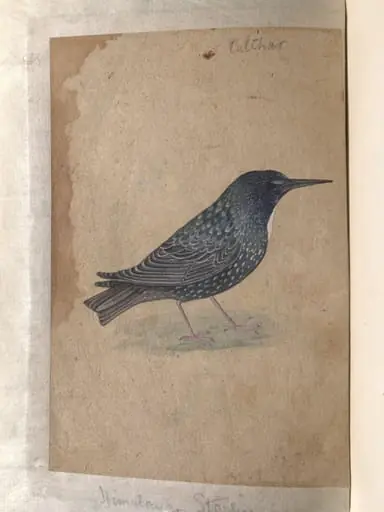 Depictions of white-cheeked bulbul and a Himalayan starling of Northern India
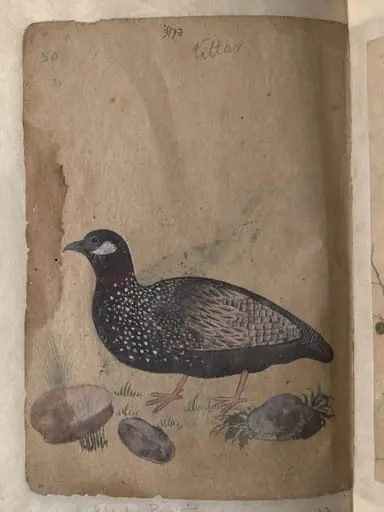 Depictions of Common (or grey) quail and a Black partridge of Northern India
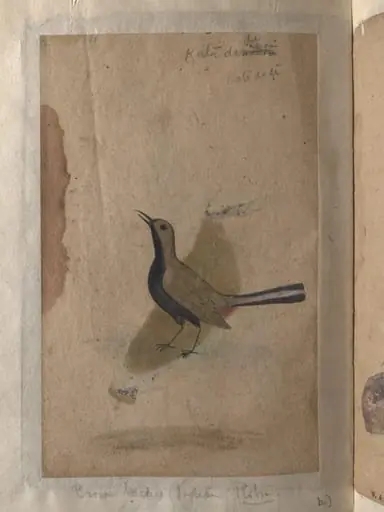 Depictions of a India pitta and Brown-backed Indian robin of Northern India
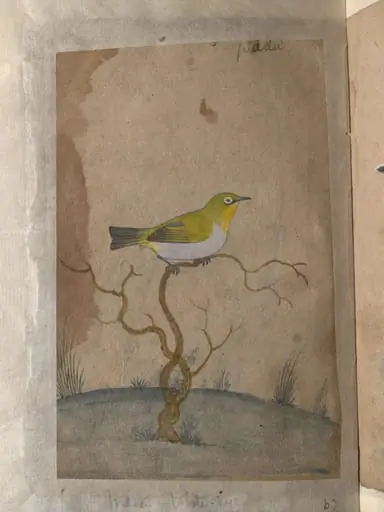 Depictions of a Indian spotted owlet and a Indian white-eye of Northern India
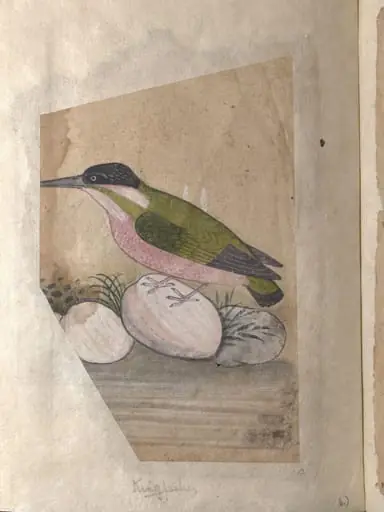 Depictions of a Plumbeous redstart and a Kingfisher of Northern India