Artwork
Desen în peniță „Ceaușescu și poporul”. Desenul îl prezintă pe Nicolae Ceaușescu în două ipostaze. În partea de jos depunând jurîmântul în calitate de președinte al RSR înconjurat de oamenii muncii. În partea de sus Nicolae Ceaușescu înconjurat de tineri, oamenii muncii și militari. Comandat de Consiliul Culturii și Educației Socialiste Ilfov, 31 ianuarie 1978.
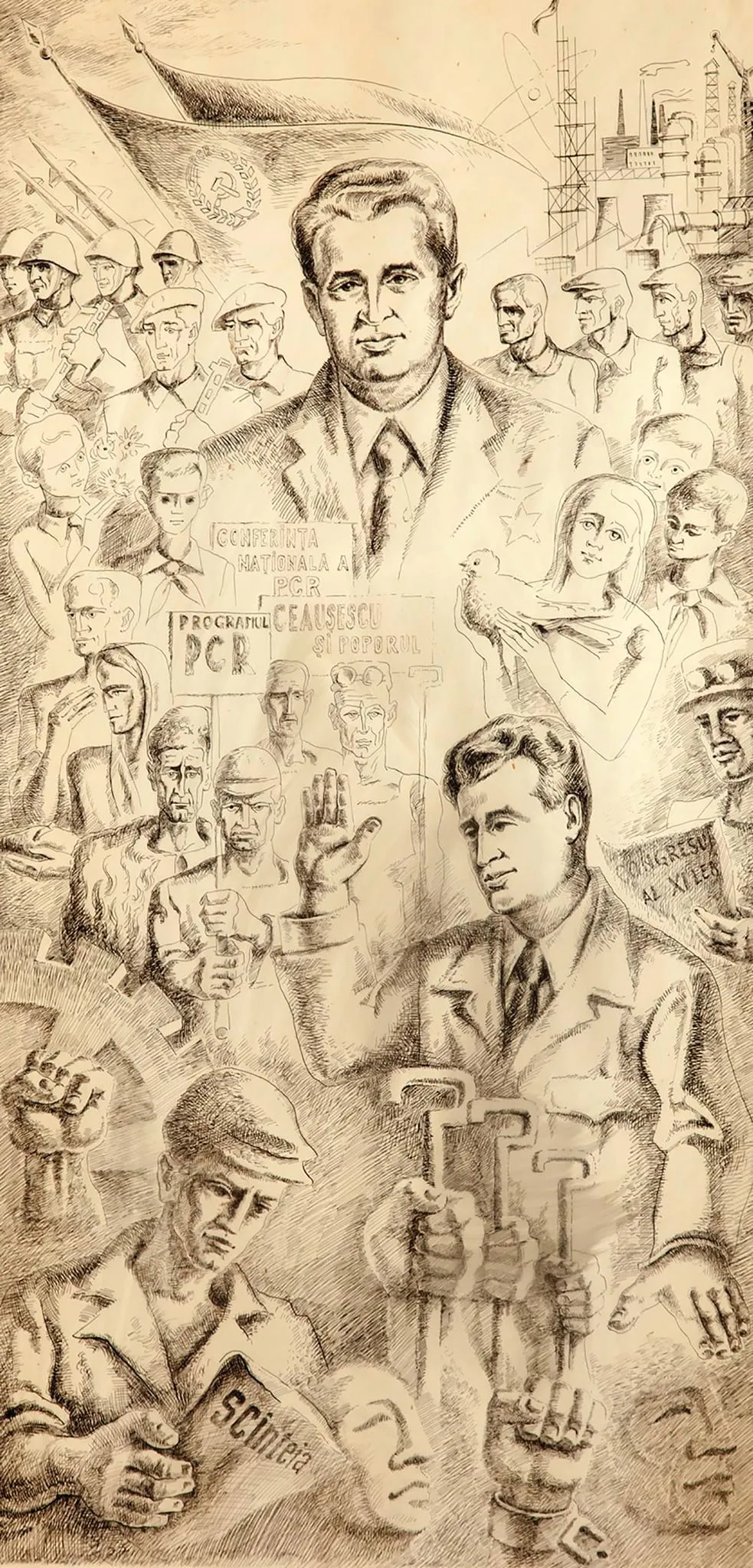
Desen în peniță „Ceaușescu și poporul”. Desenul îl prezintă pe Nicolae Ceaușescu în două ipostaze. În partea de jos depunând jurîmântul în calitate de președinte al RSR înconjurat de oamenii muncii. În partea de sus Nicolae Ceaușescu înconjurat de tineri, oamenii muncii și militari. Comandat de Consiliul Culturii și Educației Socialiste Ilfov, 31 ianuarie 1978. is a print by Unknown. It dates from 1850 and is held in the collection of the National Museum of Romanian History.
About this work
Overview
The work is a pen drawing titled “Ceaușescu și poporul,” created on 31 January 1978 under the direction of the Council of Culture and Socialist Education in Ilfov. It presents two large portrait-like images of Nicolae Ceaușescu, each placed within a distinct crowd of workers, soldiers and civilians, reflecting the official narrative of his relationship with the Romanian people.
Subject & Meaning
In the lower register, Ceaușescu is shown taking the oath of office as president of the Romanian Socialist Republic, encircled by laborers who symbolize the proletarian base of the state. The upper register depicts the same leader amid youths, additional workers and military personnel, suggesting a broader claim of unity between the party, the armed forces and the younger generation.
Technique & Style
Executed in pen, the drawing relies on loose, gestural lines that give it a sketch‑like quality rather than a finished illustration. The figures are rendered with minimal detail, emphasizing collective presence over individual features, while the repeated central figure creates a visual echo that reinforces the propagandistic message.
History & Provenance
Commissioned by the local cultural authority of Ilfov in early 1978, the piece was intended for display within socialist educational contexts. Its provenance remains tied to state‑sponsored visual programs of the late Ceaușescu era, and it now resides in the museum’s collection of political ephemera, serving as a documentary example of official art from that period.
Artist & collection

 Domestic Scene
 Giacomo and Cardinal Marco, investing Andrea, Abbot of San Zeno, with his Benefice
 The Nymph of Fontainebleau
 Portrait of a Woman
 Madonna and Child with Saints in the Enclosed Garden
 Venus and Minerva
 Family Group of Four on Sofa
 Wall painting from Room H of the Villa of P. Fannius Synistor at Boscoreale
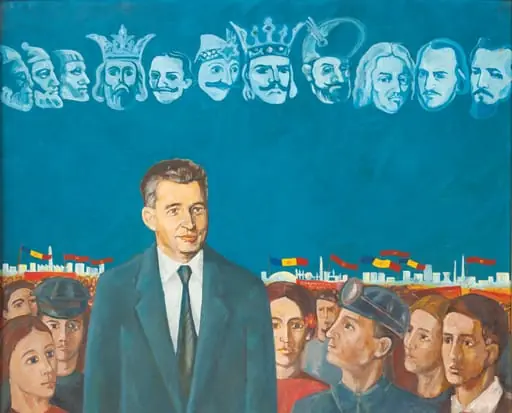 Tablou, ulei pe pânză, „Omagiu”, nesemnat. Nicolae Ceaușescu este prezentat în mijlocul oamenilor muncii vegheat de ”fantomele” eroilor neamului : Burebista, Decebal, Traian, Mircea cel Bătrân, Iancu de Hunedoara, Vlad Țepeș, Ștefan cel Mare, Mihai Viteazul, Dimitrie Cantemir, Nicolae Bălcescu, Alexandru Ioan Cuza (de la stânga la dreapta). Comandat și oferit de Comitetul Județean de Partid Tulcea, 22 ianuarie 1978.
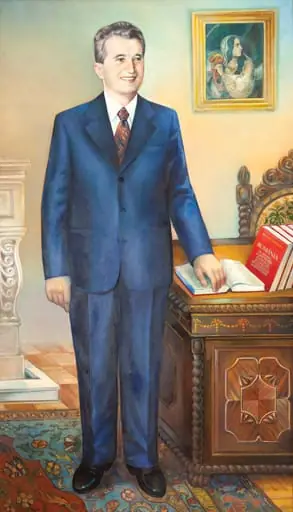 Tablou ulei pe pânză, portret Nicolae Ceaușescu, semnat în partea dreaptă jos Romulus Constantinescu, datat 1983. Nicolae Ceaușescu este reprezentat într-un costum albastru metalizat, stând în picioare lângă biroul său cu mâna pe unul din volumele lucrării ”România pe calea construirii societății socialiste multilateral dezvoltate”. Pe peretele din spatele său ”România Revoluționară” a lui C.D.Rosenthal. Comandat și oferit de Comitetul Județean de Partid Argeș (1983).
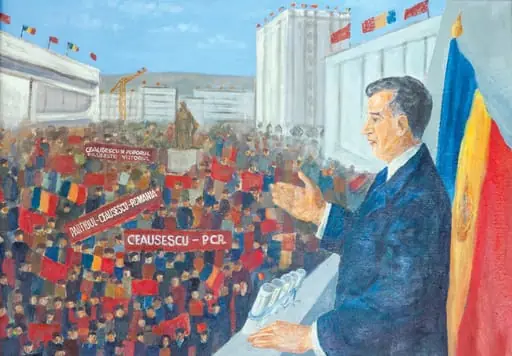 Tablou, ulei pe pânză, „Adunarea populară din Vaslui, iulie 1975”. Realizat de Cercul de Artă Plastică „Arta Vaslui”. Nicolae Ceaușescu vorbește de la balcon oamenilor muncii adunați în centrul civic din Vaslui. Se distinge statuia lui Ștefan cel Mare. Oamenii muncii flutură steaguri și pancarte (”Ceaușescu PCR”, ”Partidul - Ceaușescu - România”, ”Ceaușescu și Poporul Făurește Viitorul”. Oferit de Comitetul Județean de Partid Vaslui, 23 ianuarie 1978.
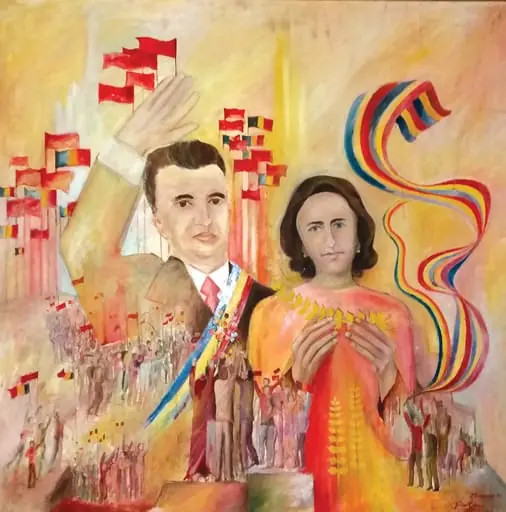 Tablou, ulei pe pânză, ”23 August”, nesemnat, atribuit Teodor Cioată. Nicolae și Elena Ceaușescu sunt prezentați în mijlocul mulțimii. Proporțiile reprezentării personajelor principale, soții Ceaușescu, nu sunt respectate de către artist - capetele sunt prea mari, la fel și mâinile care sunt ținute în poziții nefirești. În partea de jos a tabloului oameni ai muncii cu steaguri ovaționând. Tablou oferit de autor, Iași, august 1974.
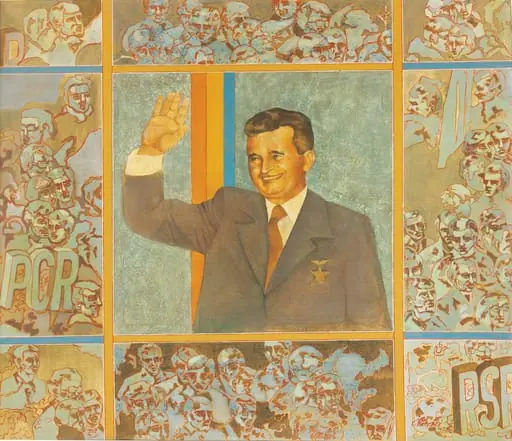 Tablou, ulei pe pânză, „Portret Nicolae Ceaușescu”, semnat în partea dreaptă jos C.Macavei și datat 1978. Tablou împărțit în mai multe registre, în plan central Nicolae Ceaușescu salutând oamenii muncii din celelalte registre. Comandat și oferit de Comitetul Județean de Partid Ilfov, 23 ianuarie 1978.
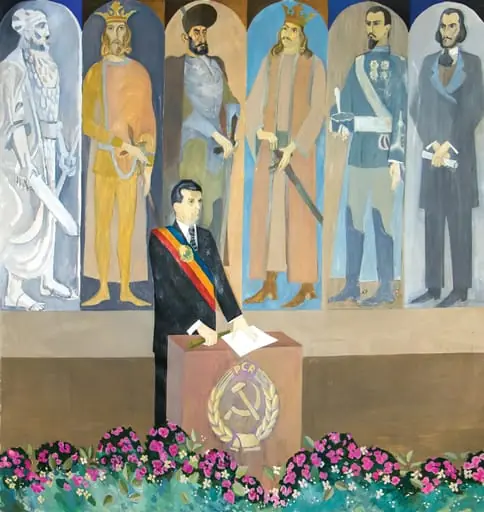 Tablou, ulei pe pânză, ”Omagiu”, semnat Constantin Piliuță. Nicolae Ceaușescu la un pupitru cu însemnele PCR depunând jurământul de învestire; poarte însemnele prezidențiale eșarfa tricoloră cu stema RSR, sceptrul, însemnul de ”Erou al Republicii Socialiste România”. Pe fundal sunt reprezentați Burebista, Mircea cel Bătrân, Mihai Viteazul, Ștefan cel Mare, Alexandru Ioan Cuza, Nicolae Bălcescu, personajele au o mimică solemnă, dau impresia că sunt garanții jurământului pe care-l face Nicolae Ceaușescu. Comandat și oferit lui Nicolae Ceaușescu de Consiliul Culturii și Educației Socialiste, ianuarie 1978.