Artwork
Design for a Ceiling: Mars and Aries
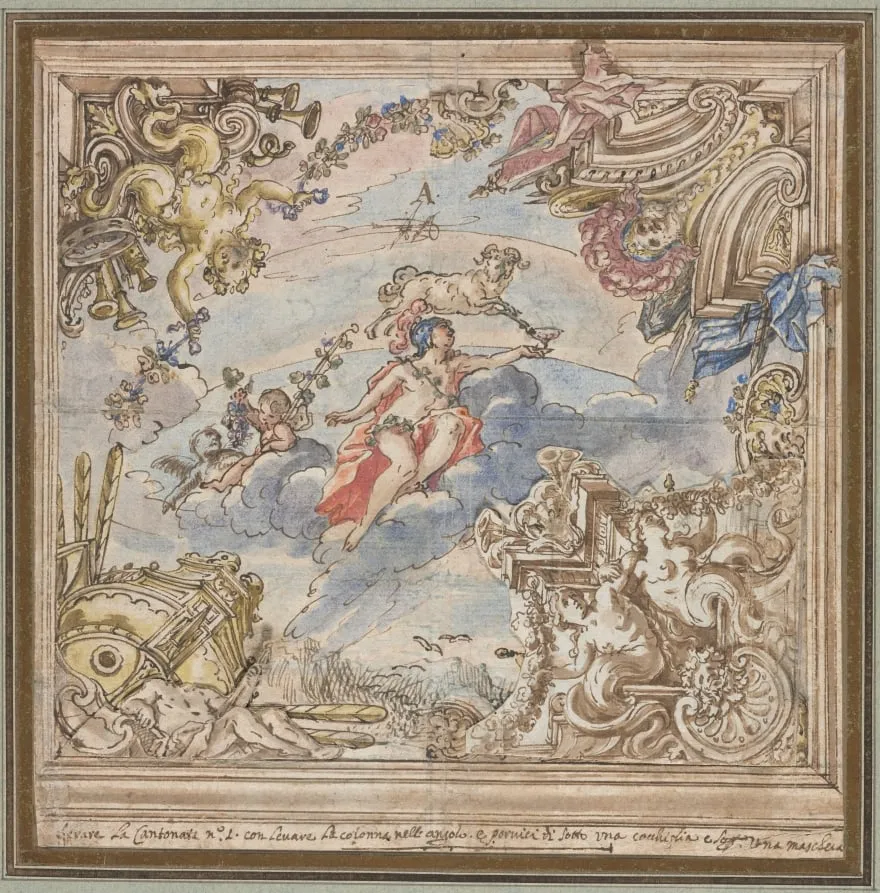
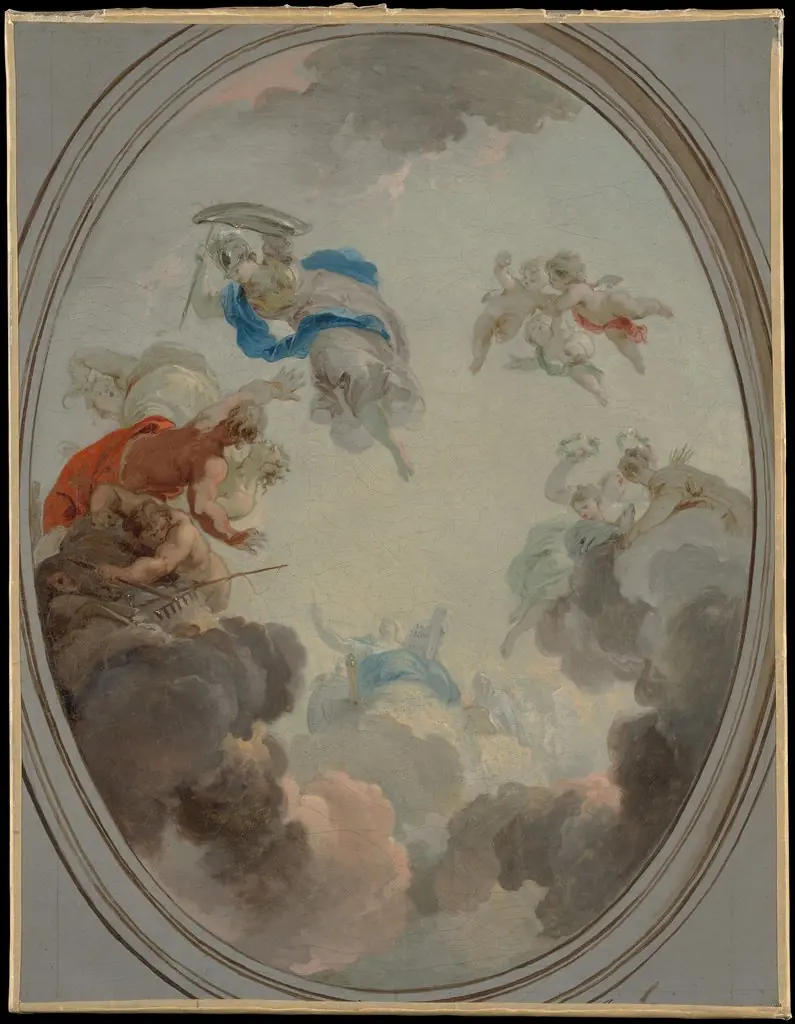
Design for a Ceiling: Mars and Aries is a drawing by the Baroque artist Unknown. It dates from 1704 and is held in the collection of the Cleveland Museum of Art.
About this work
Overview
The work, titled “Design for a Ceiling: Mars and Aries,” is a drawing that depicts a floating female figure amid a sky of clouds. She is dressed in a vivid red garment, her hair rendered in blue, and is surrounded by cherubic figures playing a drum and a horn. The composition is set against a pale blue backdrop punctuated with airy cloud formations.
Subject & Meaning
The central female figure appears to be in motion, suggesting a dance or ascent, while the surrounding cherubs engage with musical instruments, creating a lively, celebratory atmosphere. The inclusion of Mars and Aries in the title hints at an allegorical connection to the god of war and the zodiac sign, though the visual narrative focuses on movement and festivity.
Technique & Style
Executed in the Baroque idiom, the drawing employs strong contrasts of light and shadow to heighten drama. The dynamic poses, swirling clouds, and energetic gestures reflect the period’s emphasis on emotional intensity and theatrical composition.
History & Provenance
Identified as a preparatory design for a ceiling decoration, the piece likely served as a schematic for a larger fresco or mural. Its attribution to the Baroque era situates it within the broader practice of artists producing detailed sketches before executing monumental works.
Context
Baroque art frequently explored mythological and allegorical subjects, using movement and chiaroscuro to convey narrative vigor. This drawing aligns with those conventions, integrating celestial motifs and musical symbolism common in decorative ceiling programs of the time.
Artist & collection

 Domestic Scene
 Giacomo and Cardinal Marco, investing Andrea, Abbot of San Zeno, with his Benefice
 The Nymph of Fontainebleau
 Portrait of a Woman
 Madonna and Child with Saints in the Enclosed Garden
 Venus and Minerva
 Family Group of Four on Sofa
 Wall painting from Room H of the Villa of P. Fannius Synistor at Boscoreale
 Design for the Ceiling of the Salon of the Palazzo Spinola, Genoa
 Studies of Aurora and Apollo
 Minerva commending the arts of sculpture, architecture, painting and music to Jupiter
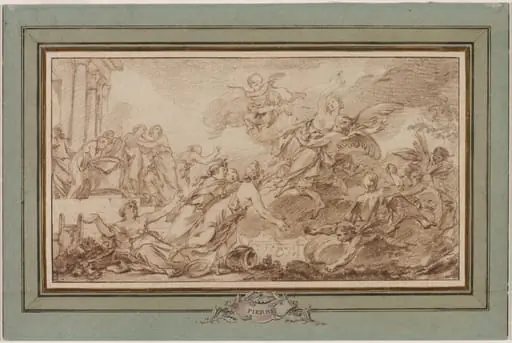 Boreas Abducting Oreithyia
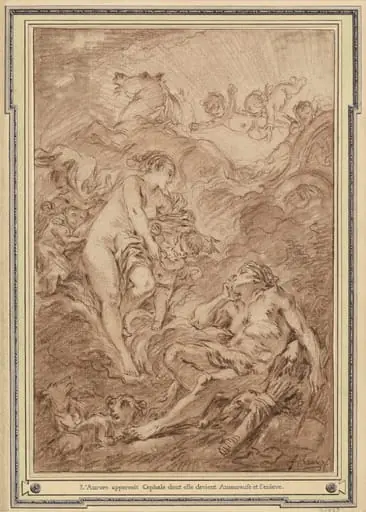 Aurora and Cephalus
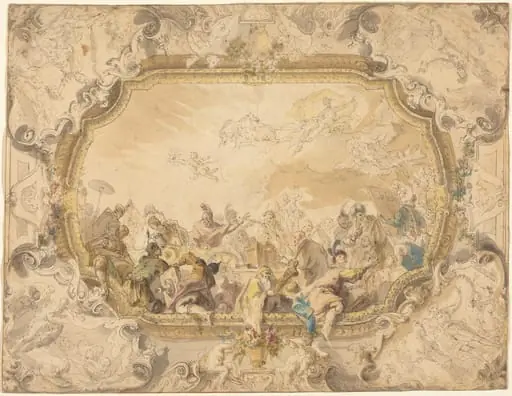 A Ceiling with Apollo Presiding over Military and Historical Learning
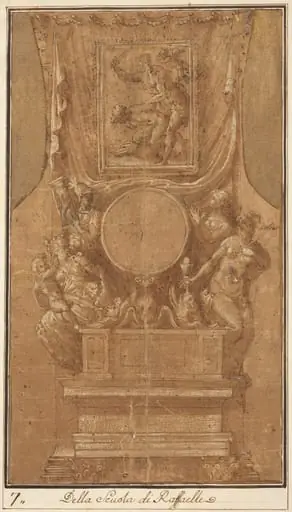 Design for an Altar
 The Incantation of Medea
 The Resurrection
 Allegory of dawn
 Preliminary design for the ceiling of the Upper Hall at Greenwich
 Allegory of Government: Wisdom Defeating Discord