Artwork
The Incantation of Medea
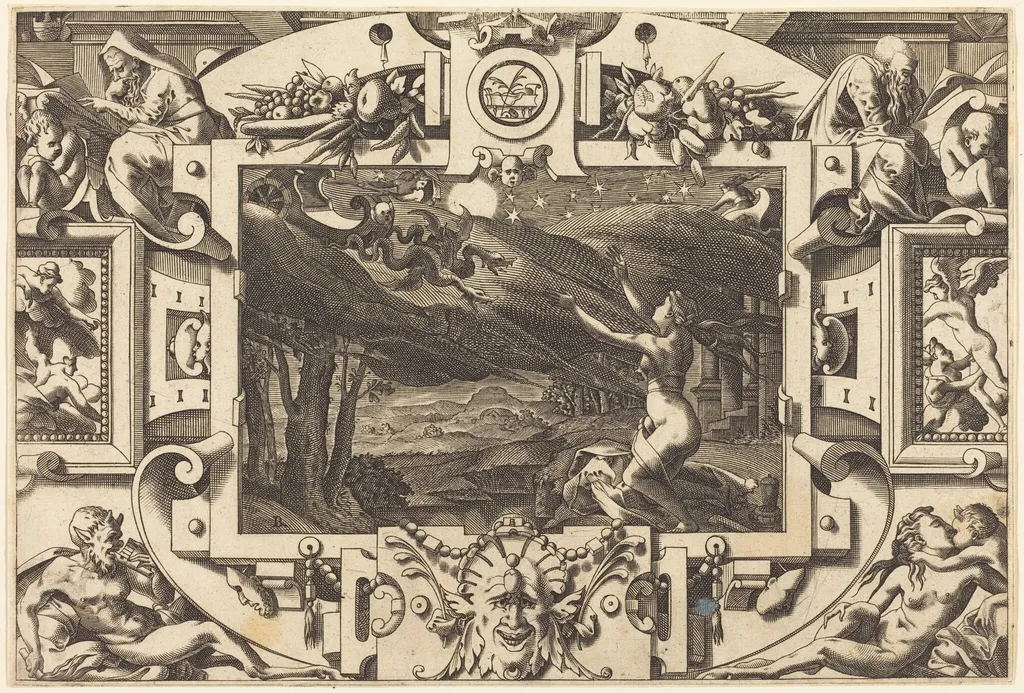
The Incantation of Medea is an ink print by the Renaissance artist René Boyvin. It dates from 1563 and is held in the collection of the National Gallery of Art.
About this work
Overview
The Incantation of Medea is a 1563 engraving on laid paper by René Boyvin, characterized by a densely populated composition of surreal and dynamic elements.
Subject & Meaning
At the center, a woman, presumably Medea, stands amidst a dark, haunting forest, her raised arms suggesting spell-casting. Surrounding her are numerous tiny, enigmatic figures—winged beings, tool-wielders, and framed faces—implying a mix of spirits, assistants, and observers, collectively narrating a secondary, intricate storyline.
Technique & Style
The engraving showcases Boyvin's mastery of the medium through its tightly packed, detailed scenes, blending central drama with peripheral, symbolic elements. The interplay of light and dark, achieved through engraving techniques, enhances the haunting, mystical ambiance.
History & Provenance
Created in 1563, the work's provenance and historical context prior to its current location are not detailed in available information, highlighting the need for further research into its historical trajectory.
Context
The Incantation of Medea reflects the Renaissance fascination with classical mythology and the occult, with its visual language drawing from both, yet its unique composition sets it apart as a distinctive interpretation of mythological themes.
Legacy
While specific direct influences are not widely documented, the engraving's blend of the bizarre with meticulous detail contributes to the broader legacy of Renaissance printmaking, inspiring interest in the technical and artistic achievements of the period.
Artist & collection


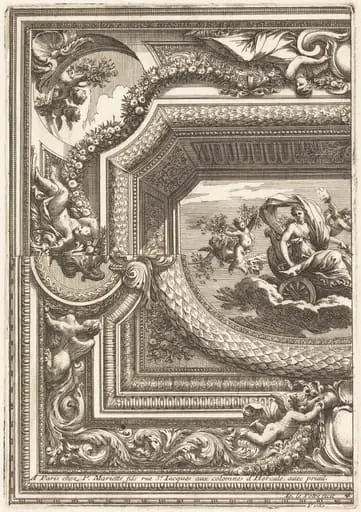 Quarts de plafons
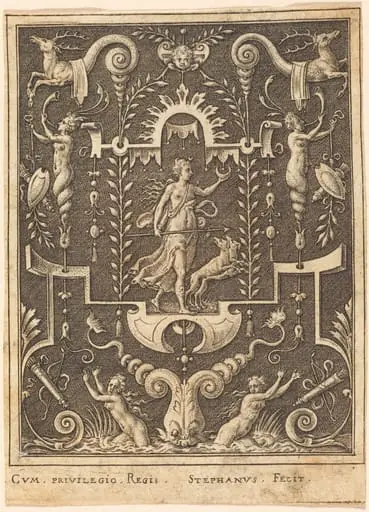 Diana
Diana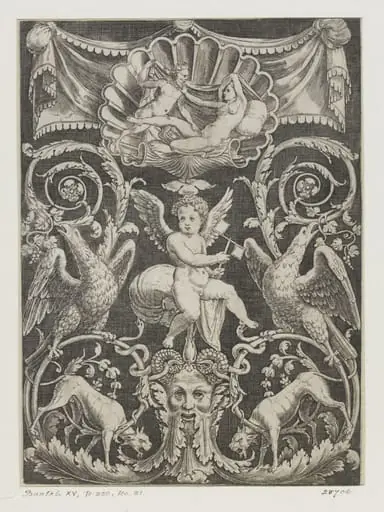 Untitled
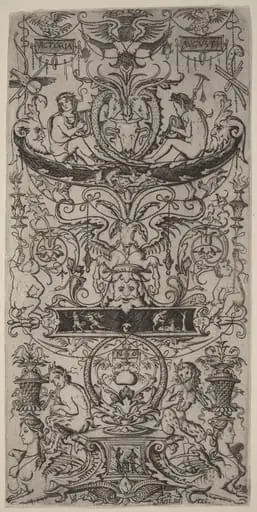 Ornament Panel: Victoria Augusta
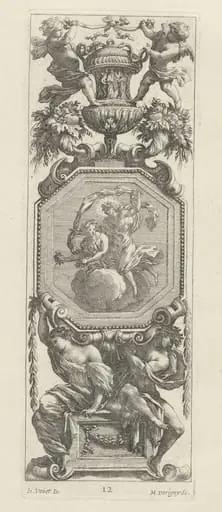 Ornamental Panel Surmounted by Two Putti and a Vase
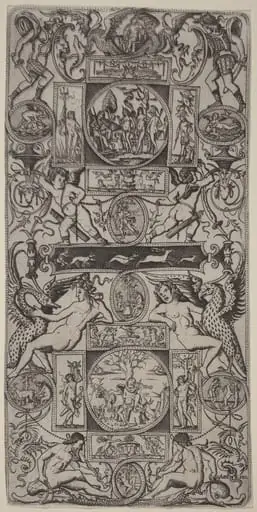 Ornament Panel with Orpheus and the Judgment of Paris
 Ornamental Panel Surmounted by a Winged Harpy
 Pandora Opening Her Box
 Ornament Panel with Orpheus and the Judgment of Paris
 Ornamental Panel with Pan and Two Garland-Bearing Women
 Clovis and Clotilda