Artwork
Devagandhari Ragini
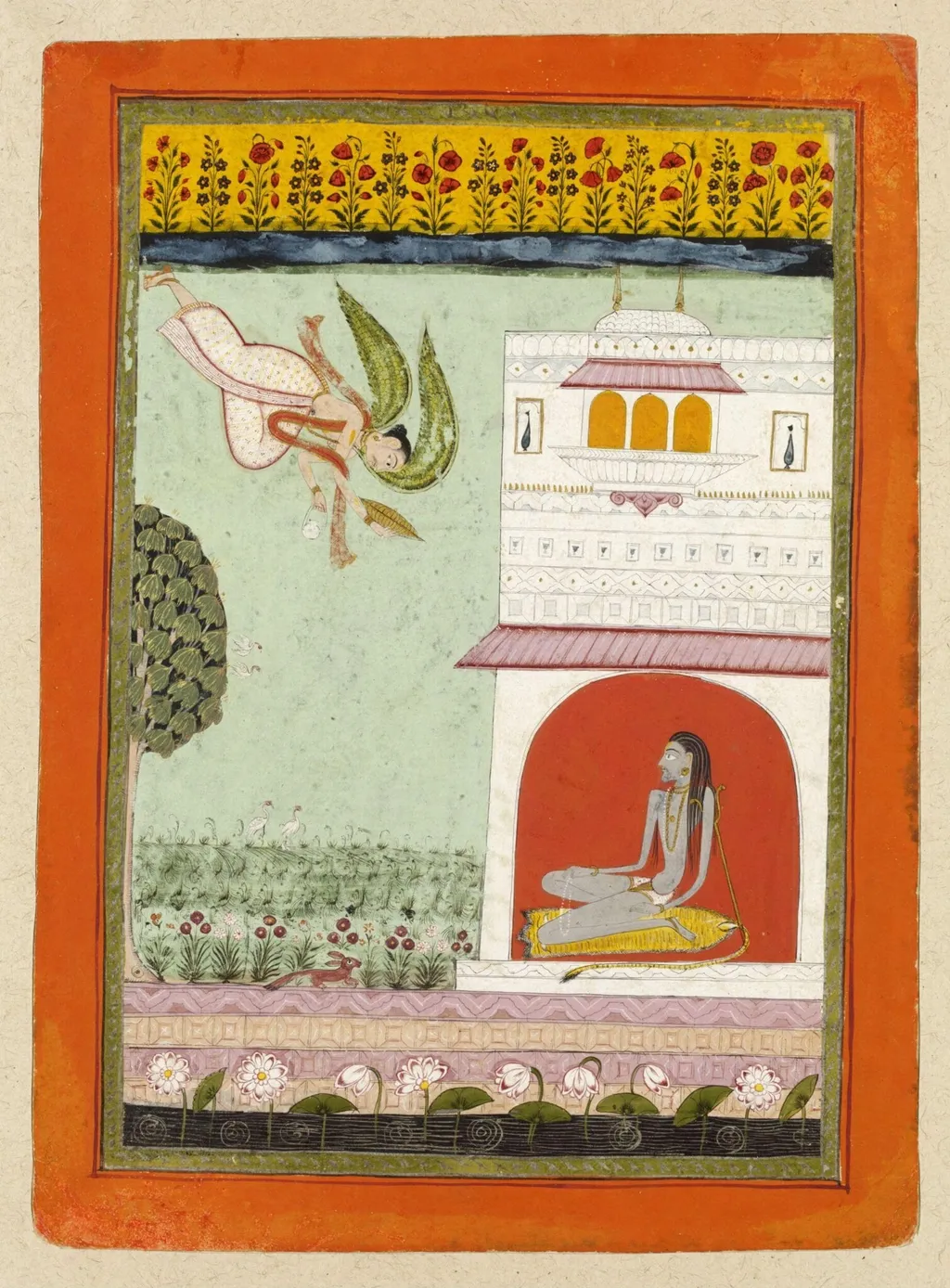
Devagandhari Ragini is a paint painting by the Baroque artist Unknown. It dates from 1680 and is held in the collection of the Victoria and Albert Museum. Created in 1680, this opaque watercolor on paper depicts a contemplative Sadhu seated within a modest chamber.
About this work
Overview
Created in 1680, this opaque watercolor on paper depicts a contemplative Sadhu seated within a modest chamber. Outside, a hare moves through grass, while an angel descends from above, offering food. The composition belongs to a Ragamala series that visualizes the Devagandhari musical mode, and it is linked to a companion piece catalogued as IS.64-1952.
Subject & Meaning
The central figure, a white‑clad Sadhu with a red sash, is positioned cross‑legged on a yellow mat, suggesting meditation or spiritual instruction. The hare and the descending angel introduce elements of nature and divine providence, reinforcing themes of harmony between the earthly and the celestial within the ragamala tradition.
Technique & Style
Executed in opaque watercolor, the artist employs a vivid palette of reds, yellows, and greens to delineate interior space and surrounding landscape. Fine brushwork renders intricate patterns on the walls and the floral border, while contrasting hues create depth, especially in the green foliage and bird‑filled background.
History & Provenance
The work forms part of a larger Ragamala collection that visually interprets Indian musical modes. It is recorded alongside a related painting (IS.64-1952) within the same series, indicating a systematic approach to illustrating each raga’s emotional and visual associations.
Context
Ragamala paintings emerged in the 16th–18th centuries as visual companions to classical Indian music, assigning each raga a narrative scene. Devagandhari, a mode associated with devotion and serenity, is represented here through the meditative Sadhu and the gentle natural motifs.
Artist & collection

 Domestic Scene
 Giacomo and Cardinal Marco, investing Andrea, Abbot of San Zeno, with his Benefice
 The Nymph of Fontainebleau
 Portrait of a Woman
 Madonna and Child with Saints in the Enclosed Garden
 Venus and Minerva
 Family Group of Four on Sofa
 Wall painting from Room H of the Villa of P. Fannius Synistor at Boscoreale
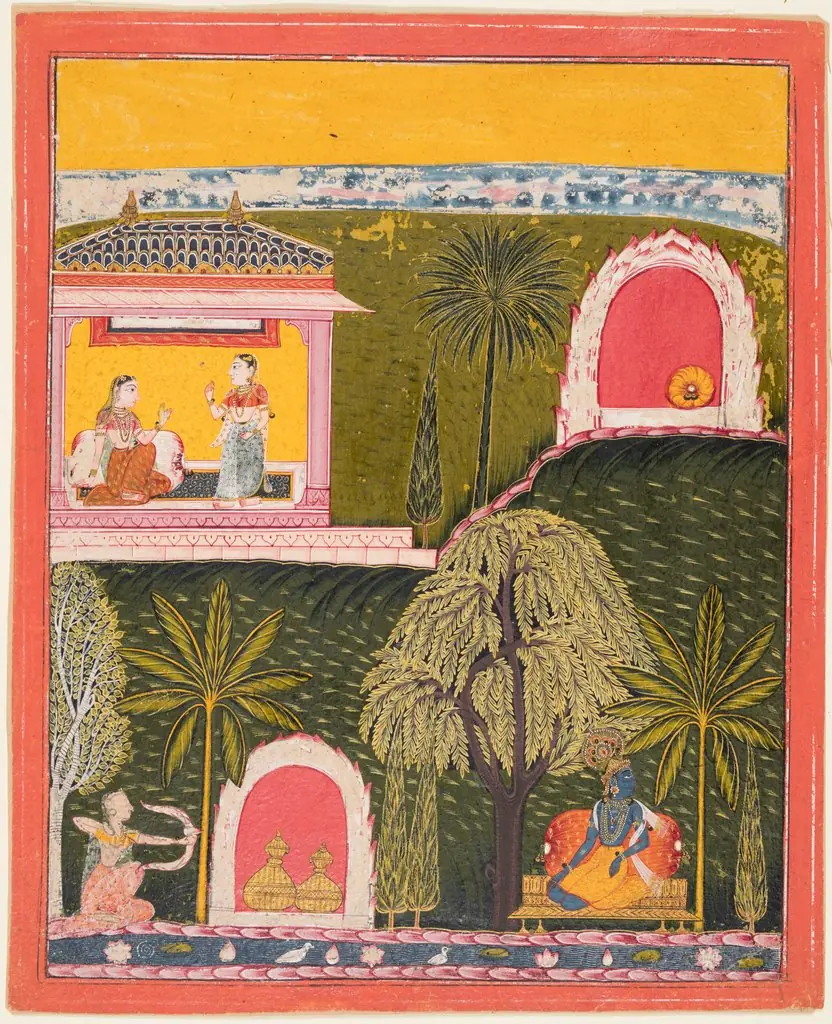 Rati, the Goddess of Erotic Love, Takes Aim at Krishna, from a Rasikapriya
 Rati, the Goddess of Erotic Love, Takes Aim at Krishna, from a Rasikapriya
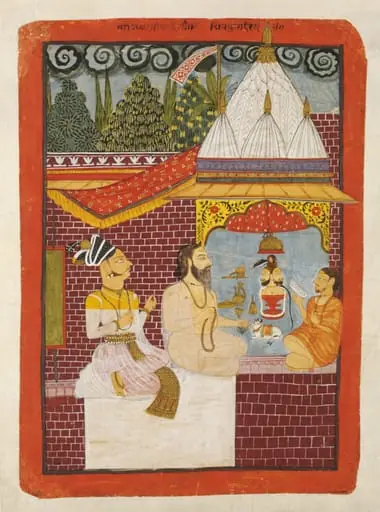 Raja Viram Dev
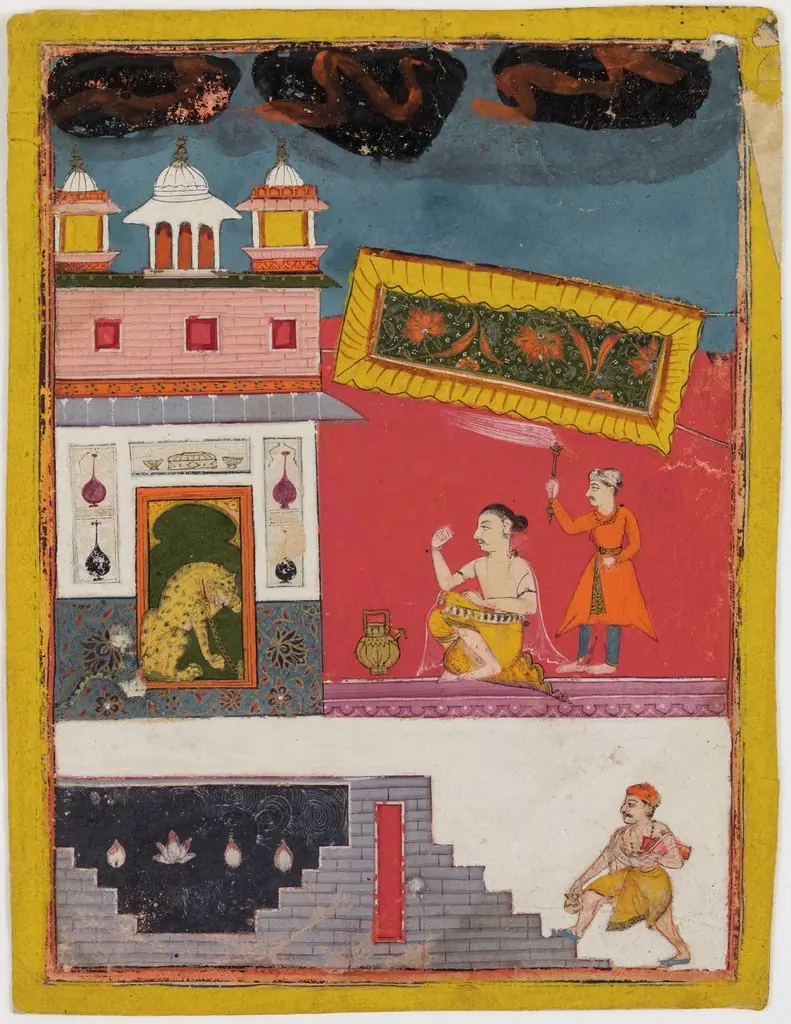 Palace Scene with Cheetah on Chain, Prince and Attendant
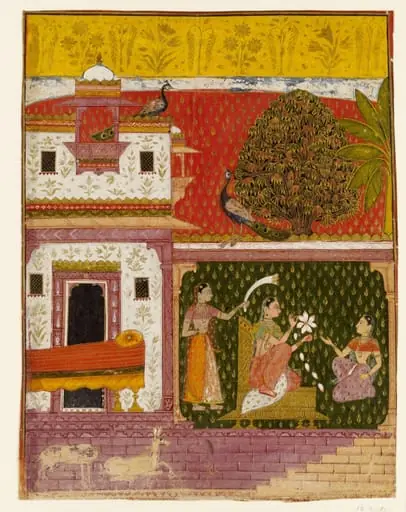 Malasri Ragini
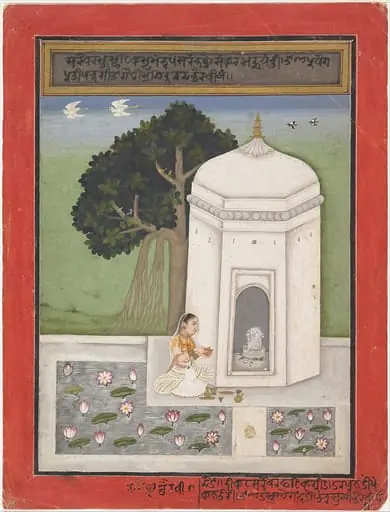 Untitled
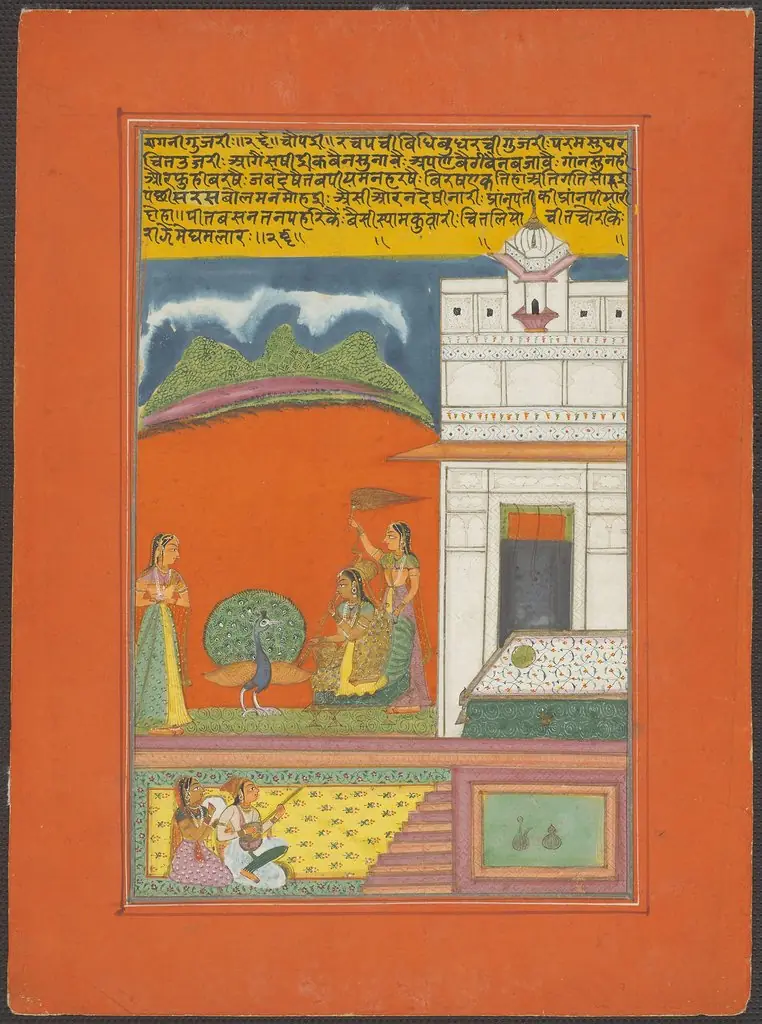 Ragini Gujari, Page from a Jaipur Ragamala Set
 Ragini Kakubha, Page from a Jaipur Ragamala Set