Artwork
Devi and Sindhu
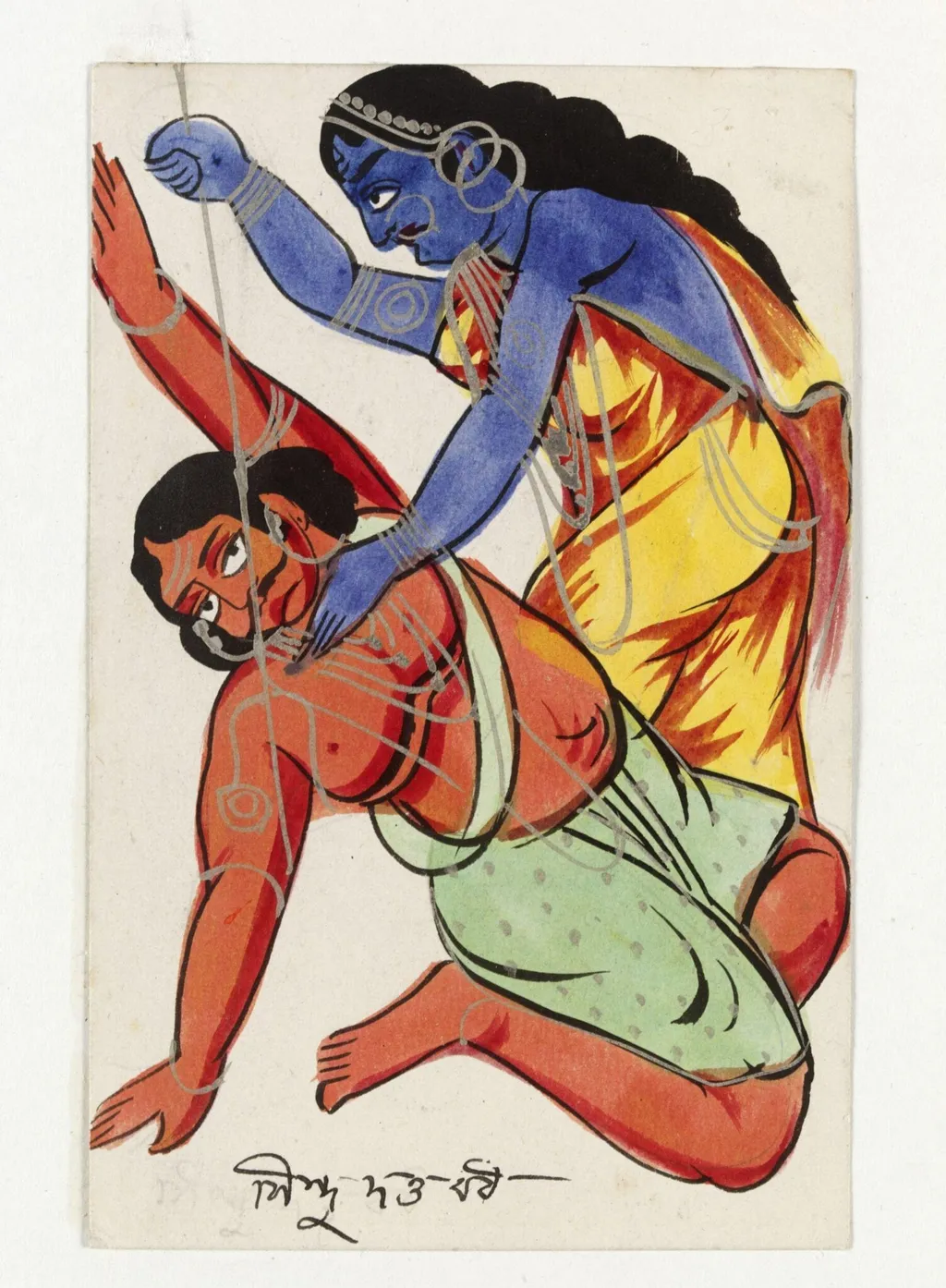
Devi and Sindhu is a paint painting by the Impressionist artist Unknown. It dates from 1890 and is held in the collection of the Victoria and Albert Museum.
About this work
The painting's style and technique are reminiscent of Impressionism and Realism, which were popular art movements during the late 19th century.
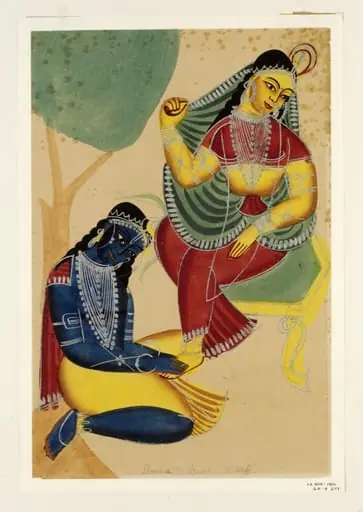
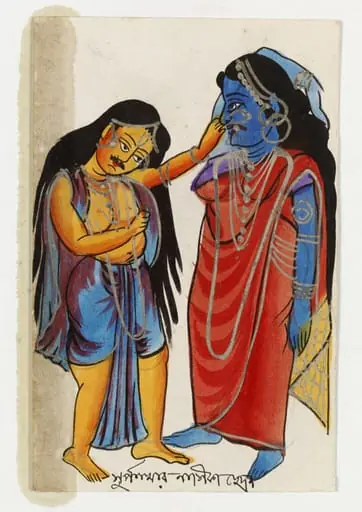
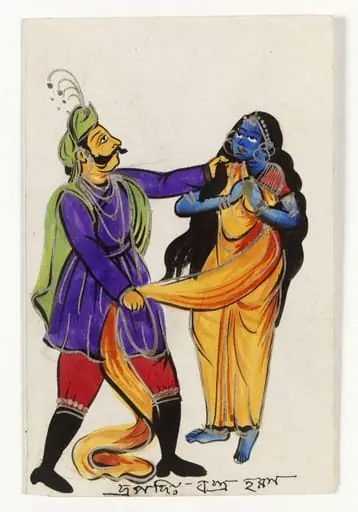
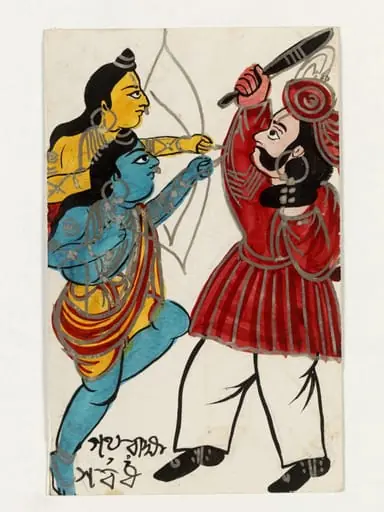
This painting depicts a woman in a yellow dress grasping the arm of a man in a green loincloth, who is falling backward. The woman's dark hair is adorned with a headband, and she wears a blue face paint. The man's face is painted red, and he has a mustache. The background of the painting is a light beige color.
The woman's grip on the man's arm suggests a sense of tension or conflict between the two figures. The use of bold colors and dynamic composition adds to the overall sense of energy and movement in the painting.
The painting's style and technique are reminiscent of Impressionism and Realism, which were popular art movements during the late 19th century. For more information on this style, look up Impressionism.
Overview
Devi and Sindhu is a watercolour and tin alloy on cardboard painting from 1890, created by an unknown artist. It portrays a dramatic scene of Devi overpowering the demon Sindhu.
Subject & Meaning
The painting depicts Devi, identifiable by her yellow dress and blue face paint, grasping the arm of the demon Sindhu, who wears a green loincloth and has a red face with a mustache. The composition conveys tension and conflict, symbolizing Devi's triumph over evil.
Technique & Style
Executed in watercolour and tin alloy on a beige-toned cardboard background, the work features bold, expressive colors and a dynamic composition. Its style reflects influences of late 19th-century Impressionism and Realism, evident in the vivid, realistic portrayal of the figures and their emotions.
History & Provenance
The artist of Devi and Sindhu remains unknown. The painting was showcased in the 1971 *Tantra* exhibition at London's Hayward Gallery, as recorded by the Arts Council of Great Britain.
Context
Created in 1890, the piece intersects with the late 19th-century art world's engagement with Eastern themes and the popularity of Impressionist and Realist techniques in global artistic practices.
Legacy
While the artist is unknown, Devi and Sindhu's inclusion in the notable 1971 *Tantra* exhibition highlights its recognized value within the context of tantric art and its influence on Western curatorial practices regarding Eastern spiritual themes.
Artist & collection

 Domestic Scene
 Giacomo and Cardinal Marco, investing Andrea, Abbot of San Zeno, with his Benefice
 The Nymph of Fontainebleau
 Portrait of a Woman
 Madonna and Child with Saints in the Enclosed Garden
 Venus and Minerva
 Family Group of Four on Sofa
 Wall painting from Room H of the Villa of P. Fannius Synistor at Boscoreale