Artwork
Dhanasri Ragini
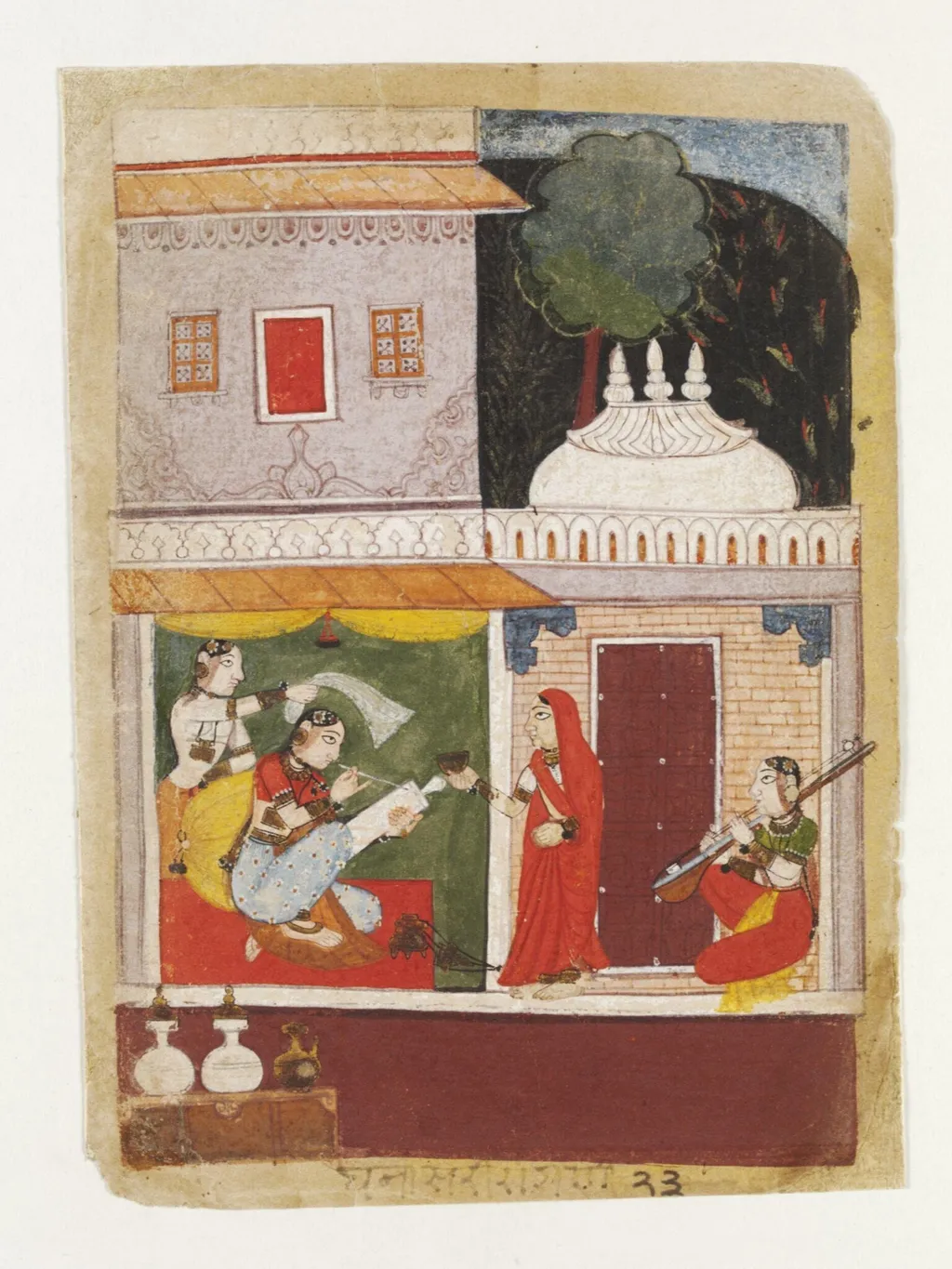
Dhanasri Ragini is a paint painting by the Mughal Painting artist Unknown. It dates from 1650 and is held in the collection of the Victoria and Albert Museum. Created circa 1650, this opaque watercolor on paper illustrates the musical mode known as Dhanashi Ragini.
About this work
Overview
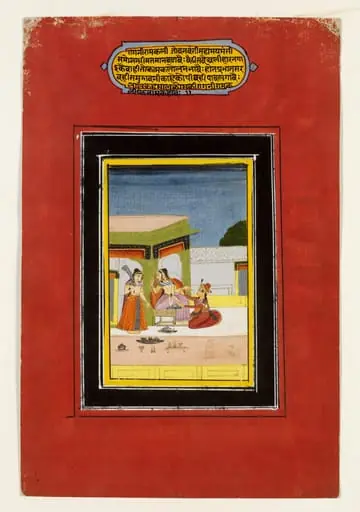
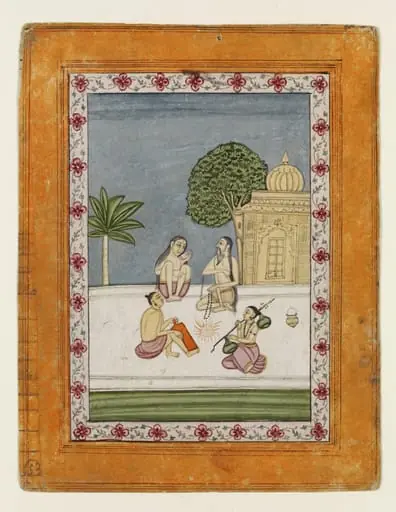
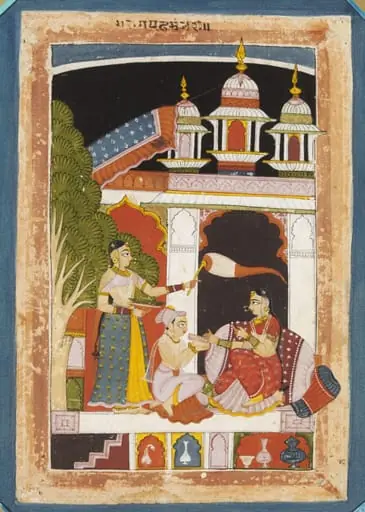
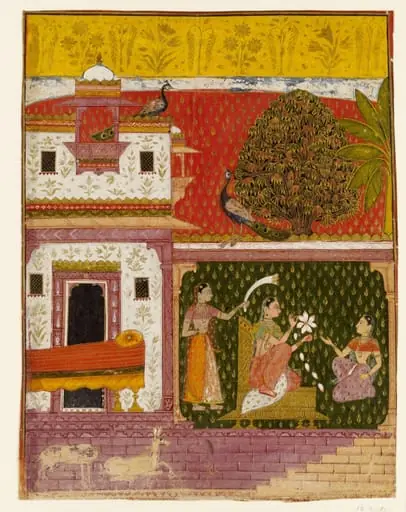
Created circa 1650, this opaque watercolor on paper illustrates the musical mode known as Dhanashi Ragini. The composition centers on a domestic interior where a woman is engaged in drawing a portrait of a lover who is not present, while attendants and a musician attend her.
Subject & Meaning
The central figure, a female artist, is shown rendering the likeness of an absent beloved, suggesting themes of longing and devotion. Surrounding attendants and a musician emphasize the cultural setting in which music and visual art intersect, reflecting the ritualized performance of the ragini mode.
Technique & Style
Executed in opaque watercolor, the work employs vivid reds, yellows and greens that contrast with a subdued background. The interior is rendered in two levels: a lower floor with three musicians—a lute player on a red carpet, a standing figure in a red dress, and a wind‑instrument player—and an upper balcony featuring a tree, a candle‑lit stand, and decorative wall patterns.
History & Provenance
The painting was produced as an illustration for the Dhanasri Ragini, a specific melodic framework in Indian classical music, and likely served a didactic or decorative purpose within a manuscript or collection of musical treatises. Its precise ownership history before entering public collections is not documented.
Context
Mid‑17th‑century Indian art often combined visual narrative with musical theory, and this piece exemplifies that synthesis. The depiction of a domestic scene with musicians aligns with contemporary courtly and devotional practices, where ragas were associated with particular emotions and stories.
Legacy
Works such as this provide insight into the interdisciplinary nature of South Asian artistic production, illustrating how music, poetry, and visual art were integrated in pedagogical and aesthetic contexts during the period.
Artist & collection

 Domestic Scene
 Giacomo and Cardinal Marco, investing Andrea, Abbot of San Zeno, with his Benefice
 The Nymph of Fontainebleau
 Portrait of a Woman
 Madonna and Child with Saints in the Enclosed Garden
 Venus and Minerva
 Family Group of Four on Sofa
 Wall painting from Room H of the Villa of P. Fannius Synistor at Boscoreale