Artwork
Purvi Ragini
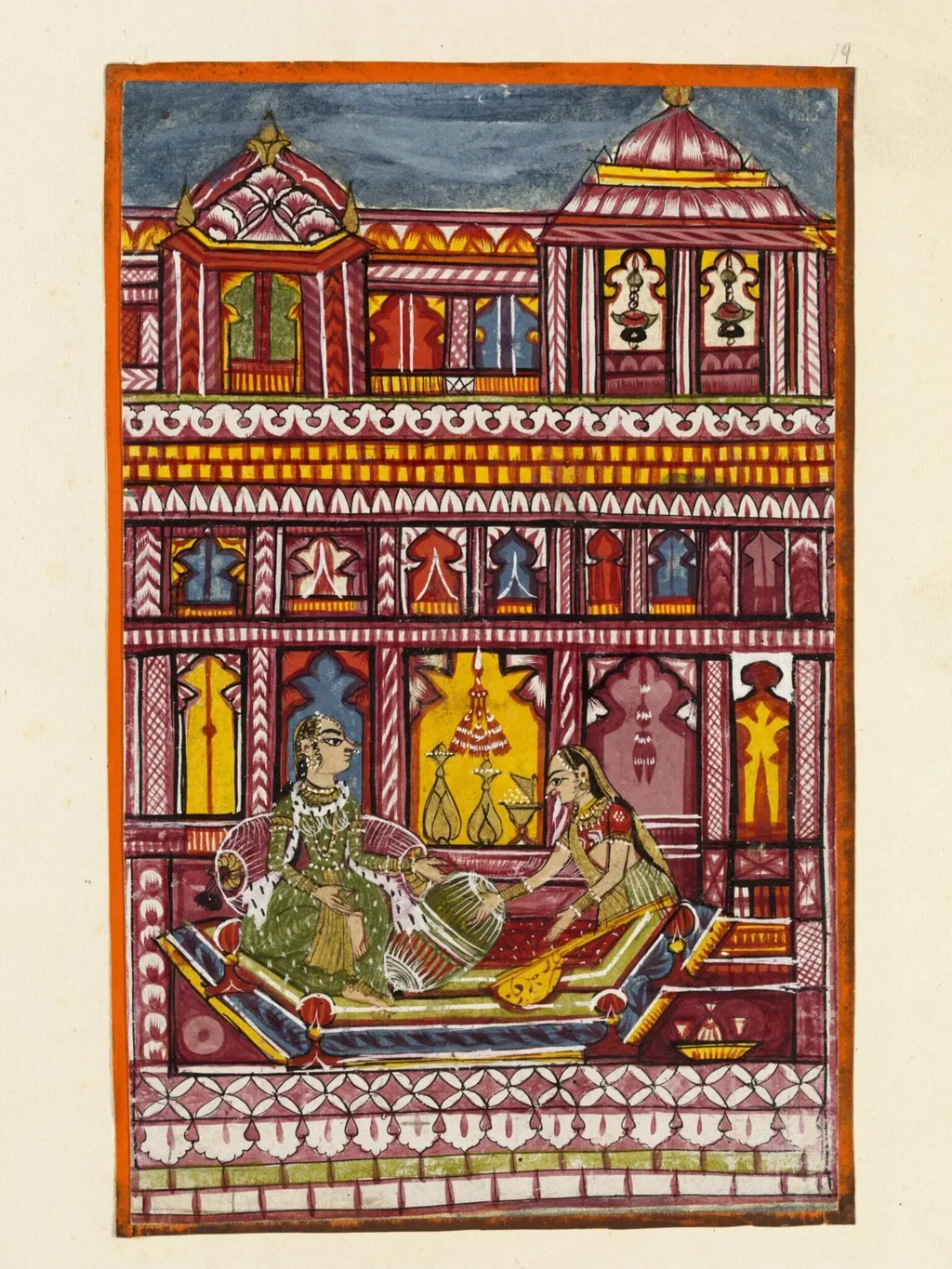
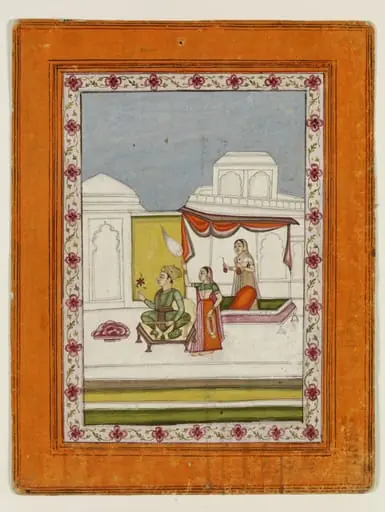
Purvi Ragini is a paint painting by Unknown. It dates from 1750 and is held in the collection of the Victoria and Albert Museum.
About this work
Overview
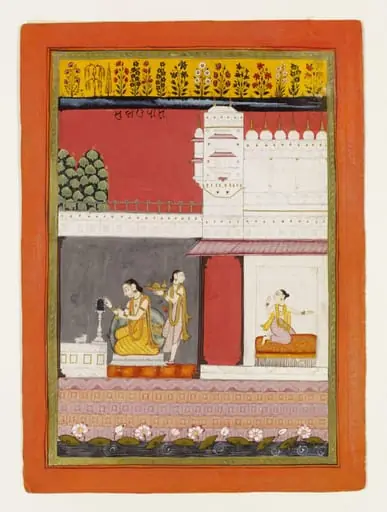
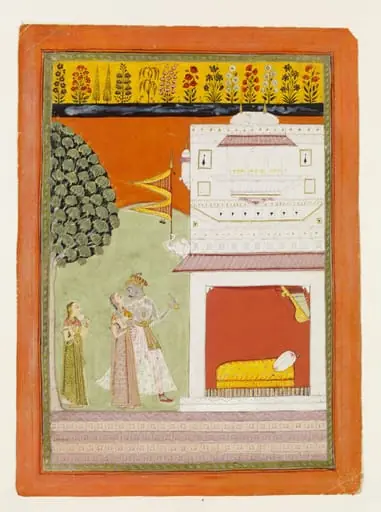
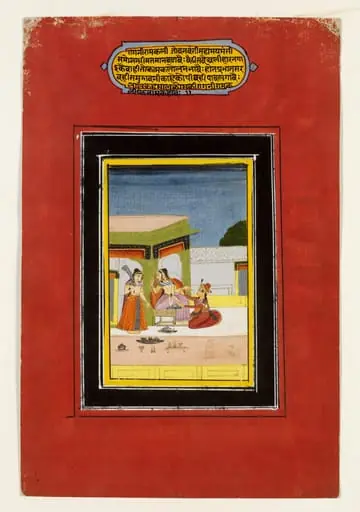
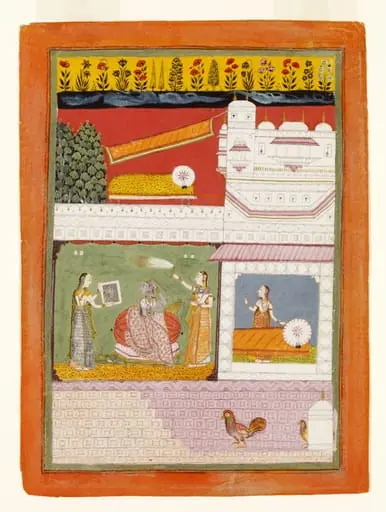
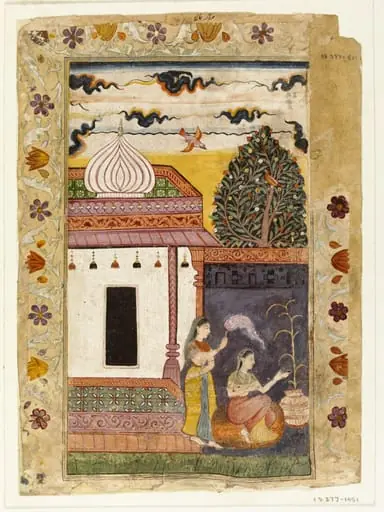
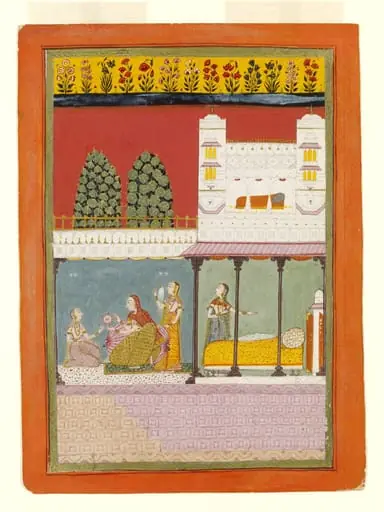
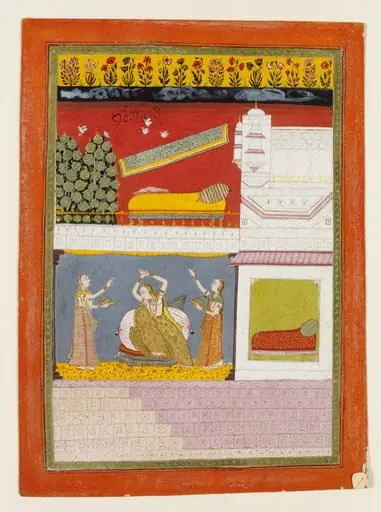
Created around 1750, this opaque watercolor and gold painting on paper illustrates the Purvi Ragini, a musical mode associated with late afternoon and introspective mood. It belongs to a series of ragamala paintings that visually interpret Indian classical ragas. The composition is contained within a decorative architectural frame, emphasizing ritualized space over naturalism.
Subject & Meaning
Their interaction suggests a narrative of longing, with the man’s music evoking the absent beloved central to the Purvi Ragini’s emotional theme.
Two figures sit together in a private chamber: a woman holding a fan and a man playing a drum. Their interaction suggests a narrative of longing, with the man’s music evoking the absent beloved central to the Purvi Ragini’s emotional theme. The confidante’s presence, though not gesturing here, implies a tradition of silent communication through posture and setting, common in poetic depictions of separation.
Technique & Style
The painting uses flat, unmodulated colors with sharp, dark outlines, typical of Rajasthani miniature traditions. Gold leaf accents highlight architectural details and textiles, enhancing luminosity without depth. Wall and floor patterns are rendered as stylized borders, reinforcing the symbolic rather than spatial realism. The absence of shading and perspective directs focus to symbolic elements over physical realism.
History & Provenance
This work emerged from a courtly atelier in Rajasthan, likely commissioned to accompany a poetic cycle of ragamala illustrations. Such paintings were collected by royalty and connoisseurs as objects of aesthetic and spiritual contemplation. Its survival suggests it was preserved in a noble household, possibly passed down through generations before entering institutional collections.
Context
Ragamala paintings flourished in 17th- to 18th-century North India, linking musical modes with visual imagery to evoke emotional states. Purvi Ragini, tied to the hour of dusk, was often depicted through solitude or quiet companionship. These works were not mere illustrations but meditative tools, aligning sensory experience with devotional and poetic traditions of the time.
Legacy
The painting contributes to a broader corpus of Indian miniature art that preserved regional aesthetics amid evolving courtly tastes. Its formal qualities—flat color, intricate patterning, symbolic composition—continue to inform modern understandings of pre-colonial Indian visual culture. Collections such as the Victoria and Albert Museum hold comparable works, preserving this artistic lineage for study and appreciation.
Artist & collection

 Domestic Scene
 Giacomo and Cardinal Marco, investing Andrea, Abbot of San Zeno, with his Benefice
 The Nymph of Fontainebleau
 Portrait of a Woman
 Madonna and Child with Saints in the Enclosed Garden
 Venus and Minerva
 Family Group of Four on Sofa
 Wall painting from Room H of the Villa of P. Fannius Synistor at Boscoreale