Artwork
Dost Muhammad
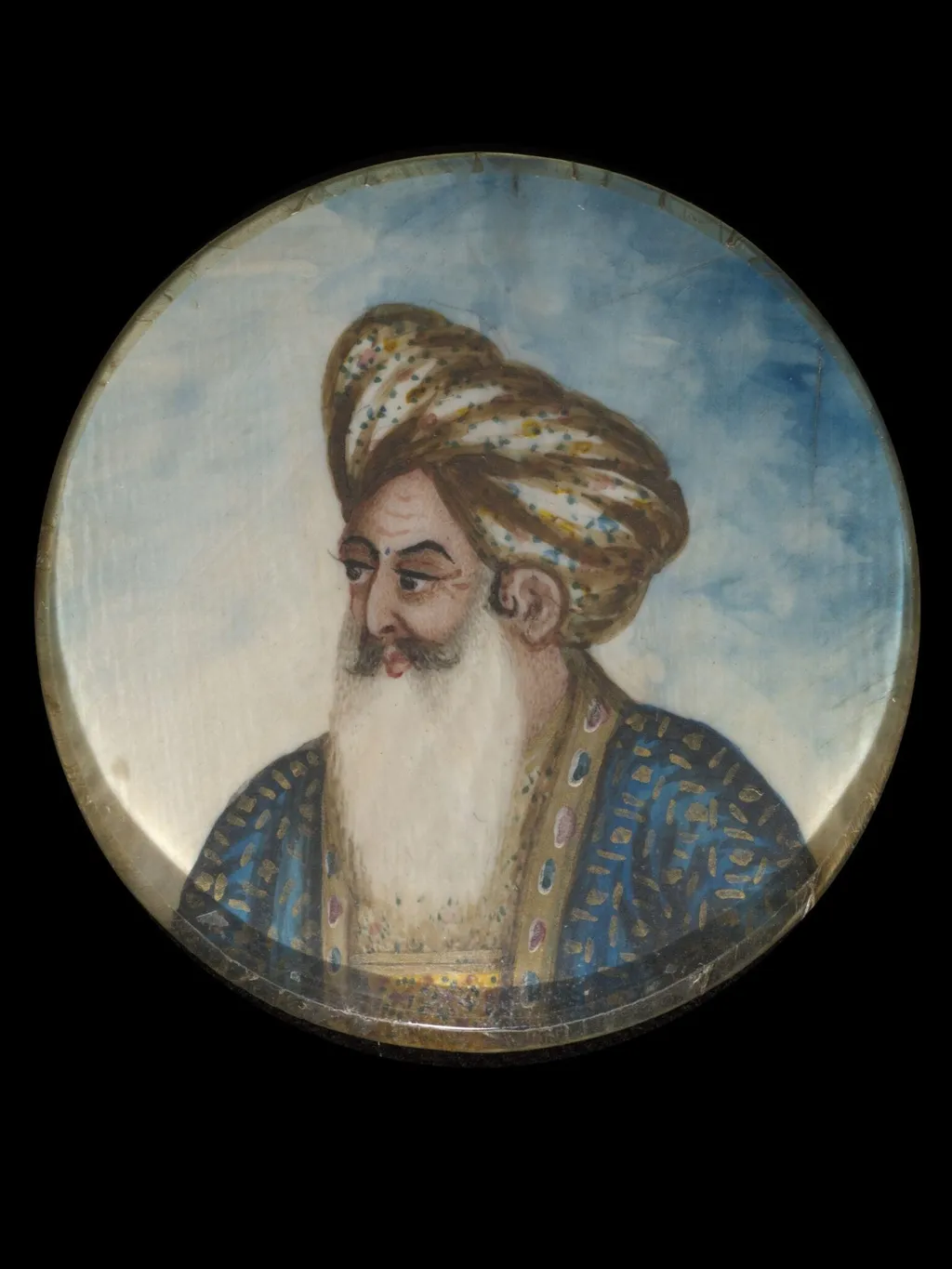
Dost Muhammad is a paint painting by the Impressionist artist Unknown. It dates from 1850 and is held in the collection of the Victoria and Albert Museum.
About this work
Overview
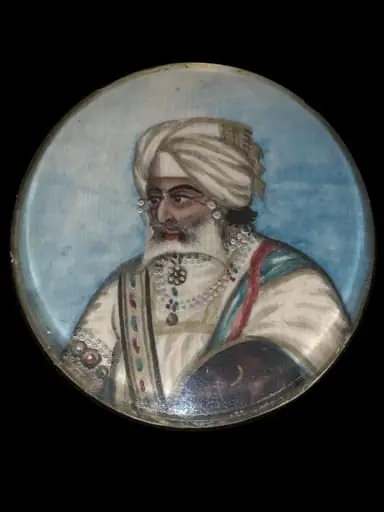
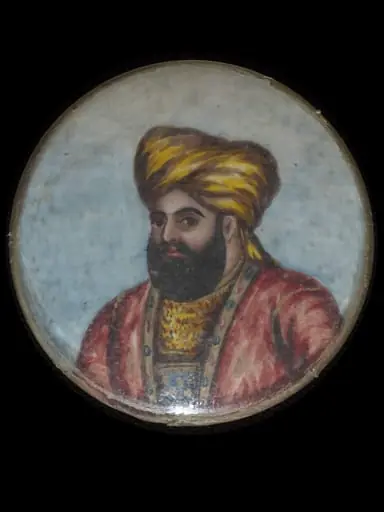
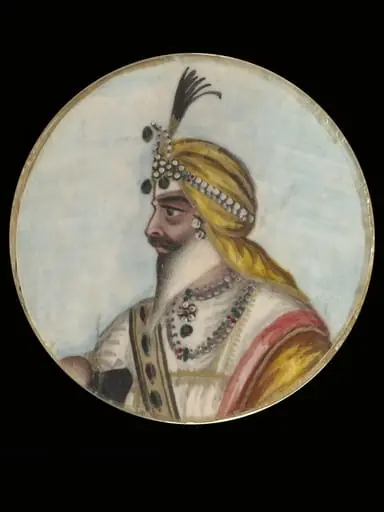
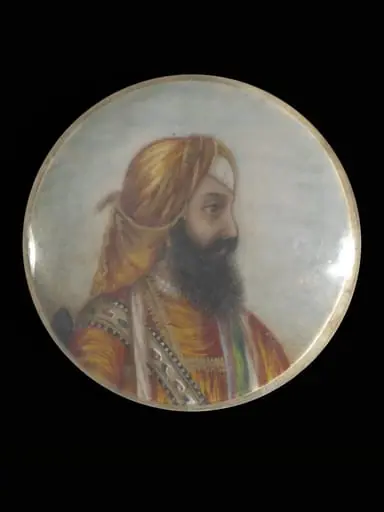
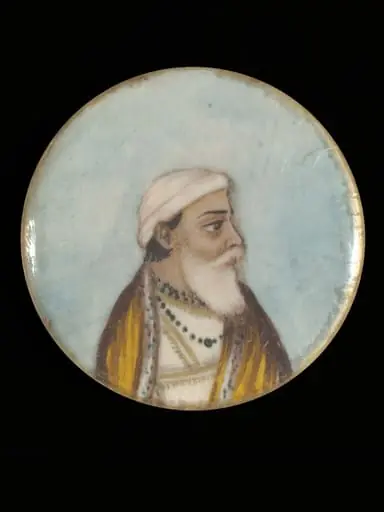
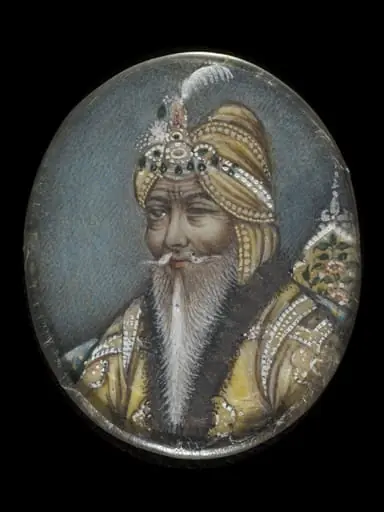
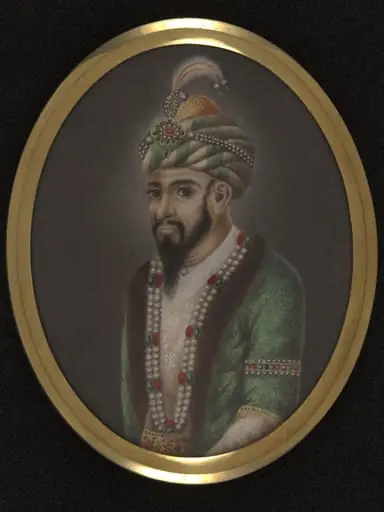
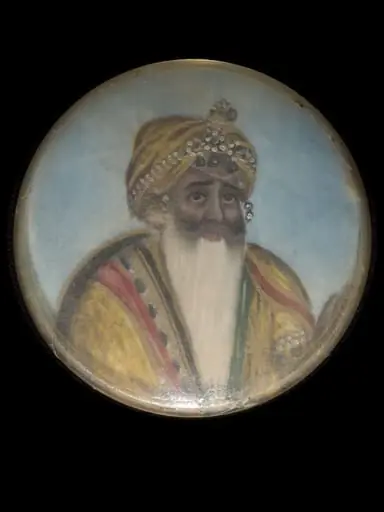
This small, circular portrait on ivory captures Dost Muhammad Khan, the Emir of Kabul, who died in 1863. Rendered in a three-quarter view, the image focuses on his head and shoulders, oriented to the left. The delicate medium and intimate scale reflect the tradition of South Asian miniature painting, where personal and political identity were conveyed through refined detail rather than grandeur.
Subject & Meaning
The portrait serves as a personal and political identifier rather than a narrative scene.
Dost Muhammad Khan is portrayed with a long white beard and a striped turban in white and gold, symbols of age, authority, and status in 19th-century Afghan leadership. His pale complexion and composed expression convey dignity, while the restrained palette and minimal background emphasize his presence as a figure of quiet power, not spectacle. The portrait serves as a personal and political identifier rather than a narrative scene.
Technique & Style
Executed in fine brushwork on ivory, the painting employs soft edges and light washes to model the face and fabric. The robe, in blue with subtle gold patterning, is rendered with minimal detail, suggesting haste or stylistic economy. The pale blue background, unadorned and circular, isolates the figure, a common convention in portrait miniatures meant for private viewing and portability.
History & Provenance
The portrait likely originated in a courtly workshop in northern India or Afghanistan during the mid-1800s, a period when Afghan rulers maintained artistic ties with Mughal and Sikh traditions. Its survival suggests it was kept in a private collection, possibly among diplomats or collectors who valued such intimate likenesses. The faded pigments indicate age and exposure, common in works handled over generations.
Context
During Dost Muhammad’s reign, Afghan rulers navigated British and Russian imperial pressures, making personal imagery a tool of diplomacy and legacy. Miniature portraits like this were exchanged among elites, serving as tokens of recognition or diplomatic gifts. The style echoes earlier Mughal portraiture but reflects a regional adaptation, blending Persian aesthetics with local conventions of representation.
Legacy
This portrait remains a quiet testament to the visual culture of Afghan leadership in the 19th century. Though not widely exhibited, it contributes to the understanding of how regional rulers used portraiture to assert identity amid shifting political landscapes. Its preservation in institutions like the Victoria and Albert Museum ensures its role in documenting the material history of South Asian and Central Asian elites.
Artist & collection

 Domestic Scene
 Giacomo and Cardinal Marco, investing Andrea, Abbot of San Zeno, with his Benefice
 The Nymph of Fontainebleau
 Portrait of a Woman
 Madonna and Child with Saints in the Enclosed Garden
 Venus and Minerva
 Family Group of Four on Sofa
 Wall painting from Room H of the Villa of P. Fannius Synistor at Boscoreale