Artwork
Duddingston Lock
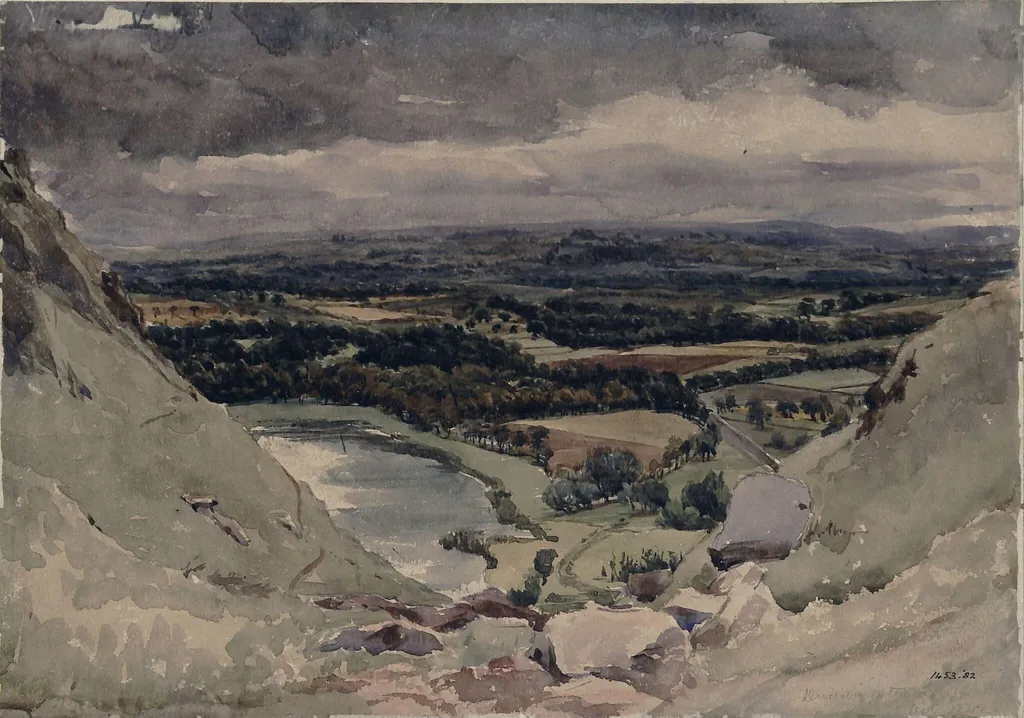
Duddingston Lock is a watercolor work on paper by the Romanticist artist Unknown. It dates from 1800 and is held in the collection of the Victoria and Albert Museum.
About this work
Overview
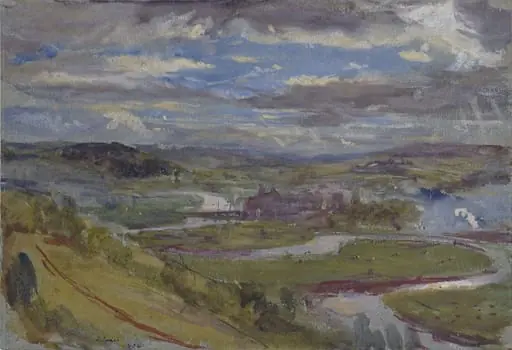
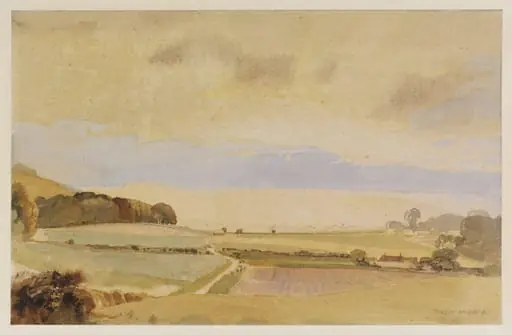
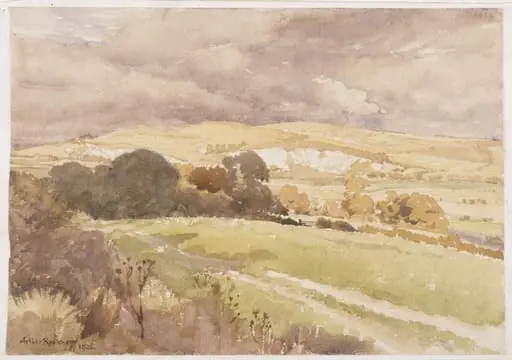
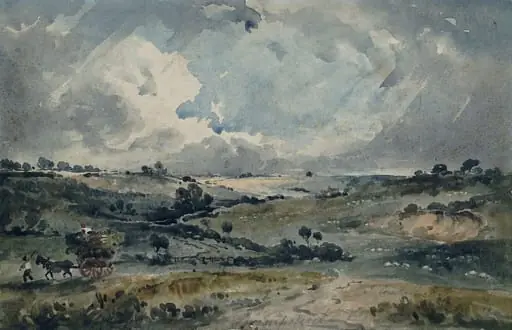
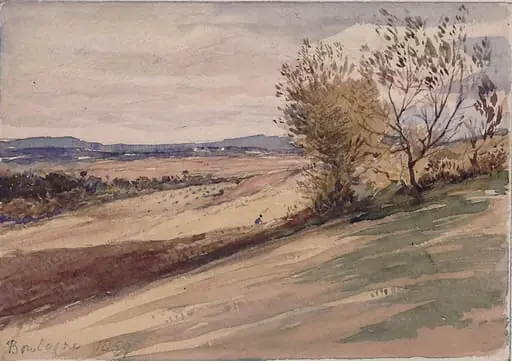
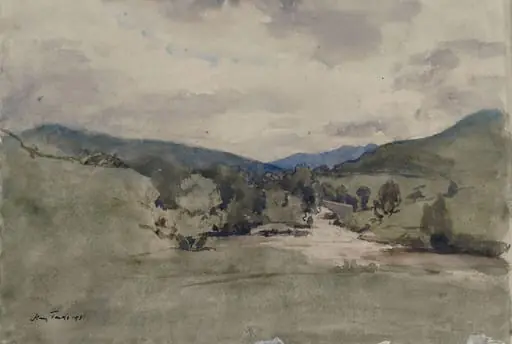
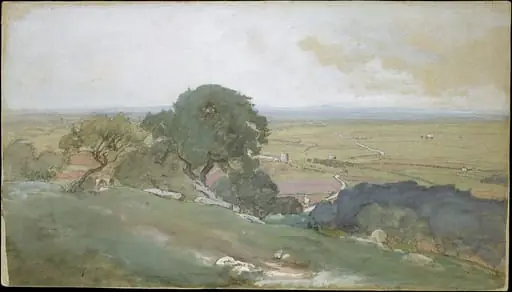
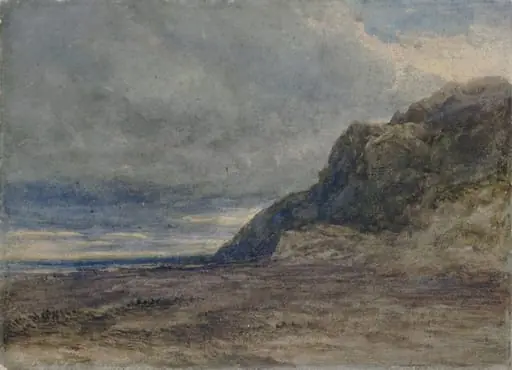
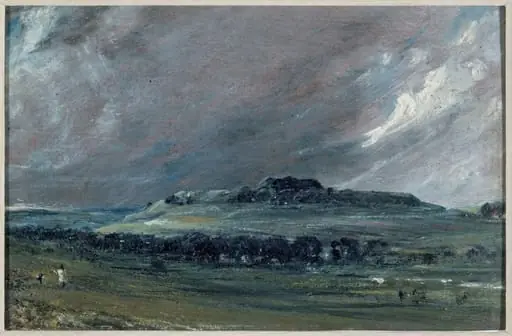
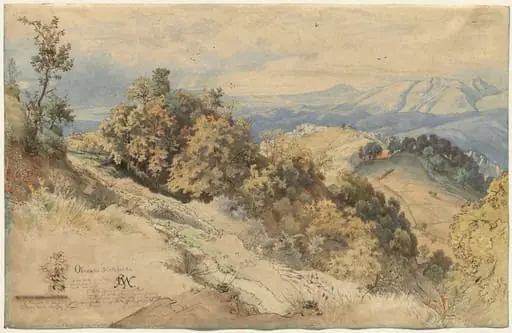
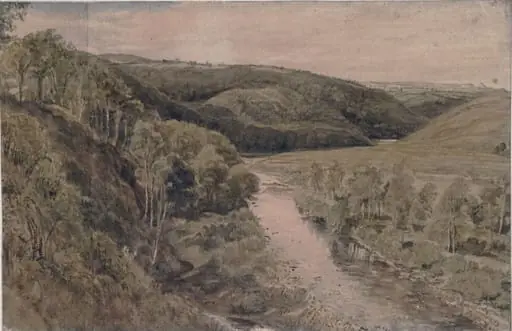
This watercolour captures Duddingston Lock, a modest canal structure near Edinburgh, rendered in delicate, translucent washes. The scene emphasizes quiet rural life, with no human figures present, focusing instead on the interplay of land, water, and sky. The composition is uncluttered, inviting contemplation rather than narrative.
Subject & Meaning
The painting presents a tranquil stretch of the River Forth, framed by rolling hills and cultivated fields. The lock, though present, is not the focal point; rather, it serves as a subtle marker of human intervention within an otherwise natural landscape. The mood is one of serene solitude, reflecting a quiet reverence for the Scottish countryside.
Technique & Style
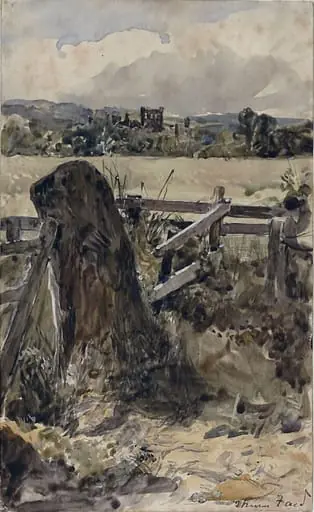
Loose, fluid brushwork and layered washes create a sense of atmospheric depth. Colors are restrained—soft grays, greens, and browns—enhancing the subdued light of an overcast day. The sketch-like quality of certain areas suggests spontaneity, typical of watercolour practice in the early 19th century, where immediacy was valued over polish.
History & Provenance
Created during a period when Scottish artists increasingly turned to local landscapes, this work likely dates to the 1820s or 1830s. It may have been made for private circulation, as watercolours of this type were often personal records or gifts rather than public exhibitions. Its survival suggests it was carefully preserved by a collector with regional ties.
Context
In the early 1800s, watercolour became a favored medium for documenting the British landscape, particularly in Scotland. Artists aligned with Romantic ideals sought to convey emotion through nature, favoring mood over detail. Duddingston Lock fits within this trend, portraying nature not as grand or sublime, but as intimate and quietly enduring.
Legacy
Though not widely exhibited, such works contributed to a growing visual archive of Scotland’s rural infrastructure and topography. They helped shape a national identity rooted in the land, influencing later generations of landscape painters who valued observation over idealization.
Artist & collection

 Domestic Scene
 Giacomo and Cardinal Marco, investing Andrea, Abbot of San Zeno, with his Benefice
 The Nymph of Fontainebleau
 Portrait of a Woman
 Madonna and Child with Saints in the Enclosed Garden
 Venus and Minerva
 Family Group of Four on Sofa
 Wall painting from Room H of the Villa of P. Fannius Synistor at Boscoreale