Artwork
Durga
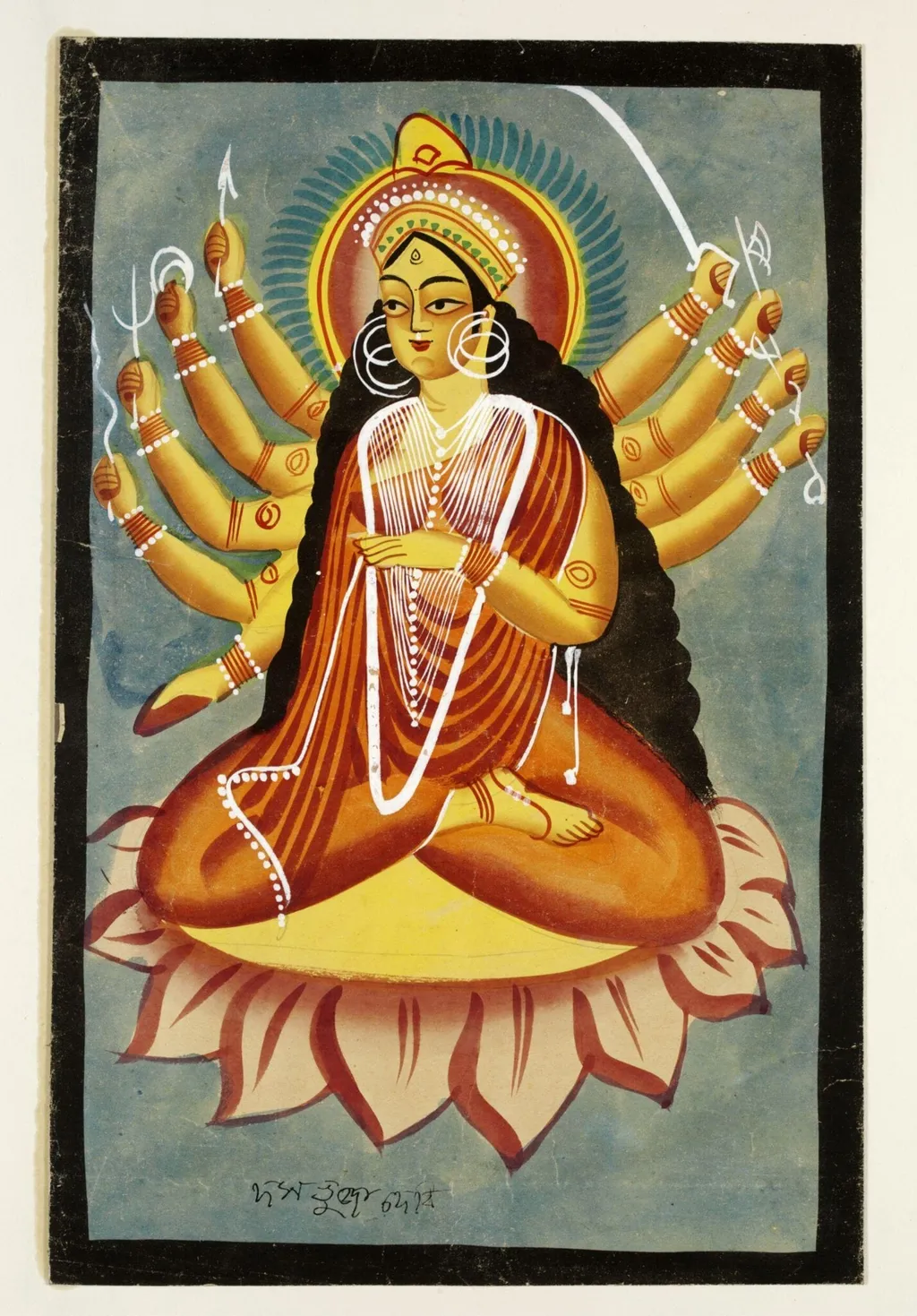
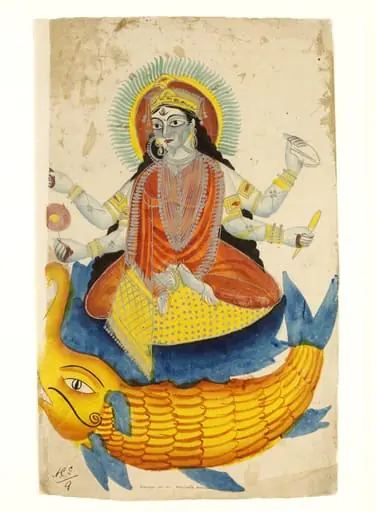
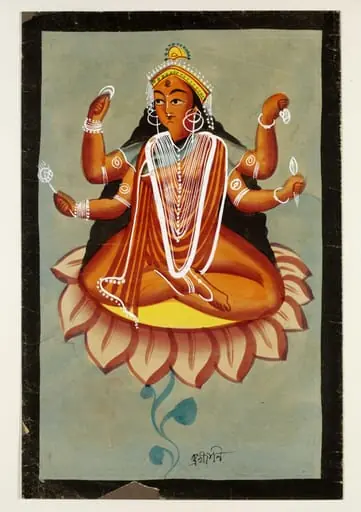
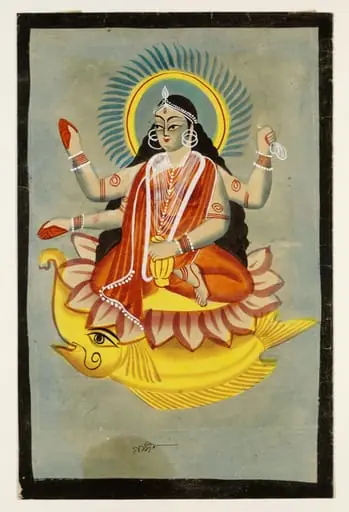
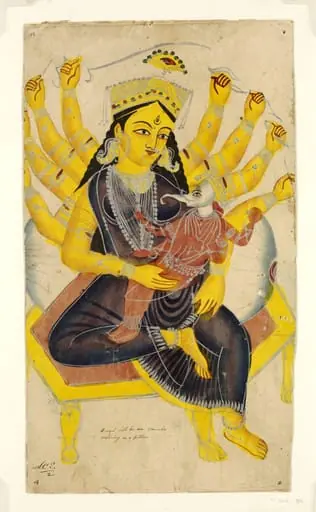
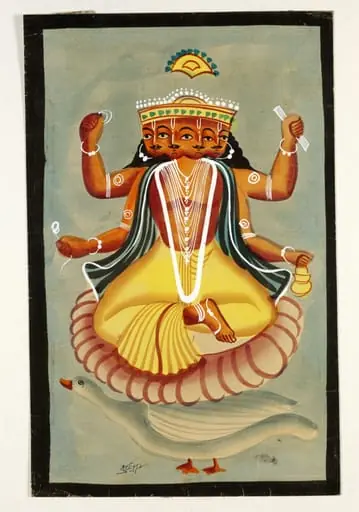
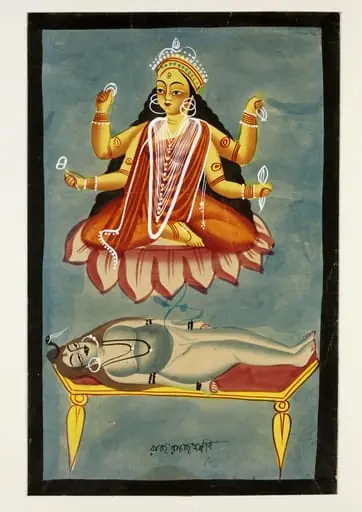
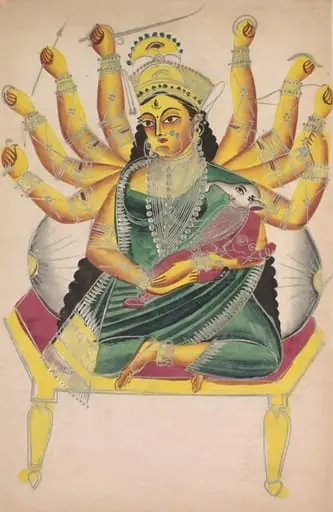
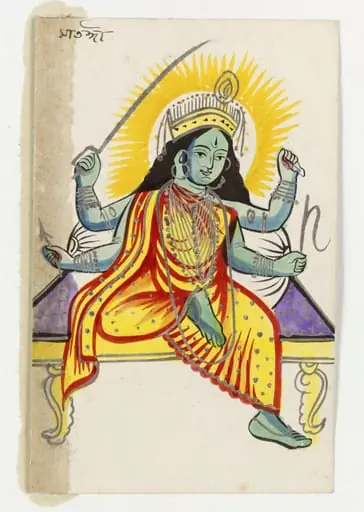
Durga is a paint painting by the Impressionist artist Unknown. It dates from 1885 and is held in the collection of the Victoria and Albert Museum.
About this work
Overview
The work is an opaque watercolor on paper created in 1885, portraying the Hindu deity Durga. Rendered in vivid reds, golds and a muted blue‑green backdrop, the figure sits upon a lotus, crowned and adorned with jewelry, her four arms each bearing a distinct attribute.
Subject & Meaning
Durga is shown in a moment of reverence by the epic hero Rama, just before his decisive confrontation with the demon king Ravana. The four arms traditionally convey the goddess’s power and protective qualities, while the calm expression suggests divine serenity.
Technique & Style
Executed with opaque watercolor, the painting combines bright, saturated hues with simplified forms, a characteristic approach in many 19th‑century Indian artworks. Bold outlines define the figure, and the flat, limited background emphasizes the central iconography.
History & Provenance
The piece entered the museum’s collection in 1894, purchased from Miss M. Steele. Steele’s mother, a Sanskrit scholar at Cambridge, had inherited the painting, and Steele suggested that her grandmother—who had lived in India—was likely the original collector.
Artist & collection

 Domestic Scene
 Giacomo and Cardinal Marco, investing Andrea, Abbot of San Zeno, with his Benefice
 The Nymph of Fontainebleau
 Portrait of a Woman
 Madonna and Child with Saints in the Enclosed Garden
 Venus and Minerva
 Family Group of Four on Sofa
 Wall painting from Room H of the Villa of P. Fannius Synistor at Boscoreale