Artwork
Ganesha
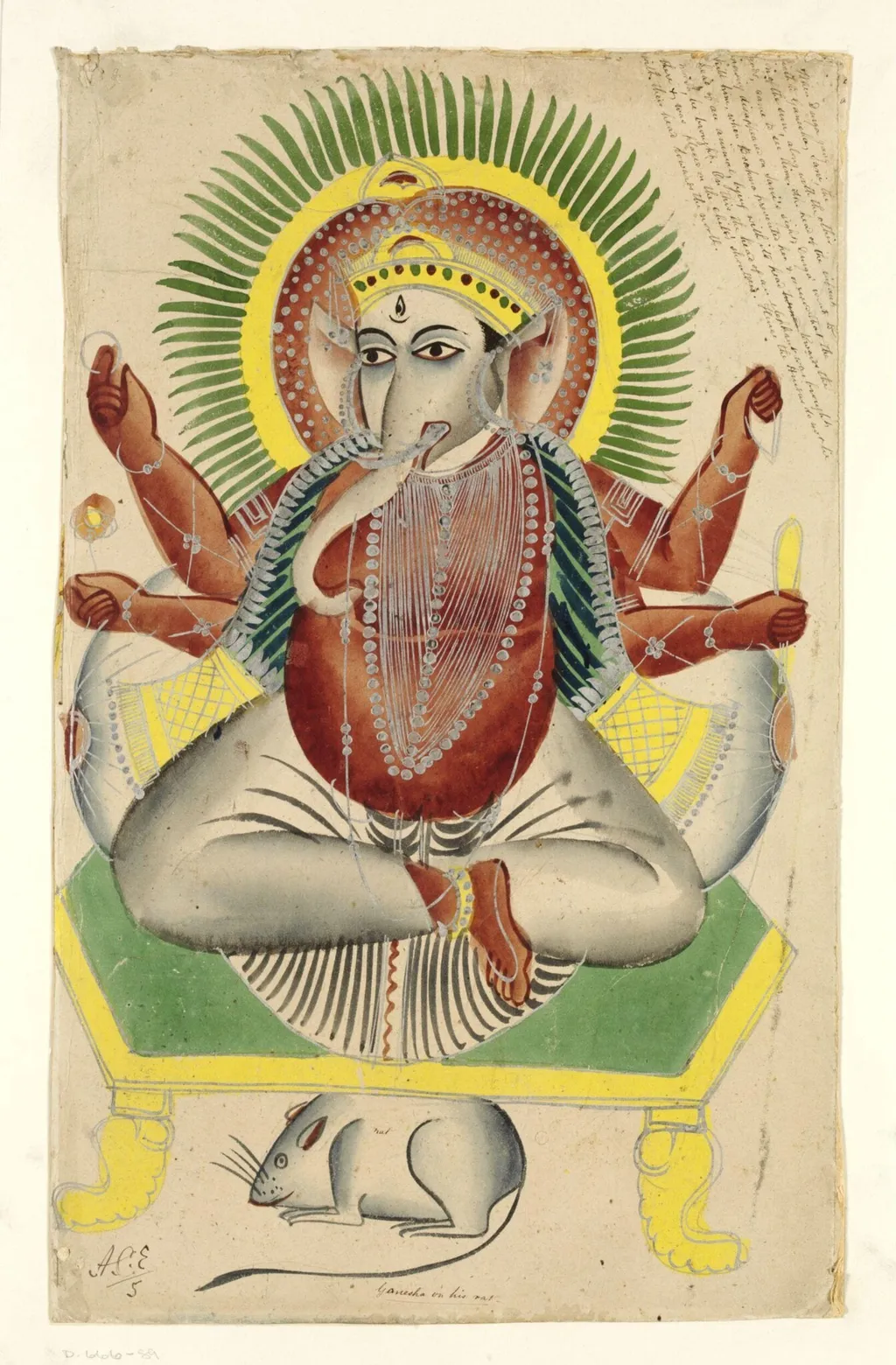
Ganesha is a paint painting by the Impressionist artist Unknown. It dates from 1850 and is held in the collection of the Victoria and Albert Museum.
About this work
Overview
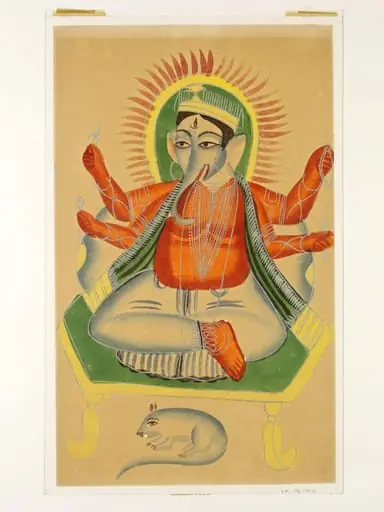
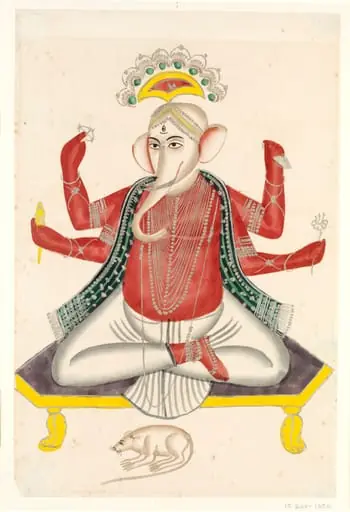
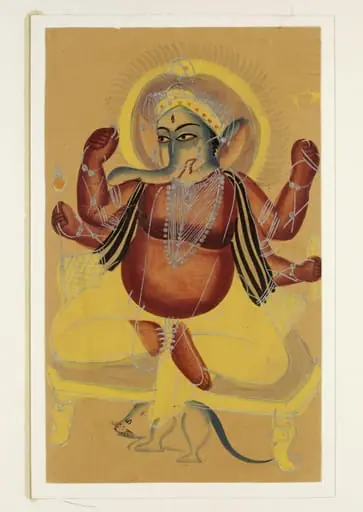
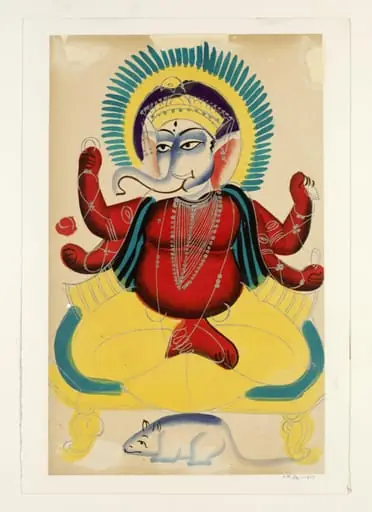
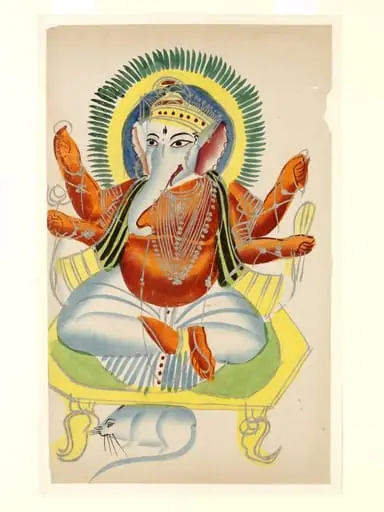
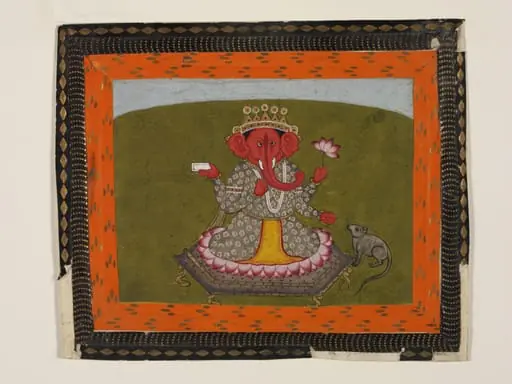
This watercolor painting on paper, dated 1850, depicts the Hindu deity Ganesha with applied tin alloy embellishments. Created by an anonymous artist, it was acquired by the museum in 1889 from G. Wild and is now part of the Department of Prints and Drawings, held on permanent loan by the Indian Section under the reference RP 51/2237.
Subject & Meaning
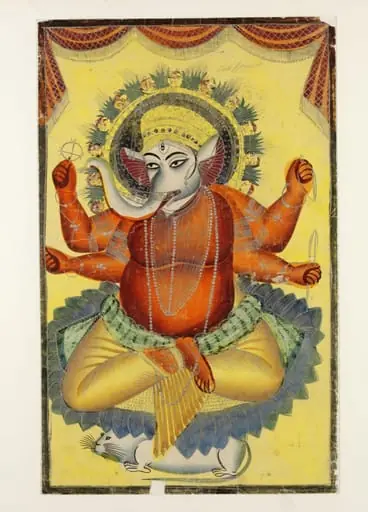
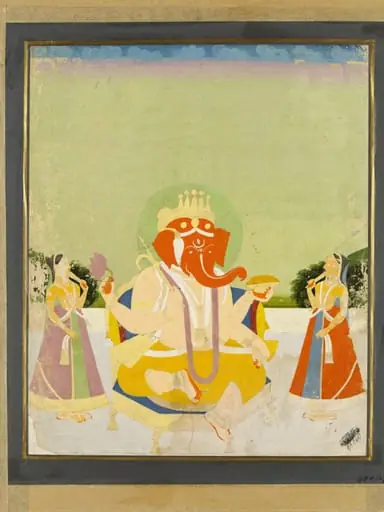
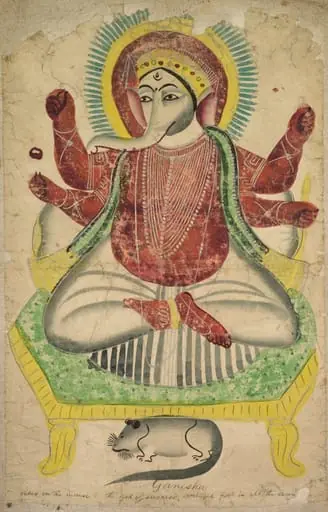
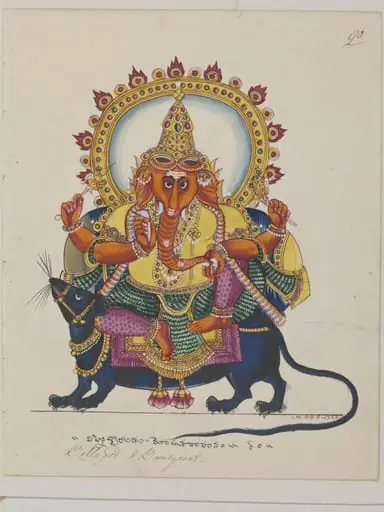
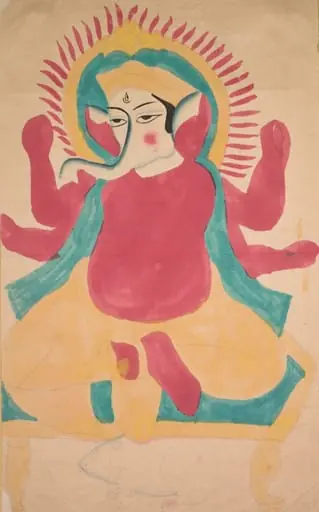
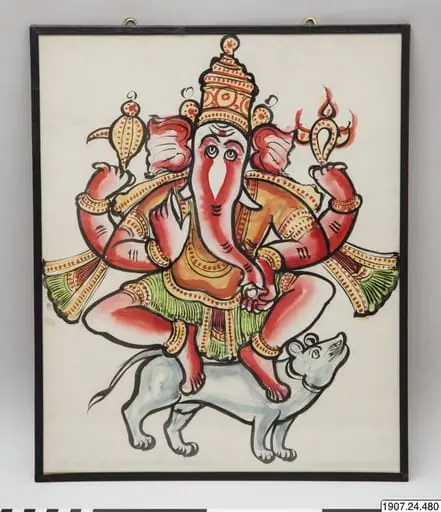
Ganesha, the elephant-headed god of wisdom and remover of obstacles, is shown seated cross-legged on a multicolored platform. His four arms convey divine presence: one holds a small object, another rests naturally, while the remaining two make symbolic gestures. A mouse, his traditional vehicle, sits below, reinforcing his connection to humility and the ability to overcome hindrances.
Technique & Style
The background is minimal, dominated by a radiant yellow circle behind the head, suggesting divine radiance without narrative detail.
The painting employs bold, flat areas of red, yellow, and green, outlined in black to define form. Tin alloy accents add subtle metallic sheen to ornaments. The face is stylized with three dots for eyes and a curved smile, reflecting regional iconographic conventions. The background is minimal, dominated by a radiant yellow circle behind the head, suggesting divine radiance without narrative detail.
History & Provenance
The work entered the museum’s collection in 1889 through acquisition from G. Wild, a known collector of South Asian art. Its journey from private hands to institutional care reflects 19th-century European interest in Indian devotional imagery. It has remained within the Prints and Drawings department since, now under the stewardship of the Indian Section.
Context
Produced in mid-19th century India, this painting aligns with regional traditions of devotional art, where deities were rendered with symbolic precision rather than naturalism. Such works were often used in domestic worship or as gifts. The use of tin alloy suggests local craftsmanship traditions, blending painting with tactile ornamentation common in certain Indian artistic communities.
Legacy
As a preserved example of 19th-century Indian devotional painting, it contributes to scholarly understanding of regional aesthetics and religious iconography. Its continued display in a major institution ensures its role as a reference for studying the intersection of material, faith, and artistic practice in colonial-era South Asia.
Artist & collection

 Domestic Scene
 Giacomo and Cardinal Marco, investing Andrea, Abbot of San Zeno, with his Benefice
 The Nymph of Fontainebleau
 Portrait of a Woman
 Madonna and Child with Saints in the Enclosed Garden
 Venus and Minerva
 Family Group of Four on Sofa
 Wall painting from Room H of the Villa of P. Fannius Synistor at Boscoreale