Artwork
Durga
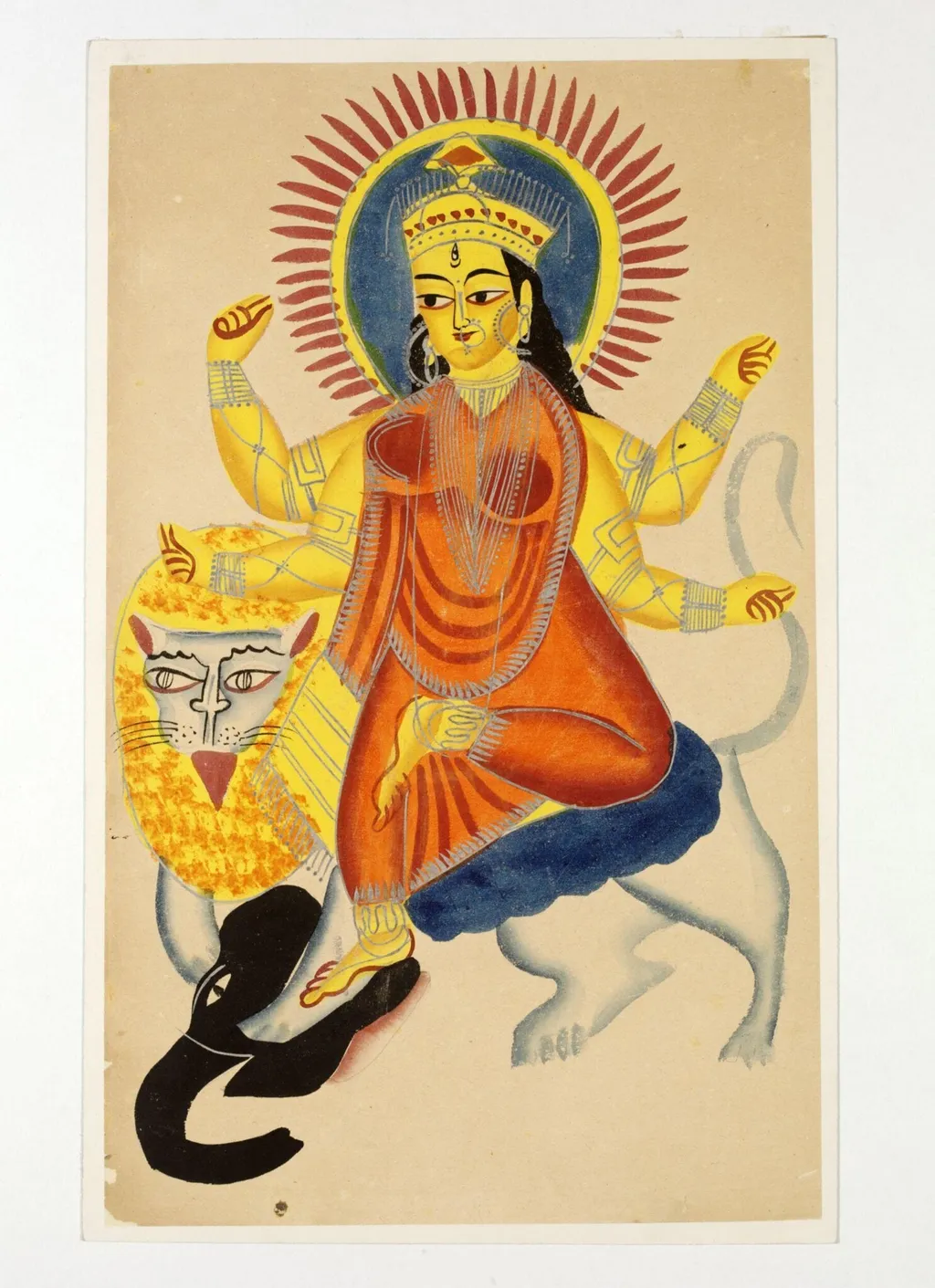
Durga is a paint painting by the Impressionist artist Unknown. It dates from 1890 and is held in the collection of the Victoria and Albert Museum.
About this work
Overview
Hindley of Highgate, London, and its inclusion in the institution’s records was confirmed during a 2023 provenance research initiative.
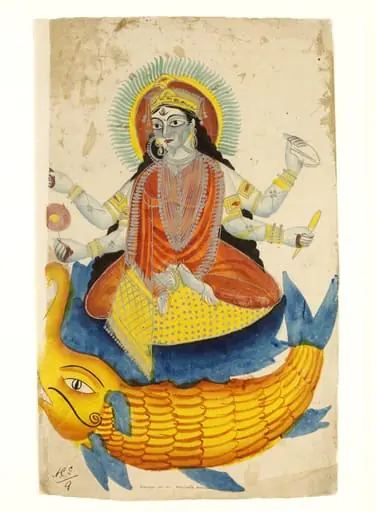
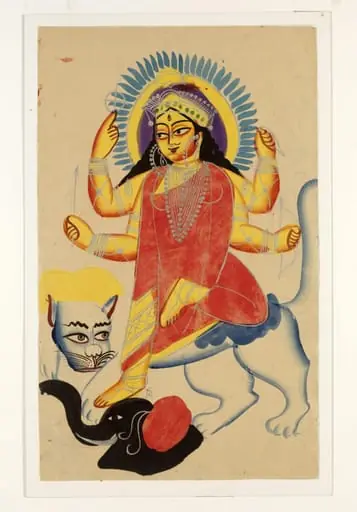
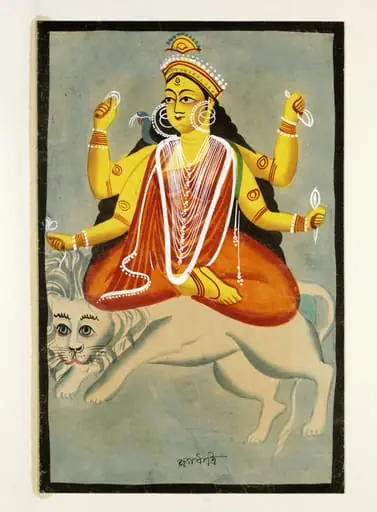
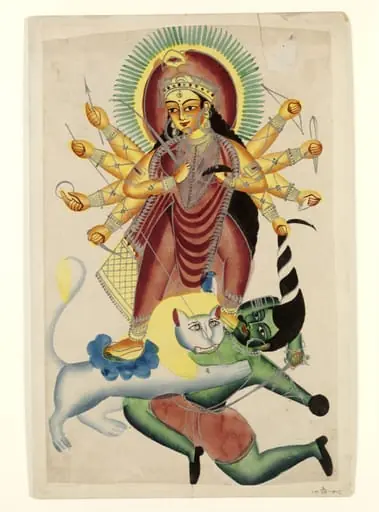
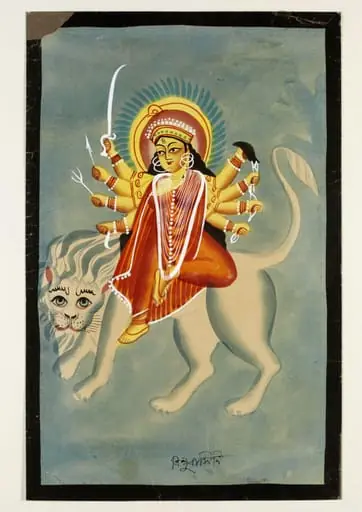
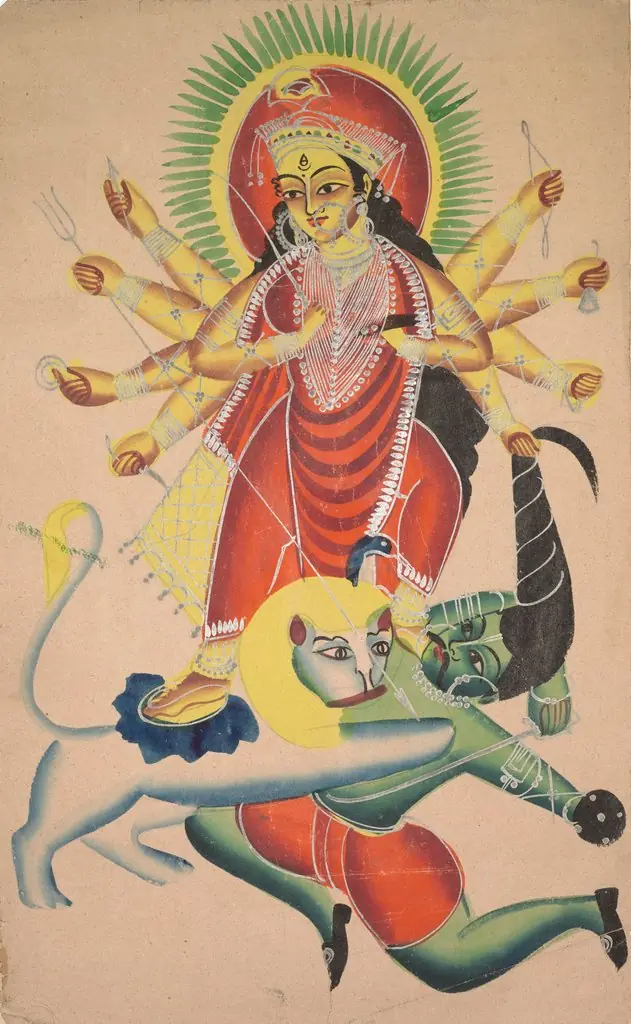
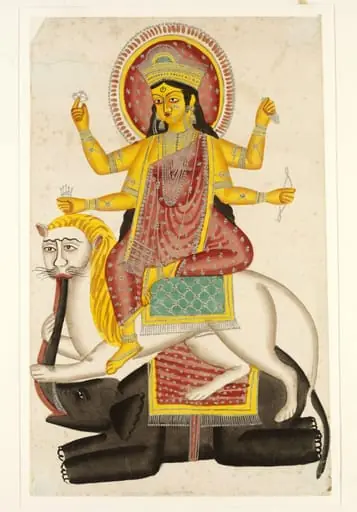
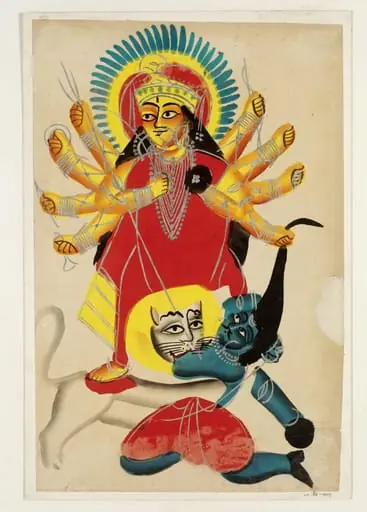
This 1890 watercolor on paper portrays the Hindu goddess Durga in her form as Jagaddhatri, a protector of the world. Created in the Kalighat style, it reflects the commercial art tradition emerging in 19th-century Calcutta. The painting was acquired by the museum through a donation by Ernest H. Hindley of Highgate, London, and its inclusion in the institution’s records was confirmed during a 2023 provenance research initiative.
Subject & Meaning
Durga as Jagaddhatri is depicted seated, radiating divine authority. Her four arms hold symbolic objects—likely a conch, discus, lotus, and sword—representing cosmic order, protection, and destruction of evil. The lion at her side signifies power and devotion. The golden halo with radiating red rays emphasizes her celestial nature, aligning with devotional imagery used in Bengali religious art to convey divine presence.
Technique & Style
Executed in watercolor on paper, the painting employs bold, dark outlines and flat areas of vivid pigment—characteristic hallmarks of Kalighat art. The palette favors saturated reds, blues, and yellows, applied with rhythmic precision. Figures are stylized rather than naturalistic, with simplified anatomy and expressive gestures, reflecting the rapid, market-driven production methods of Kalighat artists catering to pilgrims and urban patrons.
History & Provenance
The painting entered the museum’s collection through a donation by Ernest H. Hindley, a resident of Highgate, London, in the late 19th or early 20th century. Its presence in the Asia Department’s registers was verified during a 2023 provenance project, which traced its journey from colonial-era India to British private collections. No earlier ownership records are documented, but its style firmly situates it within Calcutta’s Kalighat artistic milieu.
Context
Kalighat paintings emerged near the Kalighat temple in Calcutta, where artists produced affordable devotional images for pilgrims. This work reflects a shift from temple-based iconography to urban, commercial art, blending traditional Hindu themes with new audiences and materials. The depiction of Durga as Jagaddhatri resonated with Bengali devotees during a period of cultural revival and colonial influence, making such images both religious and culturally significant.
Legacy
As a surviving example of Kalighat art, this painting contributes to the understanding of how religious imagery adapted to urban markets in colonial India. It preserves a visual language that influenced later modern Indian artists and remains a key reference for scholars studying the intersection of faith, commerce, and artistic practice in 19th-century Bengal. Its preservation ensures continued access to this unique artistic tradition.
Artist & collection

 Domestic Scene
 Giacomo and Cardinal Marco, investing Andrea, Abbot of San Zeno, with his Benefice
 The Nymph of Fontainebleau
 Portrait of a Woman
 Madonna and Child with Saints in the Enclosed Garden
 Venus and Minerva
 Family Group of Four on Sofa
 Wall painting from Room H of the Villa of P. Fannius Synistor at Boscoreale