Artwork
Durham Cathedral
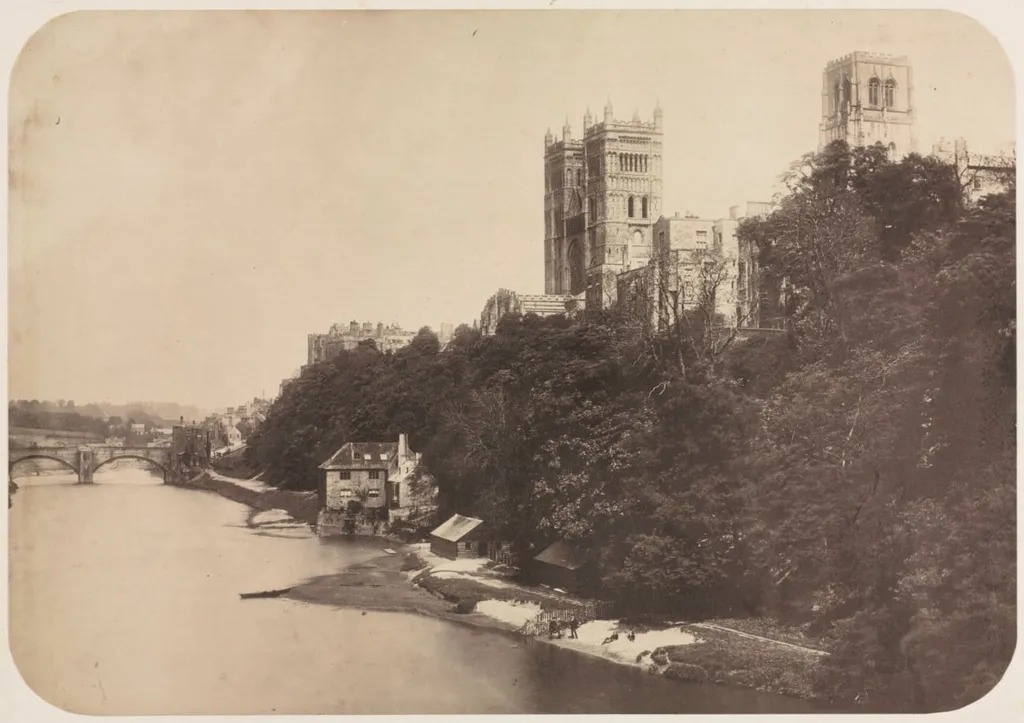
Durham Cathedral is a photography by the Impressionist artist Unknown. It dates from 1858 and is held in the collection of the Cleveland Museum of Art.
About this work
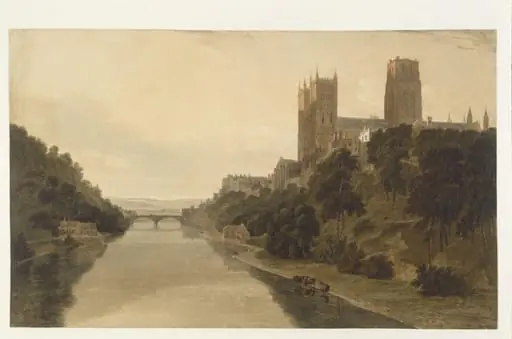
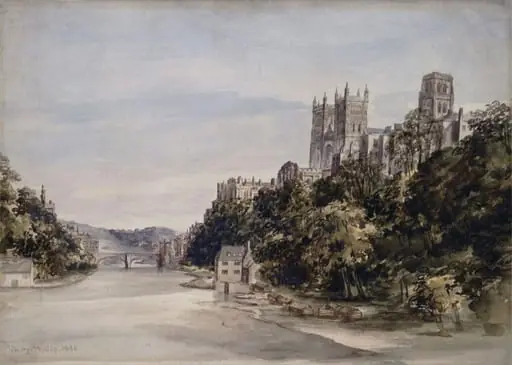
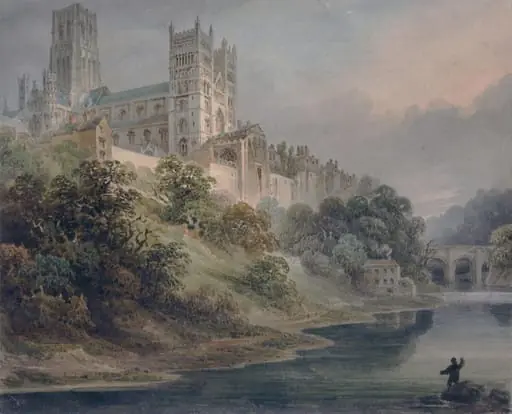
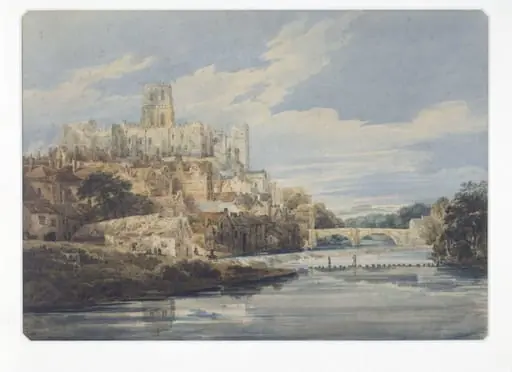
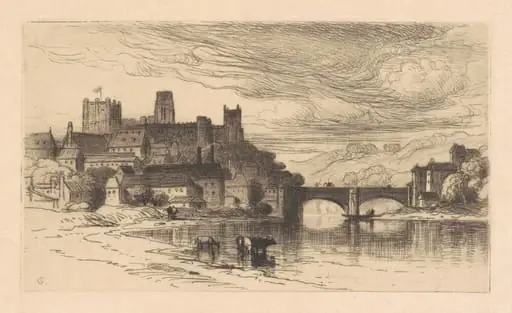
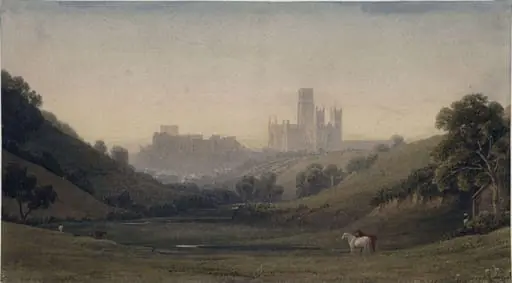
This photo shows a big old church on a hill. The church has tall towers and lots of stone details. Below it, a river winds through the scene, with trees and small buildings along the bank.
The photo looks old—like it was taken a long time ago. The church is Durham Cathedral, and this image is from 1858.
Check out Realism next to see more photos like this.
Overview
The photograph’s tonal range and composition reflect early photographic techniques, preserving the cathedral’s presence with a sober, documentary tone.
Taken in 1858, this photograph captures Durham Cathedral as it stood in the mid-nineteenth century. The image presents the cathedral perched on a rocky promontory, its massive stone structure dominating the landscape. A winding river flows below, flanked by trees and modest dwellings, framing the ecclesiastical edifice within a quiet, rural setting. The photograph’s tonal range and composition reflect early photographic techniques, preserving the cathedral’s presence with a sober, documentary tone.
Subject & Meaning
Durham Cathedral, a symbol of medieval religious authority and architectural endurance, is depicted without embellishment. The photograph emphasizes its physical permanence against the natural and human elements below. The river and surrounding buildings suggest daily life continuing beneath centuries of sacred construction, reinforcing the cathedral’s role as both spiritual center and enduring landmark in the regional landscape.
Technique & Style
The photograph employs early wet-plate collodion processes, resulting in fine detail and a muted tonal palette. The composition is balanced and static, with the cathedral centered and the river leading the eye downward. Shadows are sharp, textures in the stonework are clearly rendered, and the absence of human figures enhances the sense of timelessness. This approach aligns with early photographic realism, prioritizing accuracy over dramatic effect.
History & Provenance
The photograph was made in 1858, during a period of growing interest in documenting Britain’s architectural heritage. It likely originated from a private or institutional collection focused on antiquarian records. Its survival into the present reflects early efforts to preserve visual records of historic sites before widespread industrial change altered their surroundings.
Context
In the 1850s, photography emerged as a tool for recording historic buildings amid rapid urbanization and restoration efforts. Durham Cathedral, already recognized for its Norman architecture, became a frequent subject for early photographers. This image contributes to a broader movement to catalog England’s ecclesiastical structures, often motivated by antiquarian societies and the rising field of architectural conservation.
Legacy
This photograph remains a valuable record of the cathedral’s appearance before modern interventions. It offers insight into how early photographers approached heritage sites—with attention to structure, scale, and environmental context. As one of the earliest photographic documents of Durham Cathedral, it informs subsequent studies of its preservation and visual representation in the digital age.
Artist & collection

 Domestic Scene
 Giacomo and Cardinal Marco, investing Andrea, Abbot of San Zeno, with his Benefice
 The Nymph of Fontainebleau
 Portrait of a Woman
 Madonna and Child with Saints in the Enclosed Garden
 Venus and Minerva
 Family Group of Four on Sofa
 Wall painting from Room H of the Villa of P. Fannius Synistor at Boscoreale