Artwork
Durham Cathedral
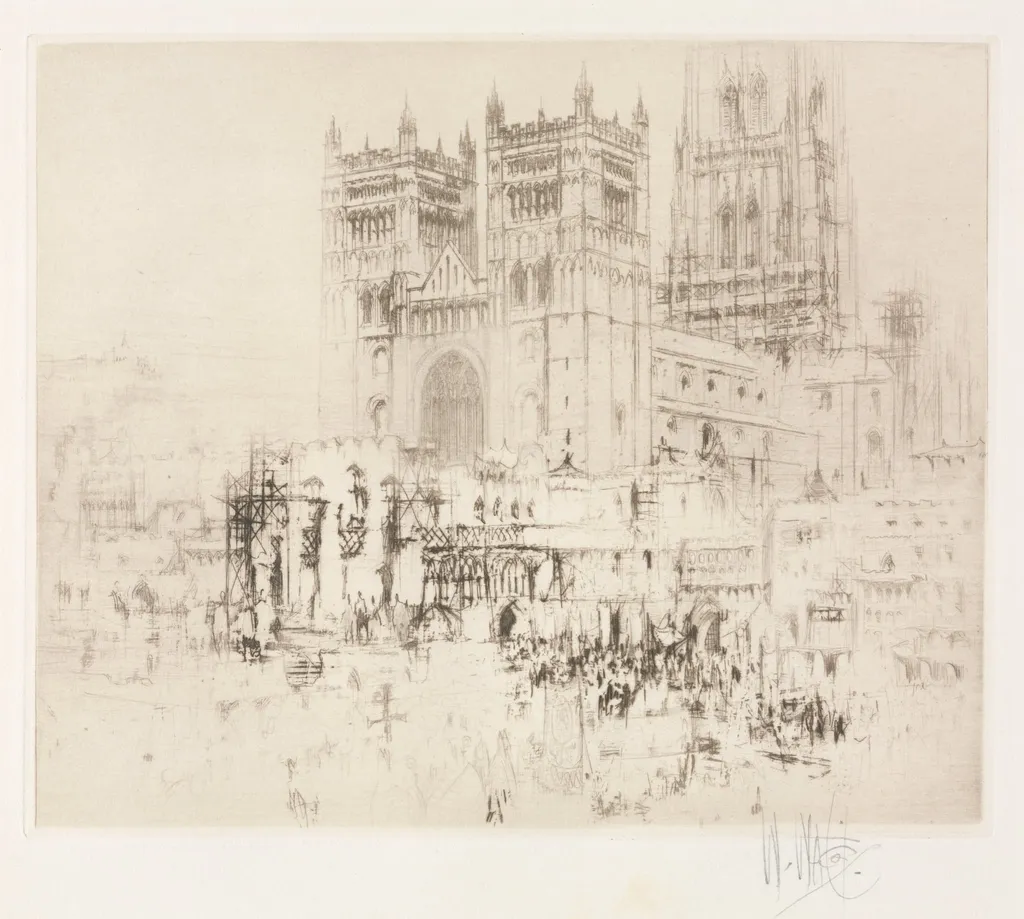
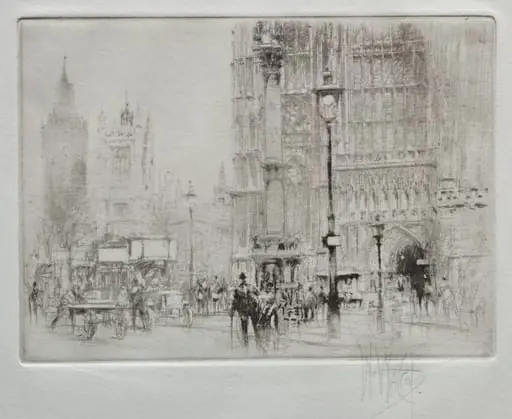
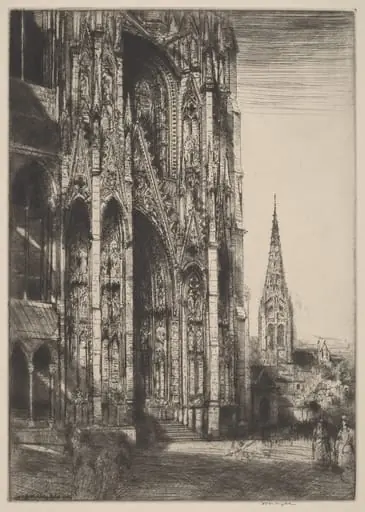
Durham Cathedral is a print by William Walcot. It dates from 1923 and is held in the collection of the Cleveland Museum of Art.
About this work
Overview
Created in 1923 by William Walcot, this print depicts Durham Cathedral as a dynamic architectural study. Rendered in ink or pencil, the work emphasizes mass and silhouette over fine detail, capturing the cathedral’s verticality through loose, energetic lines. The composition balances structural solidity with a sense of motion, suggesting the building as both enduring and in flux.
Subject & Meaning
The subject is Durham Cathedral, a medieval religious structure in northeast England. Walcot frames it not as a static monument but as a living part of its environment, with scaffolding and tiny human figures indicating ongoing activity. This inclusion suggests continuity—how historic architecture remains embedded in daily life, neither frozen in time nor fully detached from modern needs.
Technique & Style
Areas of the building are defined with precision, while others remain sketchy or unfinished, creating visual rhythm.
Walcot employed a rapid, gestural approach, using varied line weight and sparse shading to suggest form. Areas of the building are defined with precision, while others remain sketchy or unfinished, creating visual rhythm. The contrast between detailed scaffolding and atmospheric building contours gives the scene a sense of depth and impermanence, aligning with early 20th-century interests in expressive draftsmanship.
History & Provenance
The print entered the collection of The Cleveland Museum of Art, where it remains today. While its exact provenance prior to acquisition is not widely documented, Walcot’s known engagement with British architectural subjects and his active career in the 1920s support its origin in that period. It reflects his broader practice of documenting historic structures through immediate, on-site observation.
Context
In the early 1920s, artists across Europe revisited historic architecture with renewed interest, often emphasizing emotional resonance over topographical accuracy. Walcot’s work aligns with this trend, responding to a cultural moment that valued the expressive potential of drawing. His focus on scaffolding and human presence also reflects postwar attention to the intersection of heritage and modernity.
Legacy
Walcot’s print contributes to a body of work that redefined architectural representation in the modern era—not as documentary record, but as interpretive experience. Its presence in a major American museum underscores its role in bridging British architectural tradition with international modernist sensibilities, influencing how later artists approached historic structures as living entities.
Artist & collection

Artist
William Walcot RE was a Russian-Scottish architect, graphic artist and etcher, notable as a architect of refined Art Nouveau in Moscow, Russia.

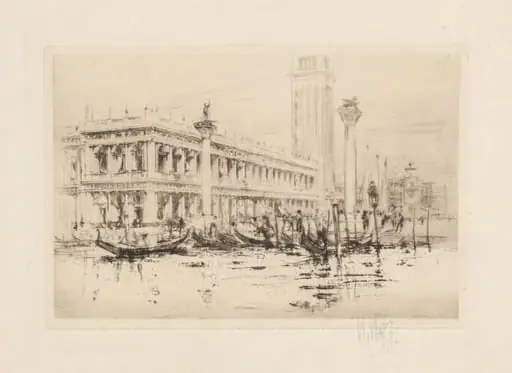 The Venice Set: The Library of St. Mark’s
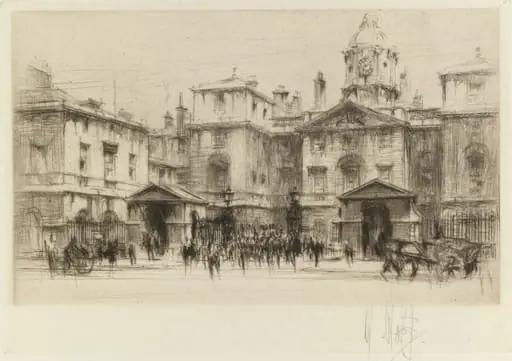 London Set: Horseguards
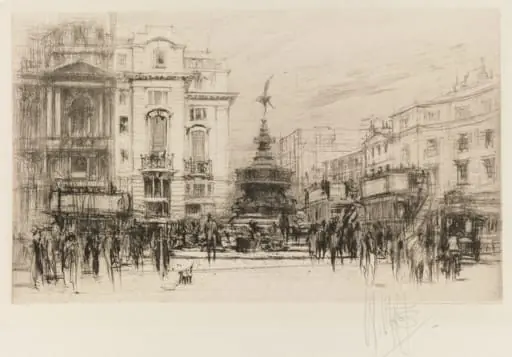 London Set: Piccadilly Circus (with Criterion Theatre)
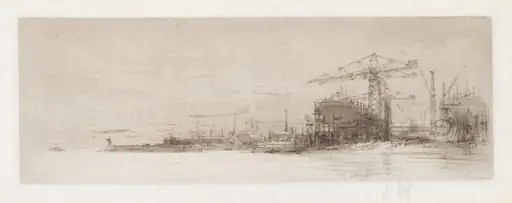 The Clyde from the series The Arteries of Great Britain
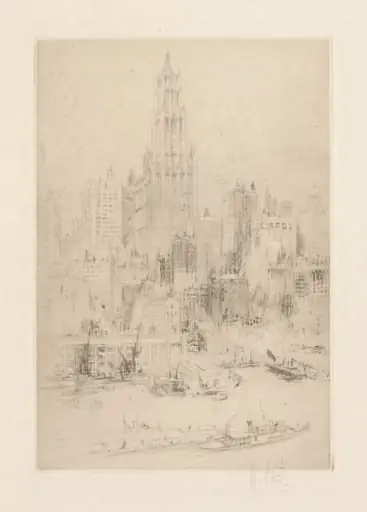 Downtown Manhattan from the East River, with the Woolworth Building
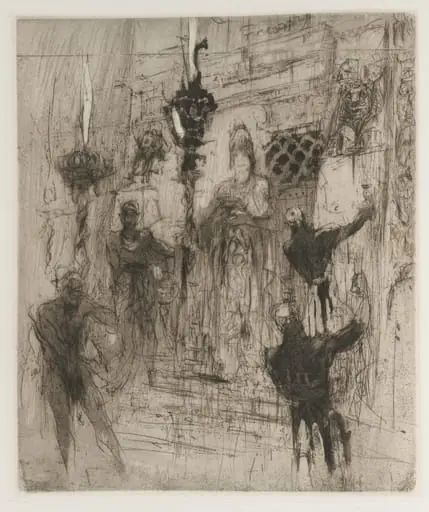 Herodias
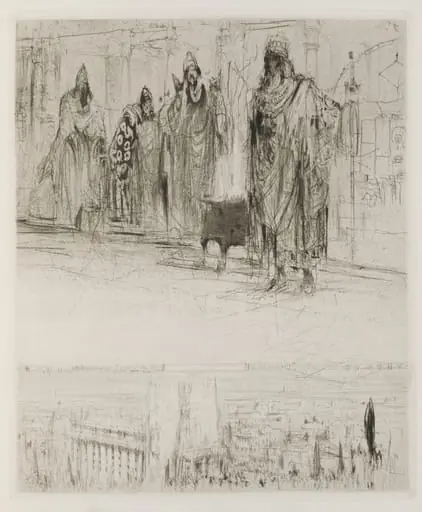 Herodias: Page 13, The tetrarch was awaited by several Galileans, the master of scribes, the chief of the land steward, the manager of the salt mines, and a Jew from Babylon commanding his troops on horse
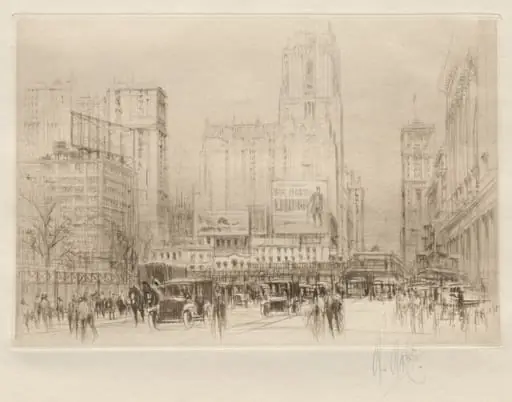 Forty-second Street NY