Artwork
Durham
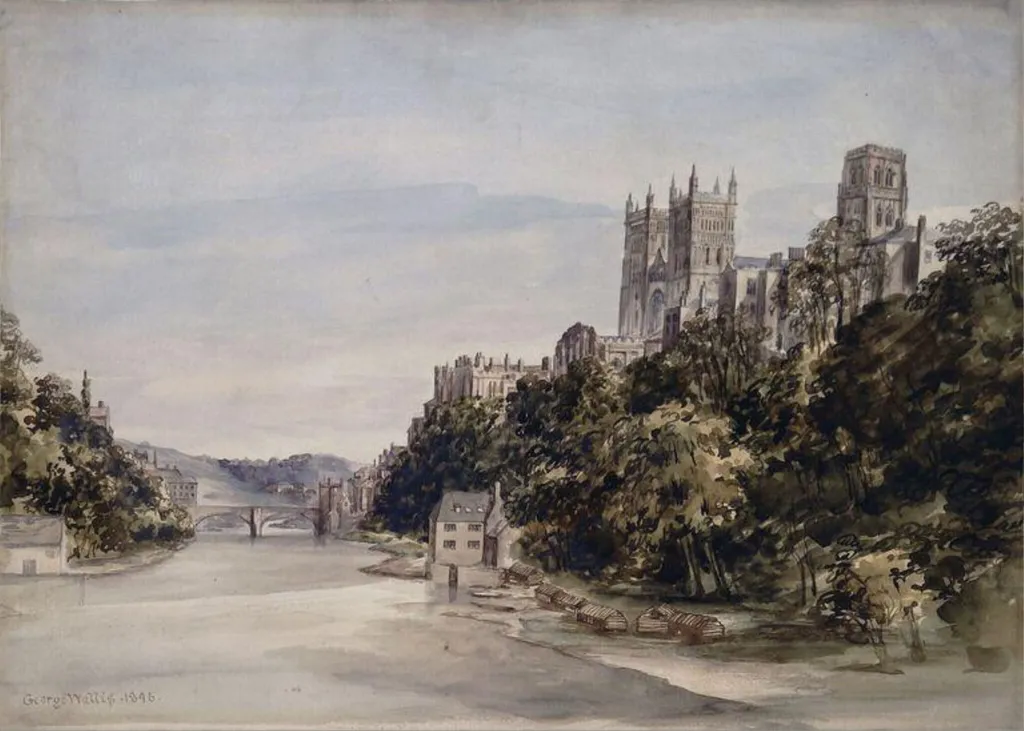
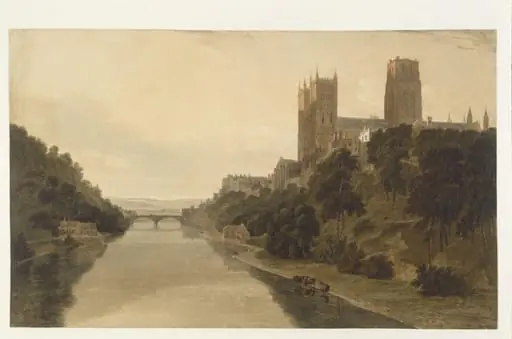
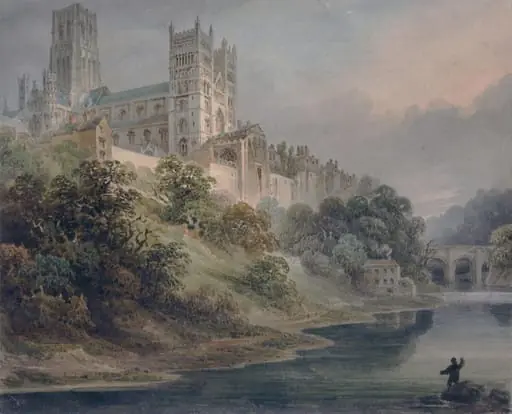
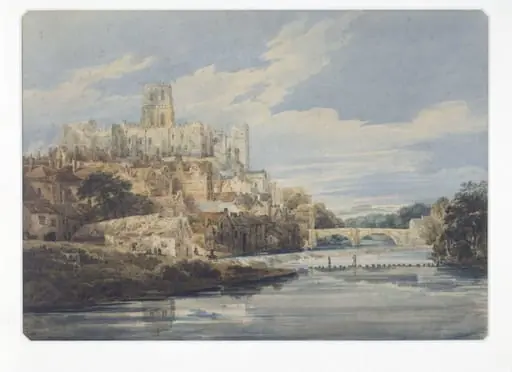
Durham is a watercolor work on paper by the British Romanticist artist George Wallis. It dates from 1846 and is held in the collection of the Victoria and Albert Museum.
About this work
Overview
Created in 1846, the watercolour titled *Durham* depicts a tranquil riverside landscape dominated by a substantial stone bridge. The composition includes a line of trees along the left bank, a modest dwelling near the water’s edge, and, in the distance, a massive, tower‑crowned structure that merges with a mist‑filled sky, suggesting a historic urban setting.
Subject & Meaning
The scene captures a moment of quietude along the River Wear, foregrounding the interplay between natural and built environments. By foregrounding the bridge and the looming castle‑like edifice, the work emphasizes the continuity of human habitation within a serene, atmospheric landscape, reflecting a reverence for England’s architectural heritage.
Technique & Style
Executed in delicate washes of muted pigments, the watercolour employs soft tonal transitions to convey a hazy ambience. Light is rendered through gradual gradations, allowing shadows to dissolve into the surrounding mist, which imparts a gentle, almost ethereal quality characteristic of the Romantic emphasis on mood and the sublime in nature.
History & Provenance
The piece was produced by George Wallis, an English painter who later became the inaugural Keeper of Fine Art at the South Kensington Museum, now known as the Victoria and Albert Museum. Wallis’s work contributed to the 19th‑century effort to record historic architecture, aligning with the broader Romantic interest in documenting national landmarks.
Own this work as a print
Artist & collection
Artist
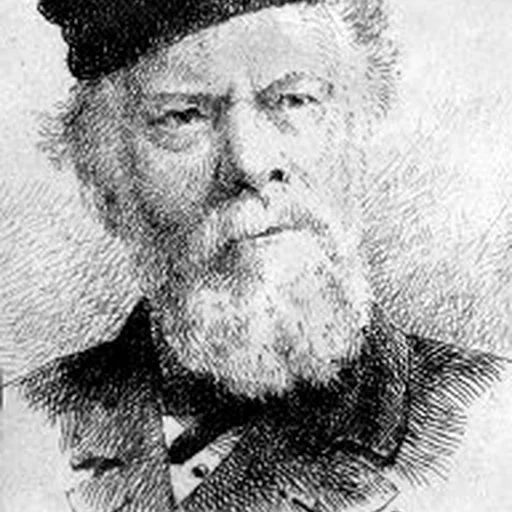
George Wallis (8 June 1811 – 24 October 1891) was an English artist, art educator, and museum curator. He was the first Keeper of Fine Art Collection at South Kensington Museum (later the Victoria & Albert Museum) in London.