Artwork
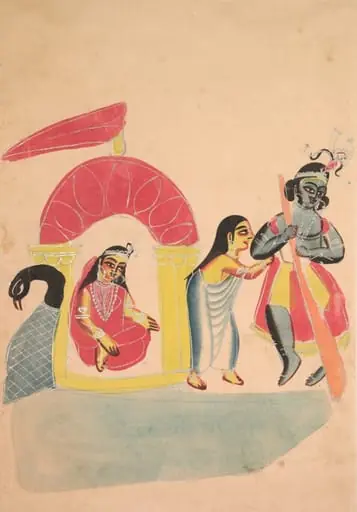
Dusmanta Garlanding Shakumtala
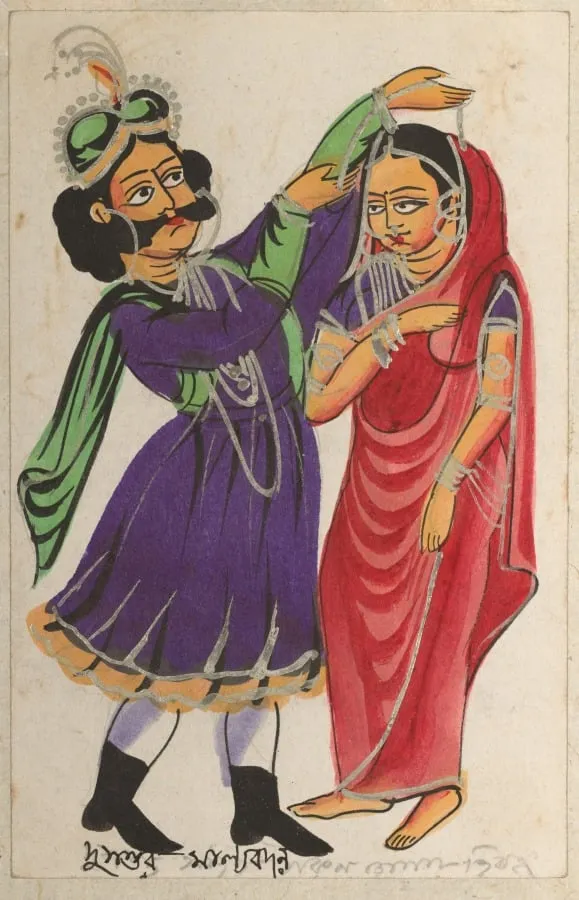
Dusmanta Garlanding Shakumtala is an unspecified painting by the Patna School of Painting artist Unknown. It dates from 1890 and is held in the collection of the Cleveland Museum of Art. This painting depicts a moment of ceremonial gesture between two women, rendered in vivid, unmodulated colors and strong outlines.
About this work
Overview
This painting depicts a moment of ceremonial gesture between two women, rendered in vivid, unmodulated colors and strong outlines. The composition emphasizes their clothing and action against minimal backgrounds, creating a focused, decorative effect. The style aligns with the Kalighat tradition, known for its bold visual language and everyday or mythic subjects rendered with rhythmic simplicity.
Subject & Meaning
The scene portrays one woman placing a green garland over the head of another, a gesture commonly associated with honor, welcome, or ritual celebration in South Asian culture. While the figures are not explicitly identified as deities or historical persons, the act suggests a moment of reverence or festivity, possibly drawn from domestic or religious customs familiar to the painting’s original audience.
Technique & Style
The artist employs flat areas of saturated color—purple, red, green, and gold—defined by crisp, dark outlines. There is no shading or perspective; forms are simplified and stylized to enhance clarity and visual impact. This approach reflects the Kalighat school’s adaptation of folk aesthetics for mass-produced religious and social imagery, prioritizing symbolic expression over naturalism.
History & Provenance
Created in the 19th century near the Kalighat temple in Kolkata, this work likely originated as a commercial painting sold to pilgrims and local patrons. Artists in this tradition worked in workshops, producing images quickly for public consumption. The subject’s secular yet ceremonial tone suggests it may have been intended for home display rather than temple worship.
Context
During the 1800s, Kalighat painters responded to urbanization and colonial influence by blending traditional iconography with contemporary life. This painting’s focus on a personal, non-mythological moment reflects a shift toward depicting everyday rituals. The bold, graphic style was well-suited to lithographic reproduction, helping spread its visual language beyond the temple precincts.
Legacy
Kalighat paintings like this one influenced later Indian modernists who sought to reclaim indigenous visual forms. Though originally ephemeral and mass-produced, surviving examples are now preserved in museum collections as important records of 19th-century Bengali culture. Their stylistic clarity continues to inform contemporary artists exploring folk traditions in modern contexts.
Artist & collection

 Domestic Scene
 Giacomo and Cardinal Marco, investing Andrea, Abbot of San Zeno, with his Benefice
 The Nymph of Fontainebleau
 Portrait of a Woman
 Madonna and Child with Saints in the Enclosed Garden
 Venus and Minerva
 Family Group of Four on Sofa
 Wall painting from Room H of the Villa of P. Fannius Synistor at Boscoreale
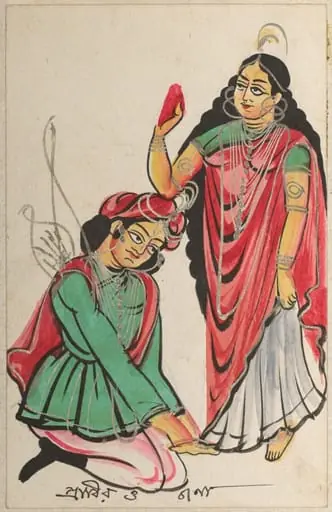 Pravira Kneeling at the Feet of Jana
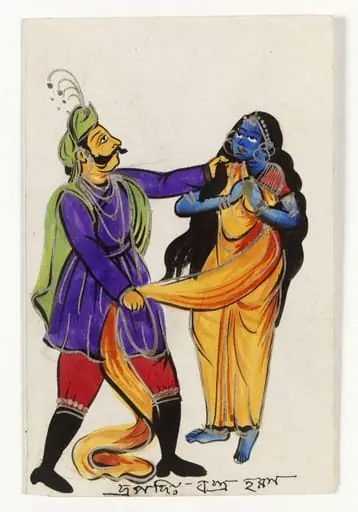 Duhshashana and Draupadi
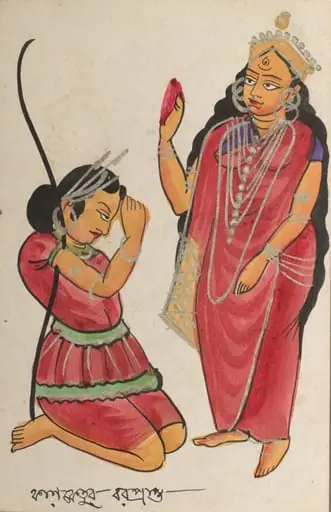 Kalaketu Receiving a Boon from the Goddess Chandi
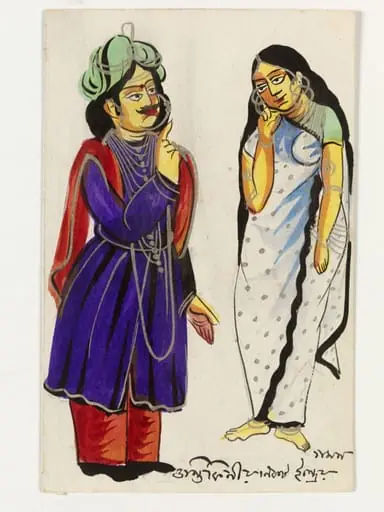 Indra and Dantiniki
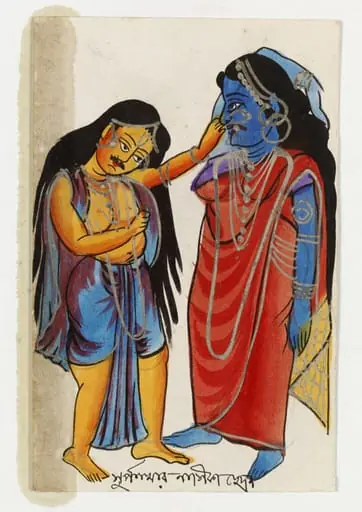 Lakshmana and Surpanakha
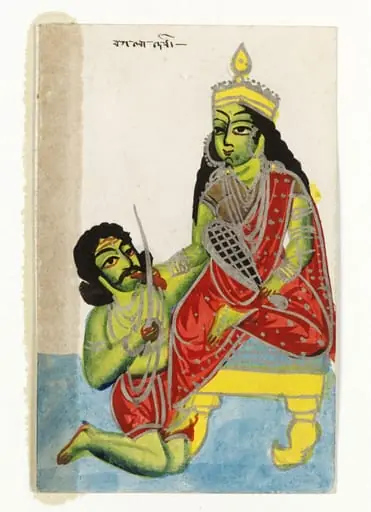 Devi as Bagala
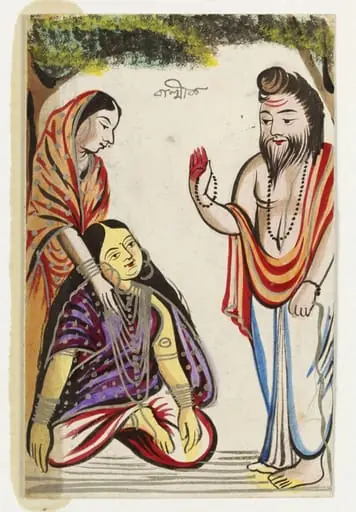 Valmiki and Sita
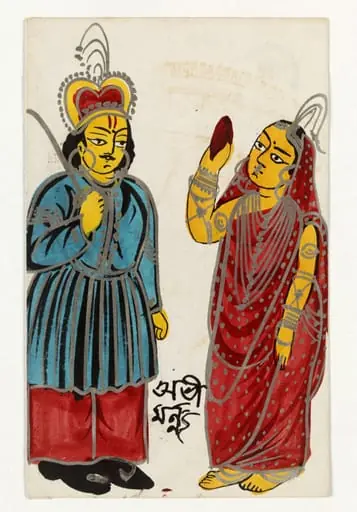 Abhimanyu and Uttara
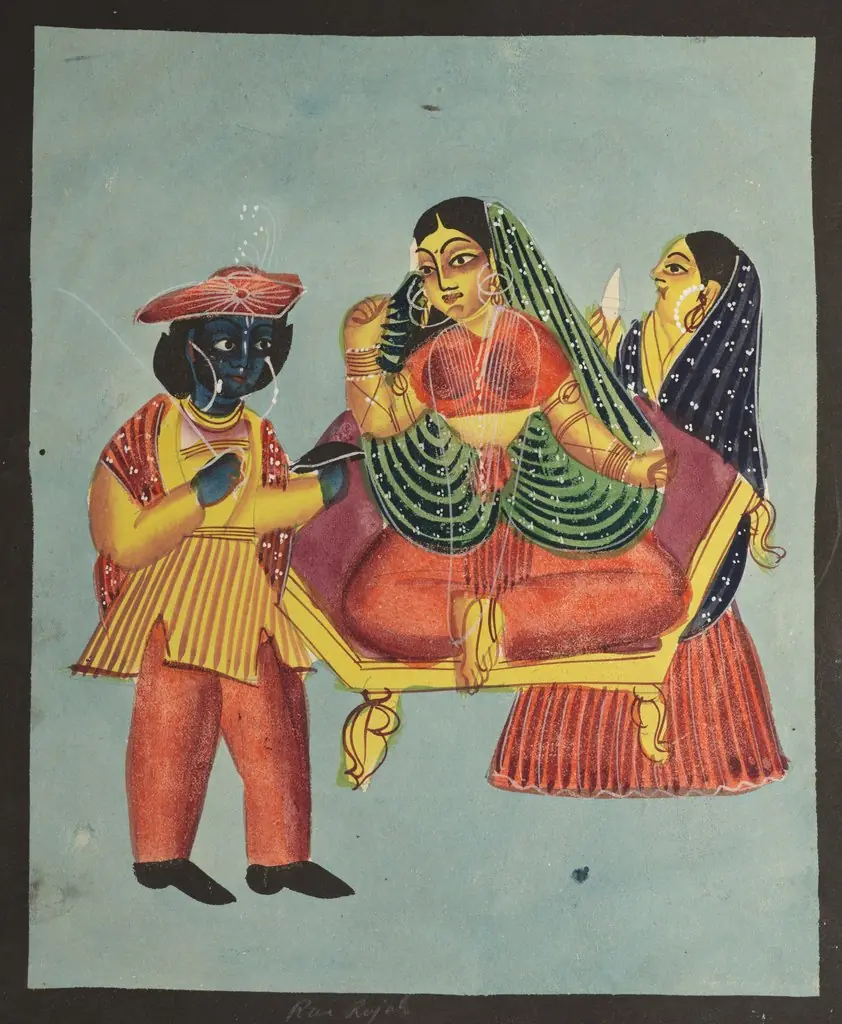 Rai Raja, from a Kalighat album
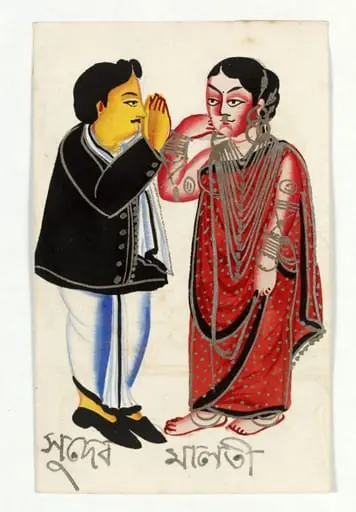 Sudeva and Malati
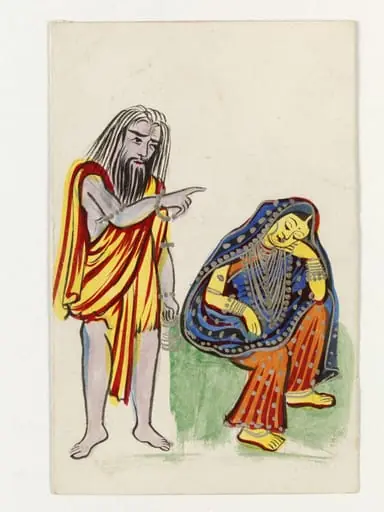 Dushanta and Shakuntala
 Krishna Ferrying Radha Across the Yamuna River