Artwork
Valmiki and Sita
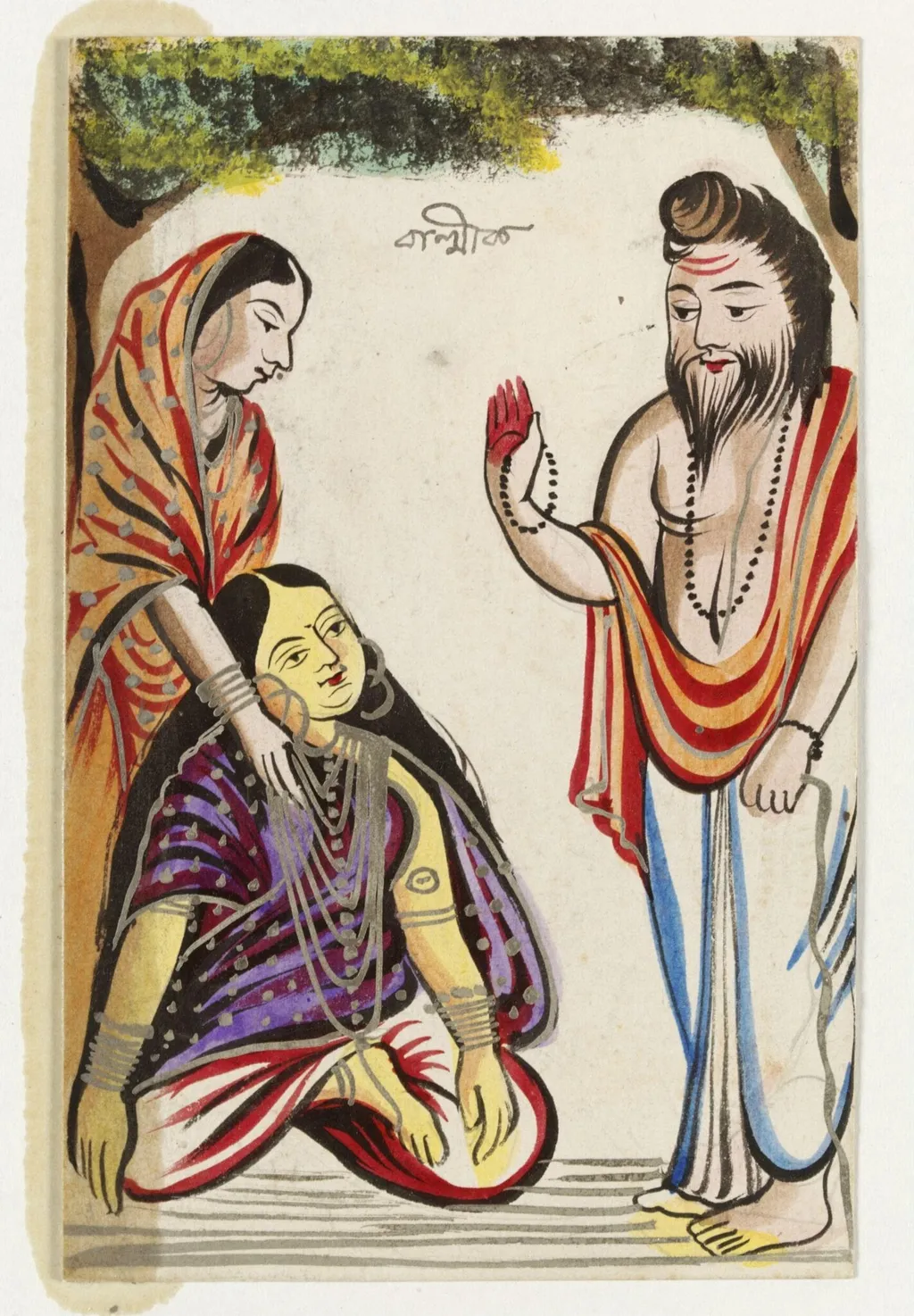
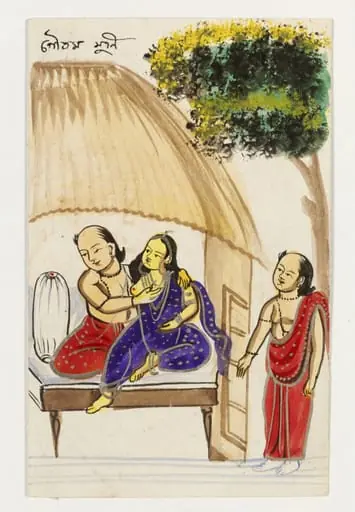
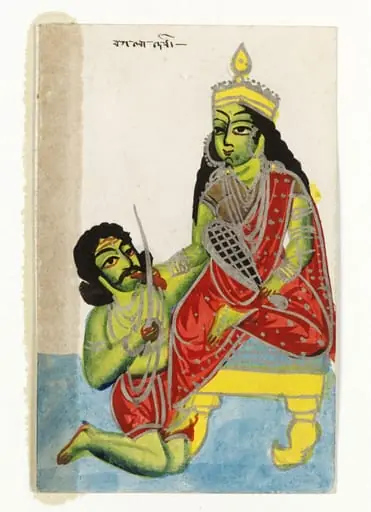
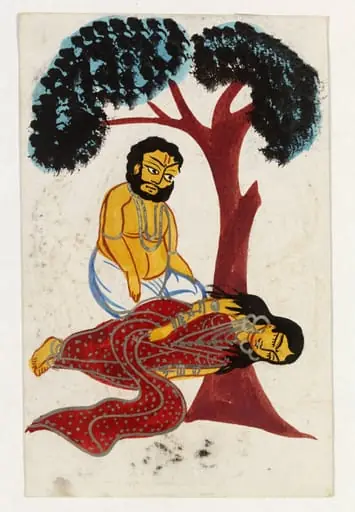
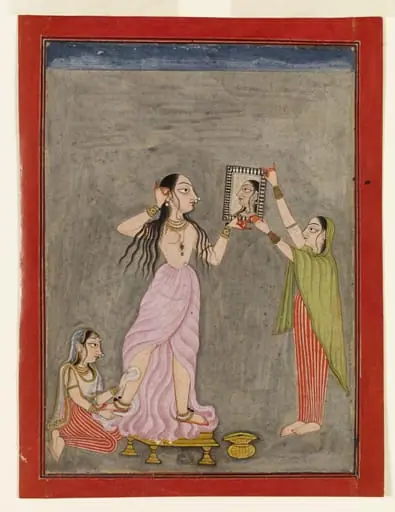
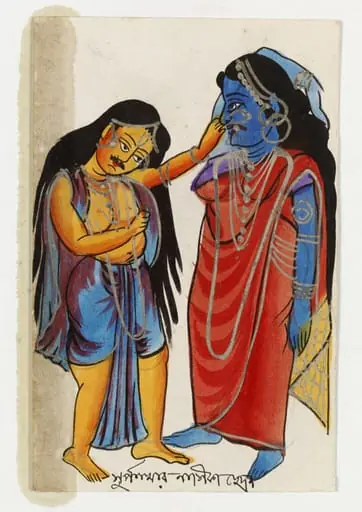
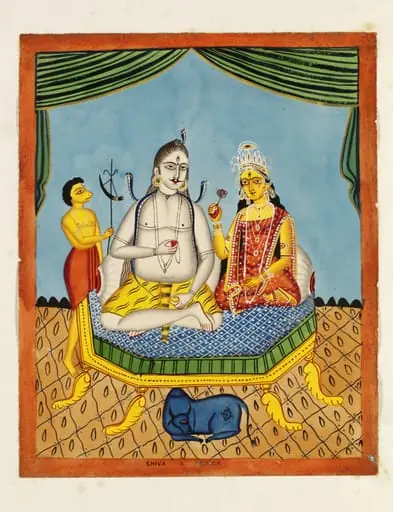
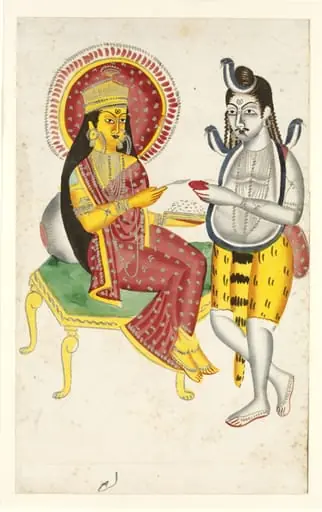
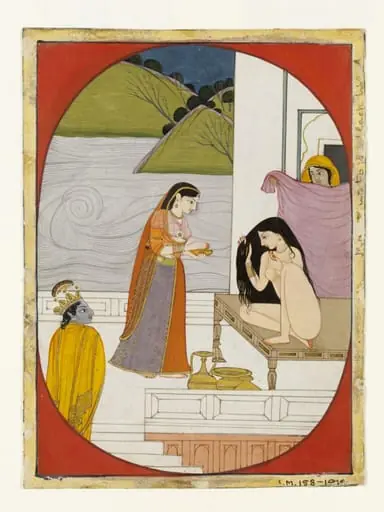
Valmiki and Sita is a paint painting by the Impressionist artist Unknown. It dates from 1890 and is held in the collection of the Victoria and Albert Museum. Created around 1890, this painting portrays a scene from the Ramayana in which the poet-sage Valmiki confronts Sita.
About this work
Overview
Created around 1890, this painting portrays a scene from the Ramayana in which the poet-sage Valmiki confronts Sita. Executed in watercolor combined with tin alloy on a cardboard support, the work measures a modest size and employs a flat, vivid palette that draws the eye to the three central figures.
Subject & Meaning
The composition centers on three characters: Sita, dressed in a red‑black sari, leans forward to support a weary Valmiki, whose head rests on her hand; a bearded figure, identified as Valmiki, raises his hand in a gesture of admonition or instruction. The interaction suggests a moment of moral rebuke, reflecting themes of duty and repentance within the epic narrative.
Technique & Style
Watercolor washes provide the luminous background, while tin alloy accents add texture and subtle sheen to the clothing and accessories. The artist employs bold, flat areas of color—purples, golds, reds—without extensive modeling, creating a graphic quality reminiscent of late‑19th‑century Indian printmaking traditions.
History & Provenance
The work originates from the late colonial period in India, a time when artists increasingly blended indigenous subjects with Western materials such as watercolor and metal alloys. It now forms part of a public collection, offering insight into the visual culture of the era and the cross‑cultural artistic exchanges that shaped it.
Artist & collection

 Domestic Scene
 Giacomo and Cardinal Marco, investing Andrea, Abbot of San Zeno, with his Benefice
 The Nymph of Fontainebleau
 Portrait of a Woman
 Madonna and Child with Saints in the Enclosed Garden
 Venus and Minerva
 Family Group of Four on Sofa
 Wall painting from Room H of the Villa of P. Fannius Synistor at Boscoreale