Artwork
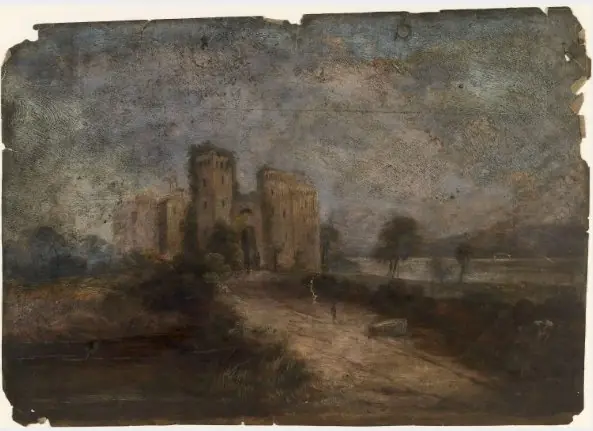
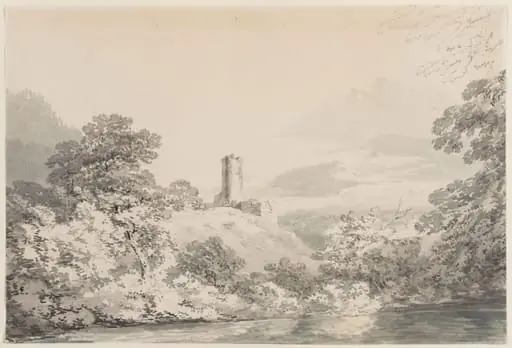
Egremont Castle, Cumberland
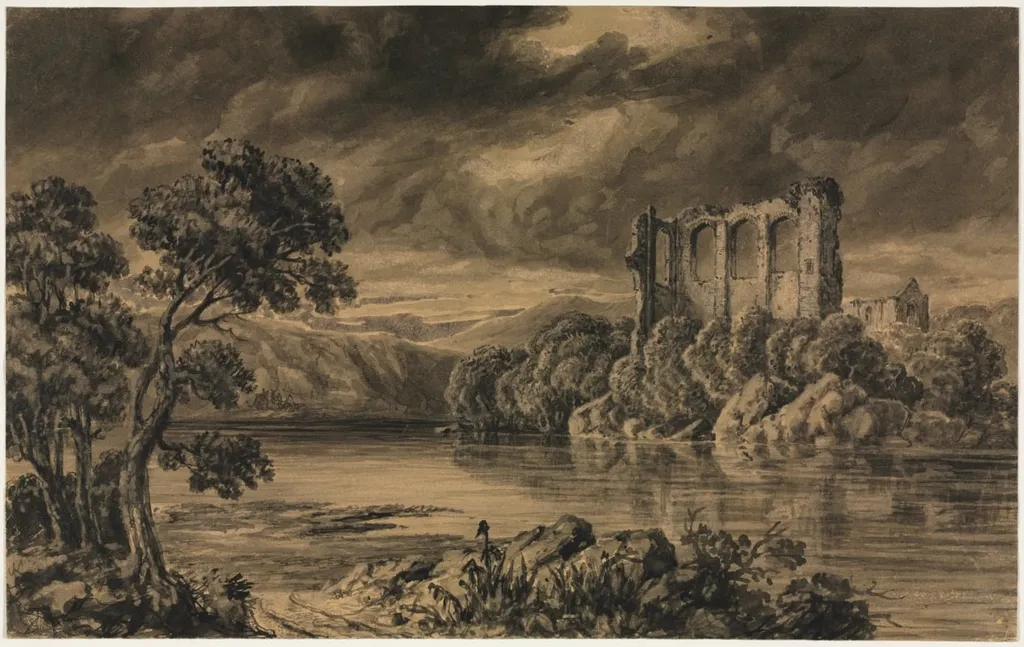
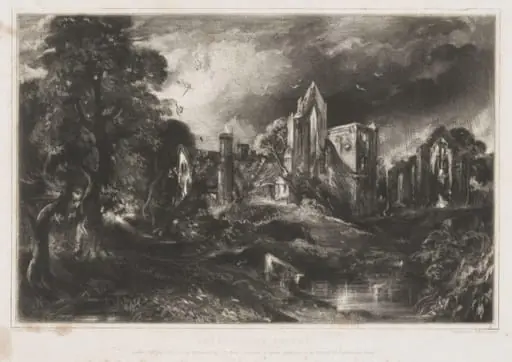
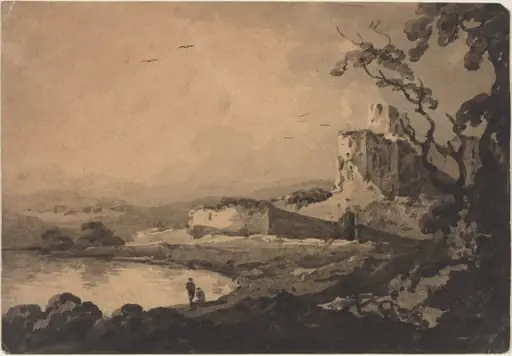
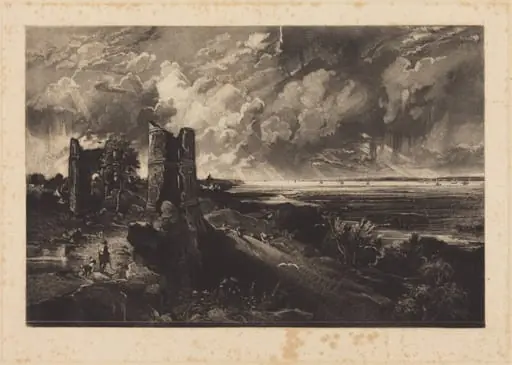
Egremont Castle, Cumberland is a drawing by the Romanticist artist Unknown. It dates from 1804 and is held in the collection of the Cleveland Museum of Art. This pencil and wash drawing portrays Egremont Castle, a medieval ruin in Cumberland, England.
About this work
Overview
Rendered with delicate tonal contrasts, the scene emphasizes the castle’s weathered stonework amid a quiet, overgrown landscape.
This pencil and wash drawing portrays Egremont Castle, a medieval ruin in Cumberland, England. Rendered with delicate tonal contrasts, the scene emphasizes the castle’s weathered stonework amid a quiet, overgrown landscape. A still pool in the foreground mirrors the structure, enhancing the sense of stillness. The sky, filled with drifting clouds, casts a subdued light that unifies the composition and deepens its atmospheric mood.
Subject & Meaning
The drawing centers on the ruins of Egremont Castle, once a defensive stronghold now reclaimed by nature. Its partial collapse and overgrown surroundings suggest the passage of time and the quiet decay of human structures. The reflective water and distant storm clouds evoke a contemplative tone, inviting reflection on impermanence without overt sentimentality.
Technique & Style
The artist employed fine pencil lines and subtle washes to model form and texture, capturing the roughness of stone and the softness of foliage. Cool grays in the water contrast with warmer earth tones in the ruins, creating visual harmony. Light is carefully modulated to suggest depth, with shadows pooling beneath arches and trees, enhancing the drawing’s spatial realism.
History & Provenance
The drawing is part of the collection at the Cleveland Museum of Art, acquired as a work by an anonymous 18th-century British artist. It likely originated from a tour of northern England’s historic sites, a common practice among amateur draftsmen of the period. No definitive record of its creation or early ownership survives, but its style aligns with topographical drawings of the time.
Context
In the late 1700s, interest in ruins and pastoral landscapes grew among British artists and travelers, influenced by Romantic sensibilities and antiquarian study. Egremont Castle, though modest in scale, was one of many such sites drawn for personal or scholarly documentation. This work reflects a broader cultural fascination with history embedded in the land, rather than grand narrative.
Legacy
Though unsigned and unattributed, the drawing contributes to a quiet tradition of British topographical art that valued observation over embellishment. Its preservation in a major museum underscores its role as a record of both architectural decay and artistic practice. It remains a quiet testament to the aesthetic value placed on solitude and ruin in the 18th-century visual imagination.
Artist & collection

 Domestic Scene
 Giacomo and Cardinal Marco, investing Andrea, Abbot of San Zeno, with his Benefice
 The Nymph of Fontainebleau
 Portrait of a Woman
 Madonna and Child with Saints in the Enclosed Garden
 Venus and Minerva
 Family Group of Four on Sofa
 Wall painting from Room H of the Villa of P. Fannius Synistor at Boscoreale