Artwork
Eleven-Headed Kannon (Jūichimen Kannon)
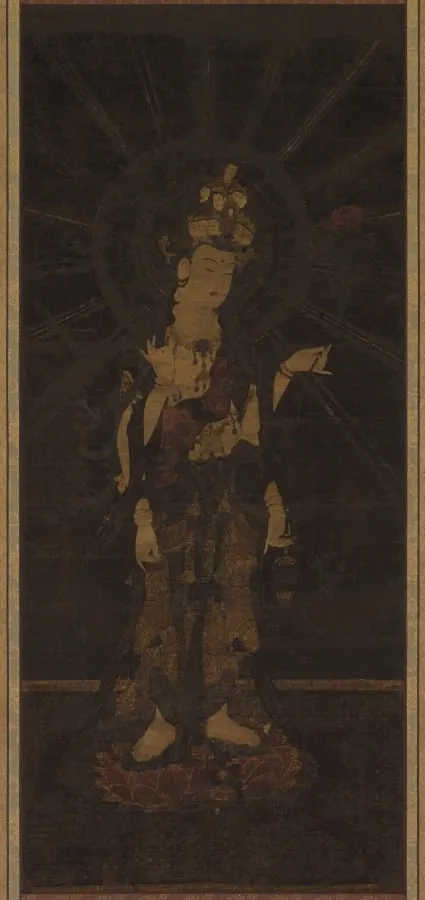
Eleven-Headed Kannon (Jūichimen Kannon) is an unspecified painting by Unknown. It dates from 1204 and is held in the collection of the Cleveland Museum of Art. The painting depicts the Eleven‑Headed Kannon, a Buddhist figure embodying mercy, rendered in vivid colors on fine silk.
About this work
You see a golden figure with eleven small heads stacked above the main one, all floating on a cloud.
This painting was made for private prayer, not a temple. The silk is fine, the colors bright—someone rich kept it close. The extra heads let the deity see suffering in every direction.
Look up more works from the subject: japan, kamakura period (1185–1333).
Overview
The painting depicts the Eleven‑Headed Kannon, a Buddhist figure embodying mercy, rendered in vivid colors on fine silk. The composition shows a central golden visage topped by ten smaller heads, all appearing to float upon a cloud. Its dimensions are modest, indicating it was intended for personal devotional use rather than public temple display.
Subject & Meaning
Kannon with eleven heads symbolizes the deity’s capacity to perceive suffering in all directions, extending compassion outward. Introduced to Japan in the seventh century, this form of Kannon grew increasingly popular among lay believers through the Kamakura period, reflecting a shift toward private religious practice.
Technique & Style
Current conservation uses two paper backings with carefully matched silk patches, allowing the original surface to be distinguished from restored areas.
Executed on high‑quality silk, the work employs bright mineral pigments and gold leaf to achieve a luminous effect. The original construction featured a single silk backing; later restoration added a full silk layer, which later caused tension and cracking. Current conservation uses two paper backings with carefully matched silk patches, allowing the original surface to be distinguished from restored areas.
History & Provenance
The painting likely originated in the Kamakura era (1185–1333) as a private devotional object for a wealthy patron. An earlier restoration introduced a dark‑dyed silk backing that concealed damage but altered the visual tone. Recent conservation removed the problematic silk layer, cleaned the original metal fittings, and installed specially crafted replacements where necessary.
Context
During the Kamakura period, Buddhist practice expanded beyond monastic settings, with affluent laypeople commissioning intimate images for home worship. The Eleven‑Headed Kannon reflects this trend, embodying both doctrinal significance and the personal piety of its owner.
Artist & collection

 Domestic Scene
 Giacomo and Cardinal Marco, investing Andrea, Abbot of San Zeno, with his Benefice
 The Nymph of Fontainebleau
 Portrait of a Woman
 Madonna and Child with Saints in the Enclosed Garden
 Venus and Minerva
 Family Group of Four on Sofa
 Wall painting from Room H of the Villa of P. Fannius Synistor at Boscoreale
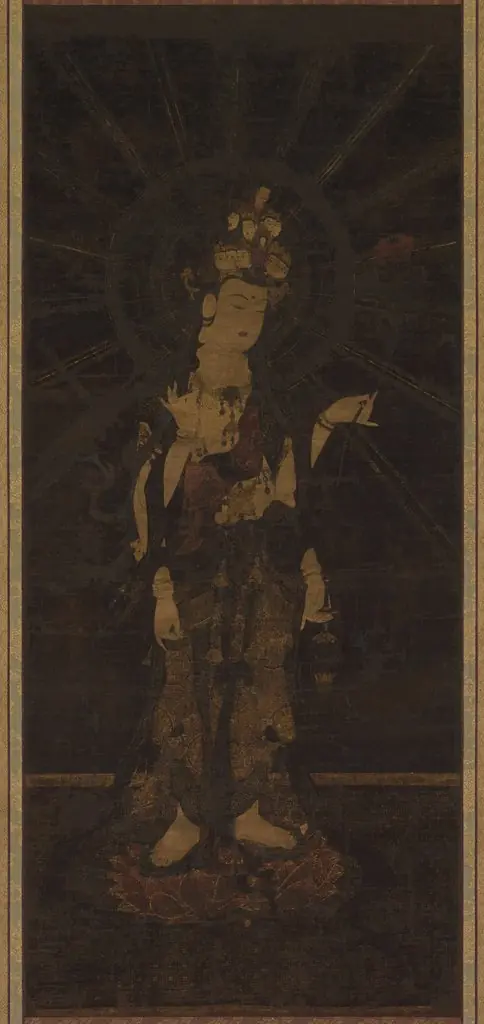 Eleven-Headed Kannon (Jūichimen Kannon)
 十一面観音影向図|Eleven-Headed Kannon on Mount Fudaraku
 Water-Moon Kannon (Suigetsu Kannon)
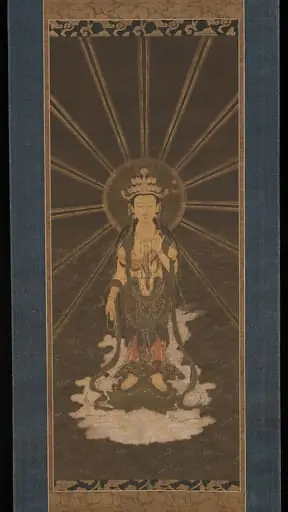 十一面観音来迎図|Descent of Eleven-Headed Kannon
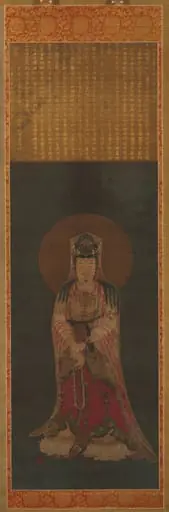 Kannon
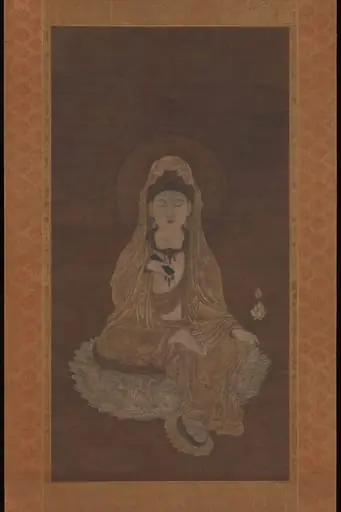 白衣観音図|White-Robed Kannon
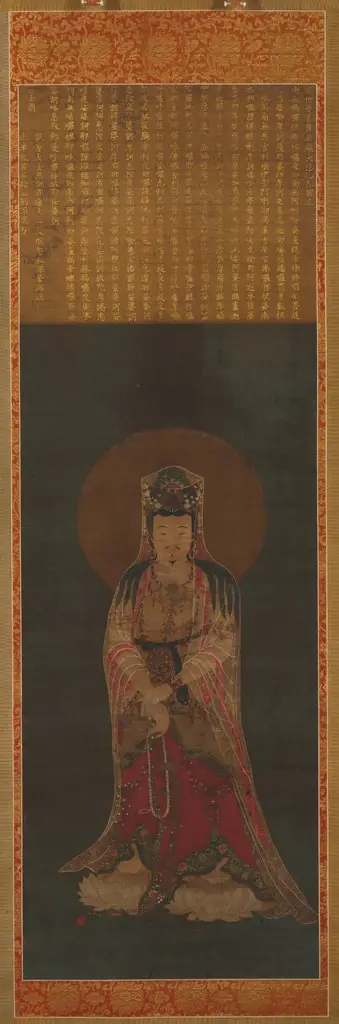 Kannon
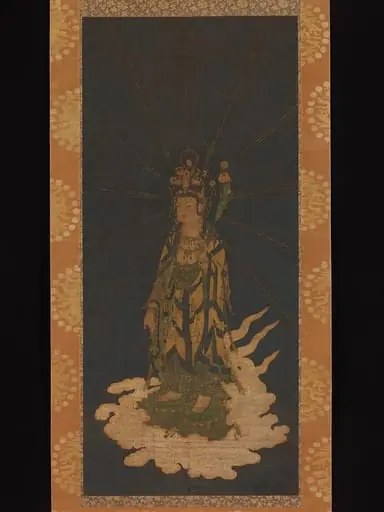 十一面観音来迎図|Descent of Eleven-Headed Kannon
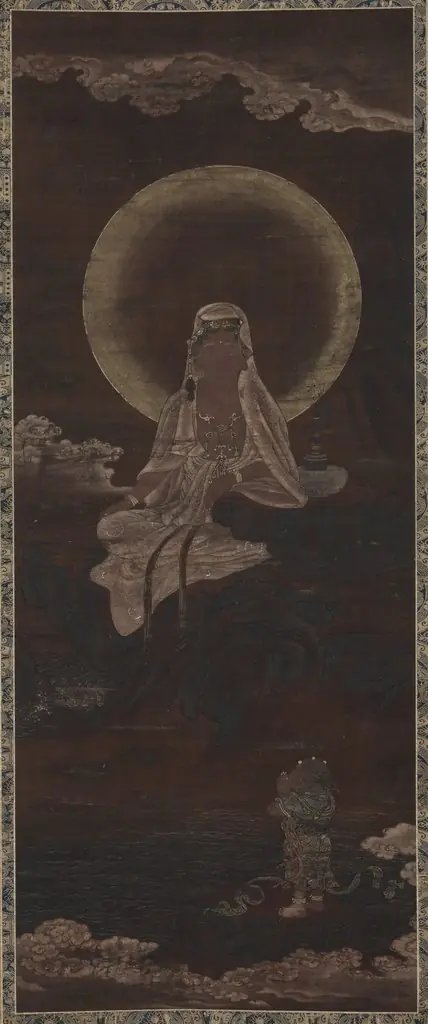 Water-Moon Kannon (Suigetsu Kannon)
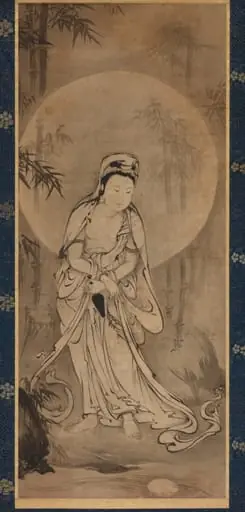 Willow-and-Moon Kannon (Yōryū Kannon)