Artwork
Emperor Aurangzeb
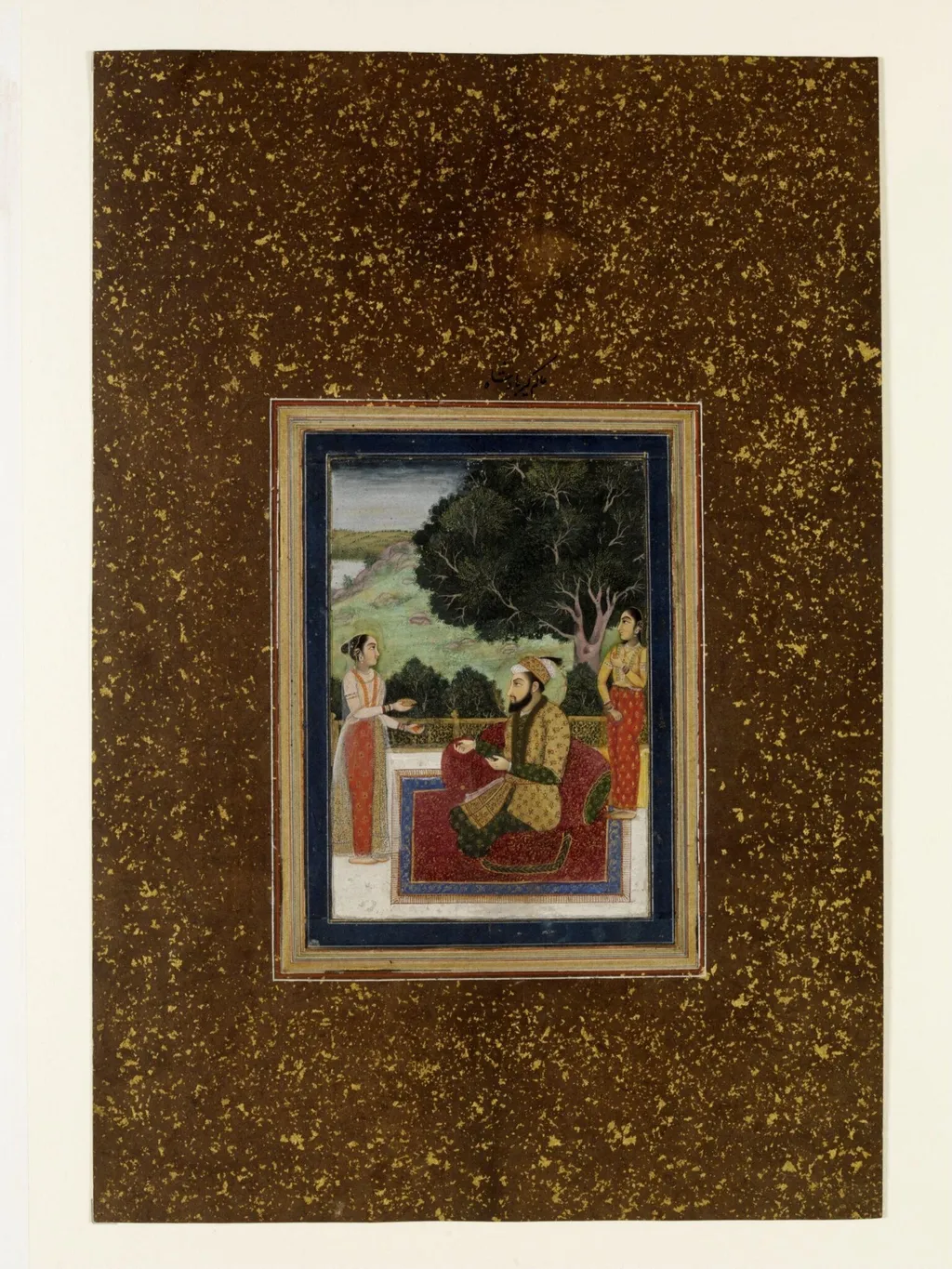
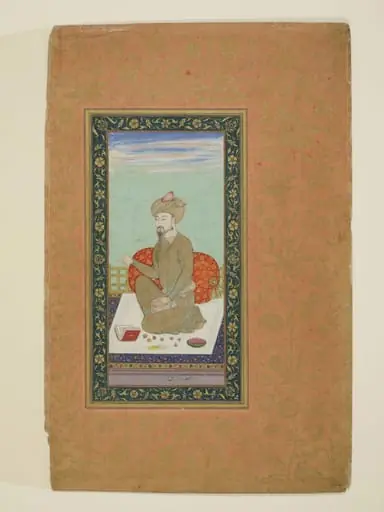
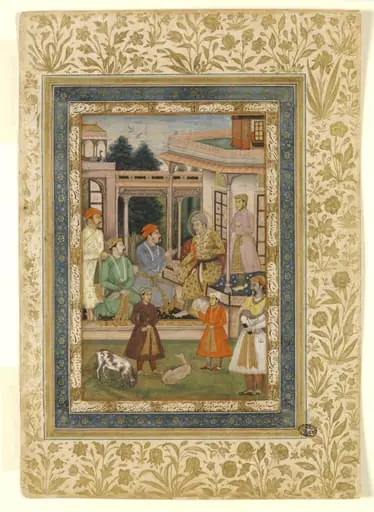
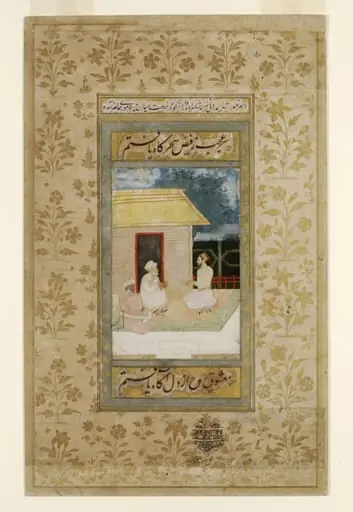
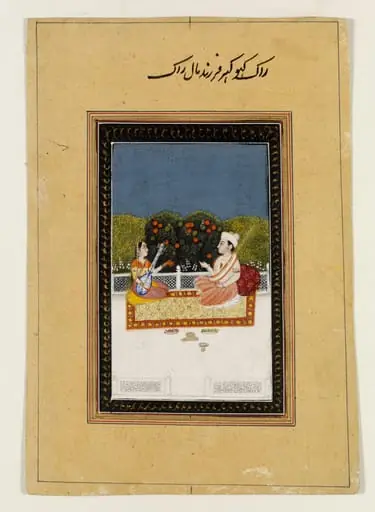
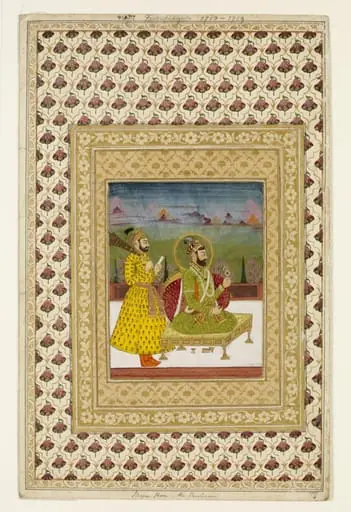
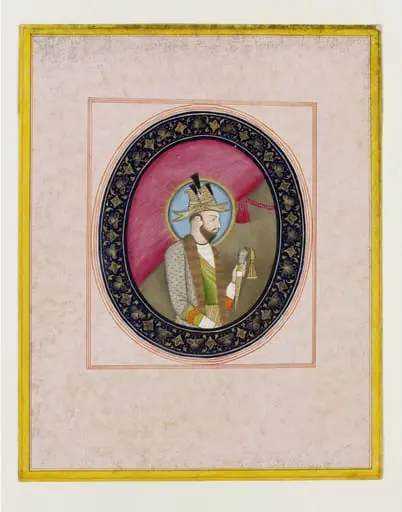
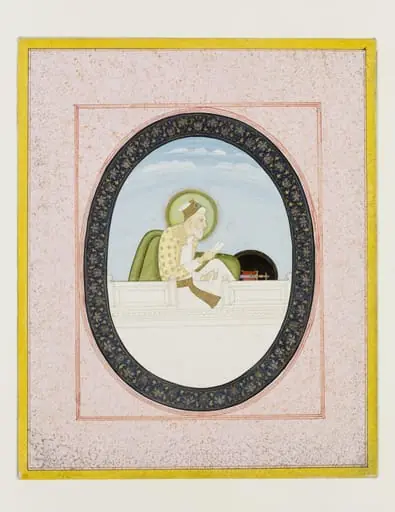
Emperor Aurangzeb is a paint painting by Unknown. It dates from 1750 and is held in the collection of the Victoria and Albert Museum.
About this work
Overview
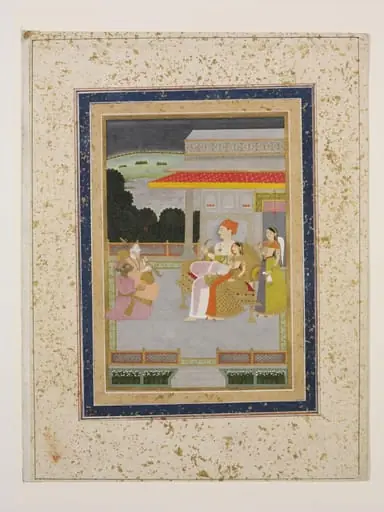
The composition is framed by a dark border adorned with delicate gold speckles, suggesting its original function as a refined decorative object.
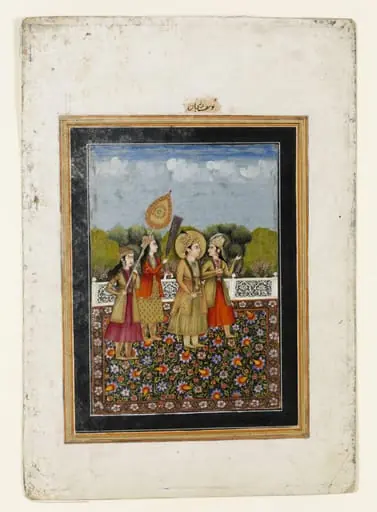
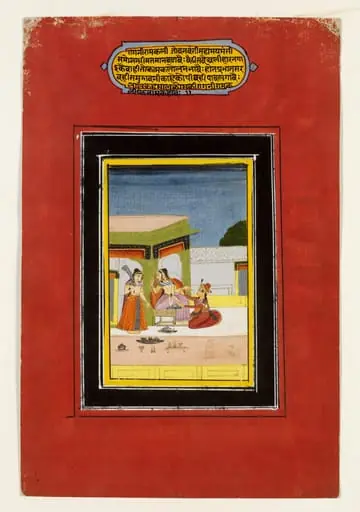
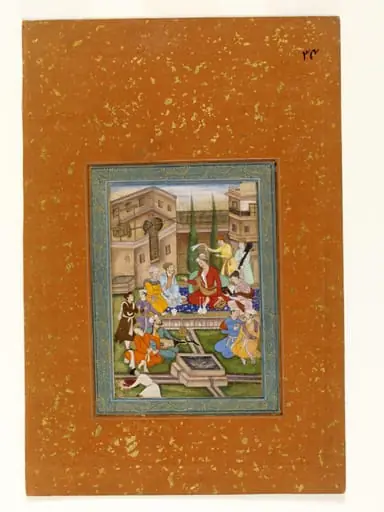
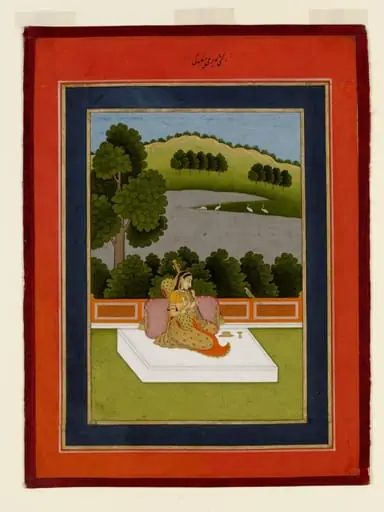
This opaque watercolor on paper portrays Emperor Aurangzeb seated on a low platform, surrounded by two female attendants in a garden setting. The composition is framed by a dark border adorned with delicate gold speckles, suggesting its original function as a refined decorative object. The scene is contained within a compact, intimate space, emphasizing stillness and formality over expansive narrative.
Subject & Meaning
Aurangzeb, the Mughal emperor, is depicted in a moment of quiet repose, flanked by women from the imperial harem. Their presence underscores his authority and the segregated nature of court life. The calm postures and restrained gestures convey dignity rather than action, reflecting the emperor’s later years, marked by austerity and religious devotion, even as his attire retains imperial opulence.
Technique & Style
Executed in opaque watercolor, the painting employs fine brushwork to render intricate textile patterns and subtle facial features. The figures are rendered with precise detail, while the background landscape is rendered in softer, more generalized tones. The gold-speckled border and flattened perspective align with late Mughal conventions, where decorative elements often balanced naturalistic representation.
History & Provenance
The painting entered a museum collection in 1913 after acquisition from Messrs Luzac & Co., a London dealer known for Asian artworks. Its prior history remains undocumented, but its style and materials suggest it was produced in a Mughal atelier during Aurangzeb’s reign, likely for private courtly use rather than public display.
Context
Created during the later phase of Mughal painting, this work reflects a shift toward intimacy and restraint compared to earlier, more flamboyant imperial portraits. The emphasis on personal space and subdued coloration mirrors Aurangzeb’s personal piety and the declining patronage of elaborate court art, even as technical skill remained highly refined.
Legacy
As a surviving example of late Mughal portraiture, the painting offers insight into the evolving aesthetics of imperial representation under Aurangzeb. It stands as a quiet testament to the persistence of artistic tradition amid political and cultural change, preserved today as a record of courtly life rather than a symbol of imperial grandeur.
Artist & collection

 Domestic Scene
 Giacomo and Cardinal Marco, investing Andrea, Abbot of San Zeno, with his Benefice
 The Nymph of Fontainebleau
 Portrait of a Woman
 Madonna and Child with Saints in the Enclosed Garden
 Venus and Minerva
 Family Group of Four on Sofa
 Wall painting from Room H of the Villa of P. Fannius Synistor at Boscoreale