Artwork
Rao Budh Singh of Bundi
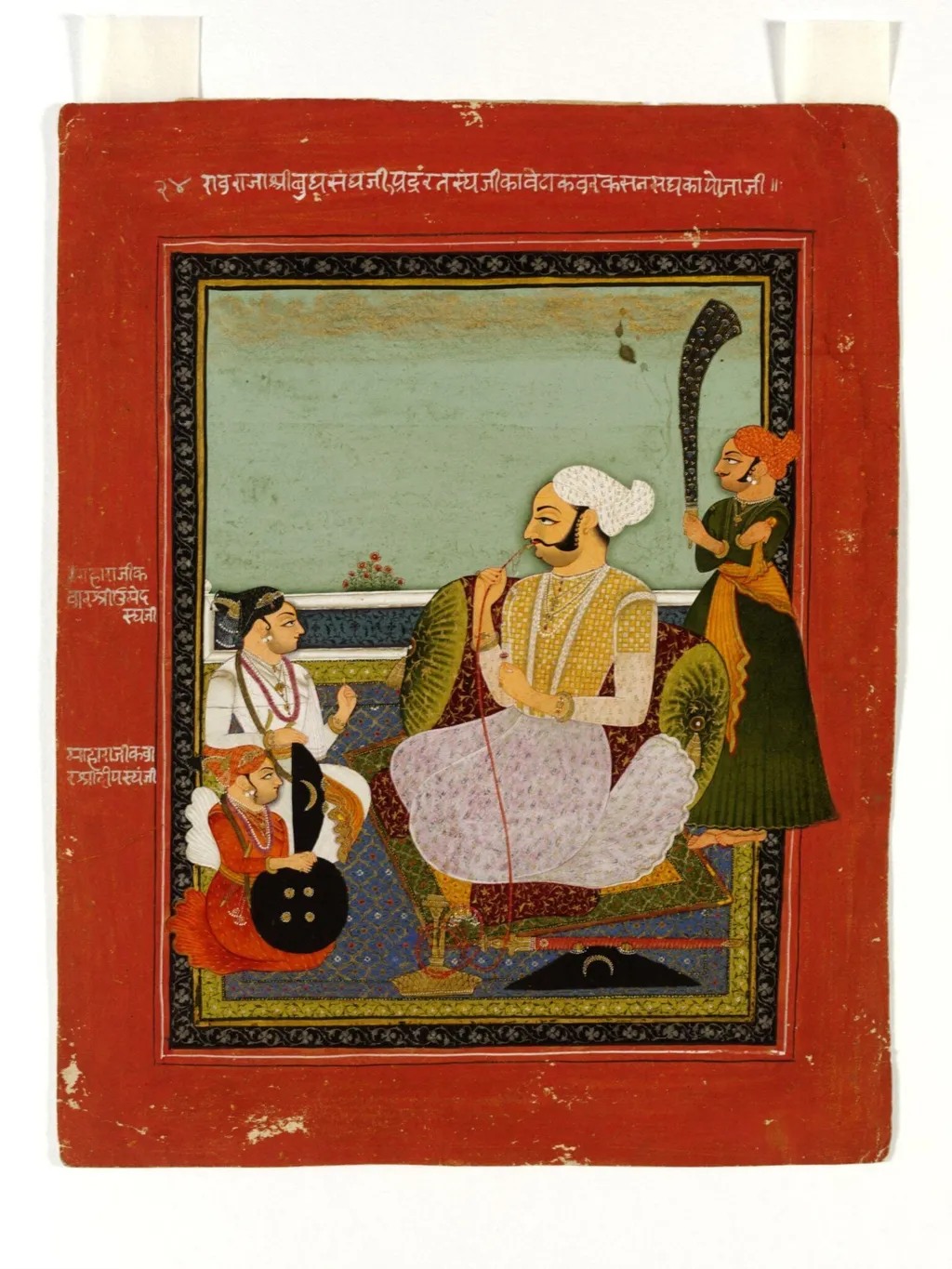
Rao Budh Singh of Bundi is a paint painting by the Baroque artist Unknown. It dates from 1743 and is held in the collection of the Victoria and Albert Museum.
About this work
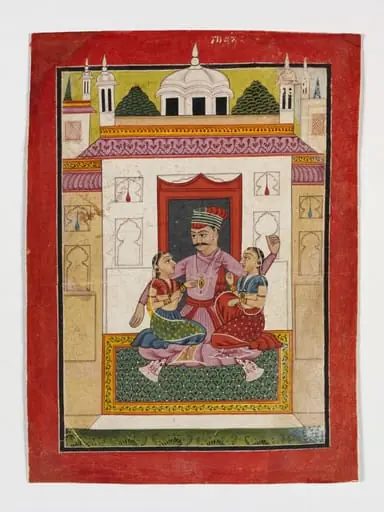
The man in the center wears a white turban, a yellow jacket, and patterned pants, holding a hookah.
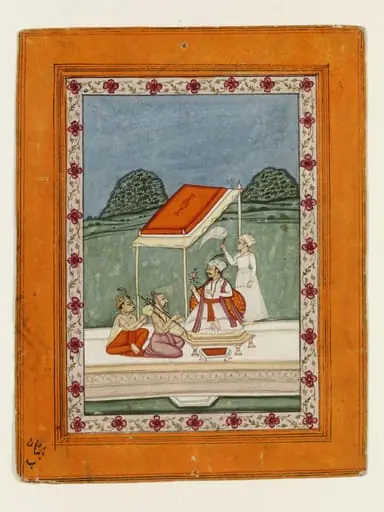
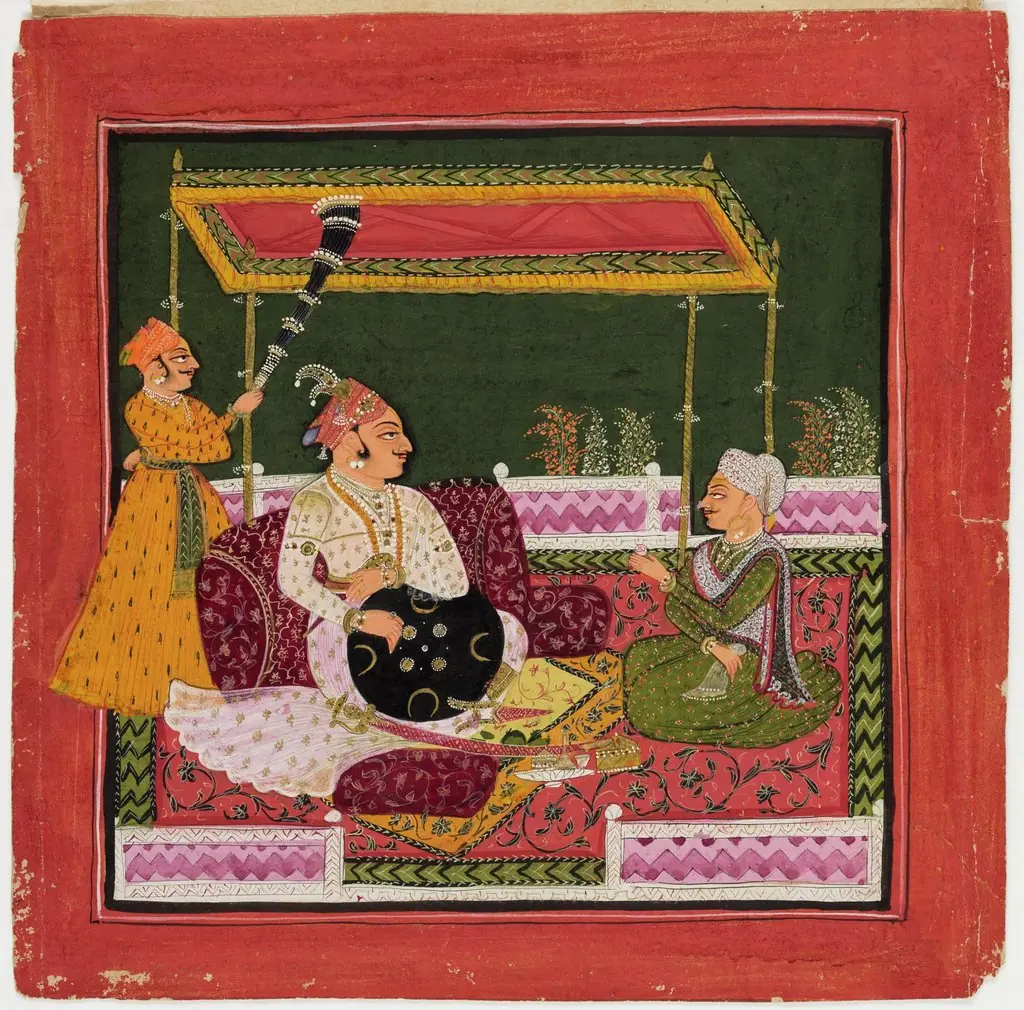
This painting shows four people sitting on a colorful rug in a room with a green wall. The man in the center wears a white turban, a yellow jacket, and patterned pants, holding a hookah. To his left, a woman in red and white sits with a child on her lap. On the right, a servant in green stands holding a fan. The borders are red with gold and black patterns, and there’s writing along the edges.
The bright colors and detailed patterns suggest this was made for someone important. The style looks like it’s from a long time ago, around 1743.
If you want to see more like this, check out the Victoria and Albert Museum.
Overview
Created in 1743, this opaque watercolor on paper depicts Rao Budh Singh of Bundi surrounded by family and attendants. The central figure sits on a richly patterned rug before a green wall, holding a huqqa, while a woman in red and white with a child, and a servant bearing a fan, complete the intimate grouping. Decorative borders in red, gold and black frame the scene, accompanied by marginal script.
Subject & Meaning
The composition presents Rao Budh Singh in a domestic setting, emphasizing his status through luxurious dress and jewellery, as well as his participation in the leisurely activity of smoking a hookah. The inclusion of his sons, a female companion with a child, and a servant underscores familial hierarchy and the social customs of 18th‑century Bundi court life.
Technique & Style
Executed in opaque watercolour, the work employs vivid pigments and fine detailing to render textiles, jewellery and interior décor. The chequered orange‑yellow garment, white turban with repeated floral motifs, and the intricate border patterns reflect a courtly aesthetic typical of North Indian miniature painting of the mid‑1700s.
History & Provenance
The painting originates from the princely state of Bundi, a regional power in central India, and is dated to the year 1743. Its survival in a museum collection suggests it was likely commissioned for a royal patron, intended to document the ruler’s lineage and courtly pleasures.
Context
During the early eighteenth century, Bundi artists blended local traditions with influences from Mughal court painting, resulting in works that combined narrative intimacy with elaborate ornamentation. The depiction of a huqqa session aligns with contemporary depictions of elite leisure, while the presence of writing along the borders may indicate a dedicatory or explanatory text.
Artist & collection

 Domestic Scene
 Giacomo and Cardinal Marco, investing Andrea, Abbot of San Zeno, with his Benefice
 The Nymph of Fontainebleau
 Portrait of a Woman
 Madonna and Child with Saints in the Enclosed Garden
 Venus and Minerva
 Family Group of Four on Sofa
 Wall painting from Room H of the Villa of P. Fannius Synistor at Boscoreale