Artwork
Eventail brisé à la cathédrale
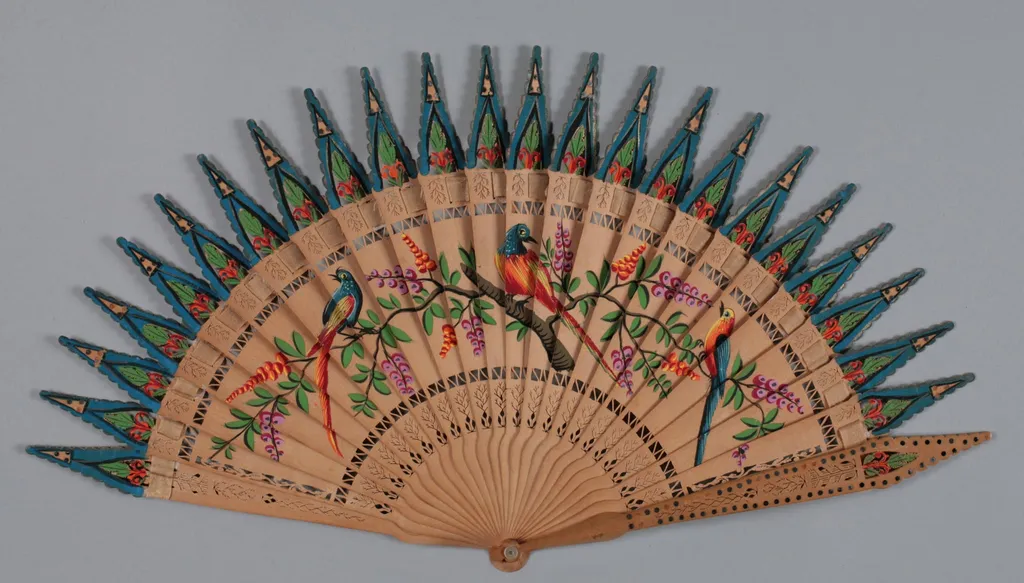
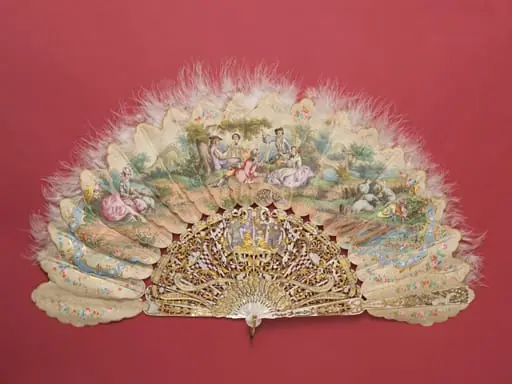
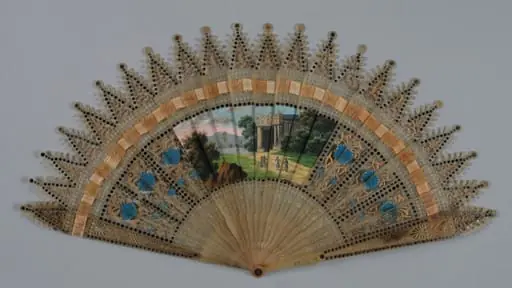
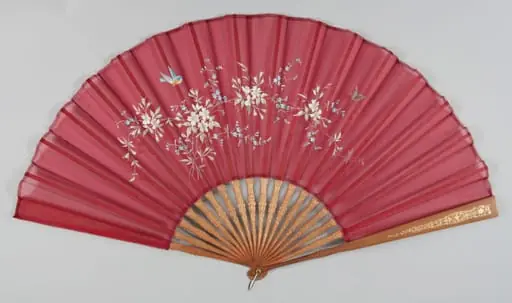
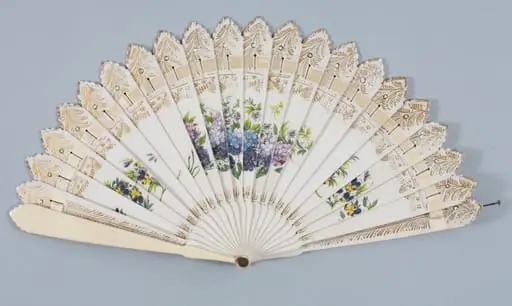
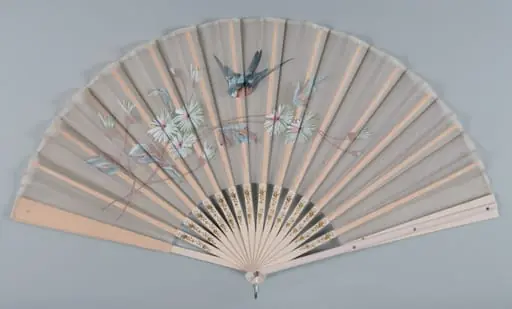
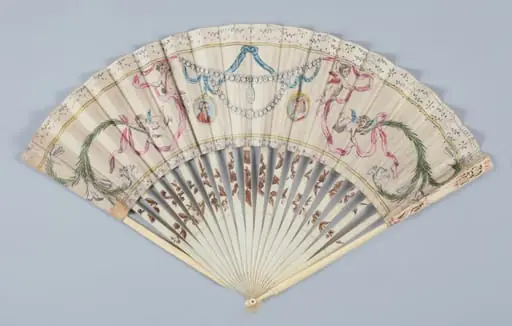
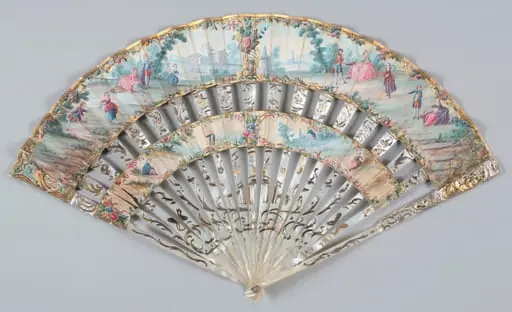
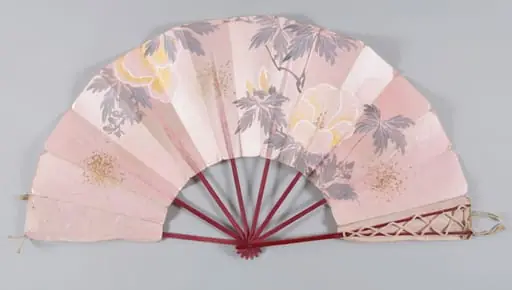
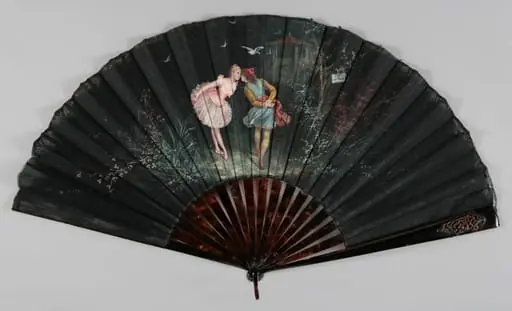
Eventail brisé à la cathédrale is an unspecified work on paper by Unknown. It dates from 1850 and is held in the collection of the Palais Galliera - Musée de la Mode de la Ville de Paris. This handheld fan consists of a lightweight wooden frame with intricately carved edges.
About this work
Overview
The handle is divided into two distinct sections—painted blue and green—and terminates in a small metal ring, suggesting a mechanism for folding or securing.
This handheld fan consists of a lightweight wooden frame with intricately carved edges. Its surface features vividly painted avian figures and floral motifs, rendered in blue, red, green, and pink. The handle is divided into two distinct sections—painted blue and green—and terminates in a small metal ring, suggesting a mechanism for folding or securing. The craftsmanship blends decorative artistry with functional design, typical of objects intended for both aesthetic and everyday use.
Subject & Meaning
The fan depicts birds perched on flowering branches, rendered with naturalistic detail in their plumage and beaks. These elements evoke themes of nature’s vitality and seasonal renewal, common in decorative arts of the period. While no explicit narrative is present, the imagery suggests an appreciation for delicate beauty and harmony, aligning with broader cultural ideals of elegance and refinement in personal accessories.
Technique & Style
The birds are painted with fine brushwork, capturing individual feathers and subtle color gradations to achieve lifelike presence. The wooden frame is carved with geometric or organic patterns along its perimeter, enhancing its tactile and visual appeal. The use of bright, contrasting pigments on a neutral ground reflects a decorative tradition that prioritized clarity and visual impact, suited for intimate, close-range viewing.
History & Provenance
Though specific origins are unrecorded, the fan’s materials and design align with 18th- or early 19th-century European or colonial production, where handcrafted fans were popular among elite circles. The split handle and metal ring indicate a mechanical function, possibly for folding or storage. Such objects often circulated as gifts or souvenirs, though no documented ownership history is available.
Context
Hand fans of this type were widely used in Europe and its colonies as both cooling devices and status symbols. They were often adorned with painted scenes, embroidery, or carved wood, reflecting personal taste and cultural trends. This fan’s naturalistic birds and flowers mirror contemporary interests in natural history and ornamental design, seen in porcelain, textiles, and interior decoration of the era.
Legacy
This fan exemplifies the intersection of utility and art in domestic objects of its time. While no direct lineage to later designs is established, its aesthetic principles—attention to detail, integration of nature, and refined craftsmanship—echo in 19th-century decorative arts. Surviving examples like this help document the material culture of personal adornment and leisure in pre-industrial societies.
Artist & collection
Museum
Palais Galliera - Musée de la Mode de la Ville de Paris
Continue through works from the same source collection.
 Domestic Scene
 Giacomo and Cardinal Marco, investing Andrea, Abbot of San Zeno, with his Benefice
 The Nymph of Fontainebleau
 Portrait of a Woman
 Madonna and Child with Saints in the Enclosed Garden
 Venus and Minerva
 Family Group of Four on Sofa
 Wall painting from Room H of the Villa of P. Fannius Synistor at Boscoreale