Artwork
Eventail plié
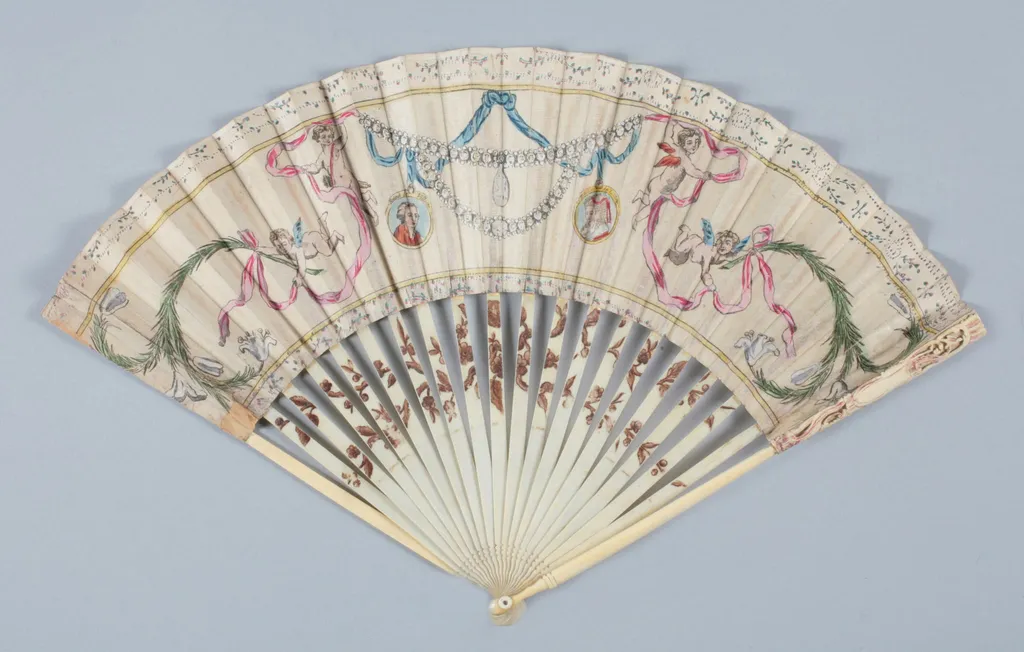
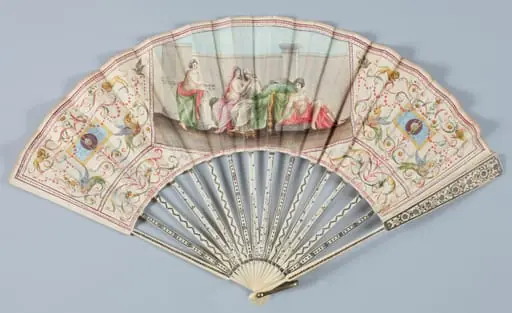
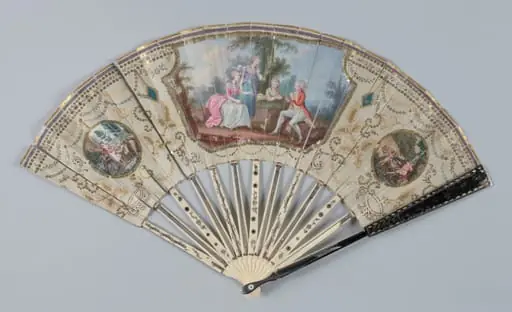
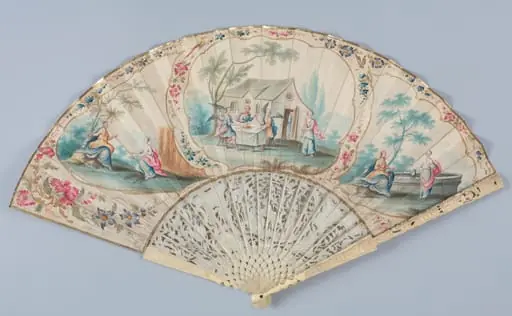
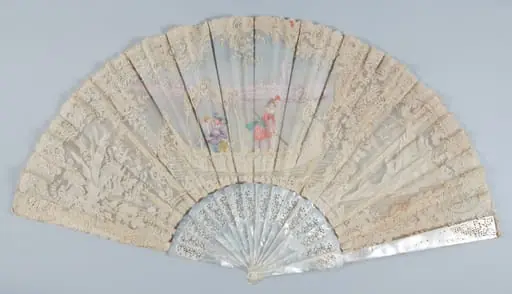
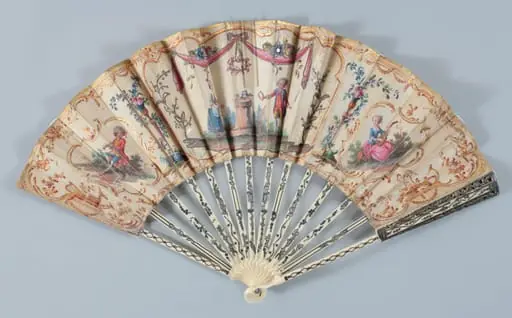
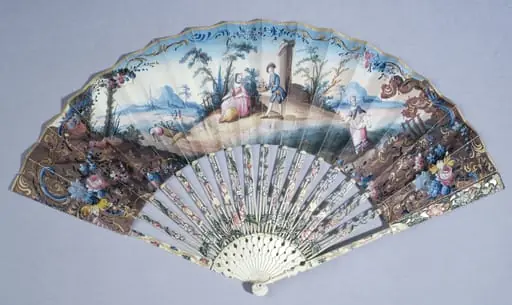
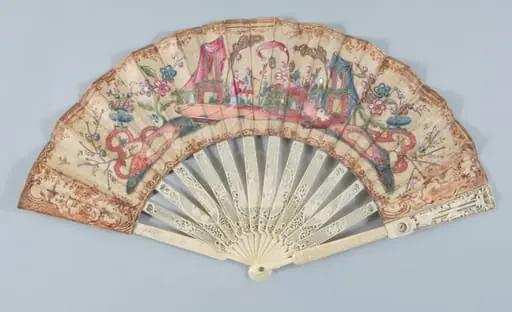
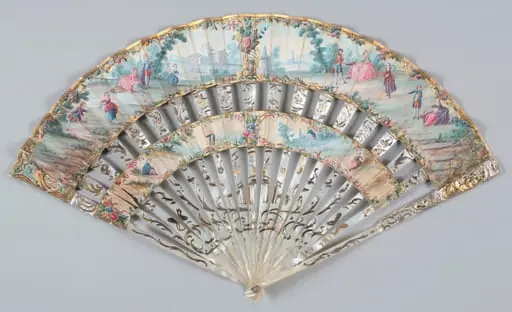
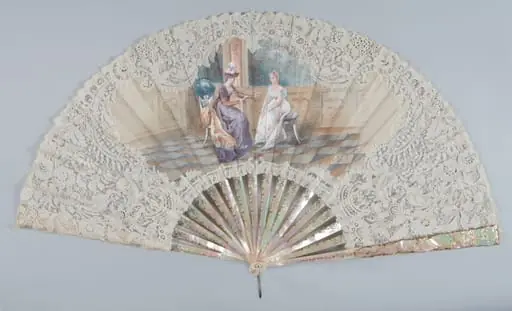
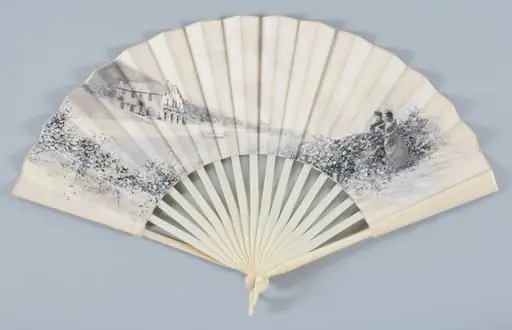
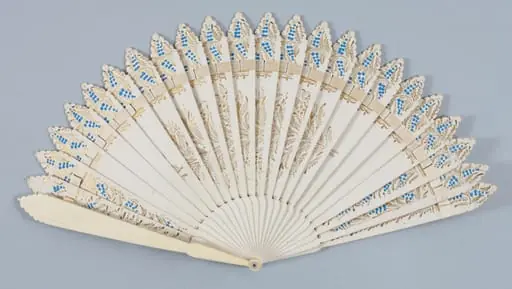
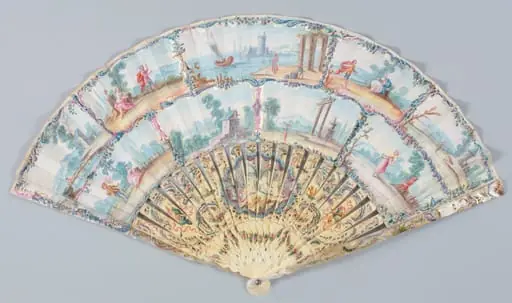
Eventail plié is an unspecified work on paper by the Rococo painting artist Unknown. It dates from 1785 and is held in the collection of the Palais Galliera - Musée de la Mode de la Ville de Paris. The object is a compact, folding fan constructed from light wood and covered with painted scenes on both its interior and exterior surfaces.
About this work
Overview
The object is a compact, folding fan constructed from light wood and covered with painted scenes on both its interior and exterior surfaces.
The object is a compact, folding fan constructed from light wood and covered with painted scenes on both its interior and exterior surfaces. Each side presents a distinct composition: the front side features two oval-framed portraits framed by blue ribbons and ornamental floral motifs, while the reverse displays two women in pink dresses holding blossoms, accompanied by green foliage and small cherubic figures.
Subject & Meaning
The imagery combines portraiture and allegorical elements, suggesting a personal or commemorative function. The paired portraits, set within decorative ribbons, imply a connection to specific individuals, perhaps members of a household or patrons. The opposite side’s figures in pastel attire, surrounded by flowers and cherubs, evoke themes of femininity, courtship, or seasonal celebration, reinforcing the fan’s role as both decorative and intimate object.
Technique & Style
The decorative scheme is executed in delicate watercolor, a medium that permits translucent washes and subtle gradations. Artists achieved the soft, layered hues by applying pigment mixed with water directly onto the fan’s thin wooden panels, allowing the natural grain to show through. The use of ornamental ribbons, floral borders, and cherubic motifs reflects a decorative aesthetic common in East Asian fan painting traditions of the eighteenth and nineteenth centuries.
Context
Folding fans of this type served both practical and aesthetic purposes, providing a portable means of cooling while also functioning as a canvas for miniature artworks. The combination of portraiture and genre scenes aligns with the broader practice of personalizing everyday objects for the aristocratic and merchant classes, who valued objects that could convey status, taste, and private sentiment.
Legacy
Such fans illustrate the intersection of functional design and fine art, preserving a snapshot of the visual culture and decorative preferences of their era. Their survival offers insight into the materials, techniques, and social customs surrounding portable art objects, informing contemporary understandings of historical domestic aesthetics.
Artist & collection

Museum
Palais Galliera - Musée de la Mode de la Ville de Paris
Continue through works from the same source collection.
 Domestic Scene
 Giacomo and Cardinal Marco, investing Andrea, Abbot of San Zeno, with his Benefice
 The Nymph of Fontainebleau
 Portrait of a Woman
 Madonna and Child with Saints in the Enclosed Garden
 Venus and Minerva
 Family Group of Four on Sofa
 Wall painting from Room H of the Villa of P. Fannius Synistor at Boscoreale