Artwork
Eventail plié
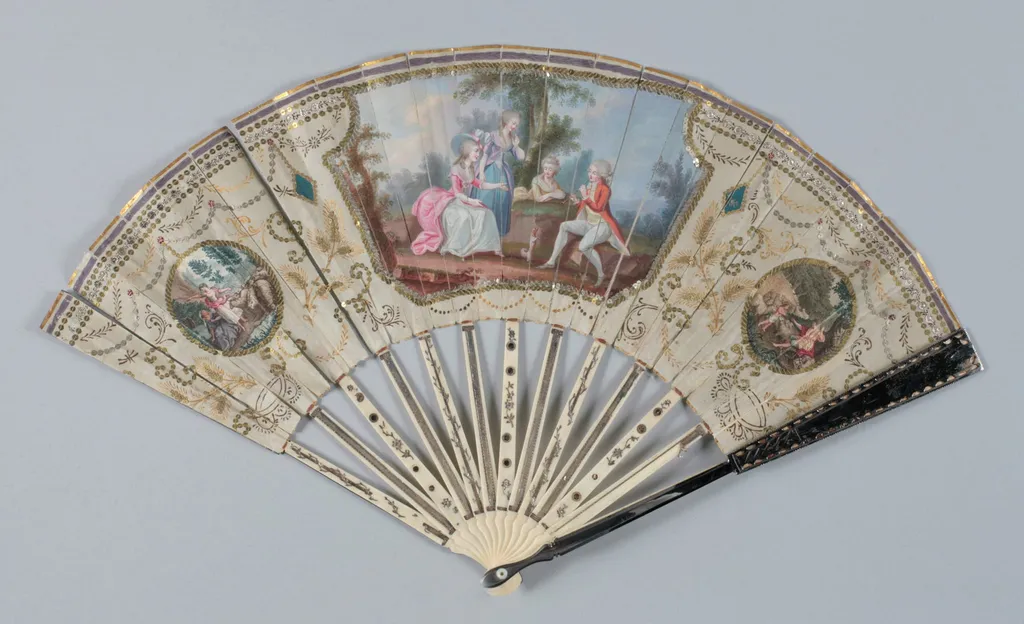
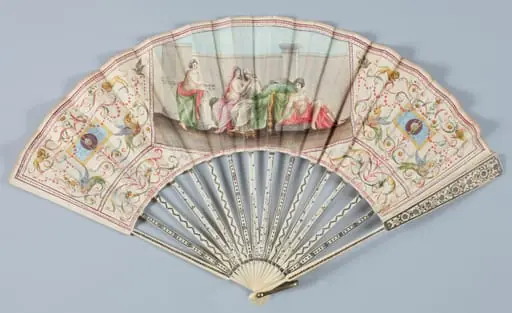
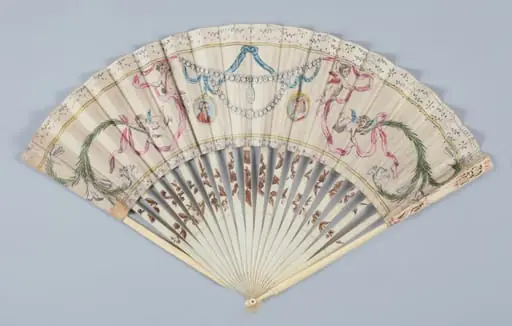
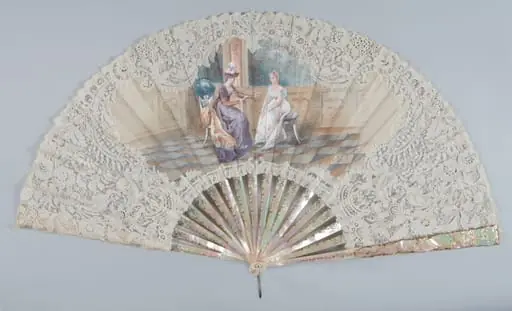
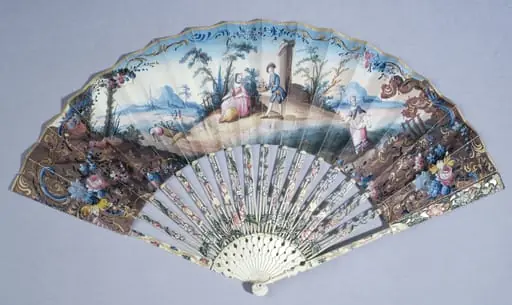
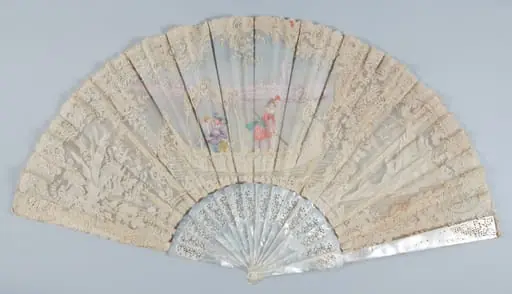
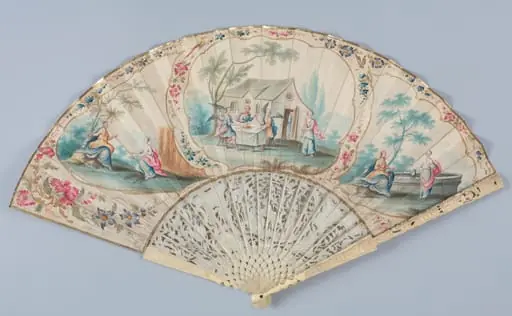
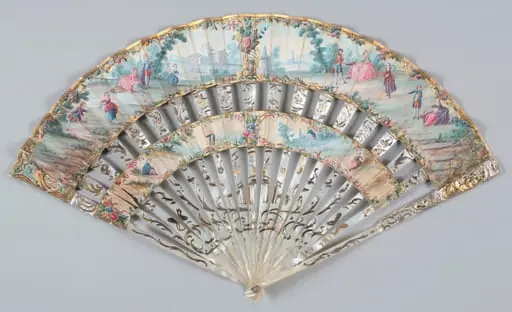
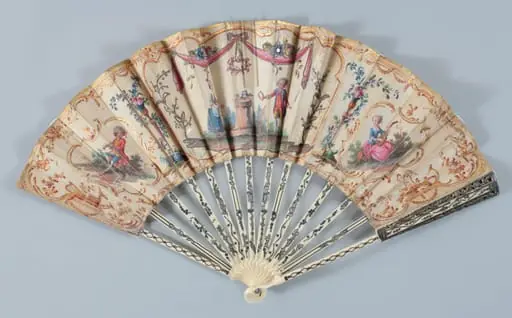
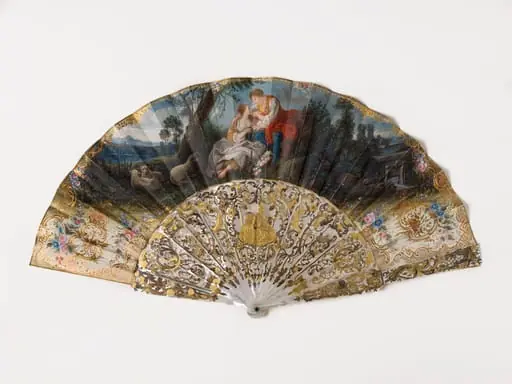
Eventail plié is an unspecified work on paper by the Rococo painting artist Unknown. It dates from 1780 and is held in the collection of the Palais Galliera - Musée de la Mode de la Ville de Paris. This folded fan, crafted as a decorative object, displays three painted scenes when opened.
About this work
Overview
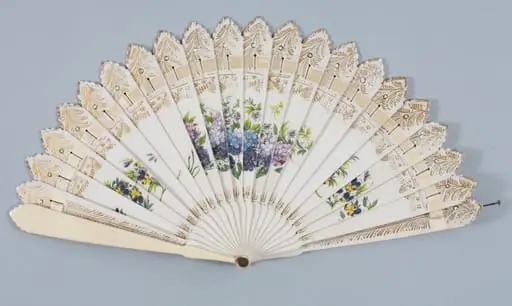
The edges are adorned with delicate gold leaf patterns and floral motifs, suggesting luxury and refinement typical of 18th-century personal accessories.
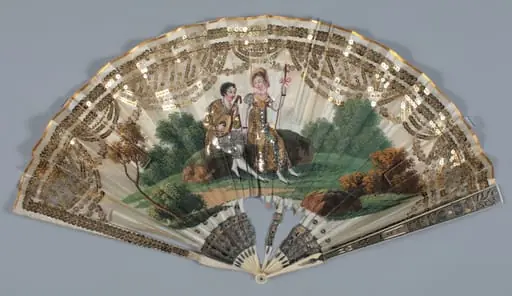
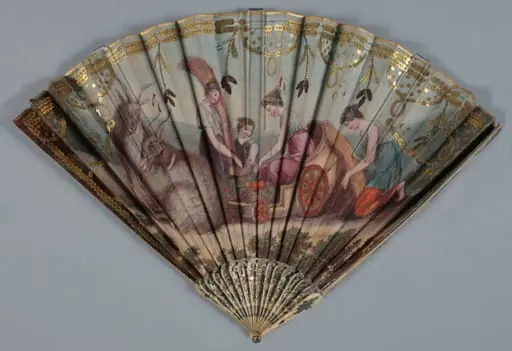
This folded fan, crafted as a decorative object, displays three painted scenes when opened. The central panel depicts a group of elegantly dressed figures in an outdoor setting, accompanied by a dog, while two smaller round medallions feature isolated portraits—a woman in blue and a man in a green hat. The edges are adorned with delicate gold leaf patterns and floral motifs, suggesting luxury and refinement typical of 18th-century personal accessories.
Subject & Meaning
The scenes suggest an aristocratic leisure activity, possibly a garden gathering or promenade, reflecting social rituals of the time. The inclusion of portraiture within the fan’s design implies personal or familial significance, perhaps commissioned to commemorate an event or individual. The dog, a symbol of loyalty, reinforces the intimate, domestic tone of the imagery, blending social display with private sentiment.
Technique & Style
Watercolor was applied with precision to achieve soft, translucent tones, allowing subtle gradations in skin tones and fabric. Gold leaf outlines and floral borders add texture and luminosity without overpowering the delicate imagery. The miniature scale of the portraits and landscape elements demonstrates skilled hand-painting, suited to the fan’s intimate format and intended for close, personal viewing.
History & Provenance
Fans of this type were popular in Europe during the 1700s, often produced in France or England for elite women. The combination of portraiture and pastoral scenes aligns with trends in decorative arts of the period. While specific ownership records are unconfirmed, the craftsmanship and materials suggest it was made for a wealthy patron, likely as a fashionable accessory or gift.
Context
In the 18th century, fans were more than tools for cooling—they were status symbols and vehicles for personal expression. Painted fans often conveyed political, romantic, or familial narratives. This example reflects the era’s fascination with idealized nature and aristocratic leisure, mirroring the aesthetic of Rococo painting and the growing market for portable, refined art objects among the upper classes.
Legacy
Though no longer used for practical purposes, such fans remain valued as artifacts of material culture, offering insight into social customs and artistic techniques of their time. They are preserved in museum collections as examples of how fine art was integrated into everyday objects, bridging the gap between utility and aesthetic refinement in pre-industrial society.
Artist & collection

Museum
Palais Galliera - Musée de la Mode de la Ville de Paris
Continue through works from the same source collection.
 Domestic Scene
 Giacomo and Cardinal Marco, investing Andrea, Abbot of San Zeno, with his Benefice
 The Nymph of Fontainebleau
 Portrait of a Woman
 Madonna and Child with Saints in the Enclosed Garden
 Venus and Minerva
 Family Group of Four on Sofa
 Wall painting from Room H of the Villa of P. Fannius Synistor at Boscoreale