Artwork
Falcon
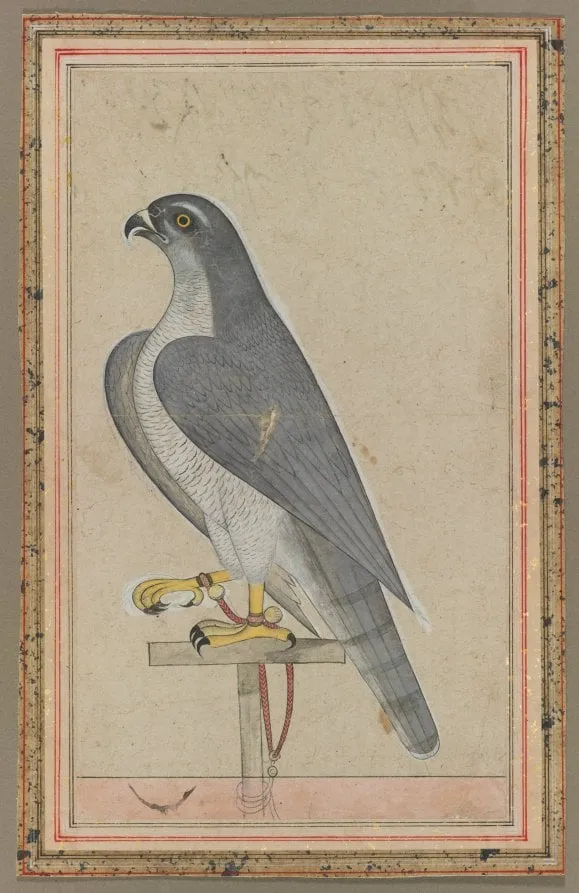
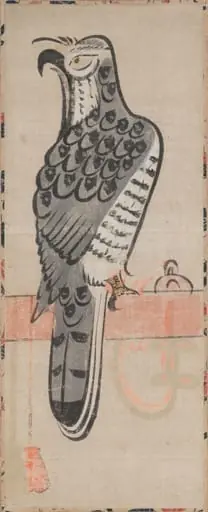
Falcon is an unspecified painting by the Mughal Painting artist Unknown. It dates from 1770 and is held in the collection of the Cleveland Museum of Art.
About this work
Overview
This small-scale painting portrays a peregrine falcon perched on a wooden stand, its legs bound by thin cords fitted with tiny bells. The bird is rendered with precise attention to feather texture and the reflective quality of its eye, emphasizing its vitality within a restrained composition.
Subject & Meaning
In the Mughal and regional Pahari courts, falcons symbolized elite status and martial prowess, serving both as hunting companions and markers of aristocratic privilege. The depiction of the tethered bird underscores its role as a trained instrument of falconry, a pastime reserved for royalty and high-ranking nobles.
Technique & Style
Executed with fine brushwork, the artist captures the falcon’s plumage through delicate strokes and subtle shading, while the cords and bells are delineated with crisp linear detail. The interplay of light on the bird’s eye and the polished wood of the stand reflects a realistic yet courtly aesthetic typical of late Mughal miniature traditions.
History & Provenance
Portraits of animals, especially hunting birds, were popular among patrons in smaller states that fell under Mughal influence. This work likely originated in a northern Indian workshop serving a Pahari patron, commissioned to celebrate the owner’s prized falcon and to affirm his connection to imperial courtly culture.
Context
Falconry held a prominent place in Mughal royal recreation, and the practice spread to allied regional kingdoms. The inclusion of bells on the cords indicates the bird’s training and readiness for release, reflecting the practical aspects of the sport as well as its ceremonial significance within the court.
Artist & collection

 Domestic Scene
 Giacomo and Cardinal Marco, investing Andrea, Abbot of San Zeno, with his Benefice
 The Nymph of Fontainebleau
 Portrait of a Woman
 Madonna and Child with Saints in the Enclosed Garden
 Venus and Minerva
 Family Group of Four on Sofa
 Wall painting from Room H of the Villa of P. Fannius Synistor at Boscoreale
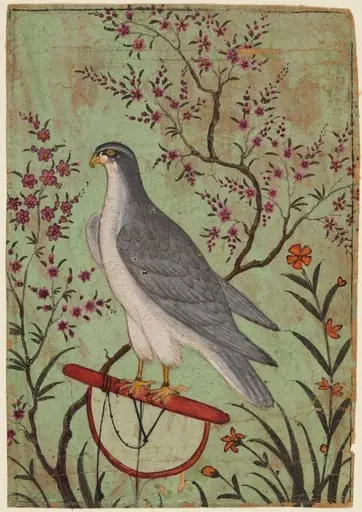 Falcon on a Perch
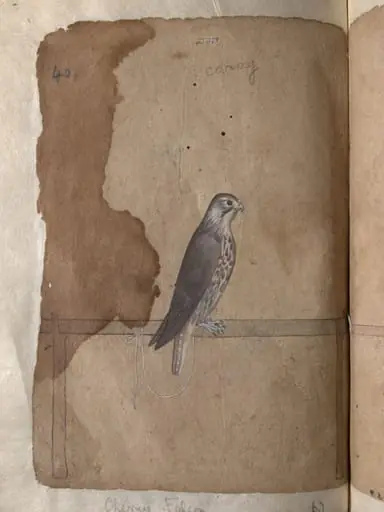 Depictions of a Eastern peregrine falcon and Cherrug falcon of Northern India
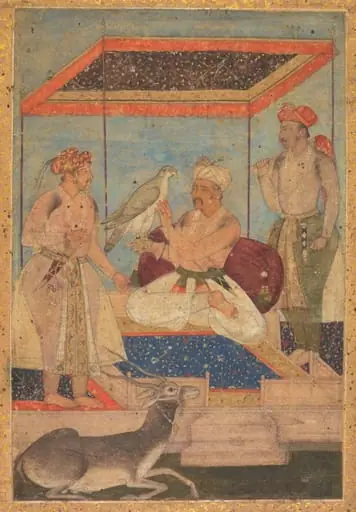 Akbar and Jahangir Examine a Ghir Falcon while Prince Khusrau Stands Behind
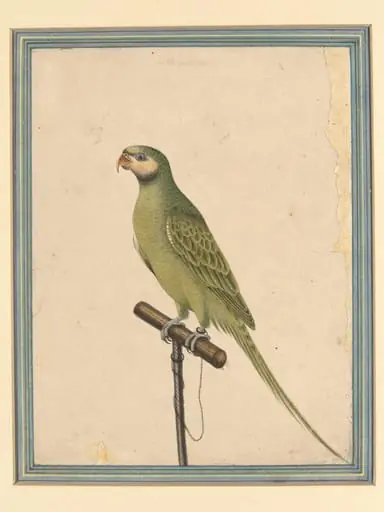 A parrot
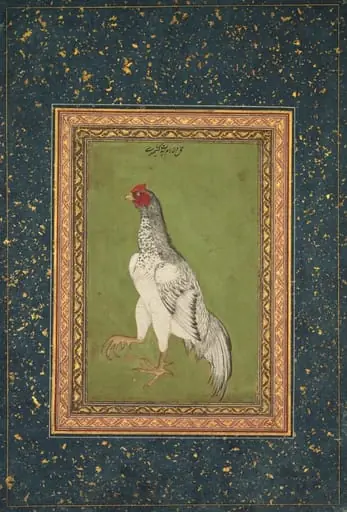 Rooster
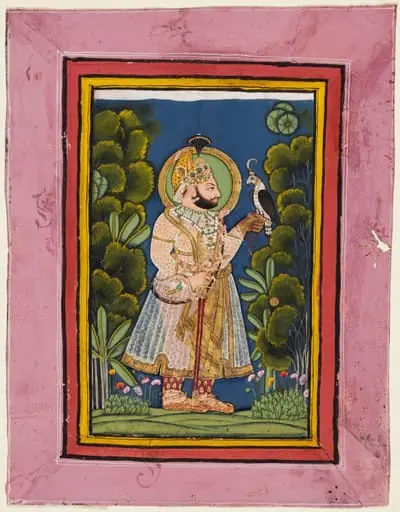 Maharana Jawan Singh of Mewar (r. 1828–38) Holding a Falcon
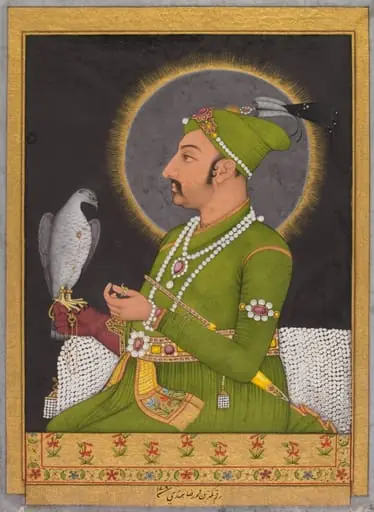 Posthumous portrait of the Mughal emperor Muhammad Shah (reigned 1719–1748) holding a falcon (recto)
 Falcon
 A Mughal courtier