Artwork
Famous Views of Ōmi
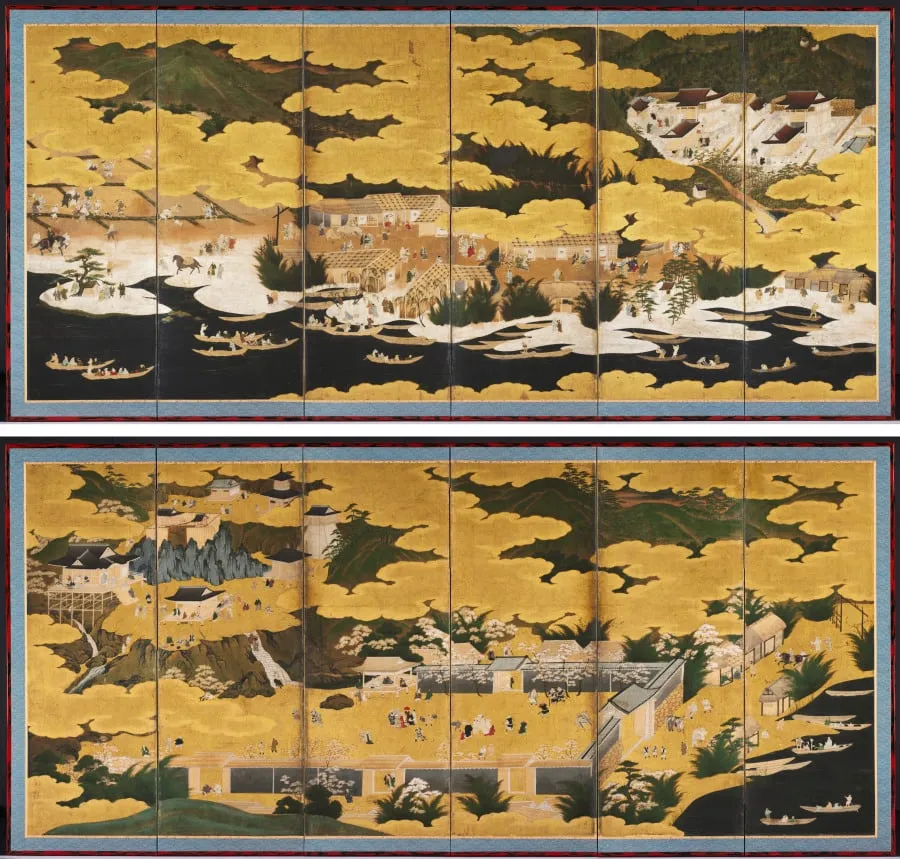
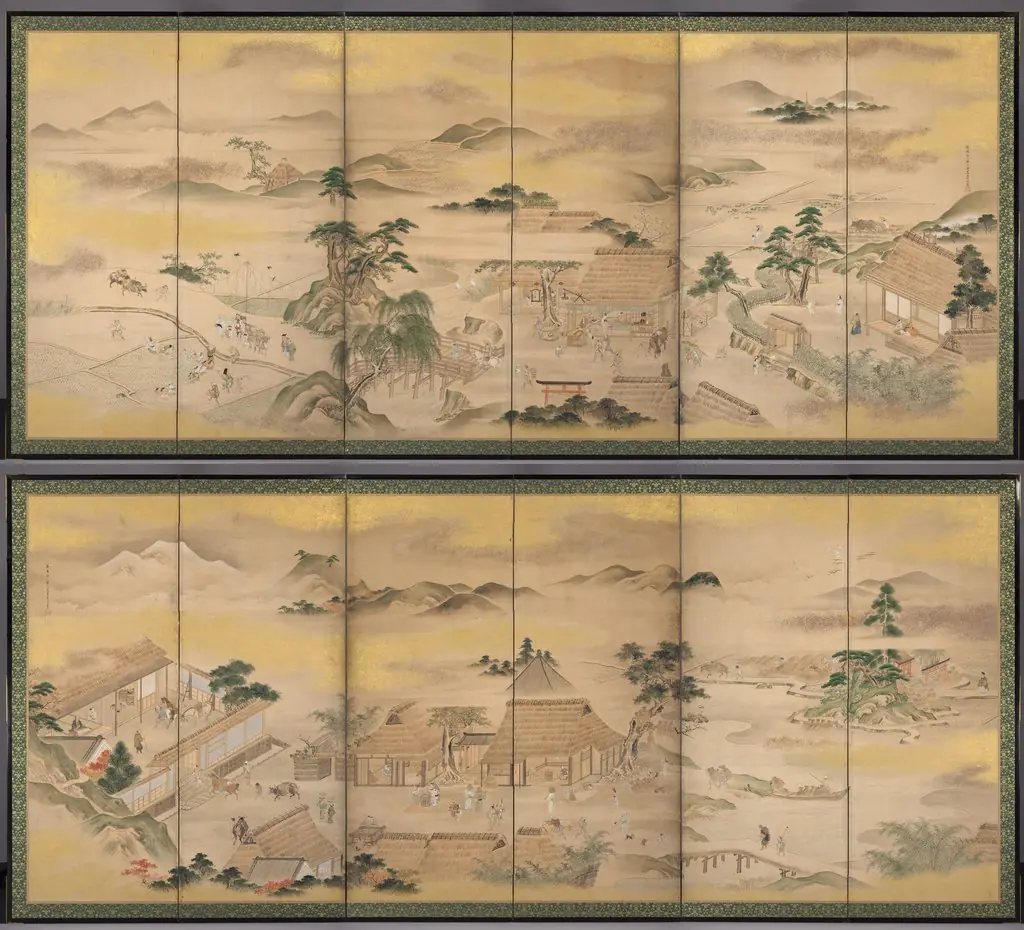
Famous Views of Ōmi is an unspecified painting by the Baroque artist Unknown. It dates from 1680 and is held in the collection of the Cleveland Museum of Art.
About this work
You see a long, narrow scroll of a Japanese countryside—rice fields, cherry trees in bloom, a winding road, and two big temple gates.
You see a long, narrow scroll of a Japanese countryside—rice fields, cherry trees in bloom, a winding road, and two big temple gates.
The painting shows two seasons at once: winter rice stubble on the right, spring blossoms on the left. That’s rare. Most scrolls pick one season. The artist also tucked tiny pilgrims and townspeople into the scene, making the temples feel alive.
Look up more scrolls from the subject: japan, edo period (1615–1868).
Overview
The hand‑scroll depicts a stretch of the Ōmi region, the area surrounding Lake Biwa near Kyoto, rendered as a continuous landscape that combines cultivated fields, flowering trees, a winding road and two prominent religious structures.
Subject & Meaning
At the upper left the Buddhist temple Ishiyamadera rises, while the Shinto shrine Hiyoshi Taisha occupies the upper right. Between them a pilgrimage route leads past a town gate, populated by tiny figures of travelers and townspeople, suggesting the flow of religious devotion and daily life.
Technique & Style
The composition is executed on a long, narrow scroll, employing a panoramic perspective that juxtaposes two seasons within a single view: winter‑time rice stubble on the right and spring cherry blossoms on the left, an uncommon treatment that emphasizes temporal transition.
History & Provenance
Created during Japan’s Edo period (1615–1868), the work belongs to a tradition of landscape scrolls that recorded regional topography and cultural landmarks for both aesthetic appreciation and documentary purposes.
Context
Ōmi’s proximity to Kyoto made it a frequent destination for pilgrims, and the inclusion of both a Shinto shrine and a Buddhist temple reflects the syncretic religious landscape of the time, while the agricultural and floral elements illustrate the seasonal cycle that shaped rural life.
Artist & collection

 Domestic Scene
 Giacomo and Cardinal Marco, investing Andrea, Abbot of San Zeno, with his Benefice
 The Nymph of Fontainebleau
 Portrait of a Woman
 Madonna and Child with Saints in the Enclosed Garden
 Venus and Minerva
 Family Group of Four on Sofa
 Wall painting from Room H of the Villa of P. Fannius Synistor at Boscoreale
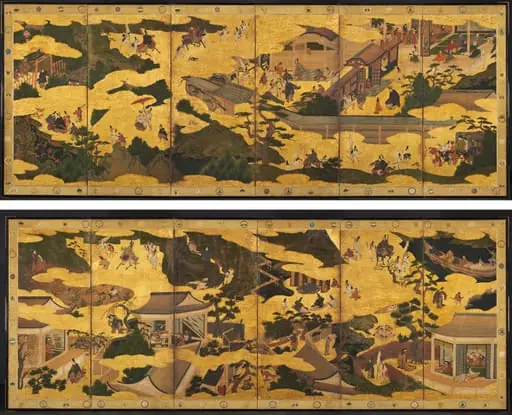 Scenes from the Tales of Ise
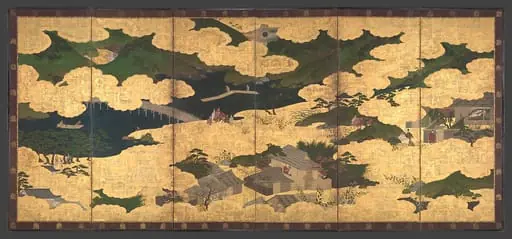 平家物語図屏風 「小督」 「大原御幸」|"Kogō" and "The Imperial Procession to Ōhara", from The Tale of the Heike (Heike monogatari)
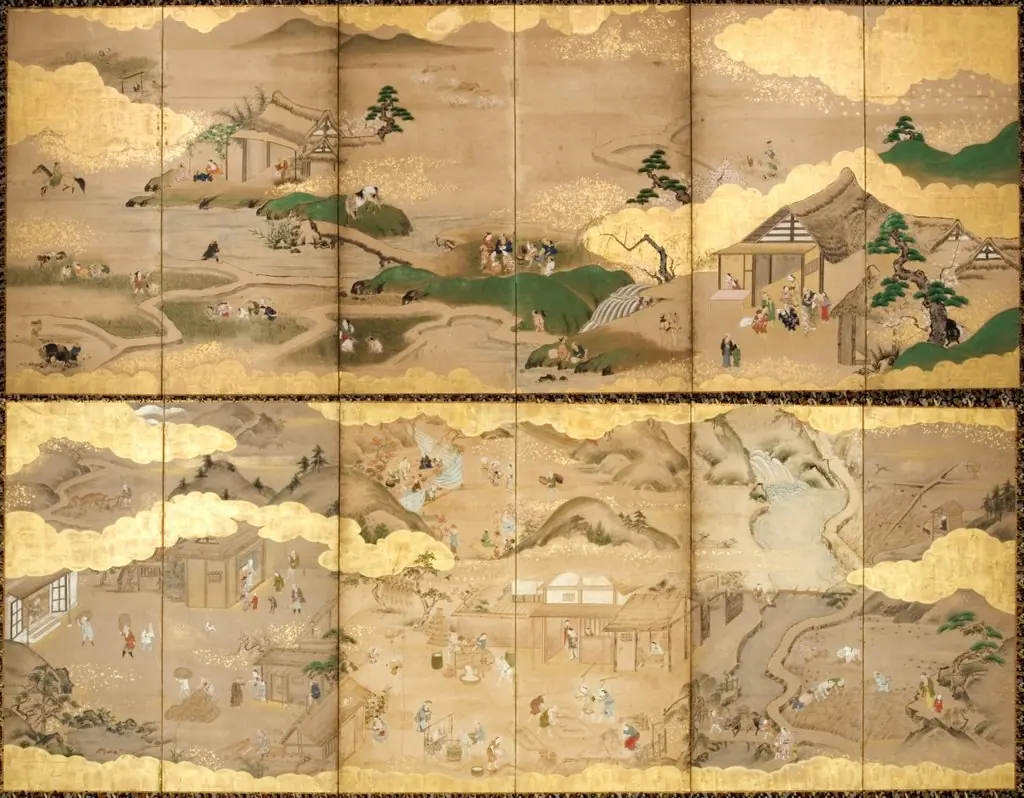 Rice Cultivation through the Four Seasons
 Horse Race at the Kamo Shrine
 One Hundred Chinese Boys
 厳島吉野花見図屏風|Cherry Blossom Viewing at Itsukushima and Yoshino
 Scenes from the Tales of Ise
 Spring and Autumn Farming