Artwork
Scenes from the Tales of Ise
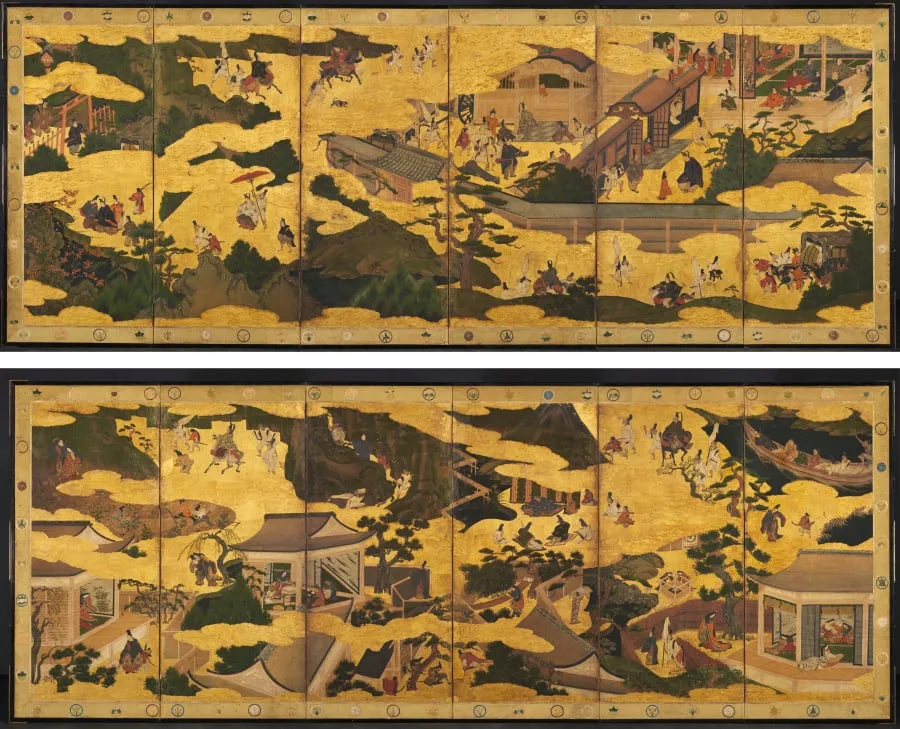
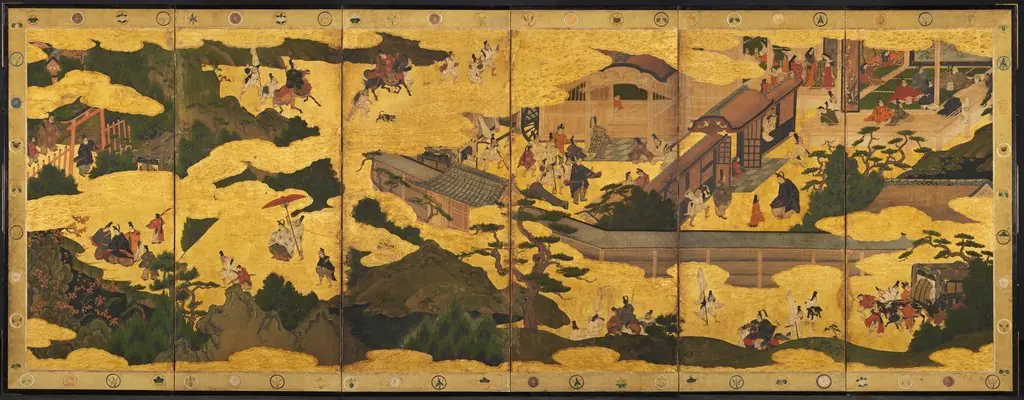
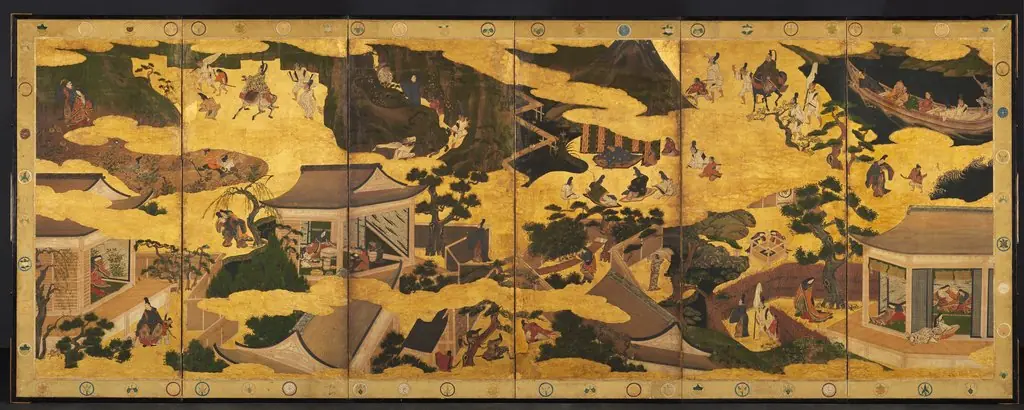
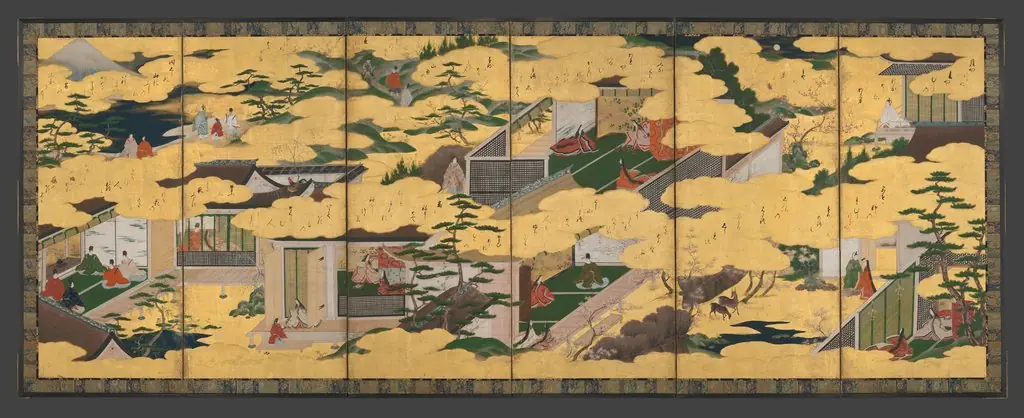
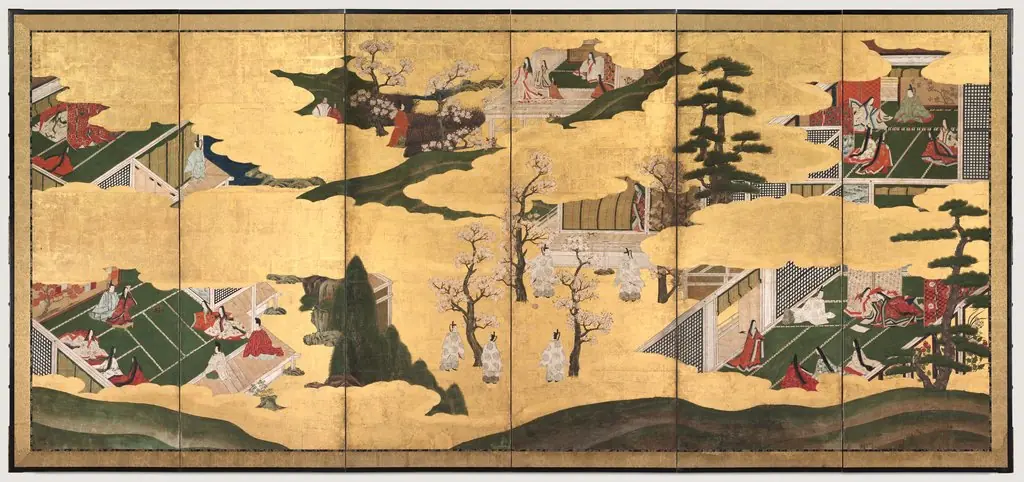
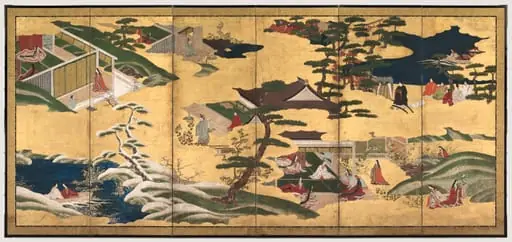
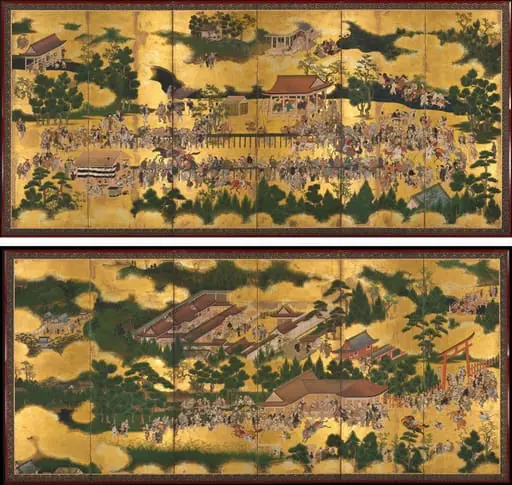
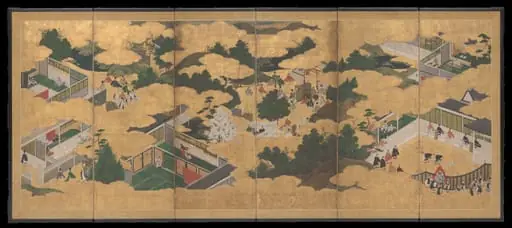
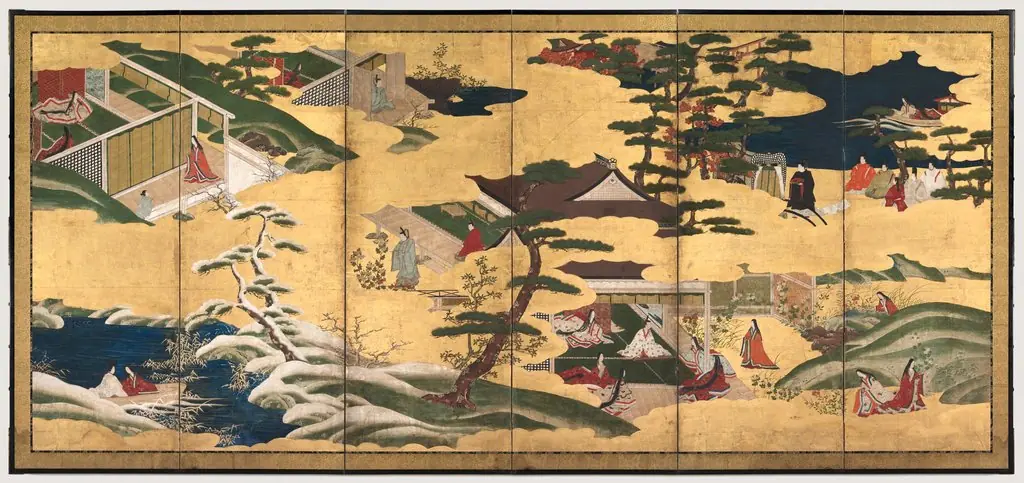
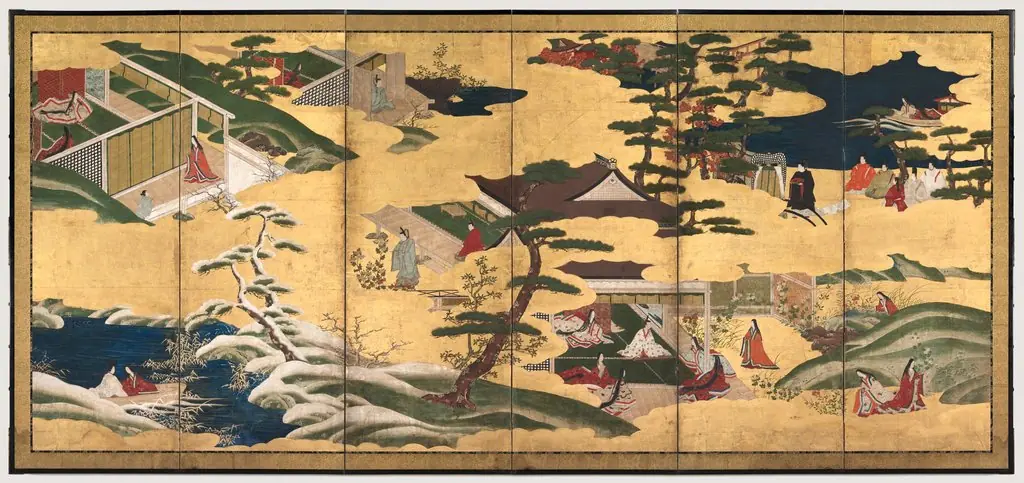
Scenes from the Tales of Ise is an unspecified painting by the Baroque artist Unknown. It dates from 1604 and is held in the collection of the Cleveland Museum of Art. This folding screen presents a sequential visual narrative drawn from the medieval Japanese collection *Tales of Ise*.
About this work
You see a long, narrow scroll filled with tiny figures walking through mountains, rivers, and villages under a pale sky.
You see a long, narrow scroll filled with tiny figures walking through mountains, rivers, and villages under a pale sky.
This painting illustrates a 1,000-year-old story called *The Tales of Ise*. Each scene matches a poem about love, travel, and nature. The artist didn’t sign it, so we don’t know who made it or what paint they used—just that it was done in the 1600s.
To see more art from this time, look up japan, edo period (1615–1868).
Overview
This folding screen presents a sequential visual narrative drawn from the medieval Japanese collection *Tales of Ise*. Arranged in a right‑to‑left progression, the work depicts a solitary courtier moving through varied landscapes—mountains, rivers, villages—under a muted sky. The composition functions as a pictorial accompaniment to the anthology’s poems, translating literary episodes into a series of compact scenes.
Subject & Meaning
Each vignette corresponds to a poem that links the traveler’s emotional state with the surrounding environment. The verses, often tinged with melancholy, associate love‑laden reflections with natural features such as misty peaks or flowing streams. Viewers familiar with the text would recognize the narrative arc, interpreting the journey as both a physical pilgrimage and an inner, poetic meditation.
Technique & Style
Executed with mineral pigments and extensive gold leaf, the screen exemplifies the early‑17th‑century Kyoto school that followed Iwasa Matabei’s aesthetic. The brushwork is delicate yet precise, rendering numerous diminutive figures against stylised terrain. The use of rich, opaque colors and luminous gold creates a decorative surface while maintaining a narrative clarity typical of the period’s Japanese‑style narrative painting.
History & Provenance
Although unsigned, stylistic analysis places the work in the first quarter of the 1600s, likely produced by an artist working in Kyoto within Matabei’s circle. Such narrative screens gained popularity among patrons seeking distinctly Japanese visual storytelling around 1600. The piece reflects the continued cultural resonance of *Tales of Ise*, a text that remained widely read among educated Japanese audiences.
Artist & collection

 Domestic Scene
 Giacomo and Cardinal Marco, investing Andrea, Abbot of San Zeno, with his Benefice
 The Nymph of Fontainebleau
 Portrait of a Woman
 Madonna and Child with Saints in the Enclosed Garden
 Venus and Minerva
 Family Group of Four on Sofa
 Wall painting from Room H of the Villa of P. Fannius Synistor at Boscoreale