Artwork
Farfuria este adâncită, tronconică cu buza profilată și pereți înalți. Este smalțuită pe interior, având dispuse elementele decorative atât pe buza vasului (motive geometrice) cât și pe pereții interiori după cum urmează: central o floare galbenă încadrată de alte două flori cu frunze - una maro și cealaltă galbenă. Cromatică: fond: alb-gălbui; motive: brun; verde; galben.
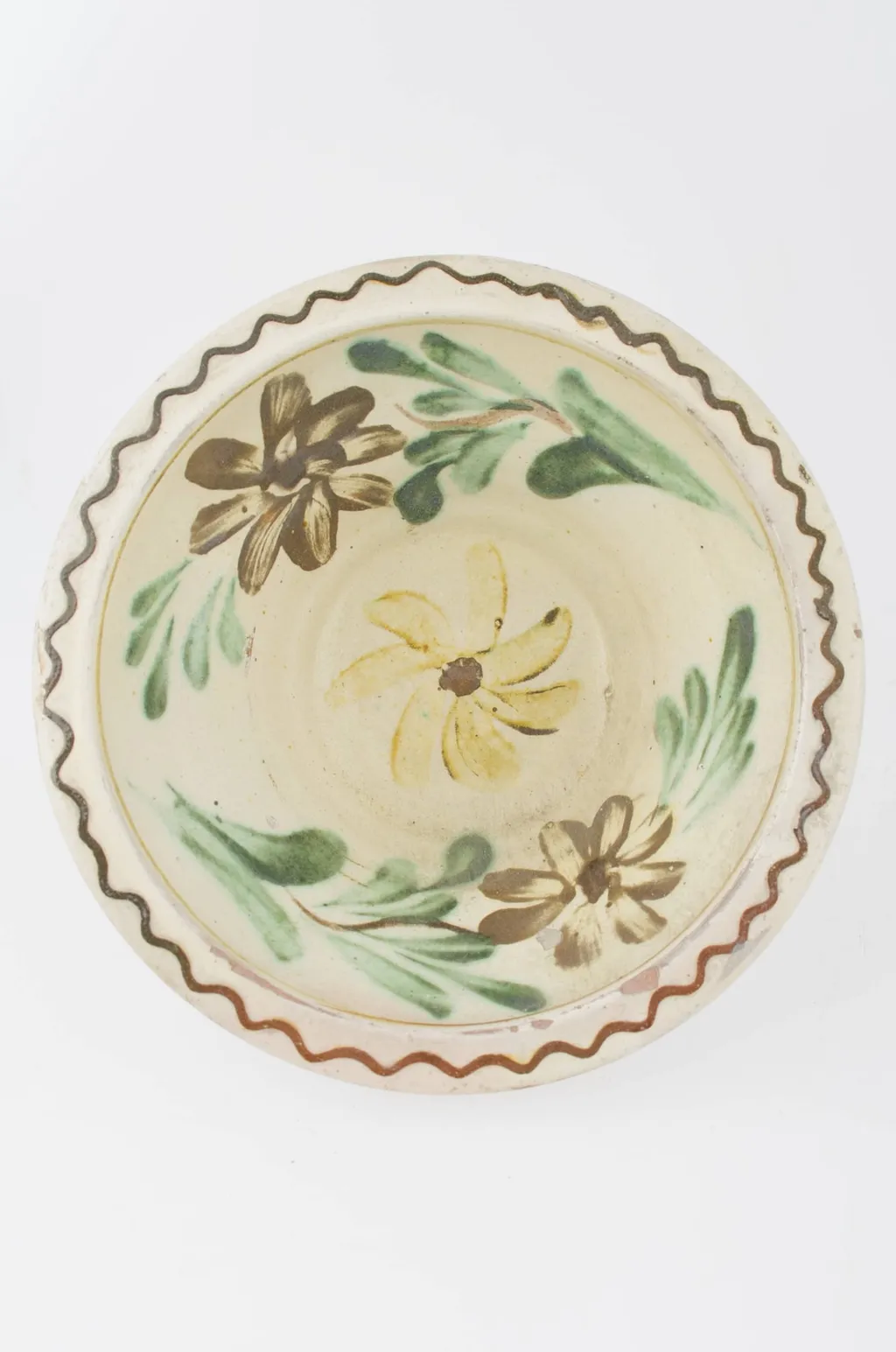
Farfuria este adâncită, tronconică cu buza profilată și pereți înalți. Este smalțuită pe interior, având dispuse elementele decorative atât pe buza vasului (motive geometrice) cât și pe pereții interiori după cum urmează: central o floare galbenă încadrată de alte două flori cu frunze - una maro și cealaltă galbenă. Cromatică: fond: alb-gălbui; motive: brun; verde; galben. is a photography by Unknown. It dates from 1850 and is held in the collection of the ASTRA National Museum Complex. A shallow, circular ceramic dish with a scalloped rim and high, tapering walls.
About this work
Overview
The palette includes muted yellow, brown, and green, applied over a pale off-white ground, suggesting hand-painted craftsmanship and age-related fading.
A shallow, circular ceramic dish with a scalloped rim and high, tapering walls. The interior is glazed, while the exterior remains unglazed. Decorative elements are confined to the inner surface, featuring stylized floral motifs arranged symmetrically around a central bloom. The palette includes muted yellow, brown, and green, applied over a pale off-white ground, suggesting hand-painted craftsmanship and age-related fading.
Subject & Meaning
The composition centers on a yellow flower, flanked by two additional blooms—one brown, one yellow—each accompanied by stylized green leaves. The arrangement lacks naturalism, favoring rhythmic repetition and balance. These motifs likely reflect regional floral symbolism, possibly tied to seasonal cycles or domestic ornamentation, rather than narrative or religious themes. The simplicity suggests everyday use, not ceremonial function.
Technique & Style
The vessel was hand-painted with mineral-based pigments over a light glaze, resulting in soft, slightly blurred edges between colors. The floral forms are abstracted, with simplified contours and minimal shading. Geometric patterns trace the rim, contrasting with the organic flow of the central design. The technique indicates local ceramic traditions, prioritizing decorative harmony over technical precision or realism.
History & Provenance
The vessel’s form and decoration align with regional pottery traditions from the Balkans or Eastern Europe, likely produced between the 17th and 19th centuries. Its utilitarian shape and modest ornamentation suggest domestic use in a rural or small-town household. No documented provenance exists, but similar pieces appear in regional folk collections, indicating widespread local production rather than workshop origin.
Context
This dish belongs to a broader category of household ceramics in which floral decoration served both aesthetic and cultural purposes. Similar designs appear on storage vessels, serving ware, and ritual objects across Eastern European villages. The use of limited pigments and repetitive motifs reflects accessible materials and inherited patterns, passed down through generations of potters without formal training.
Legacy
Though not part of major art movements, such ceramics preserve vernacular artistic practices that persisted into the modern era. They represent a quiet continuity in rural craft traditions, where decoration was embedded in daily life rather than displayed as art. Today, similar pieces are studied as indicators of regional identity and pre-industrial material culture.
Artist & collection

 Domestic Scene
 Giacomo and Cardinal Marco, investing Andrea, Abbot of San Zeno, with his Benefice
 The Nymph of Fontainebleau
 Portrait of a Woman
 Madonna and Child with Saints in the Enclosed Garden
 Venus and Minerva
 Family Group of Four on Sofa
 Wall painting from Room H of the Villa of P. Fannius Synistor at Boscoreale
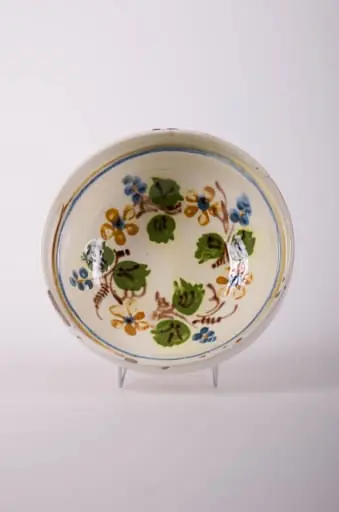 Farfurie de formă tronconică, adâncită, cu buza foarte înaltă; pe fund are găuri pentru agățare. Este smălțuit în interior și exterior (buza). Decorat cu motive geometrice: linie; motive fitomorfe; motive florale. Cromatică: fond: alb; motive: verde; maro; albastru.
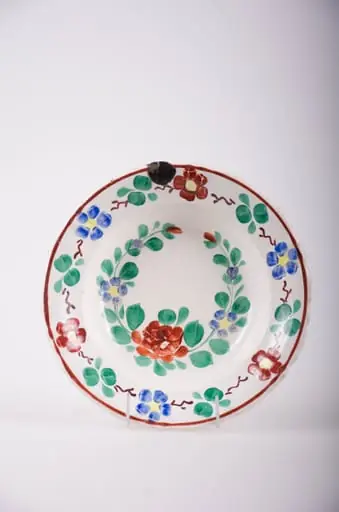 Farfurie de porțelan smălțuită pe fond alb. Decorată cu flori și frunze dispuse sub formă de ghirlande atât în centrul vasului cât și pe buza acestuia. De asemenea sunt prezente și motive geometrice: linia și linii întrerupte. Comatică: fond: alb; motive: verde; albastru; galben; roșu.
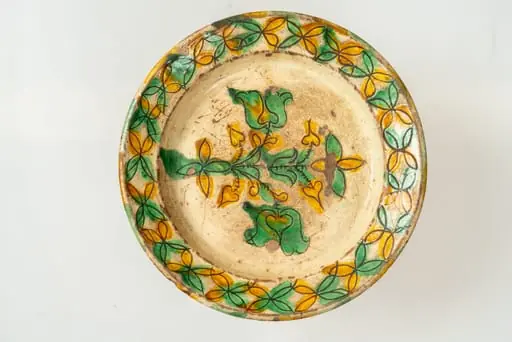 Farfurie de formă aplatizată, cu buză răsfrântă și muchie rotunjită. Piesa este modelată la roata olarului, angobată cu humă albă. Decorul este realizat prin sgrafitare în angoba crudă, peste care se aștern cu pensula culorile de smalț: verde și galben. Motivele decorative sunt florale și vegetale stilizate, dispuse pe fundul și pe buza farfuriei. Cromatica decorului: alb, galben, verde.
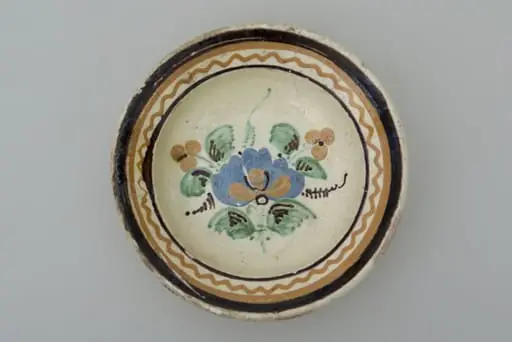 Blid de formă tronconică cu buza evazată. Smălțuit. Decorat cu motive florale: buchet, plasat pe fundul vasului și motive geoemtrice plasate pe gură: alternantă de cercuri și spirale ce se închid îm cerc. Cromatică: fond: alb; motive: maro; crem; verde; albastru.
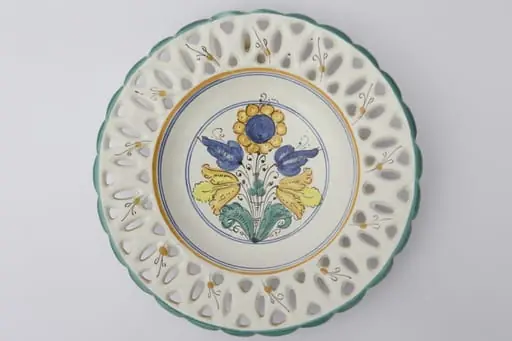 Farfurie ornamentală ce prezintă găurele între buză și partea adâncită obținute prin ștanțare. Buza este vălurită și prezintă un contur de culoare verde. Registrul central are motive florale și geometrice: cercuri galbene și albastre ce încadrează motivele florale. La posterior, baza inelară perforată pentru atârnare. Cromatică: fond: alb; motive: verde; galben; albastru; negru.
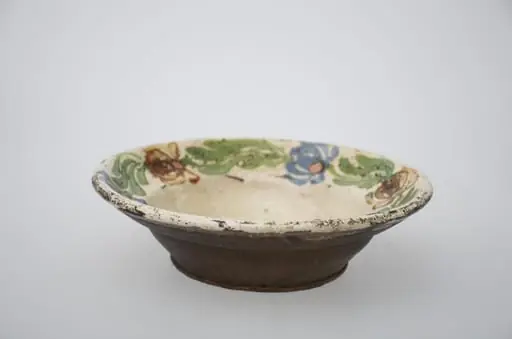 Farfurie de formă tronconică adâncă cu buza largă și decor pe fund, spre margini. Ornamentat cu motive florale. Cromatică: fond: alb; motive: maro; verde; albastru.