Artwork
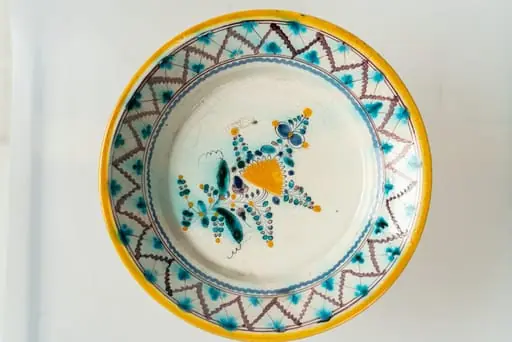
Farfurie ornamentală ce prezintă găurele între buză și partea adâncită obținute prin ștanțare. Buza este vălurită și prezintă un contur de culoare verde. Registrul central are motive florale și geometrice: cercuri galbene și albastre ce încadrează motivele florale. La posterior, baza inelară perforată pentru atârnare. Cromatică: fond: alb; motive: verde; galben; albastru; negru.
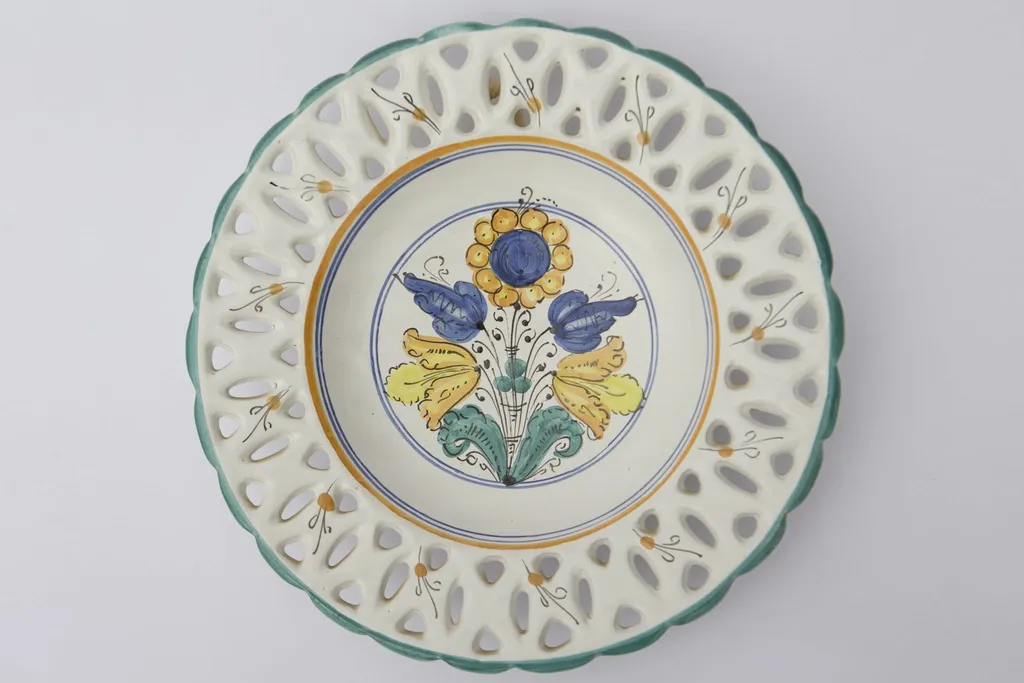
Farfurie ornamentală ce prezintă găurele între buză și partea adâncită obținute prin ștanțare. Buza este vălurită și prezintă un contur de culoare verde. Registrul central are motive florale și geometrice: cercuri galbene și albastre ce încadrează motivele florale. La posterior, baza inelară perforată pentru atârnare. Cromatică: fond: alb; motive: verde; galben; albastru; negru. is a poster by Unknown. It dates from 1850 and is held in the collection of the ASTRA National Museum Complex. This ornamental plate is a circular ceramic object designed for suspension rather than use as tableware.
About this work
Overview
Its white ground contrasts sharply with vividly colored decorative elements, and the rim features small perforations that suggest it was intended to be hung.
This ornamental plate is a circular ceramic object designed for suspension rather than use as tableware. Its white ground contrasts sharply with vividly colored decorative elements, and the rim features small perforations that suggest it was intended to be hung. The design emphasizes flat, bold patterns rather than three-dimensional modeling, aligning with decorative rather than pictorial traditions.
Subject & Meaning
The central motif consists of stylized floral forms enclosed within concentric circles of yellow and blue. These are accompanied by geometric elements such as dots and repeating leaf patterns along the border. The arrangement suggests symbolic or ritual significance, possibly referencing natural cycles or protective ornamentation, though no explicit narrative is present. The repetition of forms implies a focus on rhythm and harmony over storytelling.
Technique & Style
The decoration employs flat areas of color—green, yellow, blue, and black—outlined in black to enhance definition. The scalloped edge and pierced holes were likely created through stamping or cutting, not hand-painting. The absence of shading or chiaroscuro reinforces a two-dimensional aesthetic, prioritizing clarity and pattern over illusionistic depth. Colors are applied with uniform intensity, contributing to the visual impact.
History & Provenance
The object appears to belong to a regional ceramic tradition that valued perforated, suspended decoration, possibly from Eastern Europe or the Balkans. Its form and motifs suggest a late 19th- to early 20th-century origin, when folk art traditions were being documented or adapted for domestic or ceremonial use. No documented provenance is available, but similar pieces are found in ethnographic collections from the period.
Context
This plate reflects a broader cultural practice of creating wall-hung decorative objects in rural and artisanal communities. Its geometric and floral motifs align with local textile and pottery traditions that used repetition and symbolic color. Unlike fine art ceramics, it was not produced for elite markets but likely for household or communal display, emphasizing function as ornament rather than utility.
Legacy
As a preserved example of vernacular ceramic art, it contributes to the understanding of non-urban artistic practices in early modern Europe. Its preservation suggests it was valued as a cultural artifact, even if originally made for everyday use. Similar objects continue to inform contemporary studies of folk aesthetics and material culture, particularly in regions where such traditions were marginalized in mainstream art history.
Artist & collection

 Domestic Scene
 Giacomo and Cardinal Marco, investing Andrea, Abbot of San Zeno, with his Benefice
 The Nymph of Fontainebleau
 Portrait of a Woman
 Madonna and Child with Saints in the Enclosed Garden
 Venus and Minerva
 Family Group of Four on Sofa
 Wall painting from Room H of the Villa of P. Fannius Synistor at Boscoreale
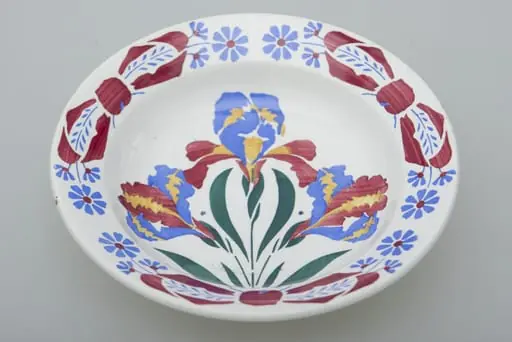 Farfurie de formă tronconică, ușor adâncită. Există două registre ornamentale, unul plasat de jur împrejurul buzei cu motive florale. Al doilea registru plasat în centru tot cu motive florale. Smălțuită. Cromatică: fond: alb; motive: albastru; verde; roșu; galben.
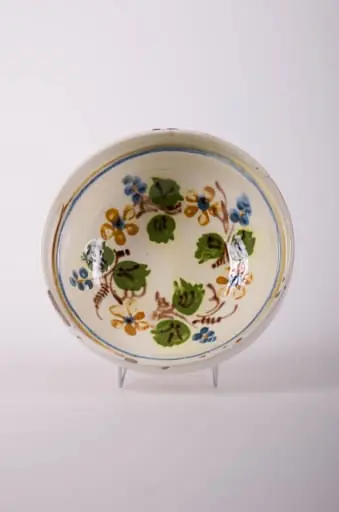 Farfurie de formă tronconică, adâncită, cu buza foarte înaltă; pe fund are găuri pentru agățare. Este smălțuit în interior și exterior (buza). Decorat cu motive geometrice: linie; motive fitomorfe; motive florale. Cromatică: fond: alb; motive: verde; maro; albastru.
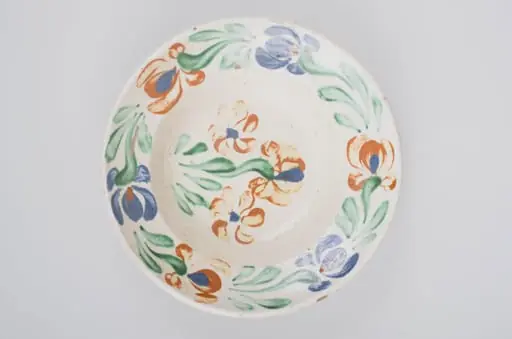 Farfurie cu fundul adâncit și buza evazată. Smălțuită numai în interior și scurgeri de smalț sub buză. Prezintă găuri pentru prinderea aței în vederea agățării. Decorată cu motive florale: central are trei flori iar pe margine un chenar floral. Cromatică: fond: alb; motive: maro; verde; albastru.
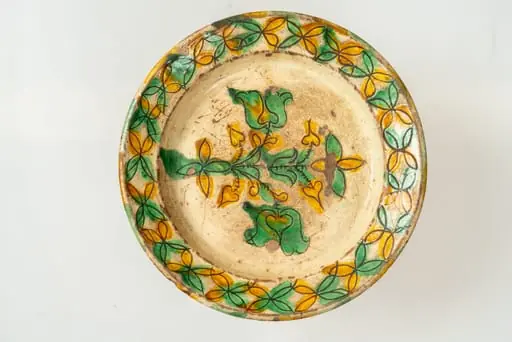 Farfurie de formă aplatizată, cu buză răsfrântă și muchie rotunjită. Piesa este modelată la roata olarului, angobată cu humă albă. Decorul este realizat prin sgrafitare în angoba crudă, peste care se aștern cu pensula culorile de smalț: verde și galben. Motivele decorative sunt florale și vegetale stilizate, dispuse pe fundul și pe buza farfuriei. Cromatica decorului: alb, galben, verde.
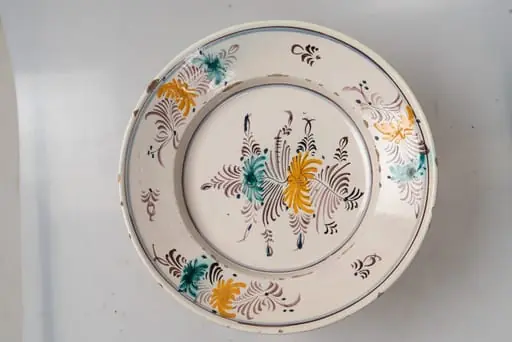 Farfurie mare, de formă aplatizată, cu buza răsfrântă. Decorul, dispus pe un fond alb-lăptos, fin realizat prin pictare cu pensula, este format din motive florale și vegetale stilizate, dispuse într-un registru central, pe fundul farfuriei (format din două flori, una galbenă și cealaltă verde-turcoaz, cu petale alungite, împreună cu frunze și elemente vegetale de culoare maro-brun, cu accente albastre) și pe buza farfuriei, unde regăsim trei grupuri de motive formate din același tip de flori ca cele din registrul central, dar de dimensiuni mai mici, grupuri separate de câte un mic motiv vegetal de culoare maro. Cromatica: alb, verde-turcoaz, maro-brun, albastru, galben-ocru.
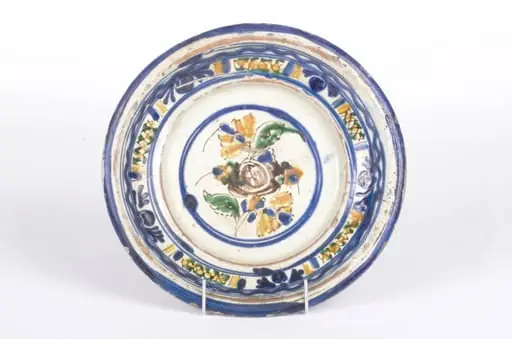 Vasul ceramic este de formă circulară, ușor adâncit, cu pereți evazați și ondulați. Decorul este amplasat pe două registre: primul registru se găsește la partea inferioară a buzei și se înscrie perimetral pe aceasta cu motive geometrice și florale (cercuri), al doilea registru este plasat central pe fundul vasului și prezintă același tip de motive. Cromatică: fond: alb-crem; motive: albastru; galben; verde; maro.
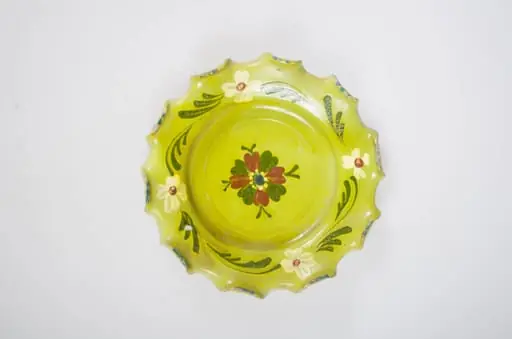 Blid cu corpul de formă circulară, buza largă și ondulată. Decorul este plasat în două registre: central prezintă o floare; pe interiorul buzei un vrej cu patru flori. Cromatică: fond: galben; motive: verde închis; roșu; alb.
 Farfurie mare, de formă aplatizată, cu marginea lată, răsfrântă, și cu muchia buzei ușor concavă spre exterior. Decorul, dispus pe un fond alb, prin pictare, este format din motive florale fin stilizate (flori și frunze), dispuse central, pe fundul farfuriei, și motive geometrice pe buza acesteia. Cromatica decorului: alb, verde-turcoaz, brun, galben-ocru, albastru.