Artwork
farfurie
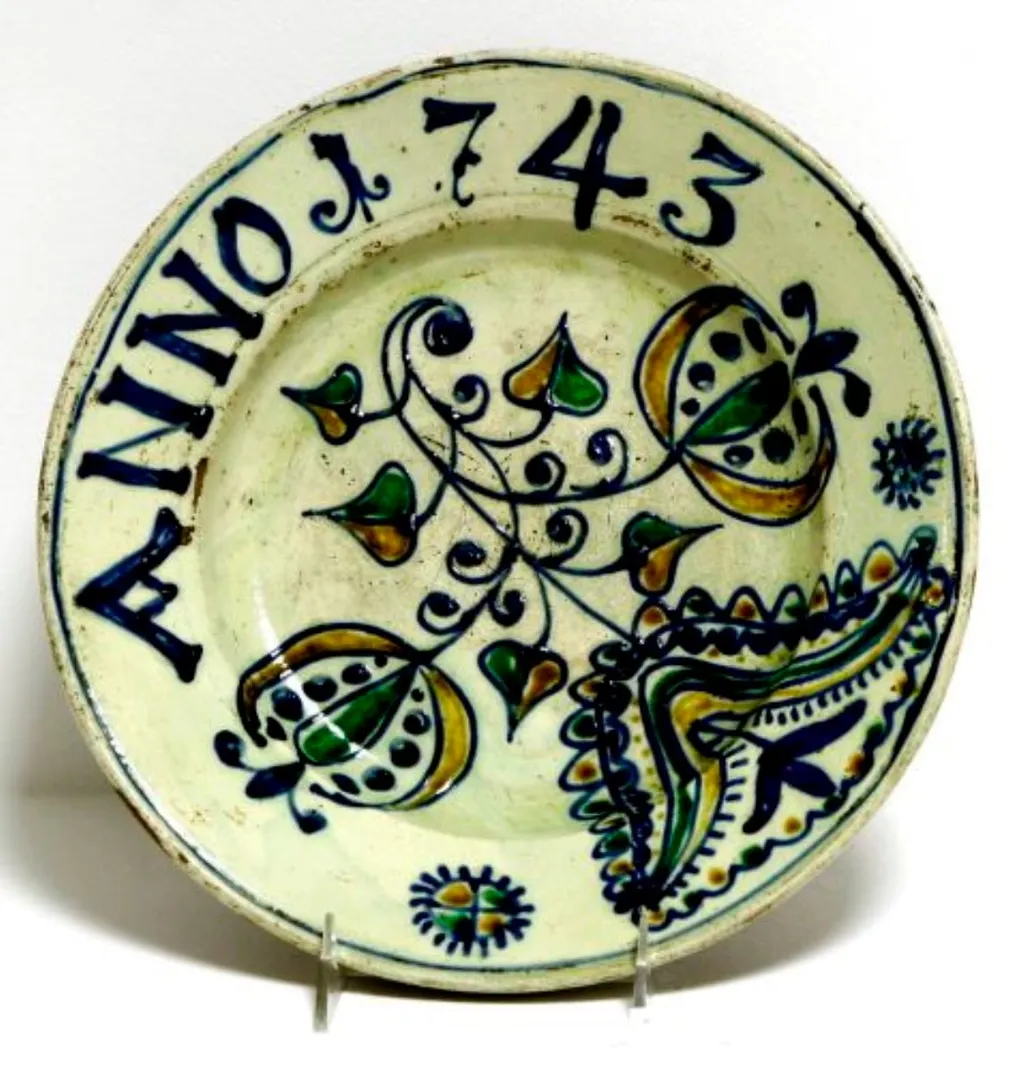
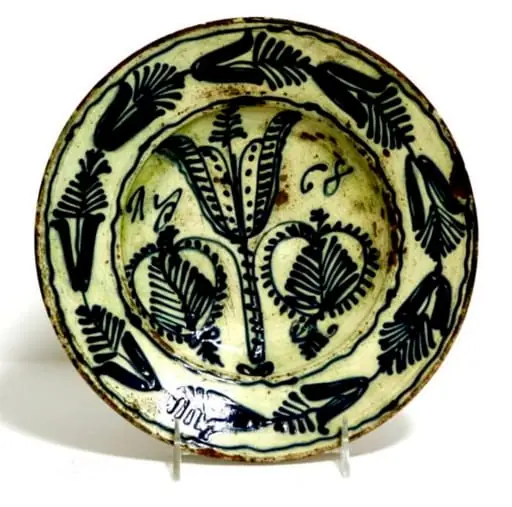
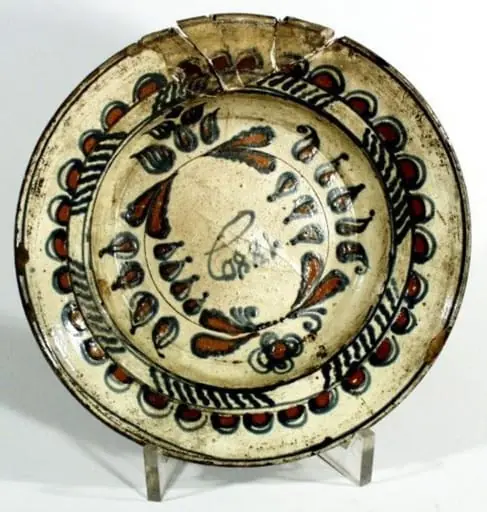
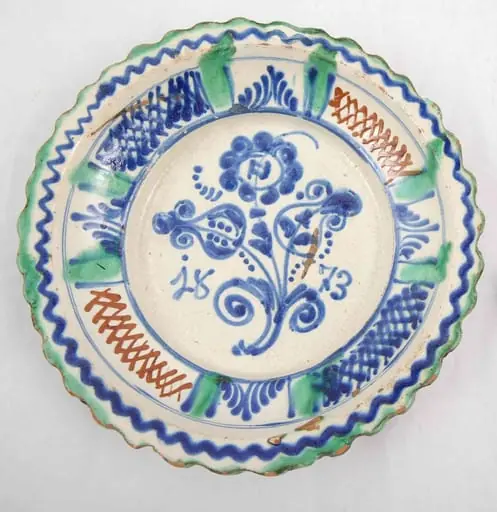
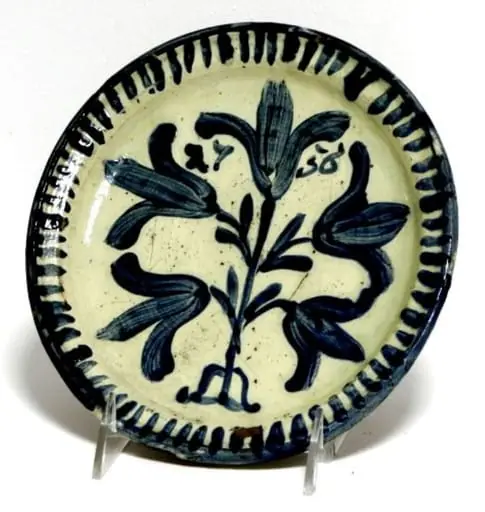
farfurie is a photography by the Baroque artist Unknown. It dates from 1743 and is held in the collection of the Romanian Peasant Museum.
About this work
The year "1743" suggests it’s from a time when people decorated everyday objects like this.
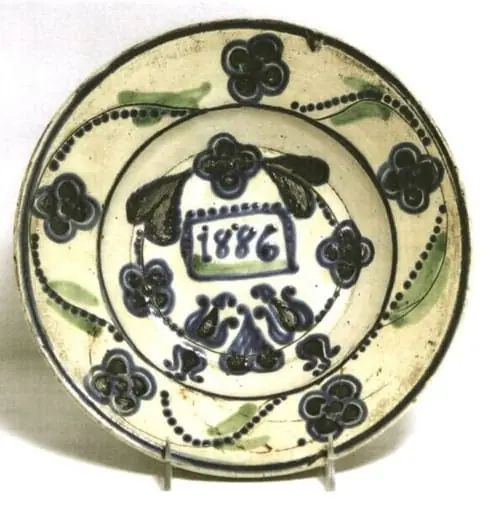
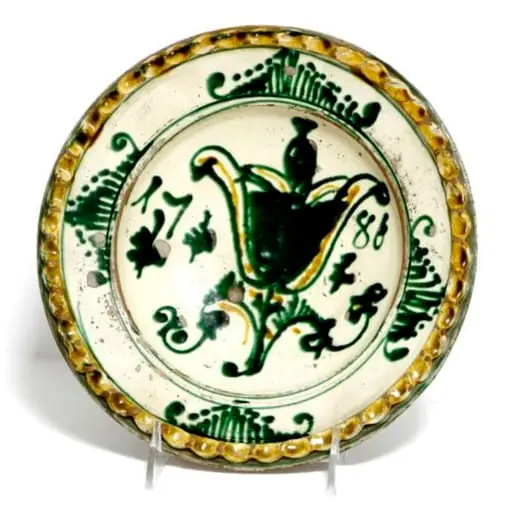
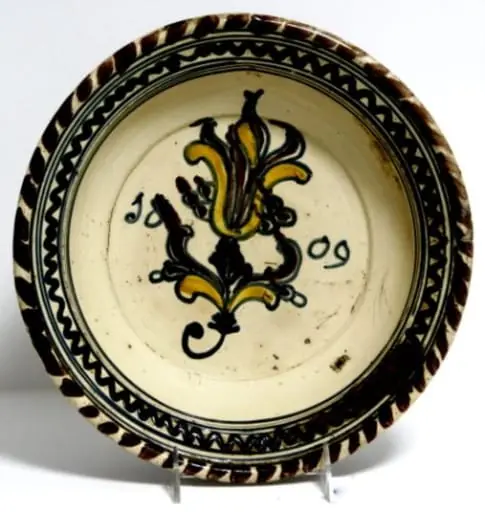
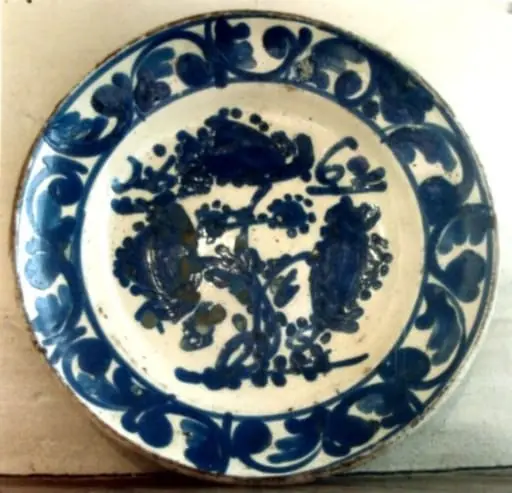
This is a round plate with a simple white background. Painted on it are swirling vines with green leaves and brown berries. The colors are bright but faded, mostly blues, greens, and yellows. There’s also a small flower and a crescent moon shape with dots inside it. The rim has the words "Farfurie 1743" written in dark blue.
The plate looks old and handmade, with uneven brushstrokes. The design is playful, mixing nature with a little whimsy. The year "1743" suggests it’s from a time when people decorated everyday objects like this.
If you like this style, look up Baroque.
Overview
Farfurie is a circular ceramic plate created in 1743, characterized by a simple white background adorned with vibrant, yet faded, decorations primarily in blues, greens, and yellows.
Subject & Meaning
The plate's design combines natural elements—swirling vines with green leaves and brown berries, a small flower—with whimsical motifs, including a crescent moon shape containing dots, suggesting a blend of nature appreciation and playful symbolism.
Technique & Style
Executed with uneven brushstrokes indicative of handmade craftsmanship, the piece reflects a decorative approach reminiscent of Baroque influences, though its overall aesthetic is more subdued and folkloric.
History & Provenance
Dated to 1743, the plate exemplifies the decorative practices of its time, where everyday objects were embellished with artistic elements. The specific origins or artist remain unspecified.
Context
Farfurie belongs to a historical context where ornate decoration of household items was common, possibly aligning with broader European ceramic decoration trends of the 18th century.
Legacy
While not explicitly linked to a major artistic movement's forefront, Farfurie illustrates the pervasive influence of decorative arts during its period, potentially inspiring interest in historical folk and ceramic art practices.
Artist & collection

 Domestic Scene
 Giacomo and Cardinal Marco, investing Andrea, Abbot of San Zeno, with his Benefice
 The Nymph of Fontainebleau
 Portrait of a Woman
 Madonna and Child with Saints in the Enclosed Garden
 Venus and Minerva
 Family Group of Four on Sofa
 Wall painting from Room H of the Villa of P. Fannius Synistor at Boscoreale