Artwork
farfurie
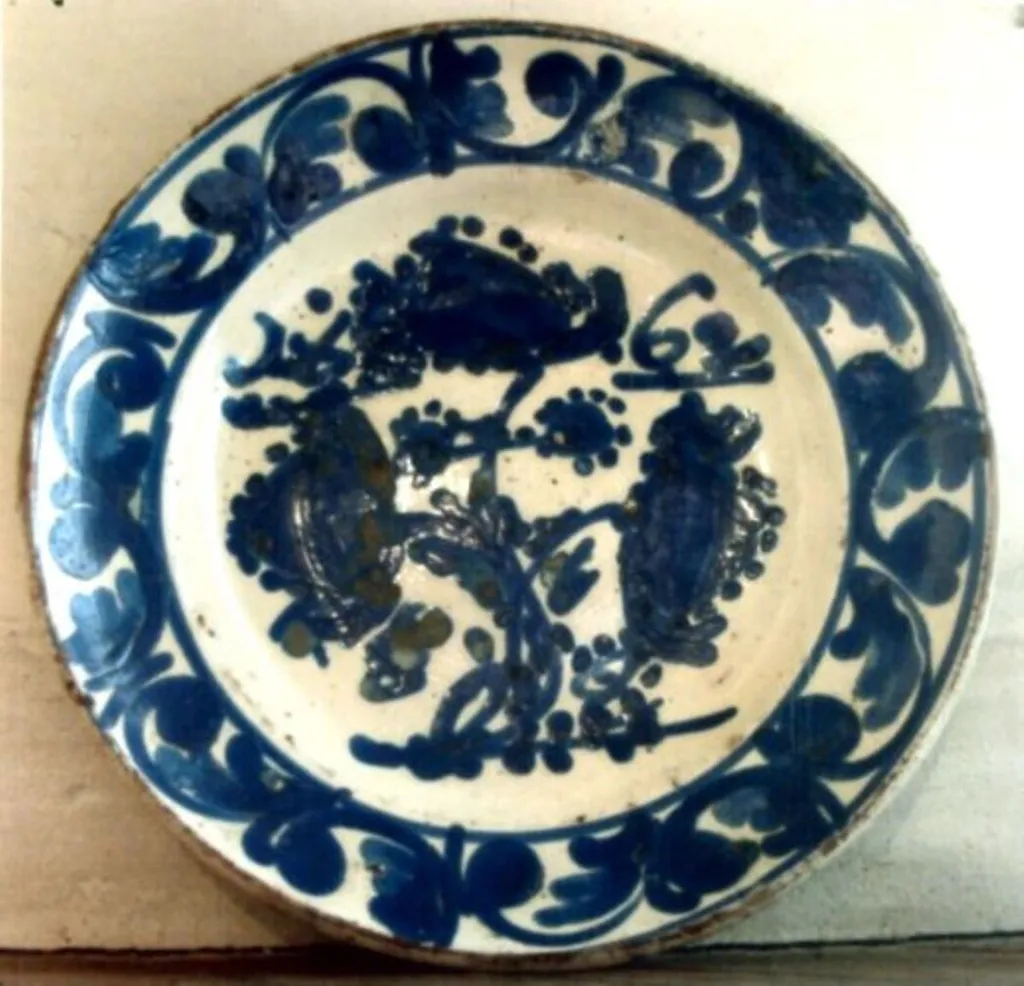
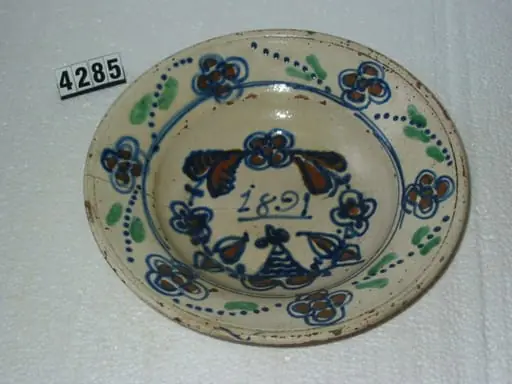
farfurie is a print by the Impressionist artist Unknown. It dates from 1862 and is held in the collection of the "Valer Literat" Făgăraş Country Museum. This ceramic plate features a classic blue-and-white palette, with a hand-painted floral motif centered on a round, wide-rimmed form.
About this work
Overview
This ceramic plate features a classic blue-and-white palette, with a hand-painted floral motif centered on a round, wide-rimmed form.
This ceramic plate features a classic blue-and-white palette, with a hand-painted floral motif centered on a round, wide-rimmed form. The design is executed in a single dark blue pigment against an unglazed white ground, suggesting a folk or vernacular tradition rather than industrial production. Its simplicity and rhythmic patterning reflect regional ceramic practices, likely intended for domestic use.
Subject & Meaning
The central motif consists of stylized leaves and blossoms arranged in a symmetrical, non-naturalistic pattern. These elements do not represent specific botanical species but instead evoke seasonal abundance and rural aesthetics. The repetition of organic forms suggests a cultural emphasis on nature’s cycles, common in household ceramics across Eastern European and Mediterranean traditions.
Technique & Style
The decoration is applied freehand with a brush, showing slight irregularities in line and pigment density that indicate artisanal rather than mechanized production. The blue glaze is opaque and saturated, applied in a single layer without shading or gradation. The style prioritizes clarity and balance over realism, aligning with folk decorative conventions rather than academic art training.
History & Provenance
While the exact origin is undocumented, the form and palette resemble 18th- to 19th-century folk ceramics from regions such as Romania, Ukraine, or southern Poland. Similar wares were commonly produced in small village workshops for local markets. The absence of maker’s marks or inscriptions suggests it was not intended for elite or export markets.
Context
Blue-and-white ceramics were widespread across Eurasia due to the accessibility of cobalt pigment and the influence of imported Chinese porcelain. In rural Europe, local potters adapted these motifs into indigenous designs, blending imported aesthetics with native symbolism. This plate reflects that hybrid tradition, distinct from Western fine art movements like Impressionism.
Legacy
Such plates remain part of regional material culture, often preserved as heirlooms or displayed in ethnographic collections. They represent a continuity of handcraft traditions that persisted despite industrialization. Their enduring presence in households underscores their role as functional art, valued for beauty and familiarity rather than novelty.
Artist & collection
Museum
"Valer Literat" Făgăraş Country Museum
Continue through works from the same source collection.
 Domestic Scene
 Giacomo and Cardinal Marco, investing Andrea, Abbot of San Zeno, with his Benefice
 The Nymph of Fontainebleau
 Portrait of a Woman
 Madonna and Child with Saints in the Enclosed Garden
 Venus and Minerva
 Family Group of Four on Sofa
 Wall painting from Room H of the Villa of P. Fannius Synistor at Boscoreale
 farfurie
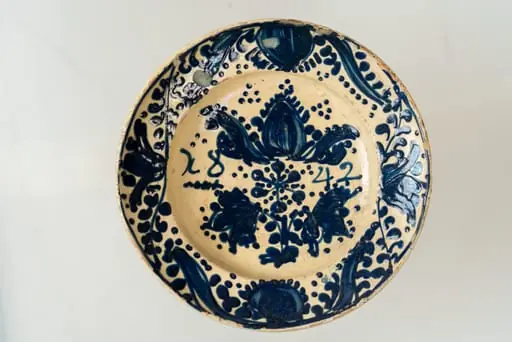 Farfurie adâncă, cu corp scund și buză lată, răsfrântă. Piesa este modelată la roata olarului, angobată cu humă albă pe fața interioară a acesteia. Decorul este realizat prin pictare cu cornul și cu pensula și constă în motive decorative vegetale stilizate (flori și frunze) și geometrice (puncte), dispuse pe întreaga suprafață a farfuriei. Central, pe fundul farfuriei, este înscris anul fabricației "1842", deoparte și de alta a registrului decorativ central. Cromatica decorului: alb, albastru. Farfuria este smălțuită pe interior, cu smalț transparent.
 farfurie
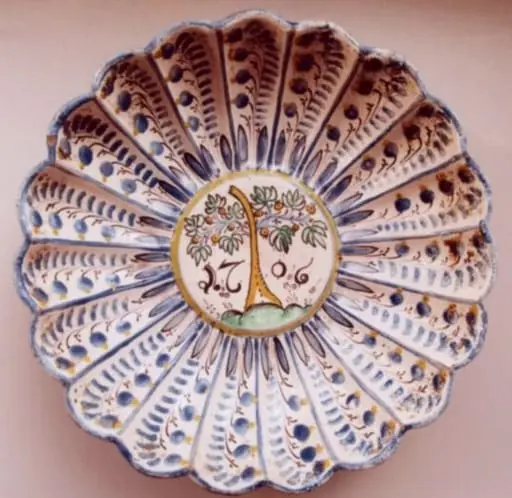 farfurie
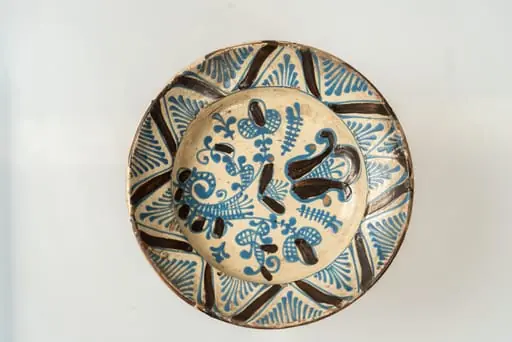 Farfurie adâncă, cu buză răsfrântă; piesa este modelată la roata olarului și este angobată cu humă albă pe fața interioară. Decorul este realizat prin pictare cu pensula și cu cornul și se compune din motive decorative florale stilizate (amplasate central, pe fundul farfuriei) și motive decorative geometrice, pe buza farfuriei (dungi de culoare maro, grupuri de linii paralele sub forma motivului de brăduț, linii hașurate). Cromatica: alb, maro, albastru. Fața farfuriei este acoperită cu un strat de smalț transparent.
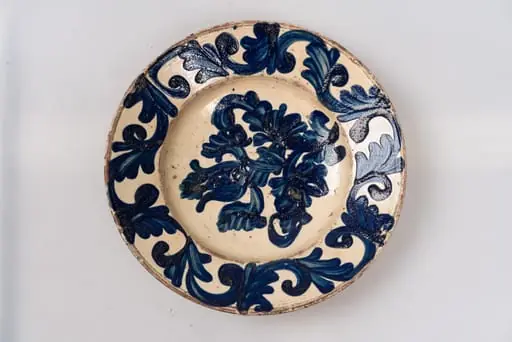 Farfurie adâncă, cu buza evazată; este angobată pe fața interioară cu un strat de humă albă, peste care este pictat cu pensula, cu linii groase, decorul monocromatic format din motive florale și fitomorfe stilizate (tulpină cu o floare de lalea și frunze, reprezentate pe centrul farfuriei și un șir continuu compus din elemente vegetale, ce decorează buza acesteia). Cromatica: alb, albastru. Farfuria este acoperită pe fața decorată cu un strat de smalț transparent.
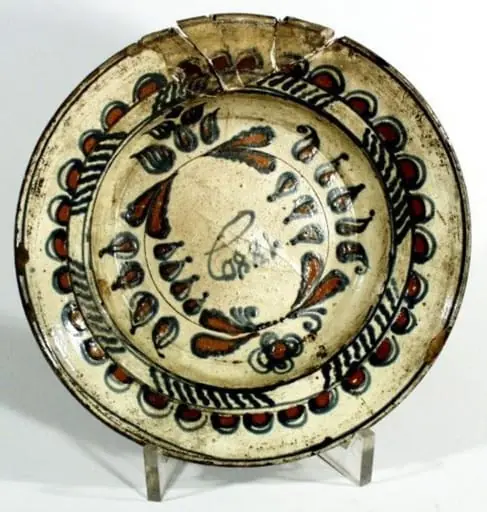 farfurie
 blid
blid