Artwork
farfurie
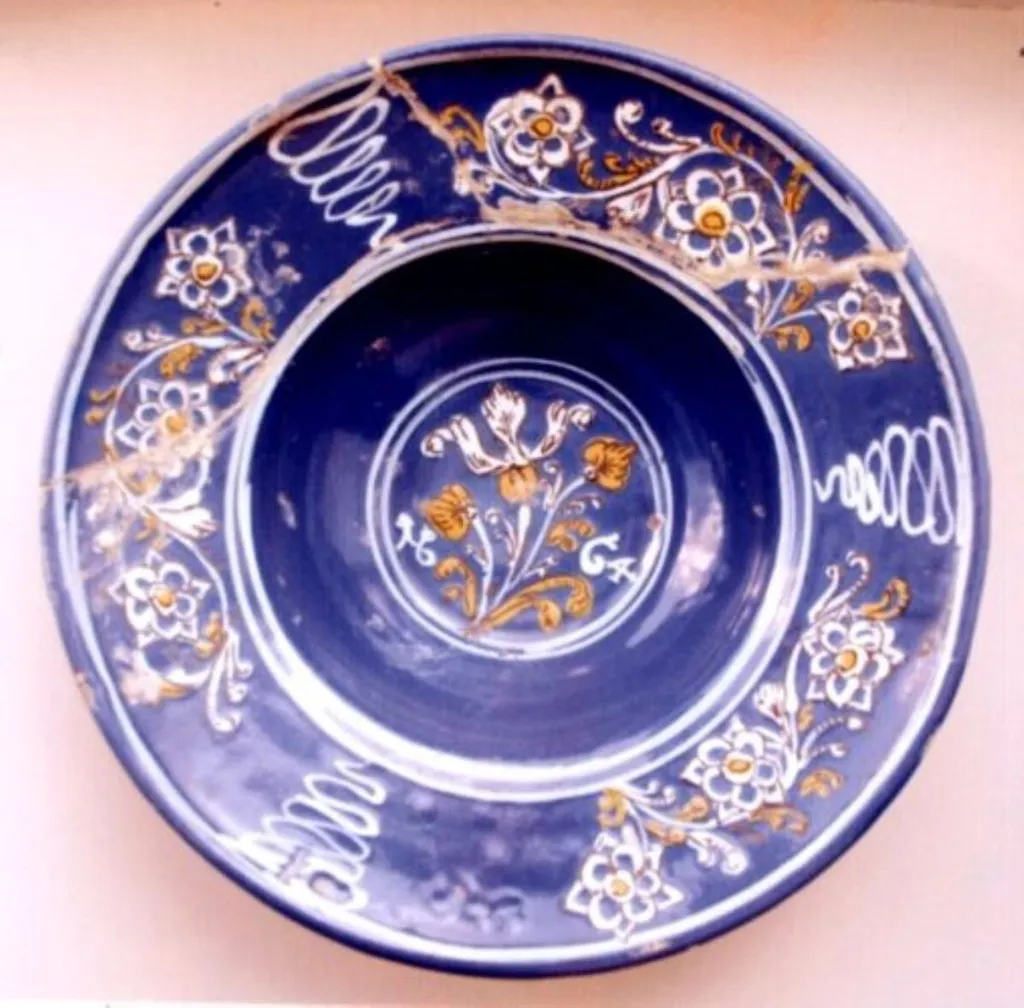
farfurie is a photography by the Baroque artist Unknown. It dates from 1664 and is held in the collection of the Ethnographical Museum of Transylvania. This ceramic plate features a blue ground with intricate floral decoration in white and yellow.
About this work
Overview
The design suggests a hand-painted technique typical of fine porcelain production, emphasizing symmetry and ornamental precision.
This ceramic plate features a blue ground with intricate floral decoration in white and yellow. Its form includes a broad outer rim and a narrower central field, each adorned with detailed botanical motifs. The design suggests a hand-painted technique typical of fine porcelain production, emphasizing symmetry and ornamental precision. The color palette and layout reflect a decorative tradition rooted in 17th- to 18th-century European ceramics.
Subject & Meaning
The plate’s subject is purely ornamental, centered on stylized flowers, leaves, and vines rendered in white and yellow against a blue field. No narrative or symbolic elements are present; the imagery serves aesthetic rather than allegorical purposes. The repetition of floral patterns across rim and center reinforces a sense of harmony and cultivated beauty, aligning with ideals of domestic refinement in early modern interiors.
Technique & Style
The decoration is executed with fine brushwork, suggesting hand-painted enamel on a glazed ceramic surface. Delicate lines and curvilinear forms create a sense of movement within the botanical motifs. The contrast between the cool blue background and the warm white and yellow pigments enhances visual depth. The style echoes Baroque sensibilities through its richness and attention to detail, though it avoids excessive gilding or three-dimensional embellishment.
History & Provenance
The plate’s design and craftsmanship are consistent with European porcelain workshops of the late 17th or early 18th century, possibly from Germany, France, or the Netherlands. Similar floral patterns appear on tableware produced for affluent households during the period. While its specific origin is unconfirmed, its aesthetic aligns with export wares influenced by Chinese porcelain traditions, adapted to Western tastes.
Context
This plate belongs to a broader trend in European ceramics where floral decoration became a dominant motif, replacing earlier geometric or heraldic designs. It reflects the growing middle and upper-class interest in refined table settings, influenced by imported Asian porcelain and the Baroque love of ornament. Such pieces were often displayed as much as used, signaling cultural sophistication and access to luxury goods.
Legacy
The plate exemplifies a transitional phase in ceramic design, bridging the ornate Baroque tradition and the later Rococo emphasis on naturalism. Its enduring appeal lies in its balance of structure and delicacy, influencing subsequent generations of decorative arts. Though not produced by a major factory, it represents the widespread adoption of floral ornamentation in domestic ceramics across Europe.
Artist & collection
Museum
Ethnographical Museum of Transylvania
Continue through works from the same source collection.
 Domestic Scene
 Giacomo and Cardinal Marco, investing Andrea, Abbot of San Zeno, with his Benefice
 The Nymph of Fontainebleau
 Portrait of a Woman
 Madonna and Child with Saints in the Enclosed Garden
 Venus and Minerva
 Family Group of Four on Sofa
 Wall painting from Room H of the Villa of P. Fannius Synistor at Boscoreale
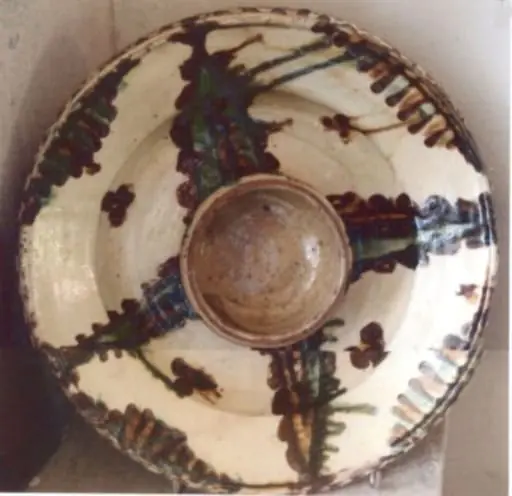 farfurie de ritual
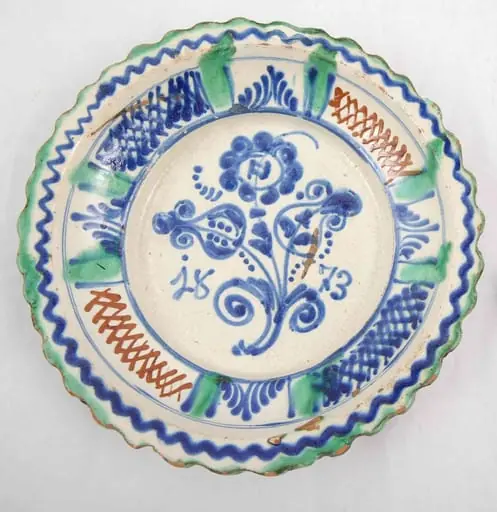 farfurie
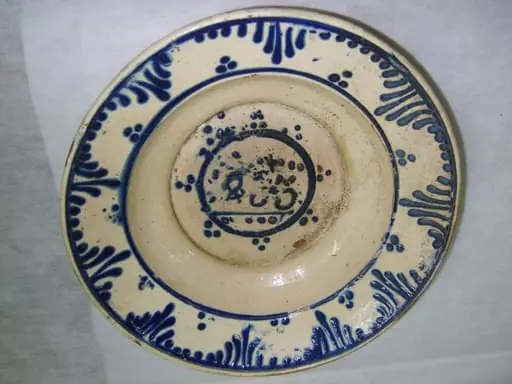 Blid mare
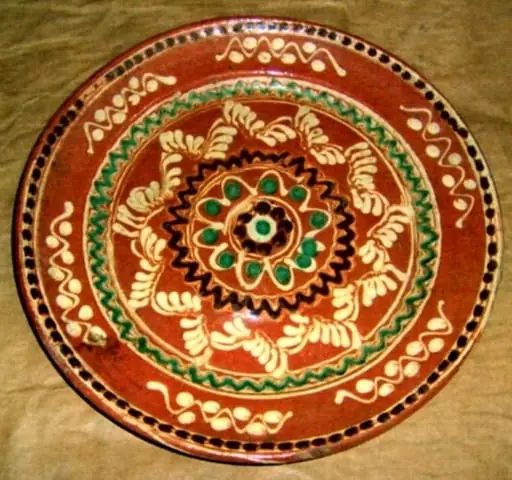 farfurie
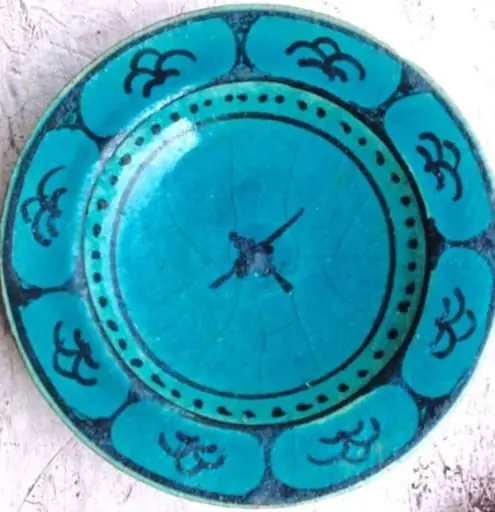 farfurie mică
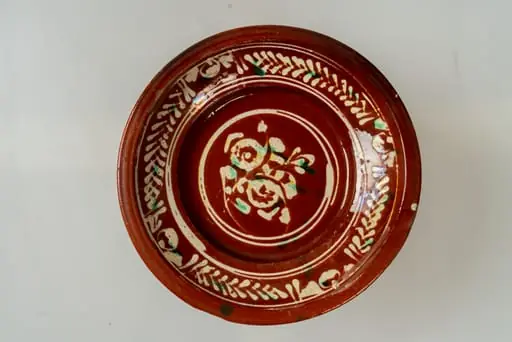 Farfurie adâncă, modelată la roata olarului, cu suprafața interioară neangobată. Decorul este pictat cu cornul și cu pensula și constă în motive decorative florale (un buchet de flori central) și vegetale stilizate, pe buza farfuriei. Pe fața interioară a farfuriei este aplicat un strat de smalț transparent. Cromatica decorului: alb, pe fondul roșu al lutului ars.
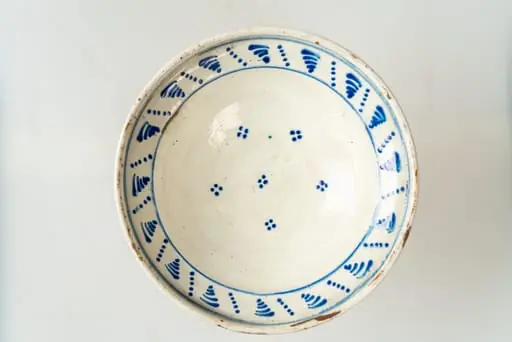 Farfurie adâncă, de tip castron. Piesă modelată la roata olarului, angobată cu alb pe fața interioară și decorată cu motive geometrice (grupuri și șiruri de puncte, grupuri de linii paralele, descrescătoare ca mărime, linii sub formă de cercuri concentrice), dispuse pe fundul farfuriei și pe buza acesteia. Farfuria este smălțuită pe fața interioară cu smalț transparent.