Artwork
farfurie
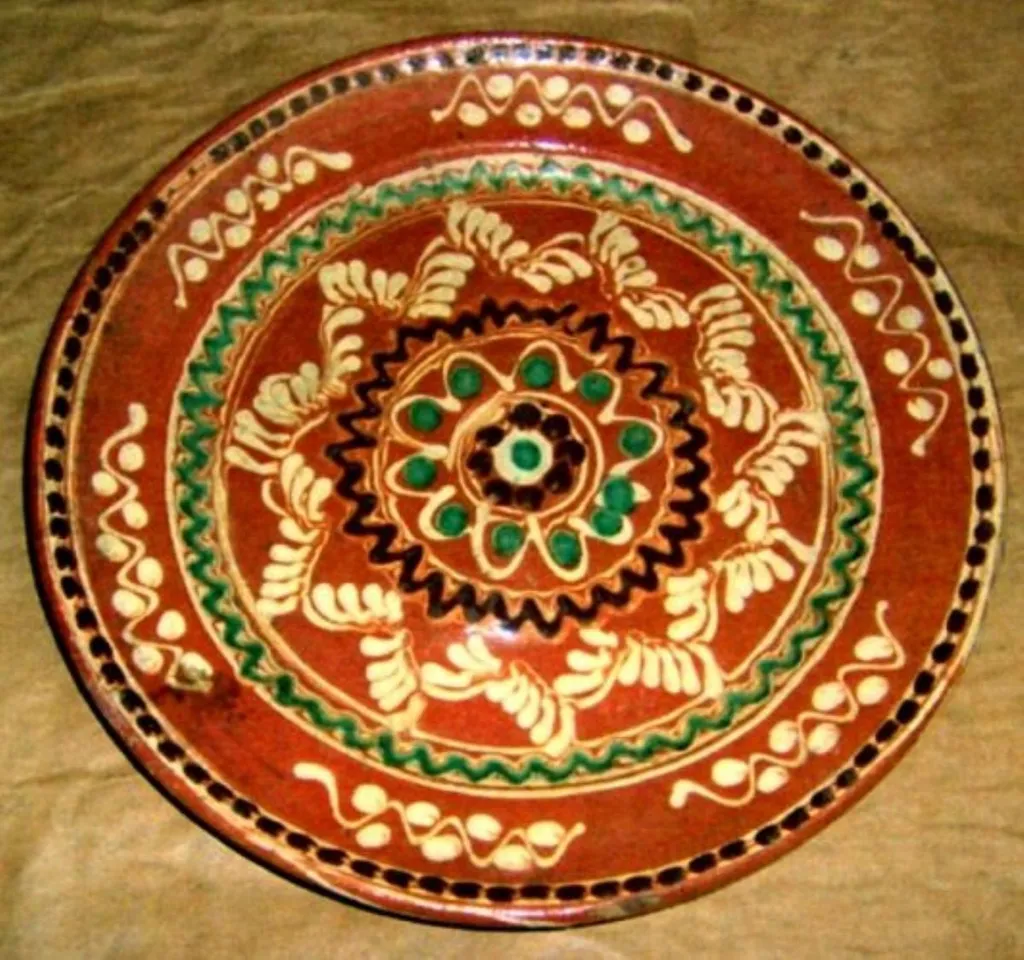
farfurie is a photography by Unknown. It dates from 1968 and is held in the collection of the National Museum of Bukovina. The object is a circular plate distinguished by a vivid decorative scheme.
About this work
The center has a spiral of green teardrop shapes, surrounded by swirls and leaves in cream and black.
This is a round, colorful plate with a bold design. The center has a spiral of green teardrop shapes, surrounded by swirls and leaves in cream and black. The outer edge has a repeating pattern of small cream flowers and black dots on a reddish background.
The photo was taken in 1968, showing a traditional-looking plate up close. The colors are bright and the lines are sharp, making the patterns stand out.
If you like this style, check out the Museum of Ethnography for more objects like this.
Overview
The object is a circular plate distinguished by a vivid decorative scheme. Its surface features a central motif of green teardrop forms arranged in a spiral, encircled by cream‑colored swirls and leaf‑like elements set against black accents. The rim is adorned with a repetitive band of small cream flowers and black dots set on a reddish ground, creating a striking contrast.
Subject & Meaning
The design combines naturalistic motifs—such as leaves and floral patterns—with abstract geometric arrangements, suggesting a synthesis of decorative tradition and stylized representation. The central spiral may evoke notions of growth or continuity, while the surrounding ornamentation reinforces a rhythmic visual flow across the plate’s surface.
Technique & Style
Executed in a flat, painted medium, the plate displays sharp, well‑defined lines and saturated colors that enhance the clarity of each motif. The use of bold outlines and a limited palette of green, cream, black, and red reflects a graphic aesthetic common in mid‑20th‑century decorative arts, emphasizing both visual impact and repeatable patterning.
History & Provenance
Photographed in 1968, the plate appears to have been produced in a context that values traditional forms while embracing contemporary decorative trends. The image captures the object at a close range, highlighting its craftsmanship and the precision of its painted surface.
Context
The piece aligns with other ethnographic ceramics that blend functional utility with elaborate surface decoration. Its stylistic traits are comparable to objects found in collections of folk and regional pottery, where motifs often draw from local flora and abstract symbolism.
Artist & collection
 Domestic Scene
 Giacomo and Cardinal Marco, investing Andrea, Abbot of San Zeno, with his Benefice
 The Nymph of Fontainebleau
 Portrait of a Woman
 Madonna and Child with Saints in the Enclosed Garden
 Venus and Minerva
 Family Group of Four on Sofa
 Wall painting from Room H of the Villa of P. Fannius Synistor at Boscoreale
 strachină
 farfurie
 farfurie
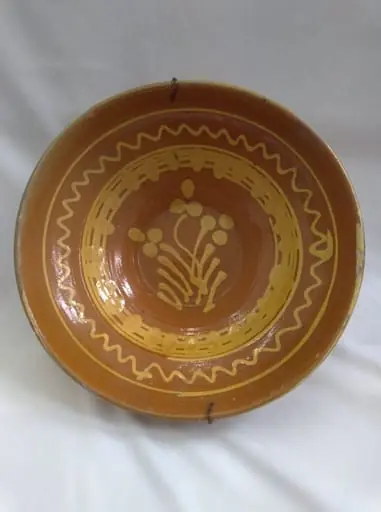 strachină
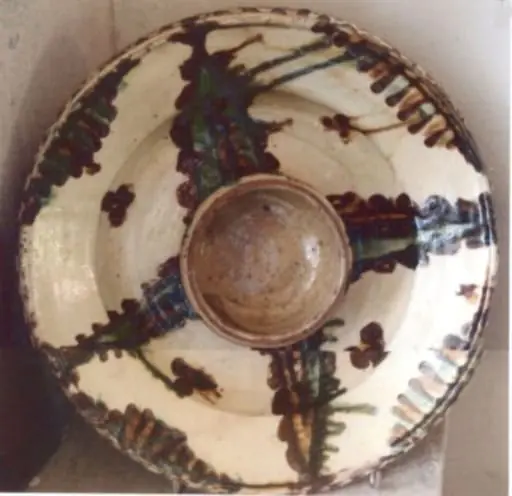 farfurie de ritual
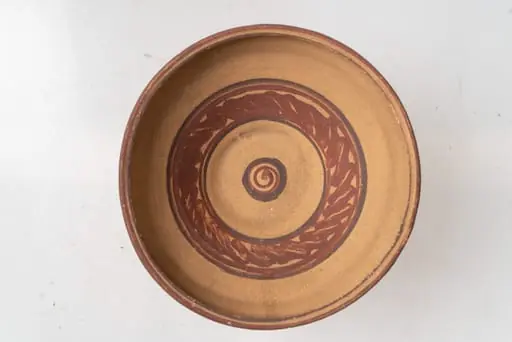 Farfurie adâncă de tip castron, cu bază îngustă și corp tronconic, buză îngustă dreaptă și muchia buzei concavă spre interior; piesa este modelată din lut la roata olarului nefiind angobată. Decorul foarte simplu este realizat cu angobă maro și roșu-închis, prin pictare cu cornul și se compune din motive geometrice: linii circulare, linie groasă ondulată, neglijent executată, linie spiralată. Cromatica: maro, roșu-închis, pe fondul lutului ars. Farfuria este nesmălțuită.
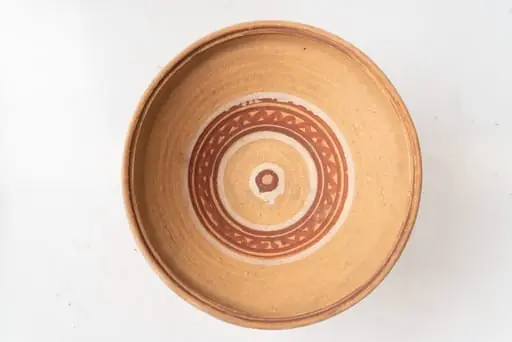 Farfurie adâncă de tip castron, cu bază îngustă și corp tronconic, buză mică dreaptă; piesa este modelată din lut la roata olarului nefiind angobată. Decorul foarte simplu este realizat cu albă și roșu-închis, prin pictare cu cornul și se compune din motive geometrice: linii circulare, linie ondulată, cercuri concentrice. Cromatica: alb, roșu-închis, pe fondul lutului ars. Farfuria este nesmălțuită.