Artwork
Farfurie adâncă, cu buza răsfrântă și muchia buzei ușor ondulată; piesa este modelată la roata olarului și angobată pe fața interioară cu humă albă. Decorul monocromatic este realizat prin pictare cu cornul și constă în două linii spiralate mari, una ce acoperă întreaga suprafață a buzei și a doua linie, ce acoperă toată zona centrală a farfuriei. O linie vălurită, pe peretele îngust al farfuriei, separă cele două spirale. Cromatica: alb, albastru. Fața decorată a farfuriei este acoperită cu un strat de smalț transparent.
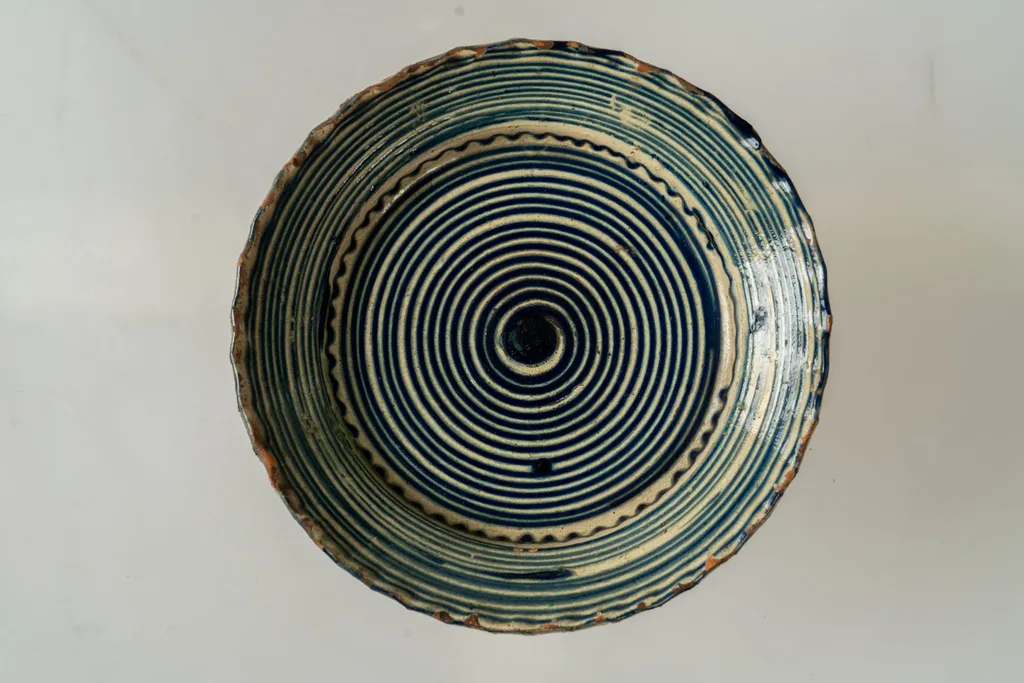
Farfurie adâncă, cu buza răsfrântă și muchia buzei ușor ondulată; piesa este modelată la roata olarului și angobată pe fața interioară cu humă albă. Decorul monocromatic este realizat prin pictare cu cornul și constă în două linii spiralate mari, una ce acoperă întreaga suprafață a buzei și a doua linie, ce acoperă toată zona centrală a farfuriei. O linie vălurită, pe peretele îngust al farfuriei, separă cele două spirale. Cromatica: alb, albastru. Fața decorată a farfuriei este acoperită cu un strat de smalț transparent. is a print by Unknown. It dates from 1850 and is held in the collection of the Ethnographical Museum of Transylvania. The object is a deep ceramic plate featuring a turned rim with a subtly undulating edge.
About this work
Overview
The object is a deep ceramic plate featuring a turned rim with a subtly undulating edge. Its interior is coated with a white slip, and the decorative surface is finished with a transparent glaze that protects the painted design.
Subject & Meaning
The plate’s ornamentation consists of two prominent blue spirals: one encircles the entire rim, while the other occupies the central area of the plate. A wavy band on the narrow side of the rim separates the two spirals, creating a balanced visual rhythm.
Technique & Style
The decoration was applied using a corn‑point brush, a traditional method for applying monochrome motifs in rural pottery. The limited palette of white slip and blue pigment reflects the straightforward aesthetic typical of 19th‑century folk ceramics.
History & Provenance
Such plates are characteristic of countryside ceramic production in the 1800s, where utilitarian objects were often embellished with simple linear designs. The piece likely originates from a regional workshop that supplied everyday household items.
Context
In the broader context of 19th‑century vernacular pottery, the use of spiral motifs and restrained coloration aligns with a functional yet decorative approach, emphasizing durability and ease of manufacture while providing modest visual interest.
Artist & collection
Museum
Ethnographical Museum of Transylvania
Continue through works from the same source collection.
 Domestic Scene
 Giacomo and Cardinal Marco, investing Andrea, Abbot of San Zeno, with his Benefice
 The Nymph of Fontainebleau
 Portrait of a Woman
 Madonna and Child with Saints in the Enclosed Garden
 Venus and Minerva
 Family Group of Four on Sofa
 Wall painting from Room H of the Villa of P. Fannius Synistor at Boscoreale
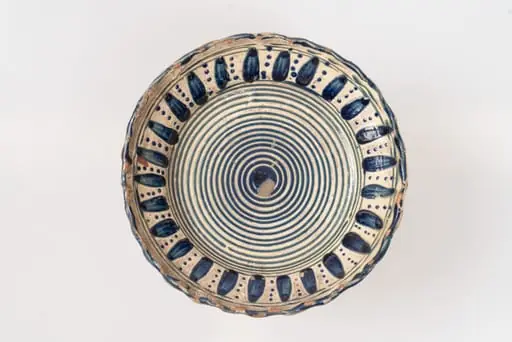 Farfurie de formă semi-adâncă, cu buză lată, evazată și muchia buzei ușor ondulată. Farfuria este angobată pe fața interioară cu un strat de humă albă, peste care este pictat cu cornul și cu pensula decorul monocromatic, format din motive fitomorfe stilizate (un șir de frunze simple, separate de câte o linie punctată - pe buza farfuriei) și geometrice (o linie spiralată amplă, ce pornește din centrul farfuriei și acoperă întreaga suprafață centrală a acesteia; linii simple circulare, puncte - pe buza farfuriei). Muchia buzei este marcată cu o dungă de culoare albastră. Cromatica: alb, albastru. Farfuria este acoperită pe fața decorată cu un strat de smalț transparent.
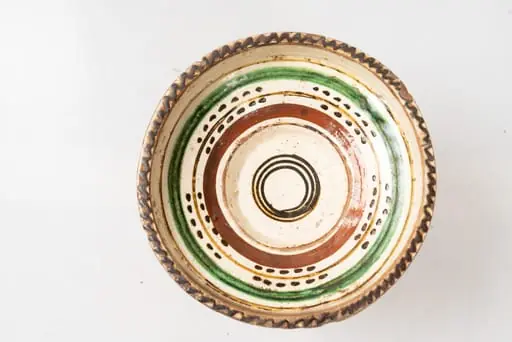 Farfurie adâncă, de tip castron, cu corp îngust tronconic și buză dreaptă. Piesa este modelată din lut la roata olarului și angobată cu humă albă pe fața interioară. Decorul este realizat prin pictare cu cornul și cu pensula și constă în motive decorative geometrice (linie spiralată, două linii groase și trei linii mai subțiri dispuse sub formă de cerc, șiruri de puncte). Muchia buzei este decorată cu o linie ondulată mărunt, de culoare maro. Cromatica: alb, maro, verde, brun roșcat. Farfuria este acoperită cu un strat de smalț transparent pe fața ornamentată.
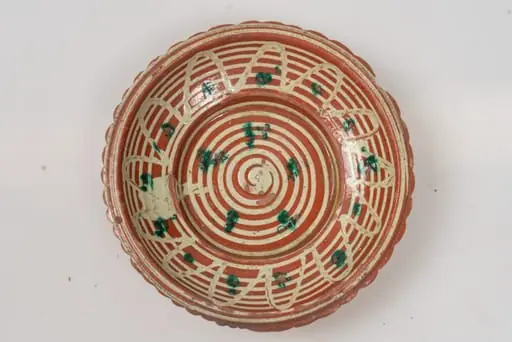 Farfurie adâncă cu buza evazată, ușor concavă spre interior și cu muchia buzei răsfrântă și ondulată. Farfuria este neangobată. Decorul este realizat prin pictare cu cornul, cu humă albă, și constă într-o linie spiralată ce acoperă întreaga suprafață centrală a farfuriei; buza acesteia este decorată cu linii circulare concentrice de culoare albă peste care a fost pictată o linie circulară ondulată albă. Câțiva stropi de culoare verde completează decorul piesei. Cromatica: alb, verde, pe fondul roșu al lutului ars. Suprafața ornamentată a farfuriei este acoperită cu un strat de smalț transparent.
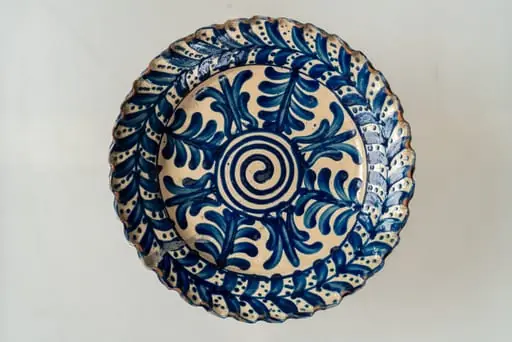 Farfurie de formă plată, cu buză răsfrântă și muchia buzei ondulată; piesa este modelată la roata olarului și este angobată cu humă albă pe fața interioară. Decorul monocromatic este pictat cu pensula și cu cornul și se compune din motive decorative vegetale stilizate și geometrice, dispuse astfel: registrul central, pe fundul farfuriei, se compune dintr-o linie spiralată pe exteriorul căreia sunt pictate motive vegetale (floare de crin, motivul brăduțului), iar buza farfuriei este decorată cu un șir continuu de frunze, intercalate de puncte, înșirate pe o linie albastră sub formă de cerc. Bordura interioară a farfuriei și muchia buzei sunt marcate de câte o linie albastră. Cromatica: alb, albastru. Fața decorată a farfuriei este acoperită cu un strat de smalț transparent.
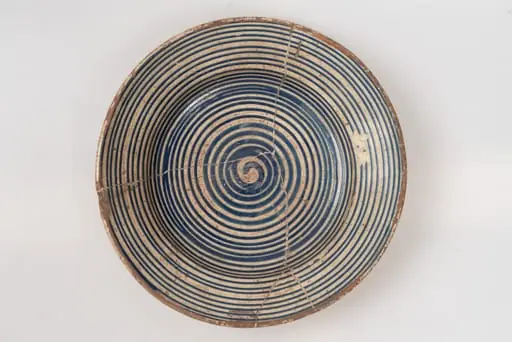 Farfurie de formă semi-adâncă, cu buză lată, evazată. Farfuria este angobată pe fața interioară cu un strat de humă albă, peste care este pictat cu cornul decorul monocromatic, format dintr-o linie simplă sub formă de spirală, care pornește din centrul farfuriei și acoperă întreaga ei suprafață. Cromatica: alb, albastru. Farfuria este acoperită pe fața decorată cu un strat de smalț transparent.
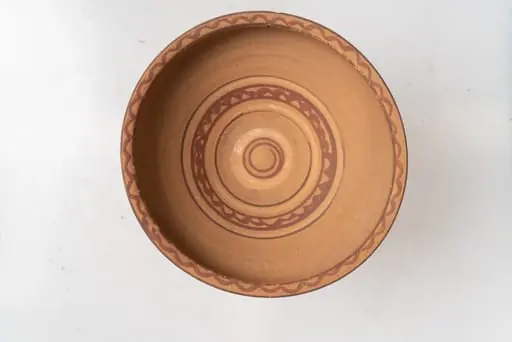 Farfurie adâncă de tip castron, cu bază îngustă și corp tronconic, buză dreaptă și muchia buzei evazată; piesa este modelată din lut la roata olarului nefiind angobată. Decorul foarte simplu este realizat cu angobă maro și roșu-închis, prin pictare cu cornul și se compune din motive geometrice: linii circulare, două linii ondulate, neglijent executate, linie spiralată. Cromatica: maro, roșu-închis, pe fondul lutului ars. Farfuria este nesmălțuită.
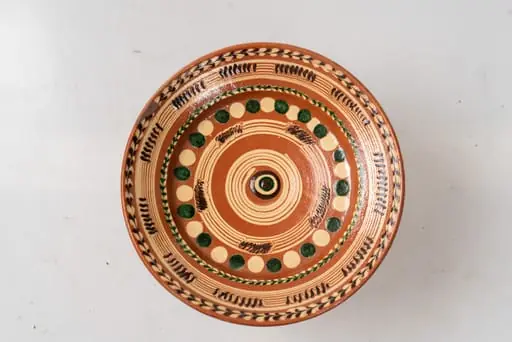 Farfurie de formă aplatizată, cu buză evazată; piesa este modelată din lut la roata olarului, nefiind angobată. Decorul este realizat prin pictare cu cornul și se compune din diverse motive geometrice dispuse pe întreaga suprafață a farfuriei (linie spiralată și linii fine dispuse sub formă de cercuri concentrice de culoare albă, șir circular de puncte groase de culoare verde și alb, grupuri de linii mici paralele, de culoare maro, suprapuse peste grupurile de linii circulare albe; bordura interioară a farfuriei și marginea buzei sunt decorate cu câte un șir fin format din motivul frunzei duble). Cromatica: alb, maro, verde, pe fondul lutului ars. Farfuria este acoperită pe fața ornamentată cu un strat de smalț transparent.
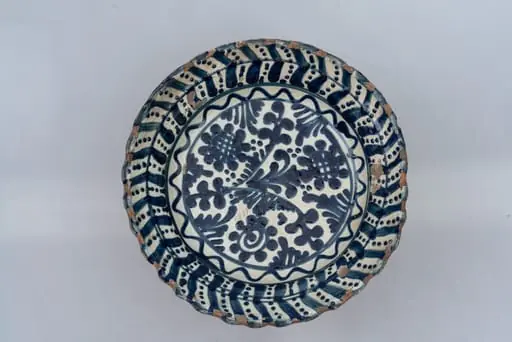 Farfurie semi-adâncă, cu fund larg, buză evazată și muchia buzei ondulată. Este acoperită pe suprafața interioară cu un strat de angobă albă peste care este pictat cu pensula și cu cornul decorul monocromatic format din motive geometrice și florale stilizate: registrul central de pe fundul farfuriei conține un buchet format din trei flori cu petale rotunde și mijlocul umplut cu linii hașurate intersectat, una dintre flori având mijlocul dintr-o linie spiralată, și din frunze; acest registru este încadrat între două linii circulare simple și o linie circulară ondulată și este completat cu șase motive formate din grupuri de linii crescătoare și descrescătoare, dispuse sub formă de triunghi și cu puncte. Registrul decorativ marginal de pe buza farfuriei este decorat cu un șir continuu de frunze duble între care se găsesc motive punctate (linii). Muchia buzei este marcată cu o dungă albastră. Suprafața ornamentată a farfuriei este acoperită cu un strat de smalț transparent. Cromatica: alb, albastru.
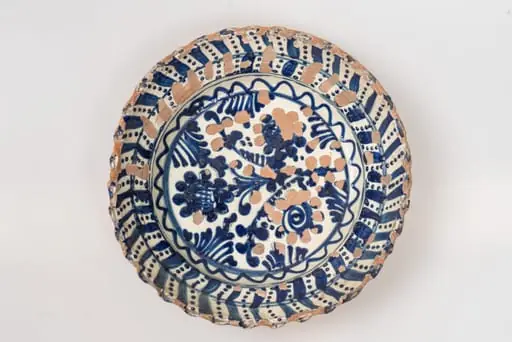 Farfurie de formă semi-adâncă, cu buză lată, evazată și muchia buzei ondulată. Farfuria este angobată pe fața interioară cu un strat de humă albă, peste care este pictat cu cornul și cu pensula decorul monocromatic, format din motive florale și fitomorfe stilizate (tulpină cu trei flori și frunze, reprezentate pe centrul farfuriei și un șir continuu de frunze duble între linii punctate, pe buza farfuriei) și geometrice (linii simple circulare, linie ondulată dispusă sub formă de cerc, puncte, grupuri de linii paralele, crescătoare și descrescătoare ca mărime, linii spiralate, linii hașurate). Buza farfuriei este marcată cu o dungă de culoare albastră. Cromatica: alb, albastru. Farfuria este acoperită pe fața decorată cu un strat de smalț transparent.
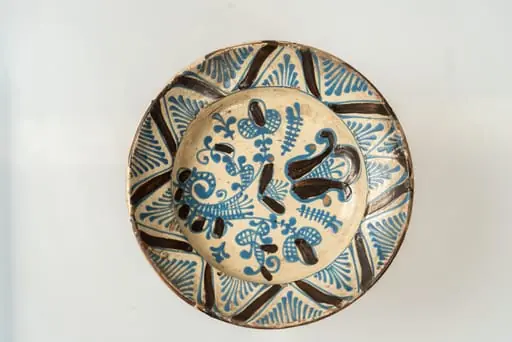 Farfurie adâncă, cu buză răsfrântă; piesa este modelată la roata olarului și este angobată cu humă albă pe fața interioară. Decorul este realizat prin pictare cu pensula și cu cornul și se compune din motive decorative florale stilizate (amplasate central, pe fundul farfuriei) și motive decorative geometrice, pe buza farfuriei (dungi de culoare maro, grupuri de linii paralele sub forma motivului de brăduț, linii hașurate). Cromatica: alb, maro, albastru. Fața farfuriei este acoperită cu un strat de smalț transparent.
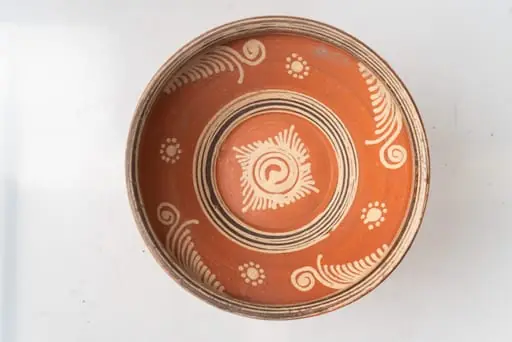 Farfurie adâncă de tip castron, cu corp tronconic, buză îngustă dreaptă și muchia buzei evazată; piesa este modelată la roata olarului nefiind angobată. Decorul este realizat cu angobă albă și maro, prin pictare cu cornul și cu pensula și se compune din motive geometrice (linie spiralată și grupuri de linii paralele crescătoare și descrescătoare, albe, în registrul de pe fundul farfuriei; motive spiralate și grupuri de linii paralele curbe, linii circulare, patru grupuri de puncte sugerând un motiv floral, două dungi maro, pe peretele și buza farfuriei). Cromatica: maro, alb, pe fondul lutului ars. Fața ornamentată este acoperită cu un strat de smalț transparent subțire.