Artwork
Farfurie adâncă cu buza evazată, ușor concavă spre interior și cu muchia buzei răsfrântă și ondulată. Farfuria este neangobată. Decorul este realizat prin pictare cu cornul, cu humă albă, și constă într-o linie spiralată ce acoperă întreaga suprafață centrală a farfuriei; buza acesteia este decorată cu linii circulare concentrice de culoare albă peste care a fost pictată o linie circulară ondulată albă. Câțiva stropi de culoare verde completează decorul piesei. Cromatica: alb, verde, pe fondul roșu al lutului ars. Suprafața ornamentată a farfuriei este acoperită cu un strat de smalț transparent.
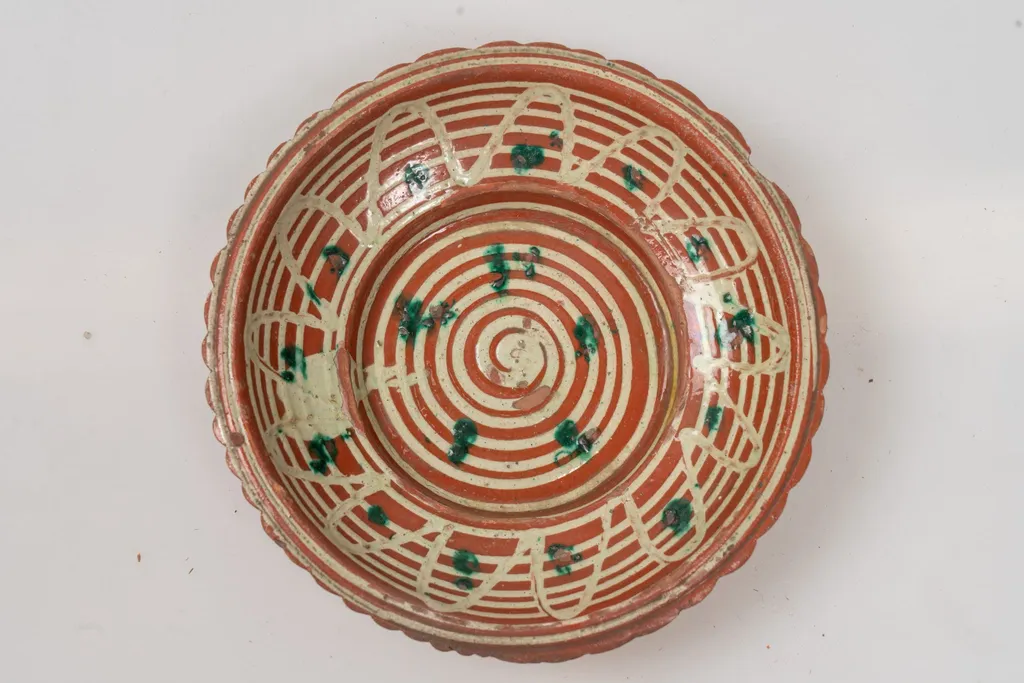
Farfurie adâncă cu buza evazată, ușor concavă spre interior și cu muchia buzei răsfrântă și ondulată. Farfuria este neangobată. Decorul este realizat prin pictare cu cornul, cu humă albă, și constă într-o linie spiralată ce acoperă întreaga suprafață centrală a farfuriei; buza acesteia este decorată cu linii circulare concentrice de culoare albă peste care a fost pictată o linie circulară ondulată albă. Câțiva stropi de culoare verde completează decorul piesei. Cromatica: alb, verde, pe fondul roșu al lutului ars. Suprafața ornamentată a farfuriei este acoperită cu un strat de smalț transparent. is a print by Unknown. It dates from 1850 and is held in the collection of the Ethnographical Museum of Transylvania. This ceramic bowl features a wide, flaring rim with a gently inward-curving edge and a wavy lip.
About this work
Overview
A transparent glaze covers the decorated area, enhancing the contrast of the pigments while preserving the organic feel of the form.
This ceramic bowl features a wide, flaring rim with a gently inward-curving edge and a wavy lip. Made from unglazed clay, it retains the natural texture of the fired material, with no slip coating. The surface is adorned with hand-painted decorations in white and green pigments, applied over a red earthenware base. A transparent glaze covers the decorated area, enhancing the contrast of the pigments while preserving the organic feel of the form.
Subject & Meaning
The decoration centers on a continuous spiral motif, extending across the interior base, suggesting movement or cyclical patterns. Concentric circles frame the rim, interrupted by a wavy white line that echoes the lip’s undulating form. Sparse green accents may indicate natural elements or symbolic additions. The design lacks figurative elements, pointing toward abstract or ritualistic intent rather than narrative representation.
Technique & Style
Pigments were applied using a brush made from animal horn, with white huma paint forming the primary design. The spiral and concentric lines were painted freehand, showing slight irregularities that reflect manual execution. Green splashes were added as accents, likely with a finer tool. The clay body was left unsmoothed after shaping, preserving finger marks and uneven contours, emphasizing the handmade nature of the vessel.
History & Provenance
This piece originates from a Neolithic culture in the region now part of Romania, dating to the fifth millennium BCE. Similar vessels have been found in archaeological contexts associated with the Cucuteni-Trypillia culture. Its form and decoration align with regional ceramic traditions, where painted pottery was used in domestic or ceremonial settings. The object was likely produced locally and used within a settled agricultural community.
Context
The vessel reflects the broader ceramic practices of Neolithic communities in the Carpathian Basin, where pottery served both utilitarian and symbolic roles. The use of spirals and concentric bands is common in contemporaneous sites, possibly linked to cosmological beliefs or communal identity. The absence of figurative imagery and the emphasis on geometric repetition suggest a preference for abstraction over representation in ritual or daily life.
Legacy
This bowl contributes to the understanding of early European ceramic traditions, illustrating the technical skill and aesthetic choices of prehistoric potters. Its preservation allows comparison with other Neolithic finds across Eastern Europe, highlighting regional variations in decoration and form. The piece remains a tangible link to the material culture of early farming societies, valued for its craftsmanship rather than its rarity.
Artist & collection
Museum
Ethnographical Museum of Transylvania
Continue through works from the same source collection.
 Domestic Scene
 Giacomo and Cardinal Marco, investing Andrea, Abbot of San Zeno, with his Benefice
 The Nymph of Fontainebleau
 Portrait of a Woman
 Madonna and Child with Saints in the Enclosed Garden
 Venus and Minerva
 Family Group of Four on Sofa
 Wall painting from Room H of the Villa of P. Fannius Synistor at Boscoreale
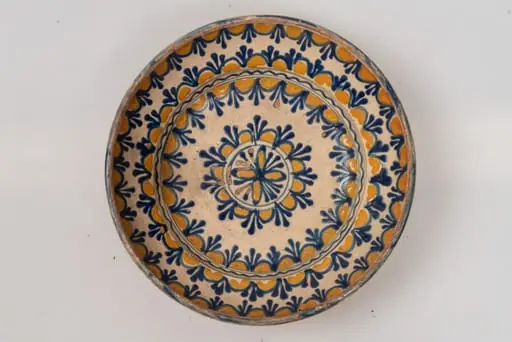 Farfurie adâncă, cu buza evazată și ușor concavă; este acoperită pe fața interioară cu un strat de angobă albă peste care este pictat cu pensula și cu cornul decorul format din motive geometrice și florale geometrizate: central pe fundul farfuriei se regăsește o floare cu petale galbene și contur albastru, încadrată într-un cerc dublu de culoare albastră, decorat pe exterior cu un șir format din semicercuri cu contur albastru și interior galben, separate de câte trei linii albastre în formă de V. Alte trei șiruri circulare formate din aceleași motive decorează buza și peretele farfuriei. Bordura interioară a farfuriei este marcată cu linii circulare simple și o linie circulară ondulată de culoare albastră iar muchia buzei cu o dungă albastră. Suprafața ornamentată a farfuriei este acoperită cu un strat de smalț transparent. Cromatica: alb, galben, albastru.
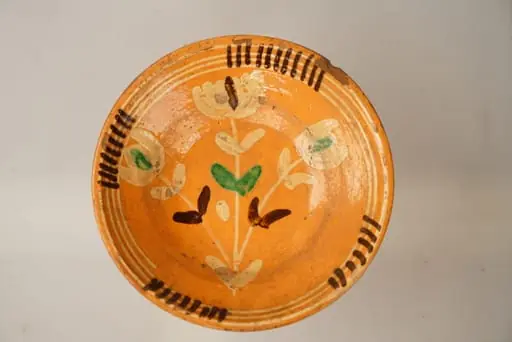 Farfurie adâncă, acoperită pe suprafața interioară cu un strat de angobă de culoare galben-ocru, peste care este pictat cu cornul și cu pensula decorul format din motive florale stilizate și geometrice: centrul farfuriei conține trei tulpini înalte cu flori de lalea de culoare albă, cu mijlocul verde și maro și frunze de culoare maro, alb și verde. Buza farfuriei este decorată cu o linie circulară spiralată de culoare albă, perpendicular pe care sunt pictate patru grupuri de linii drepte de culoare maro, așezate diametral opus în formă de cruce. Suprafața ornamentată a farfuriei este acoperită cu un strat de smalț transparent. Cromatica: alb, galben ocru, maro, verde.
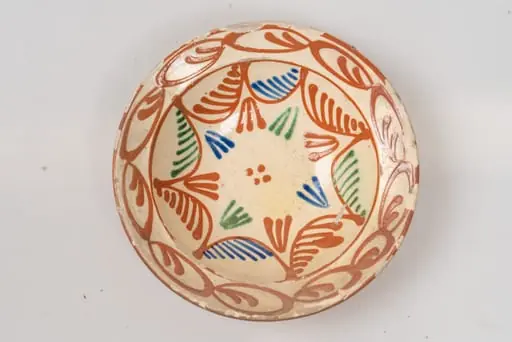 Farfurie adâncă, cu buză relativ îngustă, evazată; este acoperită pe suprafața interioară cu un strat de angobă albă, peste care este pictat cu cornul decorul format din motive geometrice: fundul farfuriei și peretele acesteia este decorat cu motive formate din linii curbe de culoare maro, ce au pe suprafața interioară linii oblice paralele, inegale ca mărime, de culoare verde, albastru, maro; grupuri de câte trei linii colorate, în formă de V și patru puncte centrale, de culoare maro. Buza farfuriei este decorată cu un șir continuu din motive formate din linii ovale, de culoare maro, cu câte două linii sub formă de virgulă în interior. Suprafața ornamentată a farfuriei este acoperită cu un strat de smalț transparent. Cromatica: alb, albastru, verde, maro.
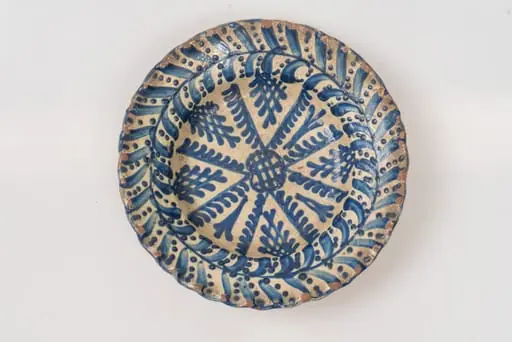 Farfurie semi-adâncă, cu fund larg, buză evazată și muchia buzei ondulată. Piesa este angobată pe suprafața interioară cu un strat de humă albă peste care este pictat cu pensula și cu cornul decorul monocromatic format din motive vegetale stilizate și geometrice: registrul central de pe fundul farfuriei conține un cerc umplut cu linii hașurate intersectat, linii în fomă de V, decorate pe exterior cu mici linii paralele, și cinci motive formate din linii hașurate intersectat. Buza farfuriei este decorată cu un șir continuu de frunze duble cu motive punctate între ele (linii). Muchia buzei este marcată cu o dungă albastră. Suprafața ornamentată a farfuriei este acoperită cu un strat de smalț transparent. Cromatica: alb, albastru.
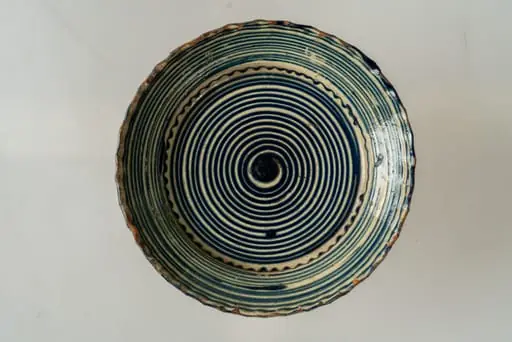 Farfurie adâncă, cu buza răsfrântă și muchia buzei ușor ondulată; piesa este modelată la roata olarului și angobată pe fața interioară cu humă albă. Decorul monocromatic este realizat prin pictare cu cornul și constă în două linii spiralate mari, una ce acoperă întreaga suprafață a buzei și a doua linie, ce acoperă toată zona centrală a farfuriei. O linie vălurită, pe peretele îngust al farfuriei, separă cele două spirale. Cromatica: alb, albastru. Fața decorată a farfuriei este acoperită cu un strat de smalț transparent.
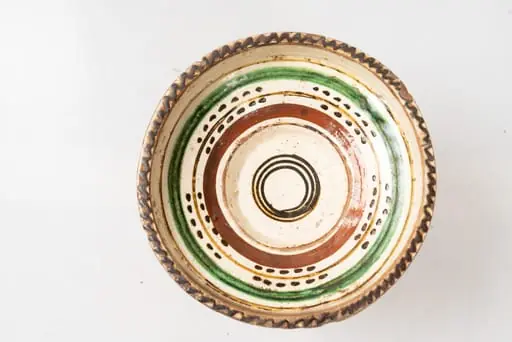 Farfurie adâncă, de tip castron, cu corp îngust tronconic și buză dreaptă. Piesa este modelată din lut la roata olarului și angobată cu humă albă pe fața interioară. Decorul este realizat prin pictare cu cornul și cu pensula și constă în motive decorative geometrice (linie spiralată, două linii groase și trei linii mai subțiri dispuse sub formă de cerc, șiruri de puncte). Muchia buzei este decorată cu o linie ondulată mărunt, de culoare maro. Cromatica: alb, maro, verde, brun roșcat. Farfuria este acoperită cu un strat de smalț transparent pe fața ornamentată.
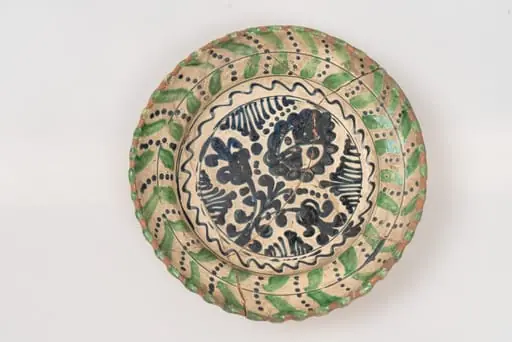 Farfurie de formă semi-adâncă, cu buză evazată și muchia buzei ondulată. Farfuria este angobată pe fața interioară cu un strat de humă albă, peste care este pictat cu cornul și cu pensula decorul format din motive florale și fitomorfe stilizate și din motive geometrice: în registrul central de pe fundul farfuriei este pictată o tulpină cu trei flori și frunze mici de culoare albastră, înscrisă într-un cerc dublu ce are la mijloc o linie ondulată circulară, de culoare albastră. Acest registru este completat cu motive formate din linii albastre crescătoare și descrescătoare dispuse în formă de triunghi. Buza farfuriei este decorată cu un șir continuu de frunze duble verzi între linii punctate de culoare albastră. Buza farfuriei este marcată cu o dungă de culoare verde. Cromatica: alb, albastru, verde. Farfuria este acoperită pe fața decorată cu un strat de smalț transparent.
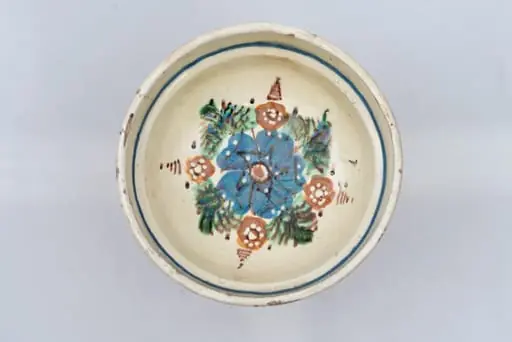 Farfurie adâncă de tip castron, cu corp tronconic, ușor concav, și buza dreaptă și verticală. Este acoperită pe suprafața interioară și pe exteriorul buzei cu un strat de angobă albă. Decorul este pictat cu pensula și cu cornul și se compune din motive florale și vegetale stilizate: central pe fundul farfuriei este pictată o floare cu cinci petale albastre, frunze verzi și patru flori mai mici, maro. O linie circulară albastră marchează pe interior partea inferioară a buzei, iar exteriorul acesteia este decorat cu o linie circulară simplă, ș una ondulată, albastre. Cromatica: alb, albastru, verde, maro. Ambele suprafețe ale farfuriei sunt acoperite cu un strat de smalț transparent.
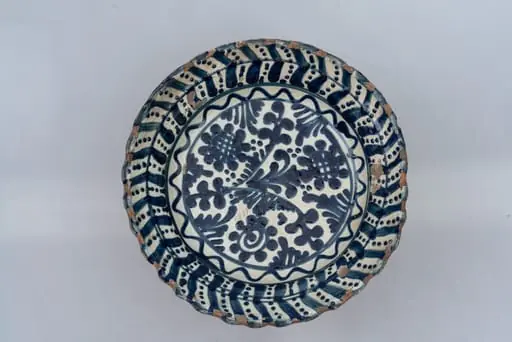 Farfurie semi-adâncă, cu fund larg, buză evazată și muchia buzei ondulată. Este acoperită pe suprafața interioară cu un strat de angobă albă peste care este pictat cu pensula și cu cornul decorul monocromatic format din motive geometrice și florale stilizate: registrul central de pe fundul farfuriei conține un buchet format din trei flori cu petale rotunde și mijlocul umplut cu linii hașurate intersectat, una dintre flori având mijlocul dintr-o linie spiralată, și din frunze; acest registru este încadrat între două linii circulare simple și o linie circulară ondulată și este completat cu șase motive formate din grupuri de linii crescătoare și descrescătoare, dispuse sub formă de triunghi și cu puncte. Registrul decorativ marginal de pe buza farfuriei este decorat cu un șir continuu de frunze duble între care se găsesc motive punctate (linii). Muchia buzei este marcată cu o dungă albastră. Suprafața ornamentată a farfuriei este acoperită cu un strat de smalț transparent. Cromatica: alb, albastru.
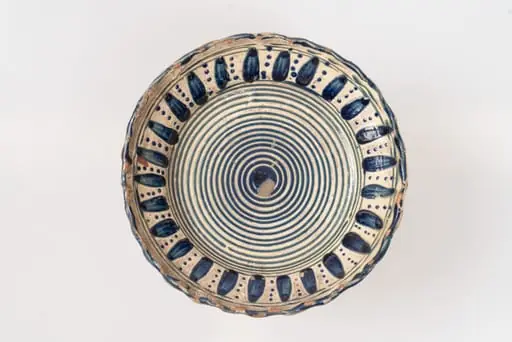 Farfurie de formă semi-adâncă, cu buză lată, evazată și muchia buzei ușor ondulată. Farfuria este angobată pe fața interioară cu un strat de humă albă, peste care este pictat cu cornul și cu pensula decorul monocromatic, format din motive fitomorfe stilizate (un șir de frunze simple, separate de câte o linie punctată - pe buza farfuriei) și geometrice (o linie spiralată amplă, ce pornește din centrul farfuriei și acoperă întreaga suprafață centrală a acesteia; linii simple circulare, puncte - pe buza farfuriei). Muchia buzei este marcată cu o dungă de culoare albastră. Cromatica: alb, albastru. Farfuria este acoperită pe fața decorată cu un strat de smalț transparent.
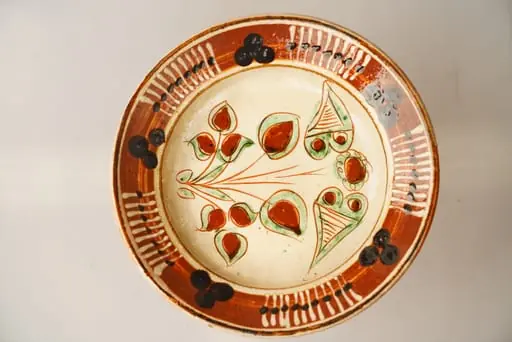 Farfurie adâncă, acoperită pe suprafața interioară cu un strat de angobă albă peste care este pictat cu pensula și cu cornul decorul format din motive vegetale stilizate și geometrice, dispuse astfel: centrul farfuriei este decorat cu o tulpină cu o floare mică centrală, opt boboci (doi dintre ei mai mari și câte trei mai mici, grupați împreună) și două frunze în formă de inimă (decorate cu câte două puncte mari și linii subțiri paralele dispuse în formă de triunghi), desenate cu contur fin roșu și umplute cu culorile roșu și verde. Registrul decorativ marginal de pe buza farfuriei se compune din motive geometrice (cinci grupuri de linii albe drepte, paralele, cu un șir de puncte maro în zona mediană, între care sunt intercalate grupuri de câte trei puncte mari, maro), pictate peste o dungă lată, de culoare roșu-cărămiziu, ce acoperă aproape întreaga suprafață a buzei. Suprafața ornamentată a farfuriei este acoperită cu un strat de smalț transparent. Cromatica: alb, verde, roșu-cărămiziu, maro.