Artwork
Farfurie adâncă, acoperită pe suprafața interioară cu un strat de angobă de culoare galben-ocru, peste care este pictat cu cornul și cu pensula decorul format din motive florale stilizate și geometrice: centrul farfuriei conține trei tulpini înalte cu flori de lalea de culoare albă, cu mijlocul verde și maro și frunze de culoare maro, alb și verde. Buza farfuriei este decorată cu o linie circulară spiralată de culoare albă, perpendicular pe care sunt pictate patru grupuri de linii drepte de culoare maro, așezate diametral opus în formă de cruce. Suprafața ornamentată a farfuriei este acoperită cu un strat de smalț transparent. Cromatica: alb, galben ocru, maro, verde.
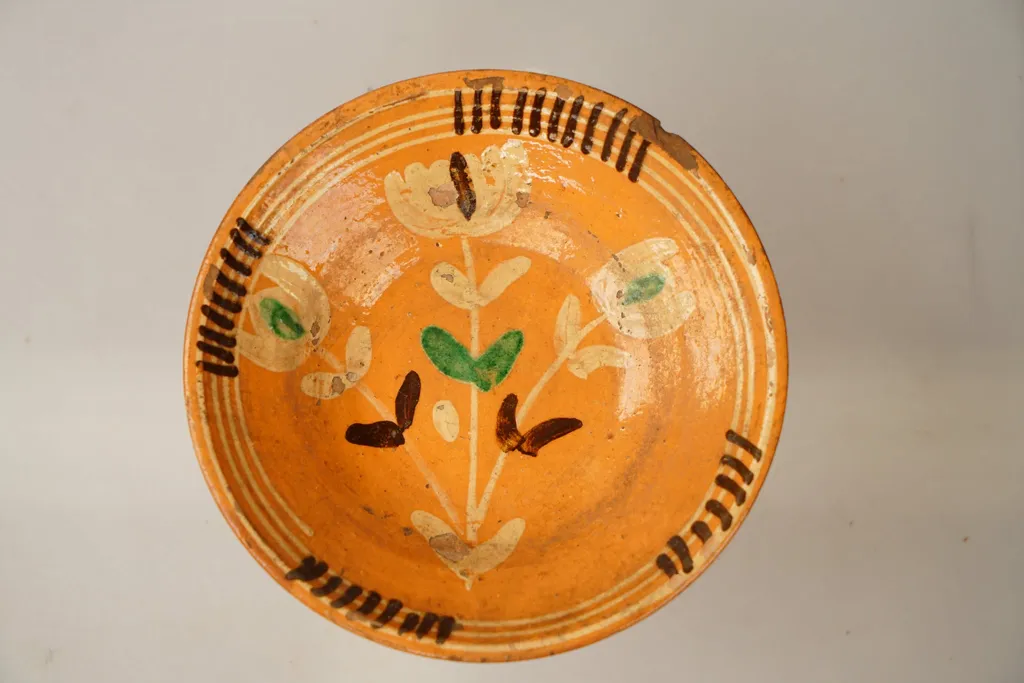
Farfurie adâncă, acoperită pe suprafața interioară cu un strat de angobă de culoare galben-ocru, peste care este pictat cu cornul și cu pensula decorul format din motive florale stilizate și geometrice: centrul farfuriei conține trei tulpini înalte cu flori de lalea de culoare albă, cu mijlocul verde și maro și frunze de culoare maro, alb și verde. Buza farfuriei este decorată cu o linie circulară spiralată de culoare albă, perpendicular pe care sunt pictate patru grupuri de linii drepte de culoare maro, așezate diametral opus în formă de cruce. Suprafața ornamentată a farfuriei este acoperită cu un strat de smalț transparent. Cromatica: alb, galben ocru, maro, verde. is a print by Unknown. It dates from 1850 and is held in the collection of the Ethnographical Museum of Transylvania. The object is a circular plate whose interior surface is coated with a yellow‑ochre slip.
About this work
Overview
The object is a circular plate whose interior surface is coated with a yellow‑ochre slip. Over this base a decorative scheme is applied using both brush and horn tools, featuring stylised floral motifs and geometric elements. The design is finished with a clear glaze that gives the piece a glossy surface.
Subject & Meaning
At the centre of the plate three elongated stems rise, each bearing a lily‑like flower rendered in white with green‑brown centres and leaves in shades of brown, white and green. The rim is marked by a white spiral band, intersected by four clusters of straight brown lines arranged in a cruciform pattern, suggesting a balance between natural and abstract symbolism.
Technique & Style
The decorative program combines painted ornamentation with a transparent enamel coating. The use of contrasting colours—white, brown, green, and ochre—creates visual equilibrium, while the juxtaposition of stylised botanicals and geometric lines reflects a folk‑art aesthetic typical of utilitarian ceramics.
Context
The palette and motifs correspond to traditional decorative traditions found in regional pottery, where floral and geometric patterns are commonly employed to enhance everyday objects. The application of both horn and brush indicates a workshop practice that values both precision and expressive line work.
Legacy
Such plates illustrate the integration of functional ware with artistic embellishment, offering insight into the material culture and aesthetic preferences of the community that produced them. Their preservation aids the study of decorative techniques and colour schemes prevalent in historic ceramic production.
Artist & collection
Museum
Ethnographical Museum of Transylvania
Continue through works from the same source collection.
 Domestic Scene
 Giacomo and Cardinal Marco, investing Andrea, Abbot of San Zeno, with his Benefice
 The Nymph of Fontainebleau
 Portrait of a Woman
 Madonna and Child with Saints in the Enclosed Garden
 Venus and Minerva
 Family Group of Four on Sofa
 Wall painting from Room H of the Villa of P. Fannius Synistor at Boscoreale
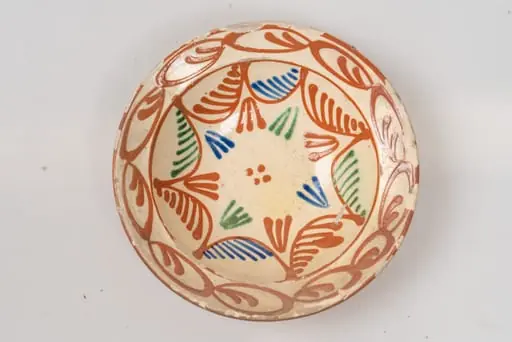 Farfurie adâncă, cu buză relativ îngustă, evazată; este acoperită pe suprafața interioară cu un strat de angobă albă, peste care este pictat cu cornul decorul format din motive geometrice: fundul farfuriei și peretele acesteia este decorat cu motive formate din linii curbe de culoare maro, ce au pe suprafața interioară linii oblice paralele, inegale ca mărime, de culoare verde, albastru, maro; grupuri de câte trei linii colorate, în formă de V și patru puncte centrale, de culoare maro. Buza farfuriei este decorată cu un șir continuu din motive formate din linii ovale, de culoare maro, cu câte două linii sub formă de virgulă în interior. Suprafața ornamentată a farfuriei este acoperită cu un strat de smalț transparent. Cromatica: alb, albastru, verde, maro.
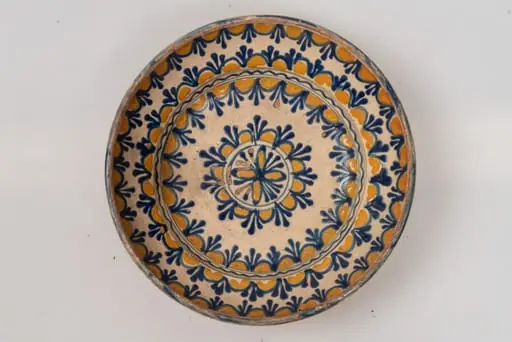 Farfurie adâncă, cu buza evazată și ușor concavă; este acoperită pe fața interioară cu un strat de angobă albă peste care este pictat cu pensula și cu cornul decorul format din motive geometrice și florale geometrizate: central pe fundul farfuriei se regăsește o floare cu petale galbene și contur albastru, încadrată într-un cerc dublu de culoare albastră, decorat pe exterior cu un șir format din semicercuri cu contur albastru și interior galben, separate de câte trei linii albastre în formă de V. Alte trei șiruri circulare formate din aceleași motive decorează buza și peretele farfuriei. Bordura interioară a farfuriei este marcată cu linii circulare simple și o linie circulară ondulată de culoare albastră iar muchia buzei cu o dungă albastră. Suprafața ornamentată a farfuriei este acoperită cu un strat de smalț transparent. Cromatica: alb, galben, albastru.
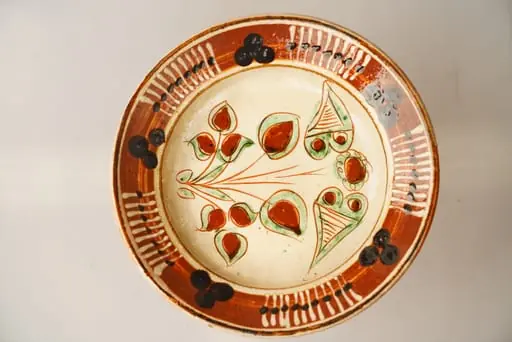 Farfurie adâncă, acoperită pe suprafața interioară cu un strat de angobă albă peste care este pictat cu pensula și cu cornul decorul format din motive vegetale stilizate și geometrice, dispuse astfel: centrul farfuriei este decorat cu o tulpină cu o floare mică centrală, opt boboci (doi dintre ei mai mari și câte trei mai mici, grupați împreună) și două frunze în formă de inimă (decorate cu câte două puncte mari și linii subțiri paralele dispuse în formă de triunghi), desenate cu contur fin roșu și umplute cu culorile roșu și verde. Registrul decorativ marginal de pe buza farfuriei se compune din motive geometrice (cinci grupuri de linii albe drepte, paralele, cu un șir de puncte maro în zona mediană, între care sunt intercalate grupuri de câte trei puncte mari, maro), pictate peste o dungă lată, de culoare roșu-cărămiziu, ce acoperă aproape întreaga suprafață a buzei. Suprafața ornamentată a farfuriei este acoperită cu un strat de smalț transparent. Cromatica: alb, verde, roșu-cărămiziu, maro.
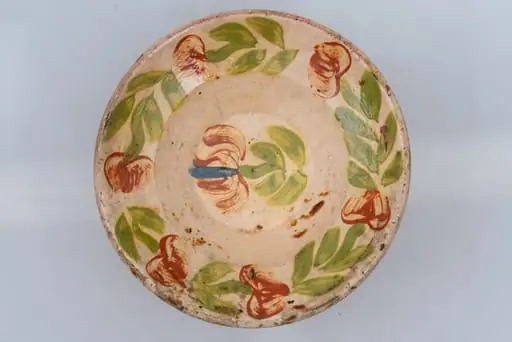 Farfurie adâncă, acoperită pe suprafața interioară cu un strat de angobă albă. Decorul este realizat prin pictare cu pensula și se compune din motive florale și fitomorfe: central pe fundul farfuriei este pictată o floare cu patru petale alungite de culoare maro deschis si o petală albastră și frunze verzi. Decorul de pe buza farfuriei se compune dintr-un șir de flori de culoare maro cu frunze verzi. Suprafața ornamentată a farfuriei este acoperită cu un strat de smalț transparent. Cromatica: alb, verde, albastru, maro-deschis.
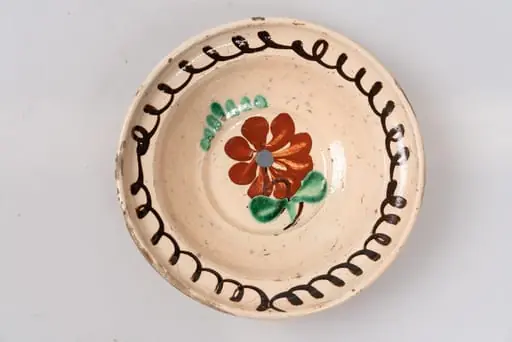 Farfurie adâncă, cu fund îngust, buza evazată cu muchia verticală; este angobată pe fața interioară cu un strat de humă albă și decorată prin pictare cu pensula și cu cornul cu motive florale, fitomorfe și geometrice: central pe fundul farfuriei este reprezentată o floare cu petale de culoare maro, cu mijlocul marcat printr-un punct gri și două frunze verzi. În partea superioară a florii, șapte linii verzi, scurte, completează decorul. Buza este ornamentată cu o linie buclată continuă, de culoare maro-închis. Cromatica: alb, verde, maro, maro-închis, gri. Suprafața ornamentată a farfuriei este acoperită cu un strat de smalț transparent.
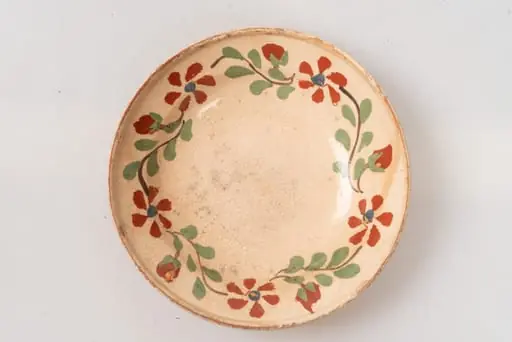 Farfurie semi-adâncă, acoperită pe suprafața interioară cu un strat de angobă albă, peste care este pictat cu pensula decorul format din motive vegetale dispuse pe buza farfuriei: o ghirlandă circulară formată din cinci flori cu petale de culoare roșu-cărămiziu și mijloc albastru, cu câte cinci boboci de aceași culoare și frunze verzi. Farfuria este acoperită pe întreaga sa suprafață cu un strat de smalț transparent. Cromatica: alb, verde, maro, roșu-cărămiziu, albastru.
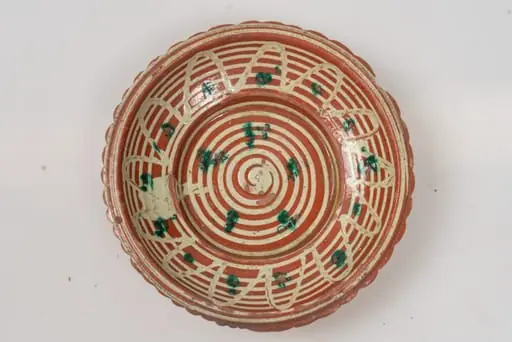 Farfurie adâncă cu buza evazată, ușor concavă spre interior și cu muchia buzei răsfrântă și ondulată. Farfuria este neangobată. Decorul este realizat prin pictare cu cornul, cu humă albă, și constă într-o linie spiralată ce acoperă întreaga suprafață centrală a farfuriei; buza acesteia este decorată cu linii circulare concentrice de culoare albă peste care a fost pictată o linie circulară ondulată albă. Câțiva stropi de culoare verde completează decorul piesei. Cromatica: alb, verde, pe fondul roșu al lutului ars. Suprafața ornamentată a farfuriei este acoperită cu un strat de smalț transparent.
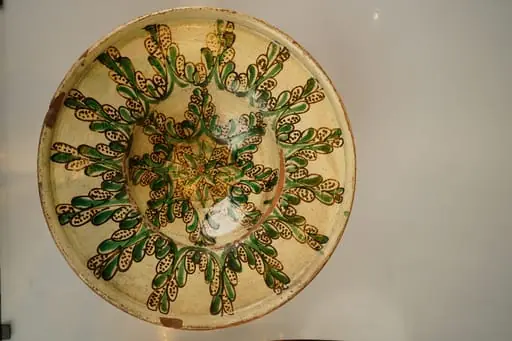 Farfurie mare adâncă, cu corp tronconic, buză lată evazată și muchia buzei profilată; este acoperită pe suprafața interioară cu un strat de angobă albă, peste care este pictat cu cornul și cu pensula decorul format din motive vegetale, dispuse astfel: centrul farfuriei conține un motiv stelar pictat cu contur verde, decorat în interior cu romburi verzi și cu puncte mici maro și care are în colțuri grupuri de frunze duble de formă ovală, unele umplute cu culoare verde, altele cu puncte mici maro. Buza farfuriei este decorată cu o ghirlandă continuă formată prin repetarea aceluiaș motiv vegetal (grupuri de frunze duble) regăsit pe centrul farfuriei. Farfuria este acoperită pe suprafața ornamentată cu un strat de smalț transparent. Cromatica: alb, verde, maro.
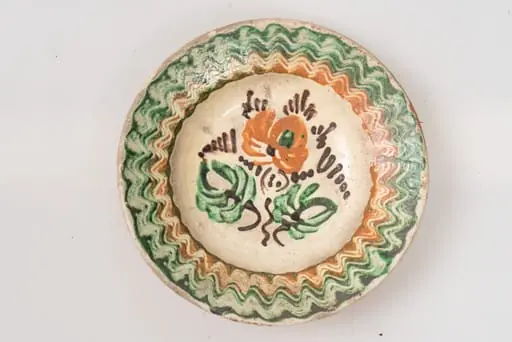 Farfurie adâncă, angobată pe suprafața interioară cu un strat de humă albă, peste care este pictat cu cornul și cu pensula decorul format din motive florale stilizate și geometrice: fundul farfuriei conține un buchet format din trei flori cu petale alungite, două de culoare verde, cea de-a treia de culoare siena arsă, și din elemente vegetale de culoare maro. Buza farfuriei este ornamentată cu linii ondulate de culoare siena arsă și verde. Suprafața ornamentată a farfuriei este acoperită cu un strat de smalț transparent. Cromatica: alb, verde, siena arsă, maro.