Artwork
Farfurie de formă aplatizată, cu muchia buzei ondulată. Este acoperită pe suprafața interioară cu un strat de angobă albă peste care este pictat cu pensula și cu cornul decorul monocromatic format din motive geometrice și florale stilizate: registrul central de pe fundul farfuriei, înscris într-un cerc gros albastru, conține patru flori (dintre care două sunt flori de crin) dispuse în formă de cruce pe exteriorul unui cerc ce conține în interior o floare de lalea. Registrul decorativ marginal de pe buza farfuriei este decorat cu un șir continuu de frunze duble între care se găsesc motive punctate (linii). Muchia buzei este marcată cu o dungă albastră. Suprafața ornamentată a farfuriei este acoperită cu un strat de smalț transparent. Cromatica: alb, albastru.
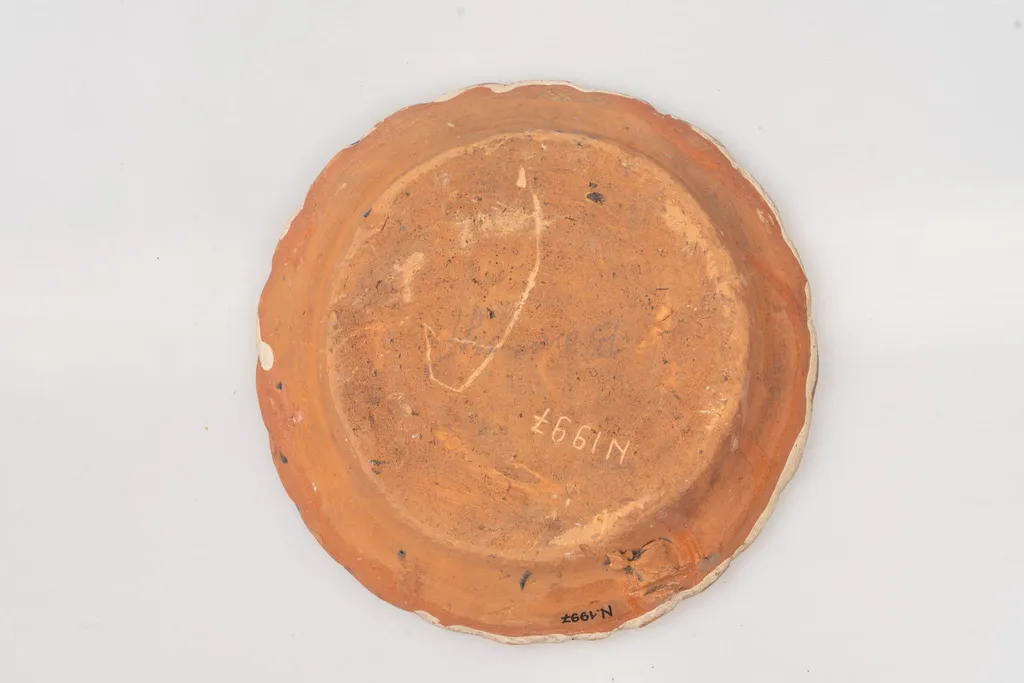
Farfurie de formă aplatizată, cu muchia buzei ondulată. Este acoperită pe suprafața interioară cu un strat de angobă albă peste care este pictat cu pensula și cu cornul decorul monocromatic format din motive geometrice și florale stilizate: registrul central de pe fundul farfuriei, înscris într-un cerc gros albastru, conține patru flori (dintre care două sunt flori de crin) dispuse în formă de cruce pe exteriorul unui cerc ce conține în interior o floare de lalea. Registrul decorativ marginal de pe buza farfuriei este decorat cu un șir continuu de frunze duble între care se găsesc motive punctate (linii). Muchia buzei este marcată cu o dungă albastră. Suprafața ornamentată a farfuriei este acoperită cu un strat de smalț transparent. Cromatica: alb, albastru. is a print by Unknown. It dates from 1750 and is held in the collection of the Ethnographical Museum of Transylvania. A flat ceramic dish with a wavy rim features a monochrome decorative scheme in white and blue.
About this work
Overview
The composition is organized in two distinct bands: a central medallion and a marginal border, each following a precise, repetitive structure.
A flat ceramic dish with a wavy rim features a monochrome decorative scheme in white and blue. The interior surface is coated with a white slip, over which geometric and stylized floral motifs are painted by hand. A transparent glaze seals the design, preserving its clarity and subtle tonal contrast. The composition is organized in two distinct bands: a central medallion and a marginal border, each following a precise, repetitive structure.
Subject & Meaning
The central motif consists of four stylized flowers—two resembling lilies—arranged in a cross formation around a central tulip, enclosed within a thick blue circle. This radial symmetry suggests a deliberate, possibly symbolic ordering, though no explicit religious or narrative meaning is documented. The surrounding border repeats double leaves and dotted lines, reinforcing rhythm over representation. The imagery reflects a tradition of abstracted natural forms common in regional ceramic decoration.
Technique & Style
The decoration was applied with a brush and possibly a corn-based tool to achieve fine, consistent lines. Motifs are simplified and non-naturalistic, emphasizing pattern over realism. The use of only two colors—white slip and blue pigment—creates visual harmony. The precision of the concentric circles and the even spacing of border elements indicate a high degree of technical control and standardized workshop practices.
History & Provenance
This dish belongs to a broader corpus of ceramic ware produced in the Balkans or Anatolia during the late medieval or early Ottoman period. Similar pieces have been found in archaeological contexts across the region, suggesting widespread production and exchange. The absence of inscriptions or maker’s marks limits precise attribution, but stylistic parallels point to a shared decorative language among local potters.
Context
The design aligns with Islamic and Byzantine ceramic traditions that favored geometric and vegetal ornamentation over figural representation. The use of slip and glaze, along with monochrome palettes, reflects both aesthetic preference and technical constraints of the period. Such vessels were likely used for domestic or ceremonial purposes, valued for their durability and visual restraint within everyday settings.
Legacy
This dish exemplifies a regional ceramic tradition that persisted for centuries, influencing later folk pottery styles. Its emphasis on repetition, symmetry, and limited color reflects a broader cultural preference for order and harmony in material culture. Though not widely documented in major collections, such pieces remain important for understanding the continuity of craft practices in southeastern Europe.
Artist & collection
Museum
Ethnographical Museum of Transylvania
Continue through works from the same source collection.
 Domestic Scene
 Giacomo and Cardinal Marco, investing Andrea, Abbot of San Zeno, with his Benefice
 The Nymph of Fontainebleau
 Portrait of a Woman
 Madonna and Child with Saints in the Enclosed Garden
 Venus and Minerva
 Family Group of Four on Sofa
 Wall painting from Room H of the Villa of P. Fannius Synistor at Boscoreale
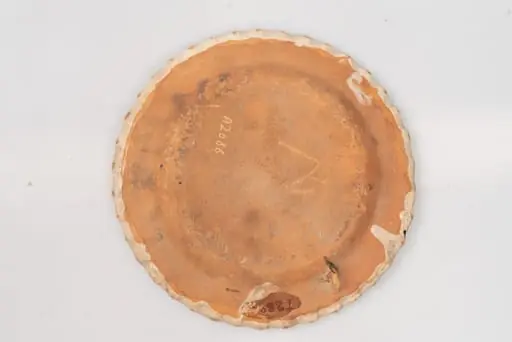 Farfurie de formă aplatizată, cu muchia buzei ușor ondulată; este angobată pe suprafața interioară cu un strat de humă albă peste care este pictat cu cornul și cu pensula decorul monocromatic format din motive florale stilizate și geometrice: pe fundul farfuriei este pictată o tulpină cu frunze și trei flori de crin, ce au centrul format din linii hașurate intersectat. Buza farfuriei este decorată cu un șir continuu de frunze duble. Bordura interioară a farfuriei este marcată cu o linie circulară ușor ondulată iar muchia buzei cu o dungă albastră. Suprafața ornamentată a farfuriei este acoperită cu un strat de smalț transparent. Cromatica: alb, albastru.
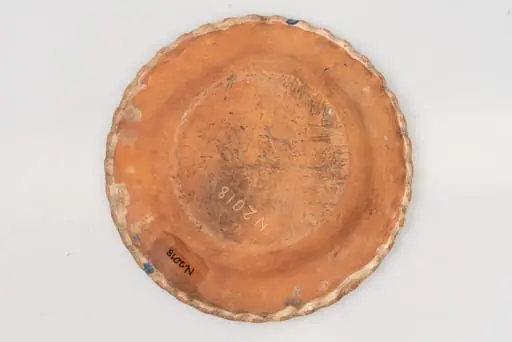 Farfurie de formă aplatizată, cu muchia buzei ușor ondulată. Este acoperită pe suprafața interioară cu un strat de angobă albă peste care este pictat cu pensula monocromatic format din motive geometrice și florale stilizate: registrul central de pe fundul farfuriei conține o tulpină cu trei flori de crin stilizate și două frunze la bază. Registrul decorativ marginal de pe buza farfuriei, înscris între două linii circulare albastre, conține un șir continuu de frunze duble între care se găsesc motive punctate (linii). Suprafața ornamentată a farfuriei este acoperită cu un strat de smalț transparent. Cromatica: alb, albastru.
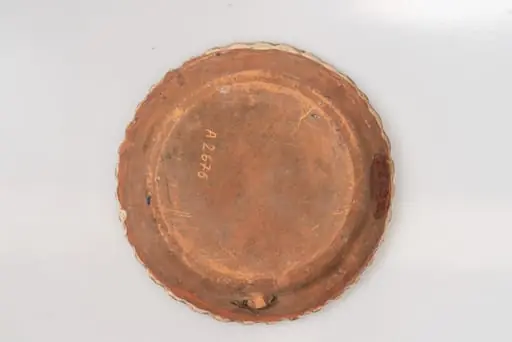 Farfurie semi-adâncă, cu fundul larg, buză evazată cu muchia buzei ondulată. Piesa este acoperită pe suprafața interioară cu un strat de angobă albă, peste care este pictat cu cornul și cu pensula decorul monocromatic, format din motive florale și vegetale stilizate și geometrice: fundul farfuriei este decorat cu un buchet format din flori și boboci de lalea stilizate (două tipuri de lalea) și grupuri de puncte, iar buza acesteia cu un șir continuu de frunze duble cu motive punctate între ele (linii). Bordura interioară a farfuriei este marcată de două linii circulare simple și o linie circulară ondulată între ele, iar muchia buzei de o dungă albastră. Suprafața ornamentată a farfuriei este acoperită cu un strat de smalț transparent. Cromatica: alb, albastru.
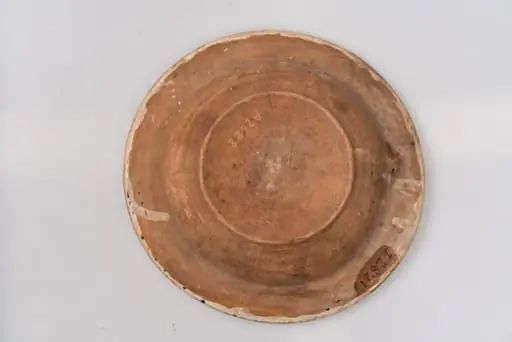 Farfurie adâncă cu buză evazată; este acoperită pe suprafața interioară cu un strat de angobă albă peste care este pictat cu cornul și cu pensula decorul monocromatic format din motive florale și vegetale stilizate: registrul central de pe fundul farfuriei conține un buchet format dintr-o floare de crin și două flori rotunde cu petale formate din linii drepte și patru grupuri de puncte sugerând niște flori mici. De o parte și de alta a florii de crin apare înscris anul fabricării piesei, 1794. Registrul decorativ de pe buza farfuriei, încadrat între două linii circulare, se compune dintr-un șir continuu format din opt flori mici de lalea cu tije în formă de S și frunze, sugerate prin linii paralele și puncte. Muchia buzei este decorată cu mici linii paralele. Suprafața ornamentată a farfuriei este acoperită cu un strat de smalț transparent. Cromatica: alb, albastru.
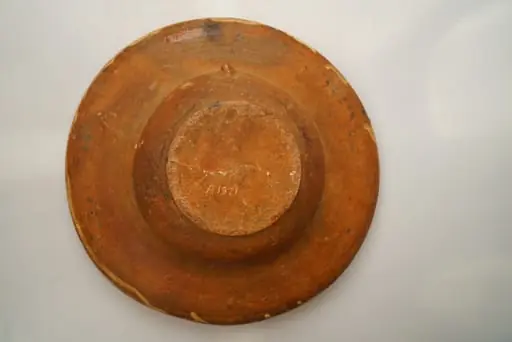 Farfurie mare adîncă, cu corp tronconic ușor rotunjit, buză lată evazată cu muchia buzei verticală; este acoperită pe suprafața interioară cu un strat de angobă albă peste care este pictat cu pensula decorul monocromatic format din motive geometrice și motive florale și vegetale stilizate, dispuse astfel: centrul farfuriei este decorat cu o floare (posibil crin) încadrată într-un cerc dublu, floare care se repetă și pe exteriorul cercului, alternată cu un motiv format din linii hașurate intersectat dispus sub formă de triunghi. Restul suprafeței corpului este decorat cu șiruri de frunze duble, orientate opus. Exteriorul buzei este decorat cu două linii circulare incizate. Suprafața ornamentată a farfuriei este acoperită cu un strat de smalț transparent. Cromatica: alb, albastru.
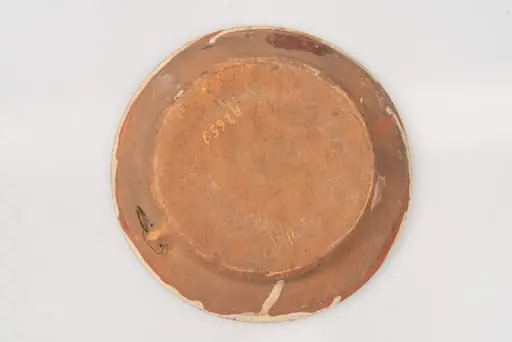 Farfurie de formă aplatizată, angobată cu humă albă pe suprafața interioară și decorată prin pictare cu cornul, cu motive geometrice și vegetale geometrizate, ce acoperă întreaga suprafață a piesei: registrul central de pe fundul farfuriei este decorat cu motivul brăduțului, flori de crin geometrizate și elemente vegetale (vrejuri), iar buza farfuriei cu două linii circulare în formă de zig-zag, intersectate, completate cu puncte albastre mari. Bordura interioară a farfuriei și muchia buzei sunt decorate cu linii circulare simple și linii circulare ondulate. Cromatica: alb, albastru. Suprafața ornamentată a farfuriei este acoperită cu un strat de smalț transparent.
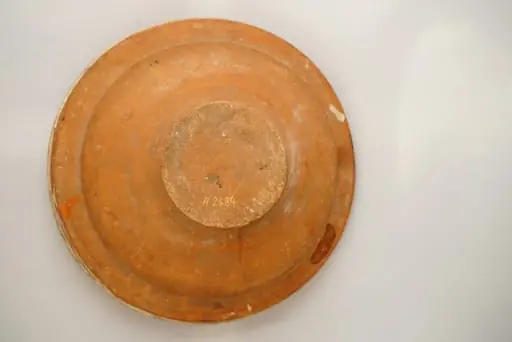 Farfurie mare, adâncă, de tip castron, cu corp tronconic, buza evazată și muchia buzei verticală; suprafața interioară a piesei este acoperită cu un strat de angobă albă, peste care este pictat cu cornul decorul monocromatic format din motive geometrice, florale și vegetale stilizate: centrul farfuriei este decorat cu un cerc format din mai multe linii subțiri maro, cerc ce conține în interior o tulpină cu o floare albastră rotundă și mai multe frunze realizate din linii subțiri; acestui decor floral i se adaugă patru grupuri de linii paralele crescătoare și descrescătoare ca mărime, dispuse sub formă de triunghi. Peretele farfuriei este decorat cu două tipuri de motive florale, cîte două din fiecare motiv și dispuse diametral opus: o tulpină cu două flori de lalea și frunze, și o tulpină cu două flori rotunde și centrul format din linii hașurate intersectat. Buza farfuriei este decorată cu un șir de motive vegetale formate din două linii sub formă de zigzag, dispuse circular, care se intersectează rezultând niște romburi, intersecția acestor linii fiind marcată cu două linii mici în formă de cruciuliță. Muchia buzei este decorată cu linii mici ondulate. Suprafața ornamentată a farfuriei este acoperită cu un strat de smalț transparent. Cromatica: alb, albastru.
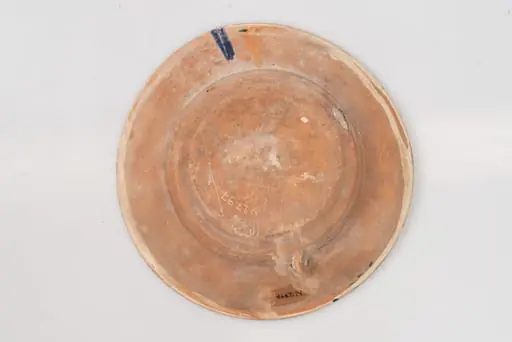 Farfurie semi-adâncă, cu buza lată, evazată; este angobată pe suprafața interioară cu un strat de humă albă, peste care este pictat cu pensula decorul format din motive florale și vegetale stilizate: registrul decorativ central de pe fundul farfuriei conține o floare cu patru petale alungite albastre și patru petale/frunze verzi, încadrată într-un cerc format din două linii ondulate și intersectate, de culoare albastră. Registrul decorativ marginal de pe buza farfuriei este format dintr-o succesiune alternantă a două motive: floarea albastră de lalea și motivul brăduțului, de culoare verde. Suprafața ornamentată a farfuriei este acoperită cu un strat de smalț transparent. Cromatica: alb, verde, albastru.
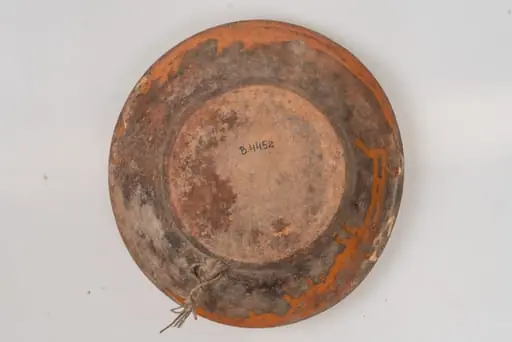 Farfurie adâncă de tip castron, cu corp tronconic și buza dreaptă, verticală. Piesa este acoperită pe suprafața interioară și pe exteriorul buzei cu un strat de angobă albă, peste care este pictat cu cornul decorul format din motive vegetale foarte stilizate: decorul de pe fundul farfuriei este păstrat doar parțial (urme de culoare maro), peretele farfuriei fiind decorat cu patru flori de culoare albastru-deschis, intercalate cu patru motive formate din linii hașurate intersectat de culoare verde, sugerând niște frunze. Două linii circulare de culoare maro, neglijent realizate, încadrează acest decor. Suprafața ornamentată a farfuriei este acoperită cu un strat de smalț transparent. Cromatica: alb, verde, maro, albastru-deschis.
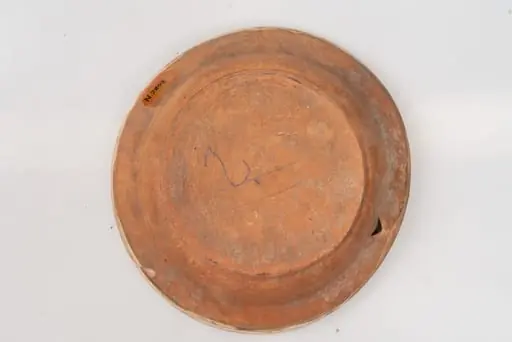 Farfurie adâncă de tip castron, acoperită pe suprafața interioară cu un strat de angobă albă, peste care este pictat cu pensula și cu cornul decorul format din motive avimorfe, vegetale și florale dispuse astfel: pe fundul vasului este pictată o pasăre albastră cu contur albastru, așezată pe o ramură cu frunze și flori, realizată în culorile albastru, verde, maro și roșu, iar peretele farfuriei este decorat cu două tipuri de motive vegetale și florale (dispuse diametral opus), în aceleași culori ca elementele vegetale de pe centrul farfuriei. Suprafața ornamentată a farfuriei este acoperită cu un strat de smalț transparent. Buza farfuriei este decorată cu linii circulare subțiri, de culoare albastră. Cromatica: alb, verde, albastru, maro, roșu.