Artwork
Farfurie de formă aplatizată, cu fund larg și buză ușor concavă spre interior; piesa este angobată pe fața interioară cu un strat de humă albă peste care este pictat cu cornul și cu pensula, cu contur din linii fine de culoare maro, decorul format din motive florale și fitomorfe stilizate: central pe fundul farfuriei este pictată o tulpină cu trei boboci, unul galben, ceilalți doi de culoare albastră, și frunze verzi. Buza farfuriei este decorată cu patru motive florale și vegetale dispuse simetric și separate de patru motive mici formate din linii hașurate intersectat, de culoare maro. Suprafața ornamentată a farfuriei este acoperită cu un strat de smalț transparent. Cromatica: alb, maro, albastru, verde, galben.
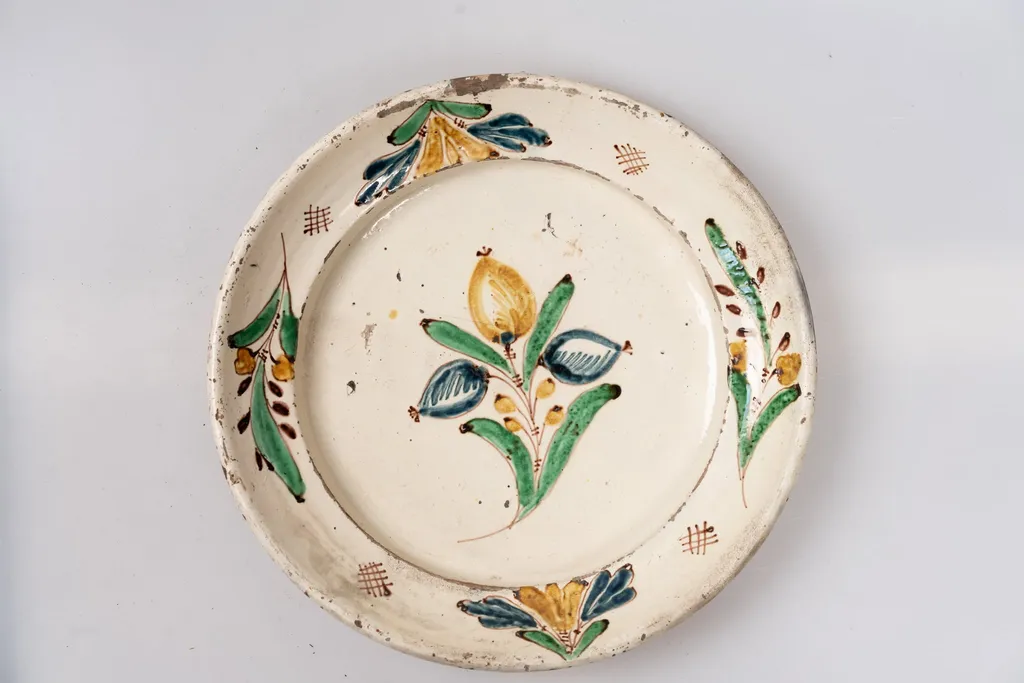
Farfurie de formă aplatizată, cu fund larg și buză ușor concavă spre interior; piesa este angobată pe fața interioară cu un strat de humă albă peste care este pictat cu cornul și cu pensula, cu contur din linii fine de culoare maro, decorul format din motive florale și fitomorfe stilizate: central pe fundul farfuriei este pictată o tulpină cu trei boboci, unul galben, ceilalți doi de culoare albastră, și frunze verzi. Buza farfuriei este decorată cu patru motive florale și vegetale dispuse simetric și separate de patru motive mici formate din linii hașurate intersectat, de culoare maro. Suprafața ornamentată a farfuriei este acoperită cu un strat de smalț transparent. Cromatica: alb, maro, albastru, verde, galben. is a print by Unknown. It dates from 1850 and is held in the collection of the Ethnographical Museum of Transylvania. A wide, shallow ceramic plate with a gently inward-curving rim, this piece features a white slip coating on its interior surface.
About this work
Overview
A wide, shallow ceramic plate with a gently inward-curving rim, this piece features a white slip coating on its interior surface.
A wide, shallow ceramic plate with a gently inward-curving rim, this piece features a white slip coating on its interior surface. Hand-painted decorations in brown, blue, green, yellow, and white are sealed under a transparent glaze. The design centers on a stylized stem with three buds and foliage, while the border alternates floral motifs with small crosshatched patterns, all rendered with fine, precise brushwork.
Subject & Meaning
The central motif—a stem bearing three buds in contrasting hues—suggests growth and natural cycles, common in folk ceramic traditions. The stylized leaves and flowers, arranged symmetrically around the rim, reflect an emphasis on order and harmony rather than botanical accuracy. The use of limited, symbolic colors implies a decorative language rooted in regional customs, possibly tied to seasonal or ritual themes.
Technique & Style
The decoration was applied by hand using fine brushes and brown outlines to define each form. Colors were laid over a white slip base, then sealed with clear glaze, preserving vibrancy. The absence of shading or chiaroscuro indicates a flat, linear approach typical of folk pottery, where clarity and repetition take precedence over naturalistic depth. The precision of the lines reveals skilled, deliberate execution.
History & Provenance
This plate belongs to a tradition of Central or Eastern European ceramic ware, likely produced in a local workshop during the late 19th or early 20th century. Its form and decoration align with regional styles that preserved indigenous motifs despite industrialization. The wear on the surface suggests regular domestic use, indicating it was part of everyday tableware rather than ceremonial display.
Context
In rural households of the period, such plates served both functional and aesthetic roles. Their designs often echoed embroidery patterns or wall paintings, linking domestic ceramics to broader folk art practices. The use of durable glaze and simple, repeatable motifs allowed for mass production while retaining handcrafted character, bridging utility and cultural expression.
Legacy
This plate exemplifies a vanishing craft tradition where pottery was shaped by local materials and inherited patterns. Its survival offers insight into pre-industrial domestic life, where beauty was integrated into daily objects. Today, such pieces are preserved as cultural artifacts, valued for their testimony to regional identity and artisanal continuity.
Artist & collection
Museum
Ethnographical Museum of Transylvania
Continue through works from the same source collection.
 Domestic Scene
 Giacomo and Cardinal Marco, investing Andrea, Abbot of San Zeno, with his Benefice
 The Nymph of Fontainebleau
 Portrait of a Woman
 Madonna and Child with Saints in the Enclosed Garden
 Venus and Minerva
 Family Group of Four on Sofa
 Wall painting from Room H of the Villa of P. Fannius Synistor at Boscoreale
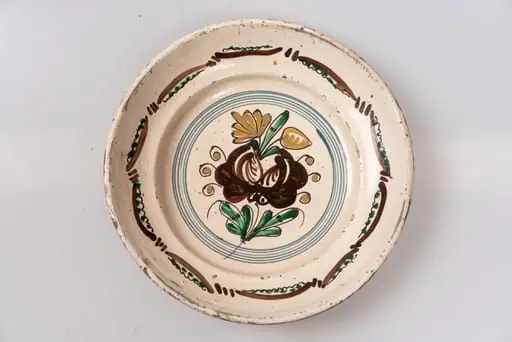 Farfurie adâncă, cu fund larg și buză evazată ușor concavă spre interior; este acoprită pe fața interioară cu un strat de humă albă peste care este pictat cu cornul și cu pensula decorul format din motive florale și vegetale stilizate, realizate cu contur fin, de culoare maro: central pe fundul farfuriei un buchet format dintr-o floare mare de culoare maro, o floare mai mică cu petale alungite, galbene, și un boboc galben, cu frunze verzi, buchet înscris între cercuri subțiri albastre. Buza este decorată cu un șir format dintr-un motiv repetitiv, format dintr-o linie mică maro, ușor curbă, puncte verzi și linie subțire ondulată; motivele sunt separate între ele de câte 2-3 linii mici maro. Fața ornamentată a farfuriei este acoperită cu un strat de smalț transparent. Cromatica: alb, verde, albastru, maro, galben.
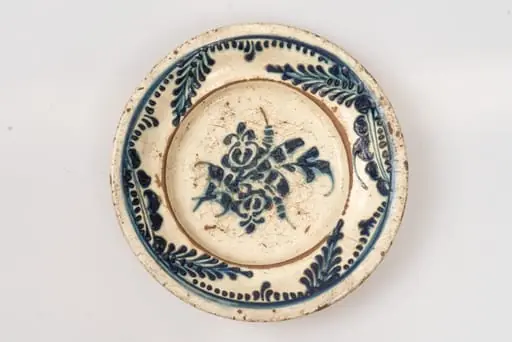 Farfurie semi-adâncă, cu fund larg și buză evazată; este acoperită pe fața interioară cu un strat de angobă albă, peste care este pictat cu cornul decorul monocromatic format din motive vegetale și florale stilizate: un buchet cu două flori și frunze, ce formează registrul decorativ central, de pe fundul farfuriei, iar buza acesteia este decorată cu patru motive vegetale (frunze) formate din linii în formă de brăduț, completate cu motive formate din puncte și șiruri de linii mici, sub formă de virgulă. Marginea buzei este marcată de o linie albastră. Cromatica: alb, albastru. Fața ornamentată a farfuriei este acoperită cu un strat de smalț transparent.
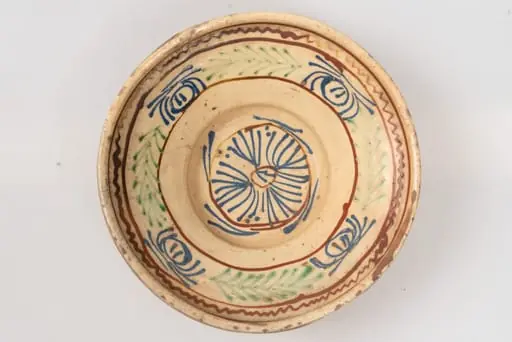 Farfurie adâncă, de tip castron, cu fund îngust, corp tronconic și buză dreaptă, verticală; este angobată pe fața interioară și pe suprafața exterioară a buzei cu un strat de humă albă. Este decorată prin pictare cu cornul cu motive florale și fitomorfe geometrizate: pe fundul farfuriei este pictată o floare cu petalele din linii subțiri albastre și centrul marcat cu un cerc mic maro, încadrată într-un cerc de asemenea de culoare maro. Peretele farfuriei este decorat cu patru grupuri de motive formate din linii verzi, sugerând o ramură cu frunze, intercalate de patru flori geometrizate, realizate din linii albastre. Decorul este completat cu trei linii circulare simple și o linie circulară ondulată. Suprafața ornamentată a farfuriei este acoperită cu un strat de smalț transparent. Cromatica: alb, verde, albastru, maro.
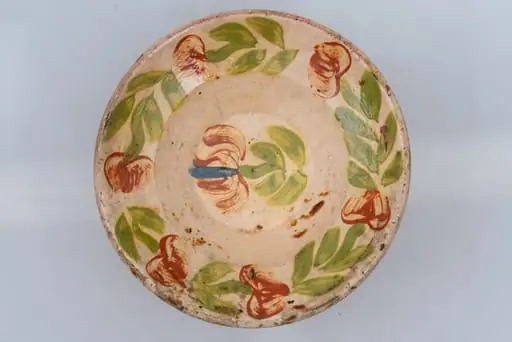 Farfurie adâncă, acoperită pe suprafața interioară cu un strat de angobă albă. Decorul este realizat prin pictare cu pensula și se compune din motive florale și fitomorfe: central pe fundul farfuriei este pictată o floare cu patru petale alungite de culoare maro deschis si o petală albastră și frunze verzi. Decorul de pe buza farfuriei se compune dintr-un șir de flori de culoare maro cu frunze verzi. Suprafața ornamentată a farfuriei este acoperită cu un strat de smalț transparent. Cromatica: alb, verde, albastru, maro-deschis.
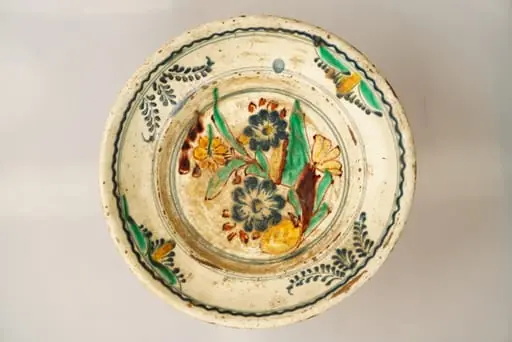
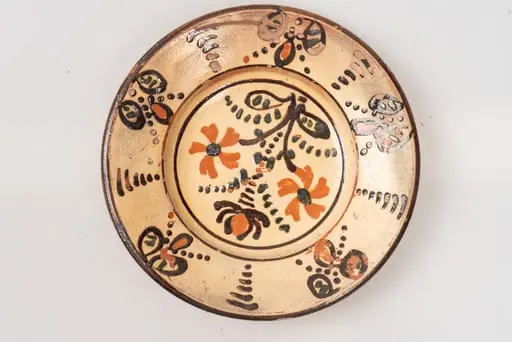 Farfurie de formă semi-adâncă, acoperită pe suprafața interioară cu un strat de angobă albă, peste care este pictat cu cornul și cu pensula decorul format din motive geometrice și florale stilizate: central pe fundul farfuriei, înscris într-un cerc maro, este pictată o tulpină de culoare maro, cu frunze și elemente vegetale de culoare verde închis și trei flori, două de culoare siena arsă, iar cea centrală cu petale maro. Buza farfuriei este decorată cu mici motive vegetale geometrizate cu contur maro, formate din câte două frunze cu două linii verzi în interior și un boboc de culoare galben ocru, completate cu linii punctate; între aceste motive se găsesc intercalate motive formate din linii mici paralele și descrescătoare ca mărime. Bordura interioară a farfuriei este marcată cu o linie circulară subțire iar muchia buzei cu o dungă de culoare maro. Suprafața ornamentată a farfuriei este acoperită cu un strat de smalț transparent. Cromatica: siena arsă, verde-închis, maro.
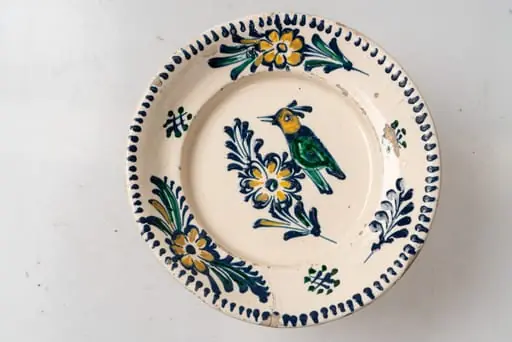 Farfurie de formă aplatizată, cu buza răsfrântă și foarte ușor concavă spre interior. Piesa este modelată din lut la roata olarului și angobată cu humă albă pe fața interioară. Decorul este realizat prin pictare cu pensula și cu cornul și se compune din motive avimorfe (o pasăre stând pe o crenguță cu frunze și cu o floare, pictate în registrul central de pe fundul farfuriei), trei motive vegetale (frunze și frunze cu flori, pe buza farfuriei) și motive geometrice (linii hașurate, puncte, pe buza farfuriei). Muchia buzei este decorată cu un șir de linii mici paralele, de culoare albastră. Cromatica: alb, albastru, verde, galben. Fața ornamentată a farfuriei este acoperită cu un strat de smalț transparent.
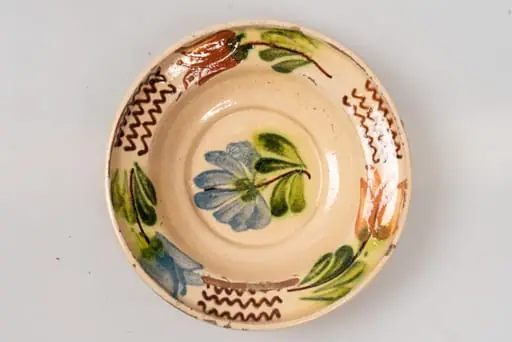 Farfurie adâncă, cu buza evazată și muchia buzei ridicată. Piesa este acoperită pe suprafața interioară cu un strat de angobă albă peste care este pictat cu pensula și cu cornul decorul format din motive florale și geometrice: fundul farfuriei conține o floare cu petale alungite de culoare albastră și frunze verzi. Alte trei flori (una cu petale de culoare albastră, a doua de culoare maro-roșcat iar cea de-a treia de culoare siena arsă), cu tulpină maro și frunze verzi, decorează buza farfuriei. Între cele trei flori, sunt pictate trei motive aproximativ identice, formate din trei linii vălurite paralele, de culoare maro. Suprafața ornamentată a farfuriei este acoperită cu un strat de smalț transparent. Cromatica: alb, verde, siena arsă, maro, maro-roșcat, albastru.
 Farfurie adâncă, cu buza dreaptă evazată; suprafața exterioară este acoperită cu un strat de angobă albă peste care este pictat cu cornul și cu pensula decorul format din motive florale și geometrice, dispuse astfel: registrul decorativ de pe fundul farfuriei conține, încadrat într-un cerc dublu albastru, un buchet desenat cu contur subțire maro, format din două flori cu petale ușor alungite albastre, un boboc și două flori galbene și din frunze verzi. Registrul decorativ de pe buza farfuriei, marcat de două linii circulare duble albastre, conține două motive decorative formate din trei frunze realizate din linii mici albastre și două motive formate din două frunze verzi și o floare centrală galbenă, decorată cu linii mici albastre. Marginea buzei este decorată cu o linie circulară albastră. Suprafața ornamentată a farfuriei este acoperită cu un strat de smalț transparent. Cromatica: alb, galben, verde, maro, albastru.
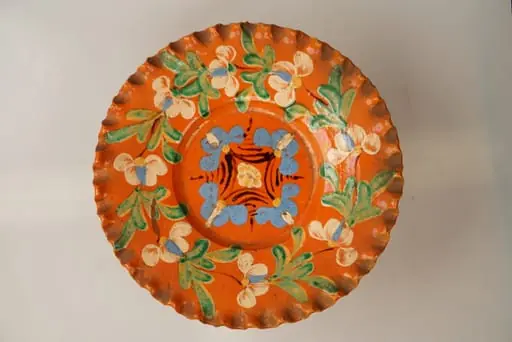 Farfurie de formă aplatizată, cu muchia buzei ondulată; suprafața interioară a farfuriei este acoperită cu un strat de angobă roșie peste care este pictat cu pensula decorul format din motive florale dispuse astfel: centrul farfuriei conține patru flori albastre cu mijlocul alb, dispuse în colțurile unui romb format din linii maro, având în centru o floare mică albă. Registrul decorativ de pe buza farfuriei este decorat cu o ghirlandă continuă dispusă circular, formată din flori cu petale albe și centru albastru, cu tulpină subțire maro și frunze verzi. Duprafața ornamentată a farfuriei este acoperită cu un strat de smalț transparent. Cromatica: roșu, alb, albastru, verde.
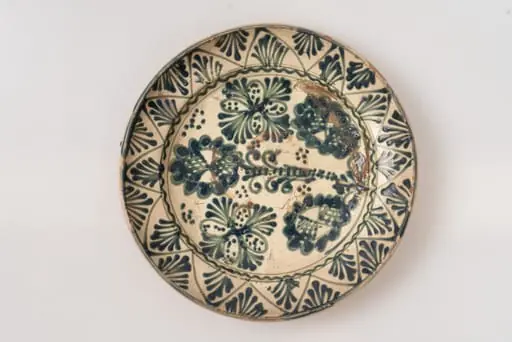 Farfurie de formă semi-adâncă, cu buză lată, răsfrântă; este angobată pe fața interioară cu un strat de humă albă, peste care este pictat cu cornul decorul monocromatic, format din motive florale și fitomorfe foarte stilizate (tulpină cu cinci flori și frunze, reprezentate pe centrul farfuriei) și geometrice (o linie în formă de zig-zag, pe toată lungimea buzei, completată cu motive formate din linii verticale, dispuse în formă de triunghi; linii circulare simple și linie circulară ondulată ce marchează bordura interioară a farfuriei; puncte, linii hașurate). Buza farfuriei este marcată cu o dungă de culoare albastră. Cromatica: alb, albastru. Farfuria este acoperită pe fața decorată cu un strat de smalț transparent.