Artwork
Farfurie adâncă de tip castron, cu corp tronconic și buza dreaptă, verticală. Piesa este acoperită pe suprafața interioară și pe exteriorul buzei cu un strat de angobă albă, peste care este pictat cu cornul decorul format din motive vegetale foarte stilizate: decorul de pe fundul farfuriei este păstrat doar parțial (urme de culoare maro), peretele farfuriei fiind decorat cu patru flori de culoare albastru-deschis, intercalate cu patru motive formate din linii hașurate intersectat de culoare verde, sugerând niște frunze. Două linii circulare de culoare maro, neglijent realizate, încadrează acest decor. Suprafața ornamentată a farfuriei este acoperită cu un strat de smalț transparent. Cromatica: alb, verde, maro, albastru-deschis.
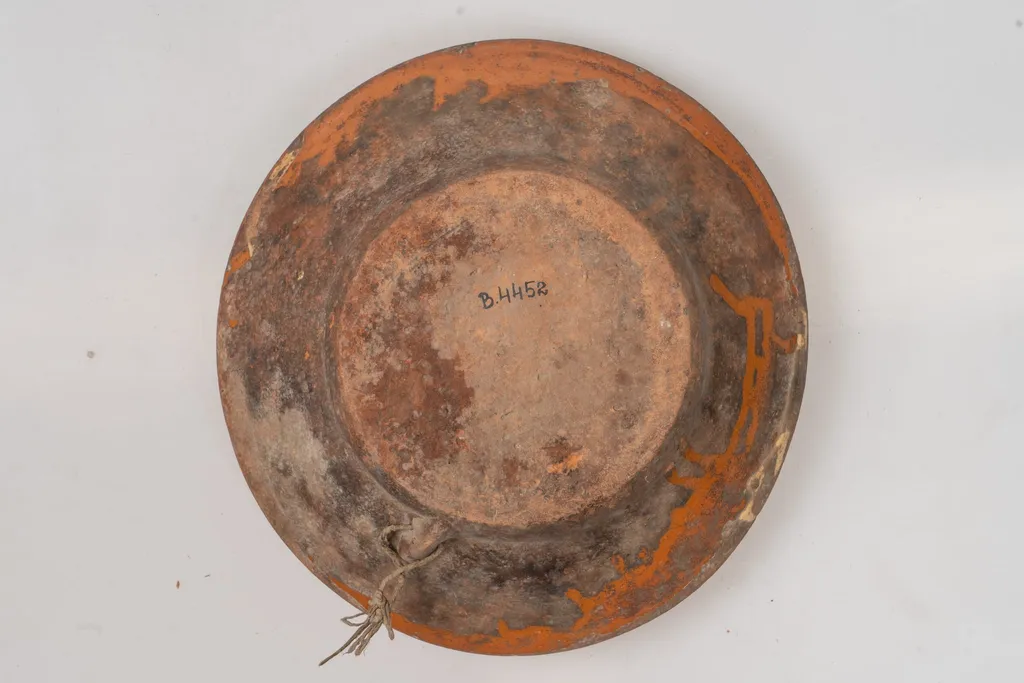
Farfurie adâncă de tip castron, cu corp tronconic și buza dreaptă, verticală. Piesa este acoperită pe suprafața interioară și pe exteriorul buzei cu un strat de angobă albă, peste care este pictat cu cornul decorul format din motive vegetale foarte stilizate: decorul de pe fundul farfuriei este păstrat doar parțial (urme de culoare maro), peretele farfuriei fiind decorat cu patru flori de culoare albastru-deschis, intercalate cu patru motive formate din linii hașurate intersectat de culoare verde, sugerând niște frunze. Două linii circulare de culoare maro, neglijent realizate, încadrează acest decor. Suprafața ornamentată a farfuriei este acoperită cu un strat de smalț transparent. Cromatica: alb, verde, maro, albastru-deschis. is a photography by Unknown. It dates from 1850 and is held in the collection of the Ethnographical Museum of Transylvania.
About this work
Overview
Its surface was treated with a white slip and sealed under transparent glaze, though wear has left only fragments of the original decoration visible.
A ceramic plate with a truncated conical body and straight, vertical rim, this object was once part of a broader tradition of glazed earthenware. Its surface was treated with a white slip and sealed under transparent glaze, though wear has left only fragments of the original decoration visible. Faint brown smudges and traces of blue and green pigment suggest a once-brighter design, now largely faded or abraded over time.
Subject & Meaning
The decoration, though heavily worn, originally featured stylized floral motifs and abstract leaf-like forms rendered in blue and green. These vegetal patterns, arranged in alternating bands around the interior wall, reflect a symbolic connection to nature, common in regional ceramic traditions. The repetition of motifs implies a decorative code rather than narrative intent, possibly tied to seasonal cycles or domestic symbolism.
Technique & Style
The plate was formed from coarse clay, coated in white slip before painting. Pigments—blue, green, and brown—were applied with simple brushwork, then sealed under a clear glaze. The circular boundary lines framing the design are unevenly drawn, indicating hand-painted execution without strict templates. The style is highly stylized, reducing natural forms to linear, rhythmic patterns suited to the curved surface.
History & Provenance
The object bears a faint numerical mark, likely a museum or collection inventory label, suggesting it was documented in a curated setting. Its condition—cracked, faded, and partially abraded—indicates prolonged use or exposure before preservation. It likely originated in a rural or artisanal context, where such wares were functional yet decorated according to local aesthetic norms.
Context
This plate belongs to a regional ceramic tradition found in Eastern Europe, where similar glazed earthenware was produced from the medieval period into the early modern era. Its simple forms and vegetal motifs align with household pottery made for daily use, contrasting with more elaborate courtly wares. The use of slip and glaze reflects accessible, locally sourced materials and techniques passed through generations.
Legacy
Though its decorative elements are now barely legible, the plate retains evidence of craftsmanship and cultural continuity. It contributes to the understanding of everyday material culture in pre-industrial communities, where even utilitarian objects carried symbolic ornamentation. Its survival in museum collections underscores the value placed on ordinary artifacts as records of lived experience.
Artist & collection
Museum
Ethnographical Museum of Transylvania
Continue through works from the same source collection.
 Domestic Scene
 Giacomo and Cardinal Marco, investing Andrea, Abbot of San Zeno, with his Benefice
 The Nymph of Fontainebleau
 Portrait of a Woman
 Madonna and Child with Saints in the Enclosed Garden
 Venus and Minerva
 Family Group of Four on Sofa
 Wall painting from Room H of the Villa of P. Fannius Synistor at Boscoreale
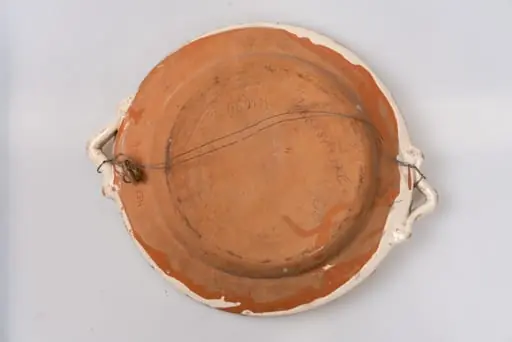 Farfurie adâncă de tip castron, cu corp tronconic, buză dreaptă verticală, prevăzută cu două torți laterale de prindere, inserate pe orizontală pe exteriorul buzei. Piesa este acoperită pe suprafața interioară și pe exteriorul buzei cu un strat de angobă albă, peste care este pictat cu cornul și cu pensula decorul format din motive geometrice și vegetale, realizate cu contur fin: central pe fundul farfuriei, încadrat într-o linie spiralată circulară albastră, se găsește un buchet format din două flori cu petale alungite galbene, o floare maro și frunze verzi. Buza farfuriei este decorată cu patru motive vegetale stilizate, aproximativ identice, dispuse în formă de cruce, formate din două frunze de culoare verde, cu o floare galbenă în mijloc. Între aceste motive vegetale se găsește câte un grup format din trei puncte de culoare albastră. Exteriorul buzei este decorat cu două linii circulare paralele realizate prin incizare. Suprafața ornamentată a farfuriei este acoperită cu un strat de smalț transparent. Cromatica: alb, galben, verde, maro, albastru.
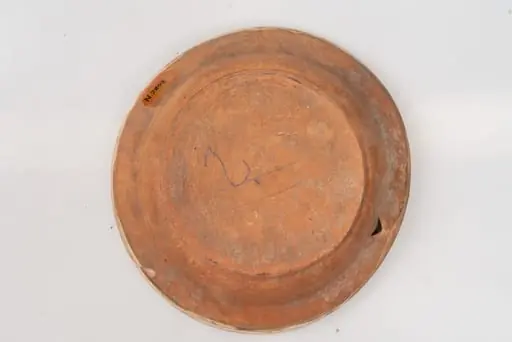 Farfurie adâncă de tip castron, acoperită pe suprafața interioară cu un strat de angobă albă, peste care este pictat cu pensula și cu cornul decorul format din motive avimorfe, vegetale și florale dispuse astfel: pe fundul vasului este pictată o pasăre albastră cu contur albastru, așezată pe o ramură cu frunze și flori, realizată în culorile albastru, verde, maro și roșu, iar peretele farfuriei este decorat cu două tipuri de motive vegetale și florale (dispuse diametral opus), în aceleași culori ca elementele vegetale de pe centrul farfuriei. Suprafața ornamentată a farfuriei este acoperită cu un strat de smalț transparent. Buza farfuriei este decorată cu linii circulare subțiri, de culoare albastră. Cromatica: alb, verde, albastru, maro, roșu.
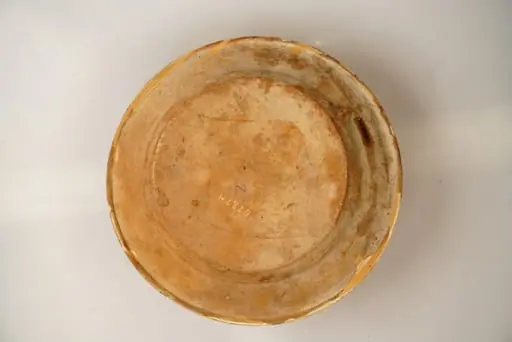 Farfurie semi-adâncă cu buza dreaptă evazată și cu muchia buzei răsfrântă spre exterior. Suprafața interioară a farfuriei este acoperită cu un strat de angobă albă peste care este realizat, prin sgrafitare în stratul de angobă și prin pictare cu pensula și cu cornul, decorul format din motive florale, vegetale și geometrice dispuse astfel: centrul farfuriei conține o tulpină cu două flori albastre rotunde, o floare cu petale alungite, de culoare verde, și frunze și elemente vegetale de culoare verde și maro. Conturul decorului din zona centrală este realizat cu o linie fină sgrafitată. Registrul decorativ marginal de pe buza farfuriei conține patru motive vegetale stilizate (boboci albaștri cu două frunze verzi), dispuse diametral opus în formă de cruce și intercalate cu patru grupuri de linii hașurate intersectat, de culoare maro. Decorul din zona buzei este încadrat între două linii circulare albastre. Suprafața ornamentată a farfuriei este acoperită cu un strat de smalț transparent. Cromatica: alb, verde, galben, maro.
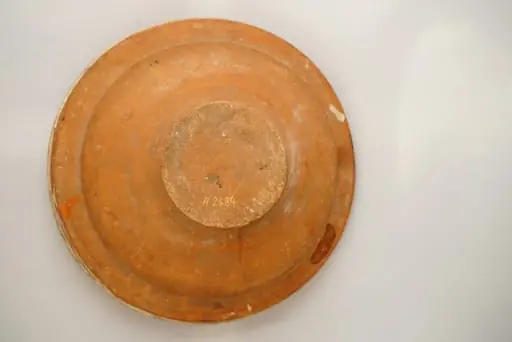 Farfurie mare, adâncă, de tip castron, cu corp tronconic, buza evazată și muchia buzei verticală; suprafața interioară a piesei este acoperită cu un strat de angobă albă, peste care este pictat cu cornul decorul monocromatic format din motive geometrice, florale și vegetale stilizate: centrul farfuriei este decorat cu un cerc format din mai multe linii subțiri maro, cerc ce conține în interior o tulpină cu o floare albastră rotundă și mai multe frunze realizate din linii subțiri; acestui decor floral i se adaugă patru grupuri de linii paralele crescătoare și descrescătoare ca mărime, dispuse sub formă de triunghi. Peretele farfuriei este decorat cu două tipuri de motive florale, cîte două din fiecare motiv și dispuse diametral opus: o tulpină cu două flori de lalea și frunze, și o tulpină cu două flori rotunde și centrul format din linii hașurate intersectat. Buza farfuriei este decorată cu un șir de motive vegetale formate din două linii sub formă de zigzag, dispuse circular, care se intersectează rezultând niște romburi, intersecția acestor linii fiind marcată cu două linii mici în formă de cruciuliță. Muchia buzei este decorată cu linii mici ondulate. Suprafața ornamentată a farfuriei este acoperită cu un strat de smalț transparent. Cromatica: alb, albastru.
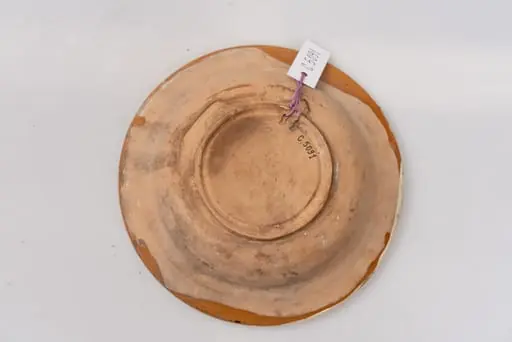 Farfurie adâncă, angobată pe fața interioară cu un strat de angobă albă și decorată prin pictare cu pensula și cu cornul cu motive florale, fitomorfe și geometrice: central pe fundul farfuriei este reprezentat, în manieră naturalistă, un buchet format din două flori cu câte trei petale de culoare maro-deschis și albastru, cu frunze verzi și elemente vegetale de culoare maro-închis. Buza este ornamentată cu un șir continuu format din romburi cu contur maro-închis, umplute cu linii hașurate verzi și separate de câte trei puncte de culoare albastră și maro. Acest registru decorativ este înscris între două linii circulare de culoare maro-închis. Cromatica: alb, verde, maro-deschis, maro-închis, albastru. Suprafața ornamentată a farfuriei este acoperită cu un strat de smalț transparent.
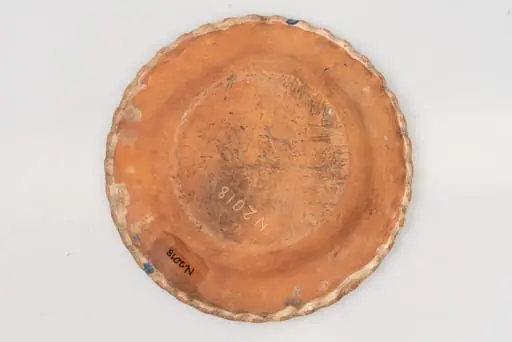 Farfurie de formă aplatizată, cu muchia buzei ușor ondulată. Este acoperită pe suprafața interioară cu un strat de angobă albă peste care este pictat cu pensula monocromatic format din motive geometrice și florale stilizate: registrul central de pe fundul farfuriei conține o tulpină cu trei flori de crin stilizate și două frunze la bază. Registrul decorativ marginal de pe buza farfuriei, înscris între două linii circulare albastre, conține un șir continuu de frunze duble între care se găsesc motive punctate (linii). Suprafața ornamentată a farfuriei este acoperită cu un strat de smalț transparent. Cromatica: alb, albastru.
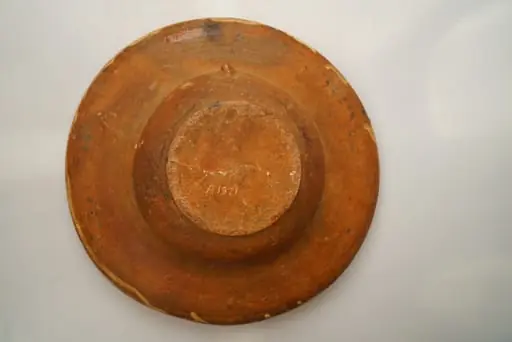 Farfurie mare adîncă, cu corp tronconic ușor rotunjit, buză lată evazată cu muchia buzei verticală; este acoperită pe suprafața interioară cu un strat de angobă albă peste care este pictat cu pensula decorul monocromatic format din motive geometrice și motive florale și vegetale stilizate, dispuse astfel: centrul farfuriei este decorat cu o floare (posibil crin) încadrată într-un cerc dublu, floare care se repetă și pe exteriorul cercului, alternată cu un motiv format din linii hașurate intersectat dispus sub formă de triunghi. Restul suprafeței corpului este decorat cu șiruri de frunze duble, orientate opus. Exteriorul buzei este decorat cu două linii circulare incizate. Suprafața ornamentată a farfuriei este acoperită cu un strat de smalț transparent. Cromatica: alb, albastru.
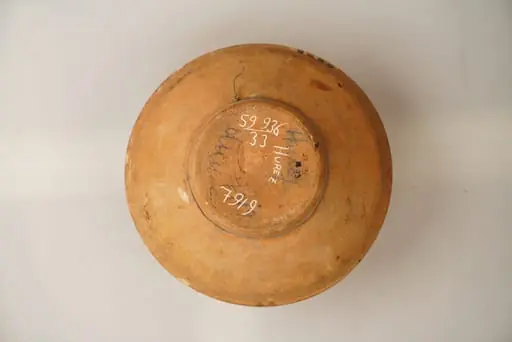 Farfurie adâncă de tip castron, cu corpul tronconic și buza dreaptă, verticală cu muchia buzei ușor răsfrântă spre exterior; este acoperită pe suprafața interioară cu un strat de angobă albă peste care este pictat cu cornul decorul format din motive geometrice dispuse astfel: centrul farfuriei este decorat cu un cerc de culoare maro ce este dublat pe exterior cu linii mici în formă de semicercuri, simulând petalele unei flori, iar în interior conținând un mic element decorativ neregulat, de culoare maro. Peretele farfuriei este decorat în jumătatea sa inferioară cu linii circulare în culorile roșu, verde-deschis, maro, completate cu șapte grupuri de motive formate din semicercuri mici de culoare maro și cu un șir de linii maro în formă de semicercuri mai mari, alăturate, având în interior linii curbe de culoare verde-deschis și roșu. Muchia buzei este decorată cu o linie circulară maro, ondulată mărunt. Suprafața farfuriei nu este smălțuită. Cromatica: alb, verde-deschis, roșu, maro.
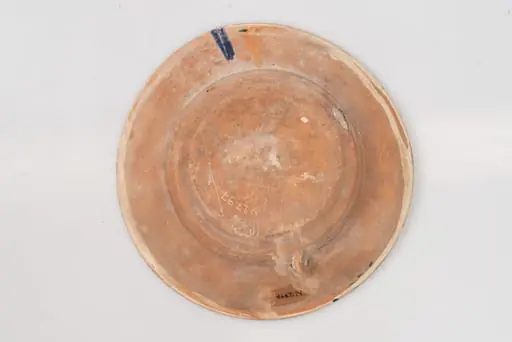 Farfurie semi-adâncă, cu buza lată, evazată; este angobată pe suprafața interioară cu un strat de humă albă, peste care este pictat cu pensula decorul format din motive florale și vegetale stilizate: registrul decorativ central de pe fundul farfuriei conține o floare cu patru petale alungite albastre și patru petale/frunze verzi, încadrată într-un cerc format din două linii ondulate și intersectate, de culoare albastră. Registrul decorativ marginal de pe buza farfuriei este format dintr-o succesiune alternantă a două motive: floarea albastră de lalea și motivul brăduțului, de culoare verde. Suprafața ornamentată a farfuriei este acoperită cu un strat de smalț transparent. Cromatica: alb, verde, albastru.
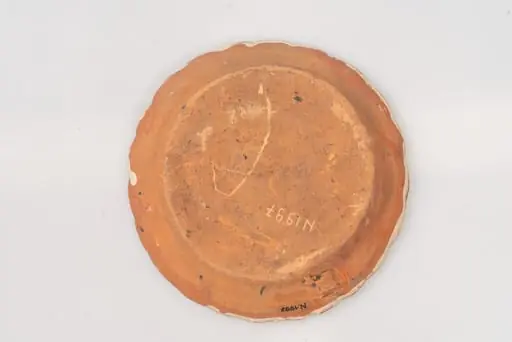 Farfurie de formă aplatizată, cu muchia buzei ondulată. Este acoperită pe suprafața interioară cu un strat de angobă albă peste care este pictat cu pensula și cu cornul decorul monocromatic format din motive geometrice și florale stilizate: registrul central de pe fundul farfuriei, înscris într-un cerc gros albastru, conține patru flori (dintre care două sunt flori de crin) dispuse în formă de cruce pe exteriorul unui cerc ce conține în interior o floare de lalea. Registrul decorativ marginal de pe buza farfuriei este decorat cu un șir continuu de frunze duble între care se găsesc motive punctate (linii). Muchia buzei este marcată cu o dungă albastră. Suprafața ornamentată a farfuriei este acoperită cu un strat de smalț transparent. Cromatica: alb, albastru.