Artwork
Farfurie de formă semi-adâncă, cu buză lată, evazată; piesa este angobată pe fața interioară cu un strat de humă albă, peste care este pictat cu cornul și cu pensula decorul monocromatic, format din motive florale și fitomorfe stilizate (tulpină cu trei flori de lalea și frunze, reprezentate central pe fundul farfuriei, și un șir continuu format din patru flori de lalea cu frunze, așezate diametral opus pe buza farfuriei). Muchia buzei este marcată cu o dungă de culoare albastră. Pe fundul farfuriei, de o parte și de alta a decorului floral, este înscris cu pensula anul fabricării piesei: 18 48. Cromatica: alb, albastru-închis. Farfuria este acoperită pe fața decorată cu un strat de smalț transparent.
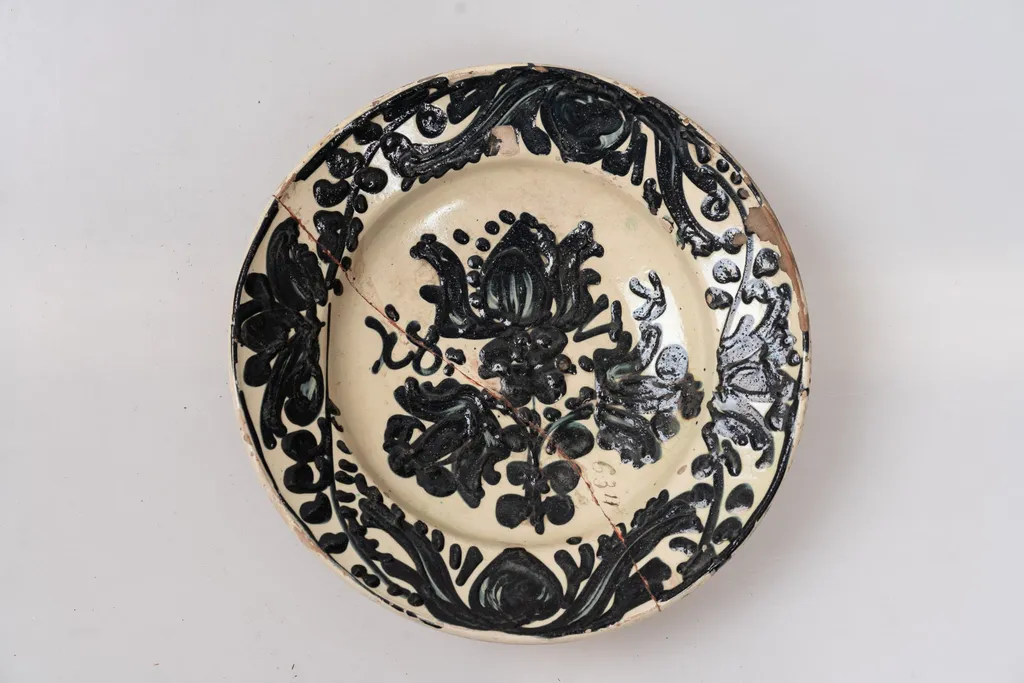
Farfurie de formă semi-adâncă, cu buză lată, evazată; piesa este angobată pe fața interioară cu un strat de humă albă, peste care este pictat cu cornul și cu pensula decorul monocromatic, format din motive florale și fitomorfe stilizate (tulpină cu trei flori de lalea și frunze, reprezentate central pe fundul farfuriei, și un șir continuu format din patru flori de lalea cu frunze, așezate diametral opus pe buza farfuriei). Muchia buzei este marcată cu o dungă de culoare albastră. Pe fundul farfuriei, de o parte și de alta a decorului floral, este înscris cu pensula anul fabricării piesei: 18 48. Cromatica: alb, albastru-închis. Farfuria este acoperită pe fața decorată cu un strat de smalț transparent. is a print by Unknown. It dates from 1850 and is held in the collection of the Ethnographical Museum of Transylvania. This semi-deep plate features a wide, flared rim and a flat bottom, characterized by a predominantly white and dark blue color scheme.
About this work
In the center of the plate, there are three large flowers with leaves, surrounded by a continuous pattern of four flowers with leaves on the rim.
This image shows a plate with a wide, flared rim and a flat bottom. The plate is white with a dark blue design around the edge, featuring stylized flowers and leaves. In the center of the plate, there are three large flowers with leaves, surrounded by a continuous pattern of four flowers with leaves on the rim. The plate has a transparent glaze and is marked with the year "1848" on the bottom.
The design is simple yet elegant, with bold lines and shapes that create a sense of movement and energy. The use of dark blue on a white background creates a striking contrast that draws the viewer's attention.
The plate is a beautiful example of traditional craftsmanship, with intricate details and a sense of history. To learn more about the artist and their work, you can explore the Museum of Ethnography.
Overview
This semi-deep plate features a wide, flared rim and a flat bottom, characterized by a predominantly white and dark blue color scheme. Its design combines stylized floral and foliate motifs, centrally and peripherally arranged, with a notable date inscription.
Subject & Meaning
The plate's subject matter revolves around stylized floral elements, specifically lily flowers and leaves, which may symbolize purity, innocence, or refinement, though no specific narrative or deeper meaning is overtly conveyed beyond aesthetic decoration.
Technique & Style
The piece employs a white enamel coating on the interior surface, over which a monochromatic dark blue design is applied using both a brush and a stylus (corn). The bold, stylized motifs and the contrast between white and dark blue suggest a blend of traditional craftsmanship with a touch of early 19th-century decorative simplicity.
History & Provenance
Manufactured in 1848, as inscribed on the plate's bottom, this piece provides a dated example of mid-19th-century ceramic production. However, specific details regarding its manufacturer, location, or original ownership are not provided.
Context
Created during the mid-19th century, the plate reflects the period's penchant for simple, elegant designs in ceramics, potentially influenced by broader European decorative arts trends of the time.
Artist & collection
Museum
Ethnographical Museum of Transylvania
Continue through works from the same source collection.
 Domestic Scene
 Giacomo and Cardinal Marco, investing Andrea, Abbot of San Zeno, with his Benefice
 The Nymph of Fontainebleau
 Portrait of a Woman
 Madonna and Child with Saints in the Enclosed Garden
 Venus and Minerva
 Family Group of Four on Sofa
 Wall painting from Room H of the Villa of P. Fannius Synistor at Boscoreale
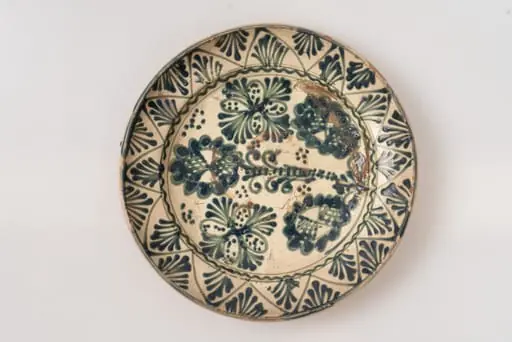 Farfurie de formă semi-adâncă, cu buză lată, răsfrântă; este angobată pe fața interioară cu un strat de humă albă, peste care este pictat cu cornul decorul monocromatic, format din motive florale și fitomorfe foarte stilizate (tulpină cu cinci flori și frunze, reprezentate pe centrul farfuriei) și geometrice (o linie în formă de zig-zag, pe toată lungimea buzei, completată cu motive formate din linii verticale, dispuse în formă de triunghi; linii circulare simple și linie circulară ondulată ce marchează bordura interioară a farfuriei; puncte, linii hașurate). Buza farfuriei este marcată cu o dungă de culoare albastră. Cromatica: alb, albastru. Farfuria este acoperită pe fața decorată cu un strat de smalț transparent.
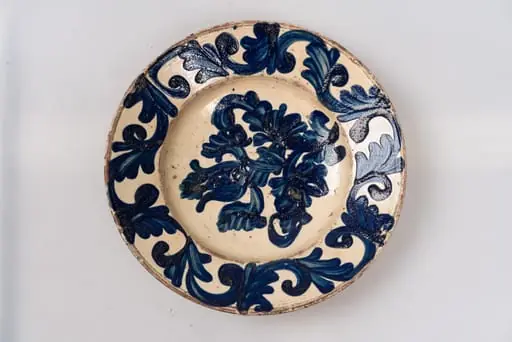 Farfurie adâncă, cu buza evazată; este angobată pe fața interioară cu un strat de humă albă, peste care este pictat cu pensula, cu linii groase, decorul monocromatic format din motive florale și fitomorfe stilizate (tulpină cu o floare de lalea și frunze, reprezentate pe centrul farfuriei și un șir continuu compus din elemente vegetale, ce decorează buza acesteia). Cromatica: alb, albastru. Farfuria este acoperită pe fața decorată cu un strat de smalț transparent.
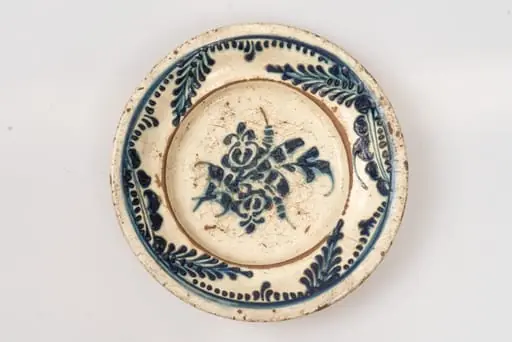 Farfurie semi-adâncă, cu fund larg și buză evazată; este acoperită pe fața interioară cu un strat de angobă albă, peste care este pictat cu cornul decorul monocromatic format din motive vegetale și florale stilizate: un buchet cu două flori și frunze, ce formează registrul decorativ central, de pe fundul farfuriei, iar buza acesteia este decorată cu patru motive vegetale (frunze) formate din linii în formă de brăduț, completate cu motive formate din puncte și șiruri de linii mici, sub formă de virgulă. Marginea buzei este marcată de o linie albastră. Cromatica: alb, albastru. Fața ornamentată a farfuriei este acoperită cu un strat de smalț transparent.
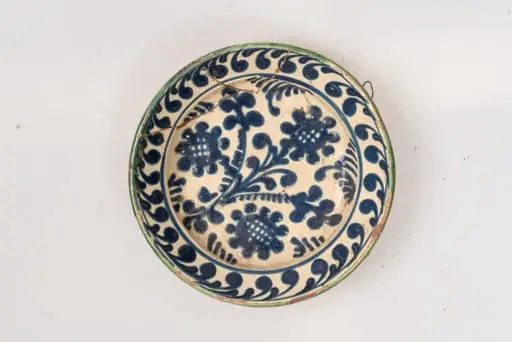 Farfurie de formă semi-adâncă, cu fund larg și buză evazată. Farfuria este angobată pe fața interioară cu un strat de humă albă, peste care este pictat cu cornul și cu pensula decorul format din motive florale și fitomorfe stilizate: o tulpină cu trei flori rotunde, cu mijlocul umplut cu linii hașurate intersectat, și frunze, reprezentate central pe fundul farfuriei. Buza farfuriei este decorată cu un șir continuu format din două tipuri de linii sub formă de virgulă. Bordura interioară a farfuriei este marcată cu o dungă de culoare albastră iar muchia buzei cu o dungă verde. Cromatica: alb, albastru, verde. Farfuria este acoperită pe fața ornamentată cu un strat de smalț transparent.
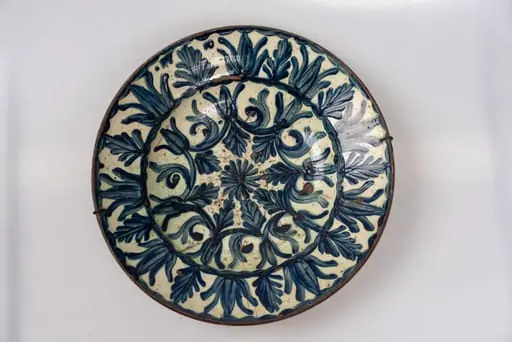 Farfurie semi-adâncă, cu fund îngust și buza lată, evazată. Piesa este acoperită pe suprafața interioară cu un strat de angobă albă peste care este pictat cu pensula decorul monocromatic, format din motive florale și vegetale stilizate ce acoperă întreaga suprafață a piesei: opt lalele împreună cu vrejuri și frunze așezate în formă de stea, acoperă zona centrală a farfuriei, iar buza acesteia conține un șir continuu format din flori de lalea intercalate cu frunze. Bordura interioară a farfuriei și muchia buzei sunt marcate de câte o linie albastră ușor ondulată. Cromatica: alb, albastru. Suprafața ornamentată a farfuriei este acoperită cu un strat de smalț transparent.
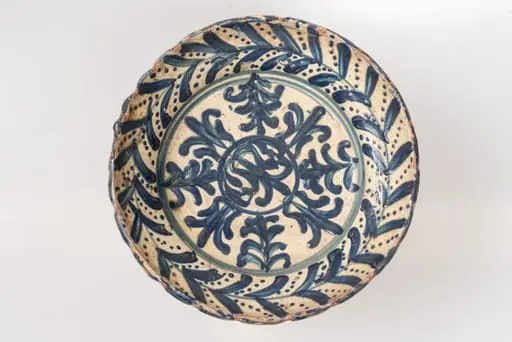 Farfurie de formă semi-adâncă, cu buză lată, evazată și muchia buzei ușor ondulată (mici alveole). Farfuria este angobată pe fața interioară cu un strat de humă albă, peste care este pictat cu cornul și cu pensula decorul monocromatic, format din motive florale și vegetale stilizate (o floare de lalea, înscrisă într-un cerc, pe exteriorul căruia se desfășoară un decor format din patru flori de lalea alternând cu patru brăduți - motive reprezentate central, pe fundul farfuriei, și un șir continuu de frunze duble între linii punctate - pe buza farfuriei). Bordura interioară a farfuriei este marcată de două linii circulare albastre iar buza farfuriei de o dungă, de asemena de culoare albastră. Cromatica: alb, albastru. Farfuria este acoperită pe fața ornamentată cu un strat de smalț transparent.
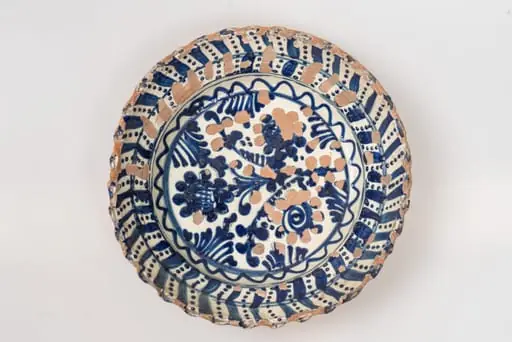 Farfurie de formă semi-adâncă, cu buză lată, evazată și muchia buzei ondulată. Farfuria este angobată pe fața interioară cu un strat de humă albă, peste care este pictat cu cornul și cu pensula decorul monocromatic, format din motive florale și fitomorfe stilizate (tulpină cu trei flori și frunze, reprezentate pe centrul farfuriei și un șir continuu de frunze duble între linii punctate, pe buza farfuriei) și geometrice (linii simple circulare, linie ondulată dispusă sub formă de cerc, puncte, grupuri de linii paralele, crescătoare și descrescătoare ca mărime, linii spiralate, linii hașurate). Buza farfuriei este marcată cu o dungă de culoare albastră. Cromatica: alb, albastru. Farfuria este acoperită pe fața decorată cu un strat de smalț transparent.
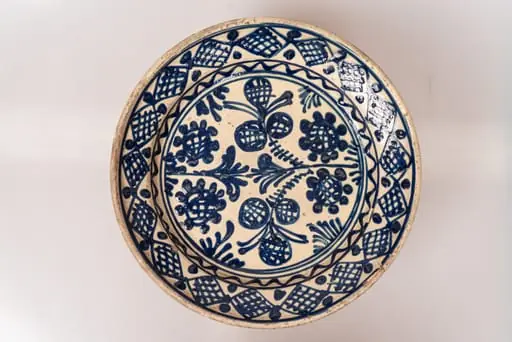 Farfurie de formă semi-adâncă, cu buza răsfrântă; piesa este modelată la roata olarului și angobată cu humă albă pe fața interioară. Decorul monocromatic este realizat prin pictare cu cornul și cu pensula și se compune din motive florale stilizate și geometrice, dispuse pe întreaga suprafață a piesei (registrul central de pe fundul farfuriei, delimitat de un cerc format din două linii concentrice, conține două perechi de flori cu petale rotunde, așezate diametral opus și o tulpină cu două ramuri ce se termină cu câte trei boboci și frunze; florile sunt umplute cu linii hașurate). Registrul marginal de pe buza farfuriei este decorat cu un șir continuu de romburi umplute cu linii hașurate și cu puncte groase. Peretele foarte îngust al farfuriei este decorat cu un cerc dintr-o linie vălurită iar muchia buzei și bordura interioară a farfuriei sunt marcate de câte o linie albastră sub formă de cerc. Cromatica: alb, albastru. Piesa este acoperită pe fața ornamentată cu un strat de smalț transparent.
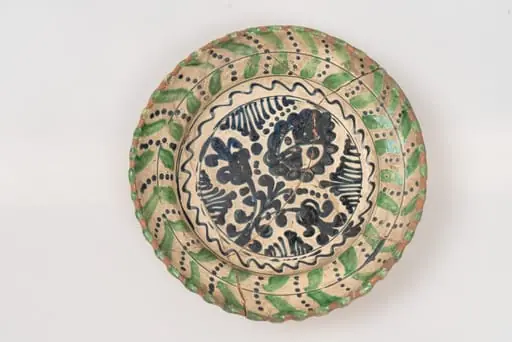 Farfurie de formă semi-adâncă, cu buză evazată și muchia buzei ondulată. Farfuria este angobată pe fața interioară cu un strat de humă albă, peste care este pictat cu cornul și cu pensula decorul format din motive florale și fitomorfe stilizate și din motive geometrice: în registrul central de pe fundul farfuriei este pictată o tulpină cu trei flori și frunze mici de culoare albastră, înscrisă într-un cerc dublu ce are la mijloc o linie ondulată circulară, de culoare albastră. Acest registru este completat cu motive formate din linii albastre crescătoare și descrescătoare dispuse în formă de triunghi. Buza farfuriei este decorată cu un șir continuu de frunze duble verzi între linii punctate de culoare albastră. Buza farfuriei este marcată cu o dungă de culoare verde. Cromatica: alb, albastru, verde. Farfuria este acoperită pe fața decorată cu un strat de smalț transparent.