Artwork
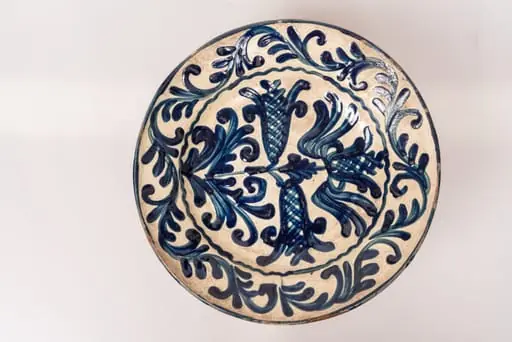
Farfurie adâncă, cu buza evazată; este angobată pe fața interioară cu un strat de humă albă, peste care este pictat cu pensula, cu linii groase, decorul monocromatic format din motive florale și fitomorfe stilizate (tulpină cu o floare de lalea și frunze, reprezentate pe centrul farfuriei și un șir continuu compus din elemente vegetale, ce decorează buza acesteia). Cromatica: alb, albastru. Farfuria este acoperită pe fața decorată cu un strat de smalț transparent.
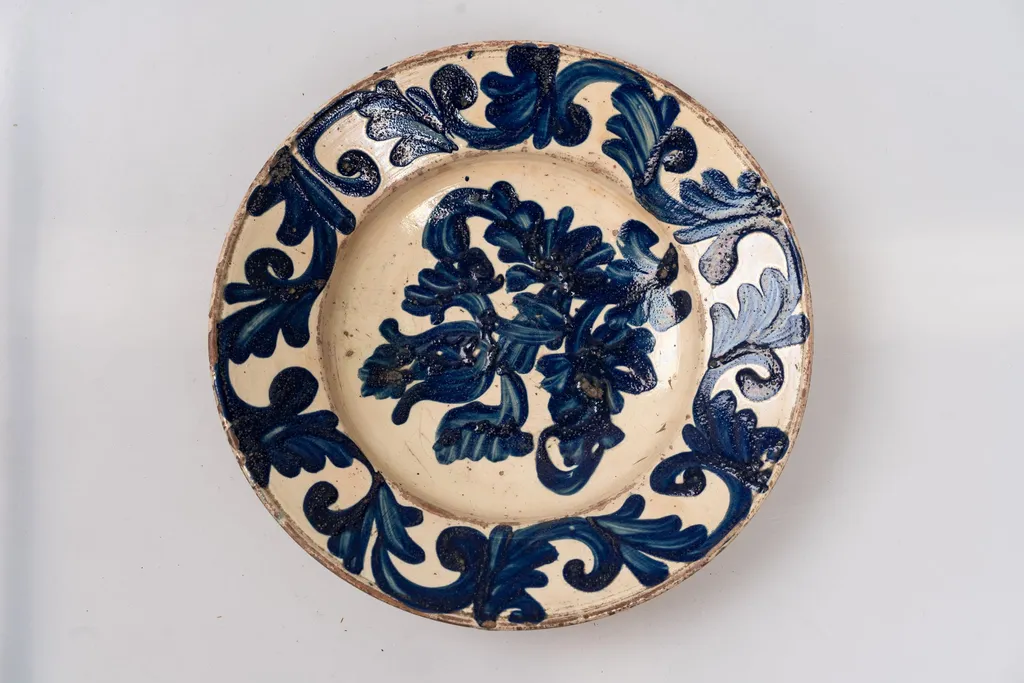
Farfurie adâncă, cu buza evazată; este angobată pe fața interioară cu un strat de humă albă, peste care este pictat cu pensula, cu linii groase, decorul monocromatic format din motive florale și fitomorfe stilizate (tulpină cu o floare de lalea și frunze, reprezentate pe centrul farfuriei și un șir continuu compus din elemente vegetale, ce decorează buza acesteia). Cromatica: alb, albastru. Farfuria este acoperită pe fața decorată cu un strat de smalț transparent. is a print by Unknown. It dates from 1850 and is held in the collection of the Ethnographical Museum of Transylvania.
About this work
Overview
This deep ceramic plate features a flared rim and is coated internally with a white slip, over which a monochrome blue decoration is hand-painted. The surface is sealed with a transparent glaze, yielding a glossy finish. The design employs bold, fluid brushstrokes to render stylized floral and vegetal motifs, arranged symmetrically around the center and along the rim.
Subject & Meaning
These motifs, drawn from natural forms but simplified into rhythmic lines, suggest an emphasis on harmony and repetition rather than botanical accuracy.
The decoration centers on a stylized tulip with accompanying leaves, surrounded by a continuous band of abstracted plant elements along the rim. These motifs, drawn from natural forms but simplified into rhythmic lines, suggest an emphasis on harmony and repetition rather than botanical accuracy. The choice of floral imagery may reflect broader cultural associations with growth, renewal, or domestic elegance.
Technique & Style
The plate was formed from clay, then coated with a white slip before painting. Decorative lines were applied with a brush using thick, confident strokes in varying shades of blue. The entire surface was then covered with a clear glaze and fired, locking the pigment beneath a glassy layer. The style prioritizes rhythmic repetition and flat, two-dimensional forms over naturalistic detail.
History & Provenance
Though specific origins are unrecorded, the form and decoration align with ceramic traditions from regions where slip-painted, glazed wares were common in domestic or ceremonial use. The monochrome palette and stylized motifs suggest production during a period when such techniques were widespread, likely between the 16th and 18th centuries in Eastern Europe or the Near East.
Context
This piece reflects a broader tradition of utilitarian ceramics adorned with symbolic or ornamental designs, produced for everyday use rather than elite display. Its restrained color scheme and repetitive patterns indicate an aesthetic preference for order and balance, consistent with regional craft practices that valued function and subtle decoration over elaborate ornamentation.
Legacy
The plate exemplifies a durable, accessible ceramic tradition that prioritized craftsmanship and visual rhythm over individual artistry. Its survival offers insight into the domestic material culture of its time, preserving techniques and motifs that were once common but rarely documented. Such objects contribute to understanding the visual language of everyday life in pre-industrial societies.
Artist & collection
Museum
Ethnographical Museum of Transylvania
Continue through works from the same source collection.
 Domestic Scene
 Giacomo and Cardinal Marco, investing Andrea, Abbot of San Zeno, with his Benefice
 The Nymph of Fontainebleau
 Portrait of a Woman
 Madonna and Child with Saints in the Enclosed Garden
 Venus and Minerva
 Family Group of Four on Sofa
 Wall painting from Room H of the Villa of P. Fannius Synistor at Boscoreale
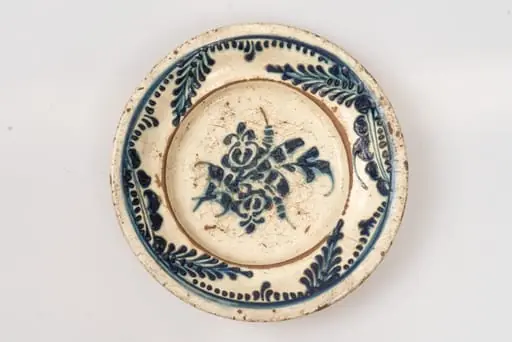 Farfurie semi-adâncă, cu fund larg și buză evazată; este acoperită pe fața interioară cu un strat de angobă albă, peste care este pictat cu cornul decorul monocromatic format din motive vegetale și florale stilizate: un buchet cu două flori și frunze, ce formează registrul decorativ central, de pe fundul farfuriei, iar buza acesteia este decorată cu patru motive vegetale (frunze) formate din linii în formă de brăduț, completate cu motive formate din puncte și șiruri de linii mici, sub formă de virgulă. Marginea buzei este marcată de o linie albastră. Cromatica: alb, albastru. Fața ornamentată a farfuriei este acoperită cu un strat de smalț transparent.
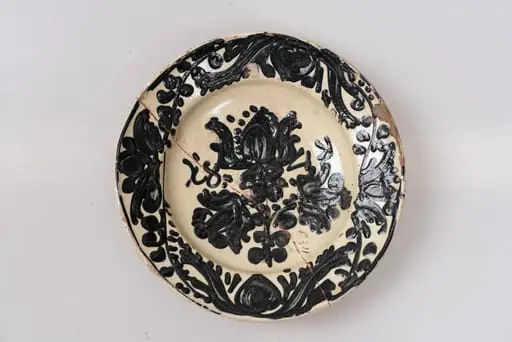 Farfurie de formă semi-adâncă, cu buză lată, evazată; piesa este angobată pe fața interioară cu un strat de humă albă, peste care este pictat cu cornul și cu pensula decorul monocromatic, format din motive florale și fitomorfe stilizate (tulpină cu trei flori de lalea și frunze, reprezentate central pe fundul farfuriei, și un șir continuu format din patru flori de lalea cu frunze, așezate diametral opus pe buza farfuriei). Muchia buzei este marcată cu o dungă de culoare albastră. Pe fundul farfuriei, de o parte și de alta a decorului floral, este înscris cu pensula anul fabricării piesei: 18 48. Cromatica: alb, albastru-închis. Farfuria este acoperită pe fața decorată cu un strat de smalț transparent.
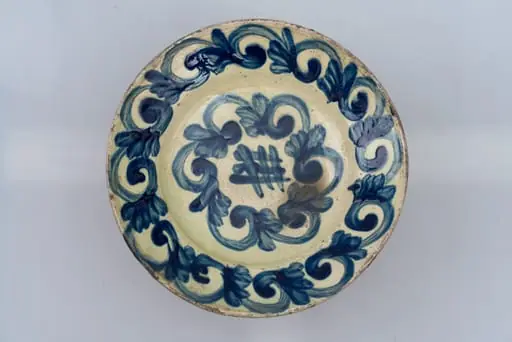 Farfurie adâncă, cu buză lată, evazată; este acoperită pe suprafața interioară cu un strat de angobă albă, peste care este pictat cu pensula, cu linii groase, decorul monocromatic format din motive vegetale stilizate: două ghirlande de formă circulară, una centrală pe fundul farfuriei și una pe buza acesteia, formate din frunze și vrejuri albastre. In centrul farfuriei se găsesște un motiv format din linii hașurate intersectat. Suprafața ornamentată a farfuriei este acoperită cu un strat de smalț transparent. Cromatica: alb, albastru.
 Farfurie semi-adâncă, cu buză răsfrântă; piesa este modelată la roata olarului și este angobată pe fața interioară cu humă albă. Decorul monocromatic este pictat cu pensula și se compune din motive decorative florale și vegetale stilizate (o floare de crin cu doi boboci și cu frunze, plasate central pe fundul farfuriei; buza farfuriei este acoperită cu un șir continuu de motive vegetale). Muchia buzei este marcată de o linie albastră iar bordura interioară a farfuriei de o linie vălurită. Cromatica: alb, albastru. Fața ornamentată a farfuriei este acoperită cu un strat de smalț transparent.
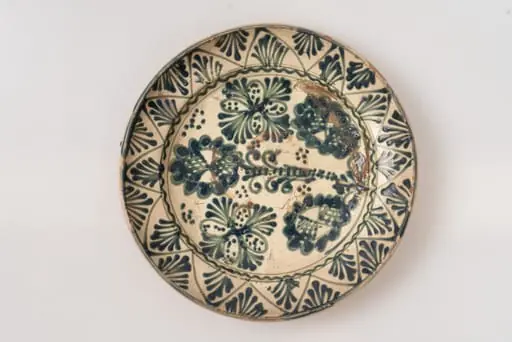 Farfurie de formă semi-adâncă, cu buză lată, răsfrântă; este angobată pe fața interioară cu un strat de humă albă, peste care este pictat cu cornul decorul monocromatic, format din motive florale și fitomorfe foarte stilizate (tulpină cu cinci flori și frunze, reprezentate pe centrul farfuriei) și geometrice (o linie în formă de zig-zag, pe toată lungimea buzei, completată cu motive formate din linii verticale, dispuse în formă de triunghi; linii circulare simple și linie circulară ondulată ce marchează bordura interioară a farfuriei; puncte, linii hașurate). Buza farfuriei este marcată cu o dungă de culoare albastră. Cromatica: alb, albastru. Farfuria este acoperită pe fața decorată cu un strat de smalț transparent.
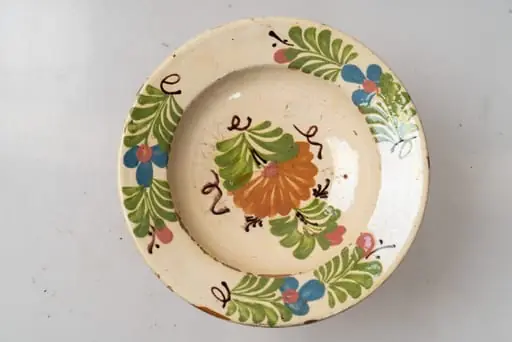 Farfurie adâncă, cu buza lată, răsfrântă; piesa este modelată din lut la roata olarului și este angobată cu humă albă pe fața interioară. Decorul este realizat prin pictare cu pensula și cu cornul și constă în motive florale și fitomorfe (o floare cu frunze și un boboc, pe centrul farfuriei și trei grupuri de flori cu frunze, pe buza farfuriei). Cromatica: alb, albastru, verde, siena naturală, roz-bej, maro. Fața ornamentată a farfuriei este acoperită cu un strat de smalț transparent.
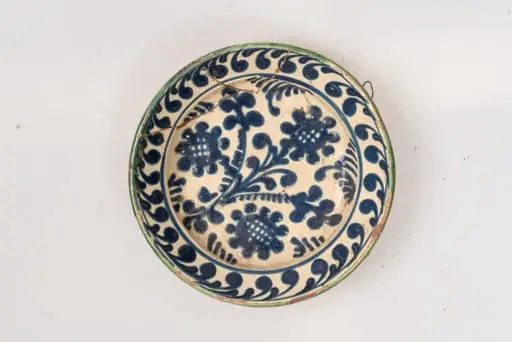 Farfurie de formă semi-adâncă, cu fund larg și buză evazată. Farfuria este angobată pe fața interioară cu un strat de humă albă, peste care este pictat cu cornul și cu pensula decorul format din motive florale și fitomorfe stilizate: o tulpină cu trei flori rotunde, cu mijlocul umplut cu linii hașurate intersectat, și frunze, reprezentate central pe fundul farfuriei. Buza farfuriei este decorată cu un șir continuu format din două tipuri de linii sub formă de virgulă. Bordura interioară a farfuriei este marcată cu o dungă de culoare albastră iar muchia buzei cu o dungă verde. Cromatica: alb, albastru, verde. Farfuria este acoperită pe fața ornamentată cu un strat de smalț transparent.
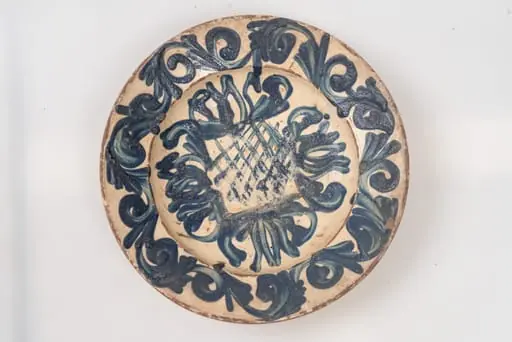 Farfurie adâncă, angobată pe fața interioară cu un strat de humă albă, peste care este pictat cu cornul și cu pensula, cu linii groase, decorul monocromatic format din motive florale și fitomorfe stilizate: pe fundul farfuriei se regăsesc patru flori de lalea dispuse pe exteriorul laturilor unui pătrat umplut cu linii hașurate intersectat de culoare albastră; buza farfuriei este decorată cu un șir continuu de elemente vegetale. Cromatica: alb, albastru. Farfuria este acoperită pe fața decorată cu un strat de smalț transparent.
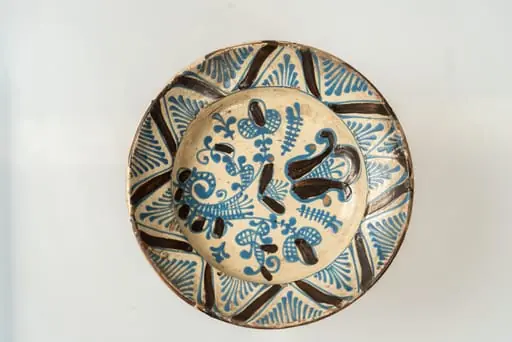 Farfurie adâncă, cu buză răsfrântă; piesa este modelată la roata olarului și este angobată cu humă albă pe fața interioară. Decorul este realizat prin pictare cu pensula și cu cornul și se compune din motive decorative florale stilizate (amplasate central, pe fundul farfuriei) și motive decorative geometrice, pe buza farfuriei (dungi de culoare maro, grupuri de linii paralele sub forma motivului de brăduț, linii hașurate). Cromatica: alb, maro, albastru. Fața farfuriei este acoperită cu un strat de smalț transparent.
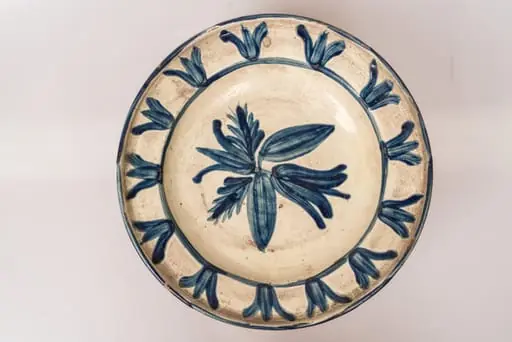 Farfurie semi-adâncă, cu buza răsfrântă și muchia buzei ușor concavă spre interior. Piesa este modelată la roata olarului și este angobată pe fața interioară cu humă albă. Decorul monocromatic este realizat prin pictare cu pensula și consta în motive florale stilizate: două flori de lalea cu doi boboci și două frunze, dispuse central pe fundul farfuriei și flori de lalea simple, înșiruite pe buza farfuriei. Bordura interioară a farfuriei și muchia buzei sunt marcate de câte o linie albastră. Cromatica: alb, albastru. Pe fața ornamentată farfuria este acoperită cu un strat de smalț transparent.