Artwork
Farfurie de formă semi-adâncă, cu buza evazată și ușor concavă spre interior. Este acoperită pe suprafața interioară cu un strat de angobă albă, peste care este pictat cu cornul decorul monocromatic format din motive florale și geometrice, dispuse astfel: registrul decorativ central de pe fundul farfuriei conține un buchet format din trei flori, dintre care una este lalea (dreapta), frunze și elemenete vegetale. Buza farfuriei este decorată cu două șiruri dispuse circular, formate din linii mici paralele; șirul dinspre interiorul farfuriei este completat cu șapte motive formate din linii hașurate intersectat. Suprafața ornamentată a farfuriei este acoperită cu un strat de smalț transparent. Cromatica: alb, albastru.
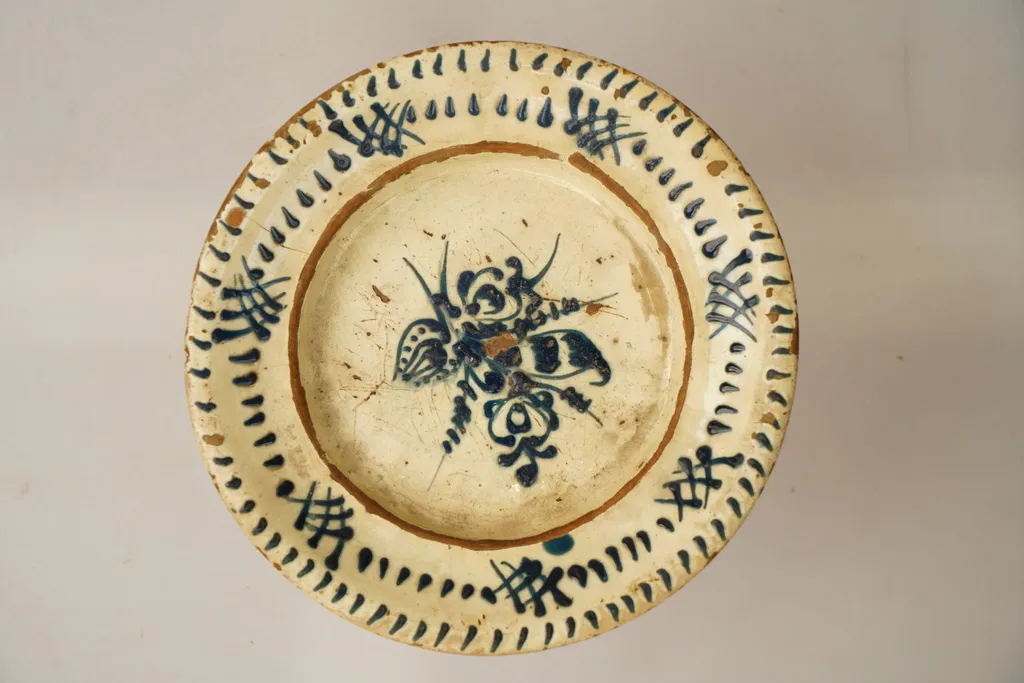
Farfurie de formă semi-adâncă, cu buza evazată și ușor concavă spre interior. Este acoperită pe suprafața interioară cu un strat de angobă albă, peste care este pictat cu cornul decorul monocromatic format din motive florale și geometrice, dispuse astfel: registrul decorativ central de pe fundul farfuriei conține un buchet format din trei flori, dintre care una este lalea (dreapta), frunze și elemenete vegetale. Buza farfuriei este decorată cu două șiruri dispuse circular, formate din linii mici paralele; șirul dinspre interiorul farfuriei este completat cu șapte motive formate din linii hașurate intersectat. Suprafața ornamentată a farfuriei este acoperită cu un strat de smalț transparent. Cromatica: alb, albastru. is a photography by Unknown. It dates from 1850 and is held in the collection of the Ethnographical Museum of Transylvania. This shallow, semi‑deep plate features a wide, slightly concave rim and a white interior ground.
About this work
Overview
This shallow, semi‑deep plate features a wide, slightly concave rim and a white interior ground. A monochrome blue decoration of floral and geometric motifs is applied over the base, and the entire surface is finished with a clear glaze that gives the colors a subtle sheen.
Subject & Meaning
The central field of the plate displays a bouquet of three stylised flowers, one recognisable as a tulip, accompanied by leaves and other vegetal elements. The composition centres on natural motifs, reflecting a decorative tradition that favours simplified botanical representation.
Technique & Style
The interior is first covered with a layer of white slip before the blue pigment is painted in a restrained, monochromatic palette. The rim is adorned with two concentric bands of fine parallel lines, the inner band interrupted by seven intersecting, hachured motifs, all sealed under a transparent glaze.
Context
The use of blue on a white ground and the emphasis on floral and geometric patterns are characteristic of ceramic traditions in Eastern Europe and the Balkans during the 19th‑century folk pottery movement, where utilitarian objects were also canvases for modest decorative schemes.
Legacy
Such plates illustrate the intersection of everyday function and aesthetic expression in regional craft, offering insight into the visual language and material culture that informed domestic environments in the area.
Artist & collection
Museum
Ethnographical Museum of Transylvania
Continue through works from the same source collection.
 Domestic Scene
 Giacomo and Cardinal Marco, investing Andrea, Abbot of San Zeno, with his Benefice
 The Nymph of Fontainebleau
 Portrait of a Woman
 Madonna and Child with Saints in the Enclosed Garden
 Venus and Minerva
 Family Group of Four on Sofa
 Wall painting from Room H of the Villa of P. Fannius Synistor at Boscoreale
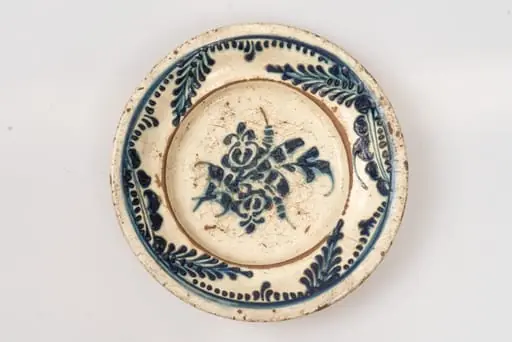 Farfurie semi-adâncă, cu fund larg și buză evazată; este acoperită pe fața interioară cu un strat de angobă albă, peste care este pictat cu cornul decorul monocromatic format din motive vegetale și florale stilizate: un buchet cu două flori și frunze, ce formează registrul decorativ central, de pe fundul farfuriei, iar buza acesteia este decorată cu patru motive vegetale (frunze) formate din linii în formă de brăduț, completate cu motive formate din puncte și șiruri de linii mici, sub formă de virgulă. Marginea buzei este marcată de o linie albastră. Cromatica: alb, albastru. Fața ornamentată a farfuriei este acoperită cu un strat de smalț transparent.
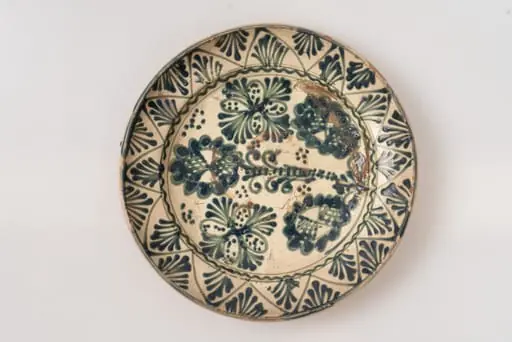 Farfurie de formă semi-adâncă, cu buză lată, răsfrântă; este angobată pe fața interioară cu un strat de humă albă, peste care este pictat cu cornul decorul monocromatic, format din motive florale și fitomorfe foarte stilizate (tulpină cu cinci flori și frunze, reprezentate pe centrul farfuriei) și geometrice (o linie în formă de zig-zag, pe toată lungimea buzei, completată cu motive formate din linii verticale, dispuse în formă de triunghi; linii circulare simple și linie circulară ondulată ce marchează bordura interioară a farfuriei; puncte, linii hașurate). Buza farfuriei este marcată cu o dungă de culoare albastră. Cromatica: alb, albastru. Farfuria este acoperită pe fața decorată cu un strat de smalț transparent.
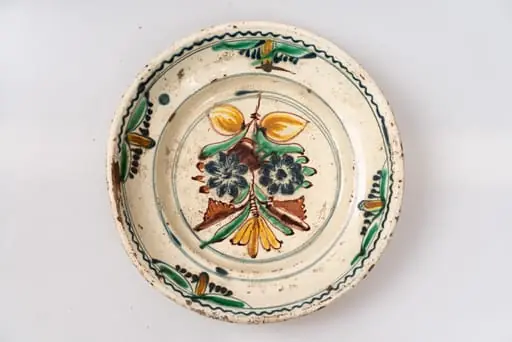 Farfurie semi-adâncă, cu buza evazată și muchia buzei rotunjită; este acoperită pe suprafața interioară cu un strat de angobă albă, peste care este pictat cu cornul și cu pensula decorul format din motive florale și geometrice, realizate cu contur din linii fine maro: central pe fundul farfuriei, încadrat într-un cerc albastru format dintr-o linie spiralată subțire, este pictat un buchet format din două flori albstre, o floare galbenă cu petale lungi, doi boboci galbeni și frunze verzi. Registrul decorativ marginal, încadrat între două cercuri albastre, conține patru motive vegetale stilizate, aproximativ identice, dispuse în cruce (două frunze verzi și una centrală galbenă, decorate cu puncte alungite de culoare albastru-închis). Muchia buzei este marcată cu o linie circulară ondulată de culoare albastră. Suprafața ornamentată a farfuriei este acoperită cu un strat de smalț transparent. Cromatica: alb, galben, verde, maro, albastru.
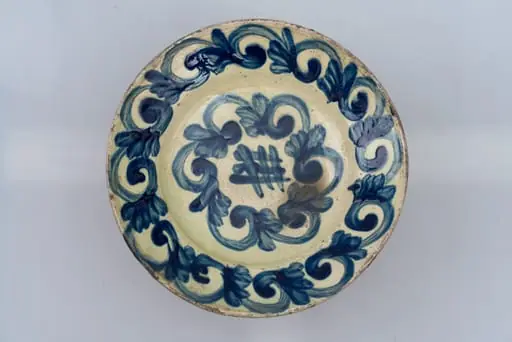 Farfurie adâncă, cu buză lată, evazată; este acoperită pe suprafața interioară cu un strat de angobă albă, peste care este pictat cu pensula, cu linii groase, decorul monocromatic format din motive vegetale stilizate: două ghirlande de formă circulară, una centrală pe fundul farfuriei și una pe buza acesteia, formate din frunze și vrejuri albastre. In centrul farfuriei se găsesște un motiv format din linii hașurate intersectat. Suprafața ornamentată a farfuriei este acoperită cu un strat de smalț transparent. Cromatica: alb, albastru.
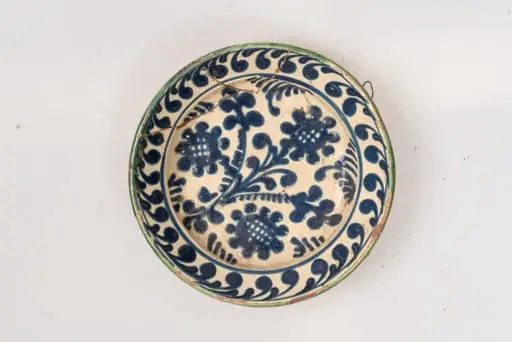 Farfurie de formă semi-adâncă, cu fund larg și buză evazată. Farfuria este angobată pe fața interioară cu un strat de humă albă, peste care este pictat cu cornul și cu pensula decorul format din motive florale și fitomorfe stilizate: o tulpină cu trei flori rotunde, cu mijlocul umplut cu linii hașurate intersectat, și frunze, reprezentate central pe fundul farfuriei. Buza farfuriei este decorată cu un șir continuu format din două tipuri de linii sub formă de virgulă. Bordura interioară a farfuriei este marcată cu o dungă de culoare albastră iar muchia buzei cu o dungă verde. Cromatica: alb, albastru, verde. Farfuria este acoperită pe fața ornamentată cu un strat de smalț transparent.
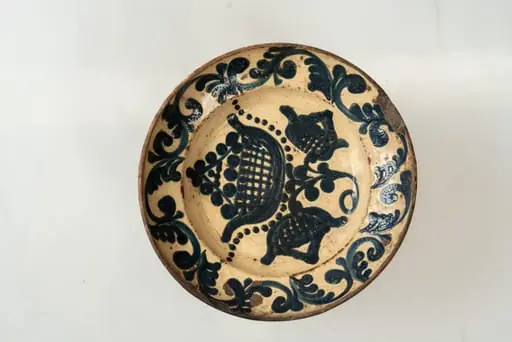 Farfurie semi-adâncă, cu corp scund și buză lată, răsfrântă și muchia buzei ușor concavă spre interior. Piesa este modelată la roata olarului, angobată cu humă albă pe fața interioară a acesteia. Decorul este realizat prin pictare cu pensula și cu cornul, cu linii groase, și constă în motive decorative florale și vegetale stilizate (flori și frunze), dispuse pe toată suprafața farfuriei. Cromatica decorului: alb, albastru. Farfuria este smălțuită pe interior, cu smalț transparent.
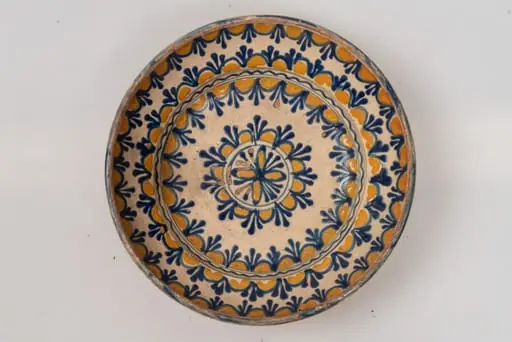 Farfurie adâncă, cu buza evazată și ușor concavă; este acoperită pe fața interioară cu un strat de angobă albă peste care este pictat cu pensula și cu cornul decorul format din motive geometrice și florale geometrizate: central pe fundul farfuriei se regăsește o floare cu petale galbene și contur albastru, încadrată într-un cerc dublu de culoare albastră, decorat pe exterior cu un șir format din semicercuri cu contur albastru și interior galben, separate de câte trei linii albastre în formă de V. Alte trei șiruri circulare formate din aceleași motive decorează buza și peretele farfuriei. Bordura interioară a farfuriei este marcată cu linii circulare simple și o linie circulară ondulată de culoare albastră iar muchia buzei cu o dungă albastră. Suprafața ornamentată a farfuriei este acoperită cu un strat de smalț transparent. Cromatica: alb, galben, albastru.
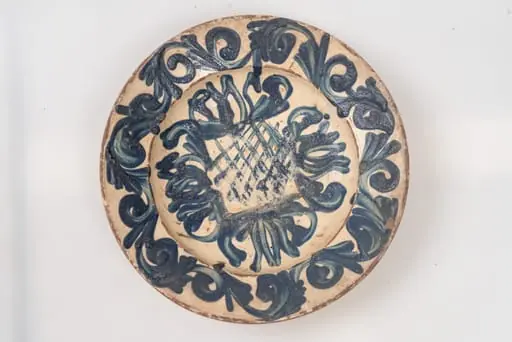 Farfurie adâncă, angobată pe fața interioară cu un strat de humă albă, peste care este pictat cu cornul și cu pensula, cu linii groase, decorul monocromatic format din motive florale și fitomorfe stilizate: pe fundul farfuriei se regăsesc patru flori de lalea dispuse pe exteriorul laturilor unui pătrat umplut cu linii hașurate intersectat de culoare albastră; buza farfuriei este decorată cu un șir continuu de elemente vegetale. Cromatica: alb, albastru. Farfuria este acoperită pe fața decorată cu un strat de smalț transparent.
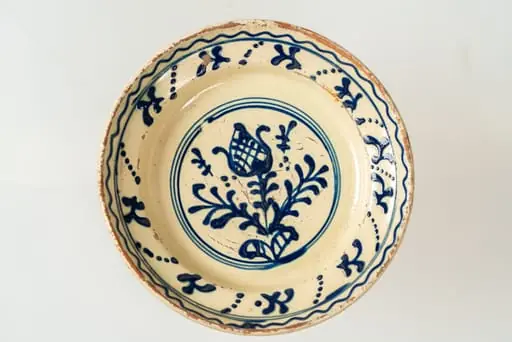 Farfurie semi-adâncă, cu corp scund și buză lată, răsfrântă, cu muchia buzei ușor concavă spre interior. Piesa este modelată la roata olarului, angobată cu humă albă pe fața interioară a acesteia. Decorul este realizat prin pictare cu pensula și cu cornul și constă în motive decorative florale și vegetale stilizate (flori și frunze), dispuse central, pe fundul farfuriei (încadrate in trei cercuri concentrice) și pe buza acesteia. Motive decorative geometrice: șiruri oblice de puncte, linie vălurită, linii sub formă de cerc. Cromatica decorului: alb, albastru. Farfuria este smălțuită pe fața interioară cu smalț transparent.
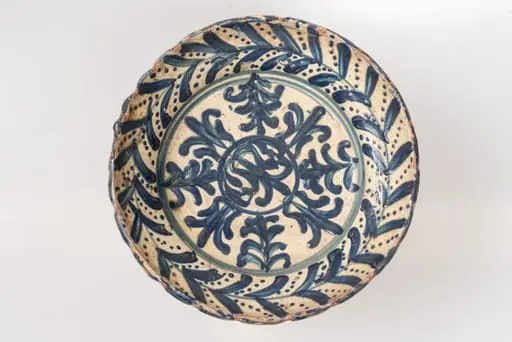 Farfurie de formă semi-adâncă, cu buză lată, evazată și muchia buzei ușor ondulată (mici alveole). Farfuria este angobată pe fața interioară cu un strat de humă albă, peste care este pictat cu cornul și cu pensula decorul monocromatic, format din motive florale și vegetale stilizate (o floare de lalea, înscrisă într-un cerc, pe exteriorul căruia se desfășoară un decor format din patru flori de lalea alternând cu patru brăduți - motive reprezentate central, pe fundul farfuriei, și un șir continuu de frunze duble între linii punctate - pe buza farfuriei). Bordura interioară a farfuriei este marcată de două linii circulare albastre iar buza farfuriei de o dungă, de asemena de culoare albastră. Cromatica: alb, albastru. Farfuria este acoperită pe fața ornamentată cu un strat de smalț transparent.
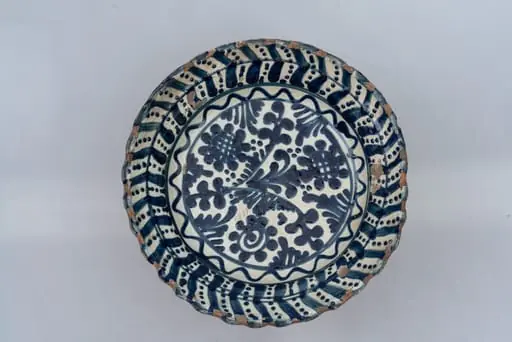 Farfurie semi-adâncă, cu fund larg, buză evazată și muchia buzei ondulată. Este acoperită pe suprafața interioară cu un strat de angobă albă peste care este pictat cu pensula și cu cornul decorul monocromatic format din motive geometrice și florale stilizate: registrul central de pe fundul farfuriei conține un buchet format din trei flori cu petale rotunde și mijlocul umplut cu linii hașurate intersectat, una dintre flori având mijlocul dintr-o linie spiralată, și din frunze; acest registru este încadrat între două linii circulare simple și o linie circulară ondulată și este completat cu șase motive formate din grupuri de linii crescătoare și descrescătoare, dispuse sub formă de triunghi și cu puncte. Registrul decorativ marginal de pe buza farfuriei este decorat cu un șir continuu de frunze duble între care se găsesc motive punctate (linii). Muchia buzei este marcată cu o dungă albastră. Suprafața ornamentată a farfuriei este acoperită cu un strat de smalț transparent. Cromatica: alb, albastru.
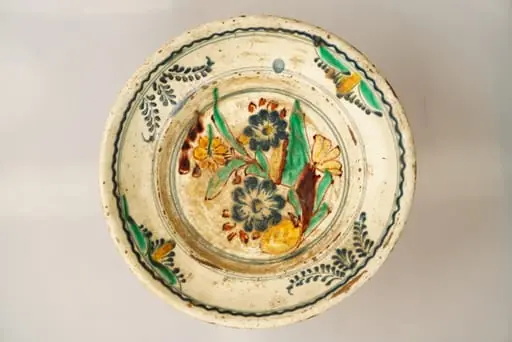 Farfurie adâncă, cu buza dreaptă evazată; suprafața exterioară este acoperită cu un strat de angobă albă peste care este pictat cu cornul și cu pensula decorul format din motive florale și geometrice, dispuse astfel: registrul decorativ de pe fundul farfuriei conține, încadrat într-un cerc dublu albastru, un buchet desenat cu contur subțire maro, format din două flori cu petale ușor alungite albastre, un boboc și două flori galbene și din frunze verzi. Registrul decorativ de pe buza farfuriei, marcat de două linii circulare duble albastre, conține două motive decorative formate din trei frunze realizate din linii mici albastre și două motive formate din două frunze verzi și o floare centrală galbenă, decorată cu linii mici albastre. Marginea buzei este decorată cu o linie circulară albastră. Suprafața ornamentată a farfuriei este acoperită cu un strat de smalț transparent. Cromatica: alb, galben, verde, maro, albastru.